Health
What's the earliest sign of heart disease in an older Aussie?
A soft cough after lying down or first standing, often paired with a gradual drop in exercise tolerance.

Quick answer
What's the earliest sign of heart disease in an older Aussie?
A soft cough after lying down or first standing, often paired with a gradual drop in exercise tolerance.
This is the slow-burn version of heart disease — the kind that creeps in over months, not the kind a puppy is born with.
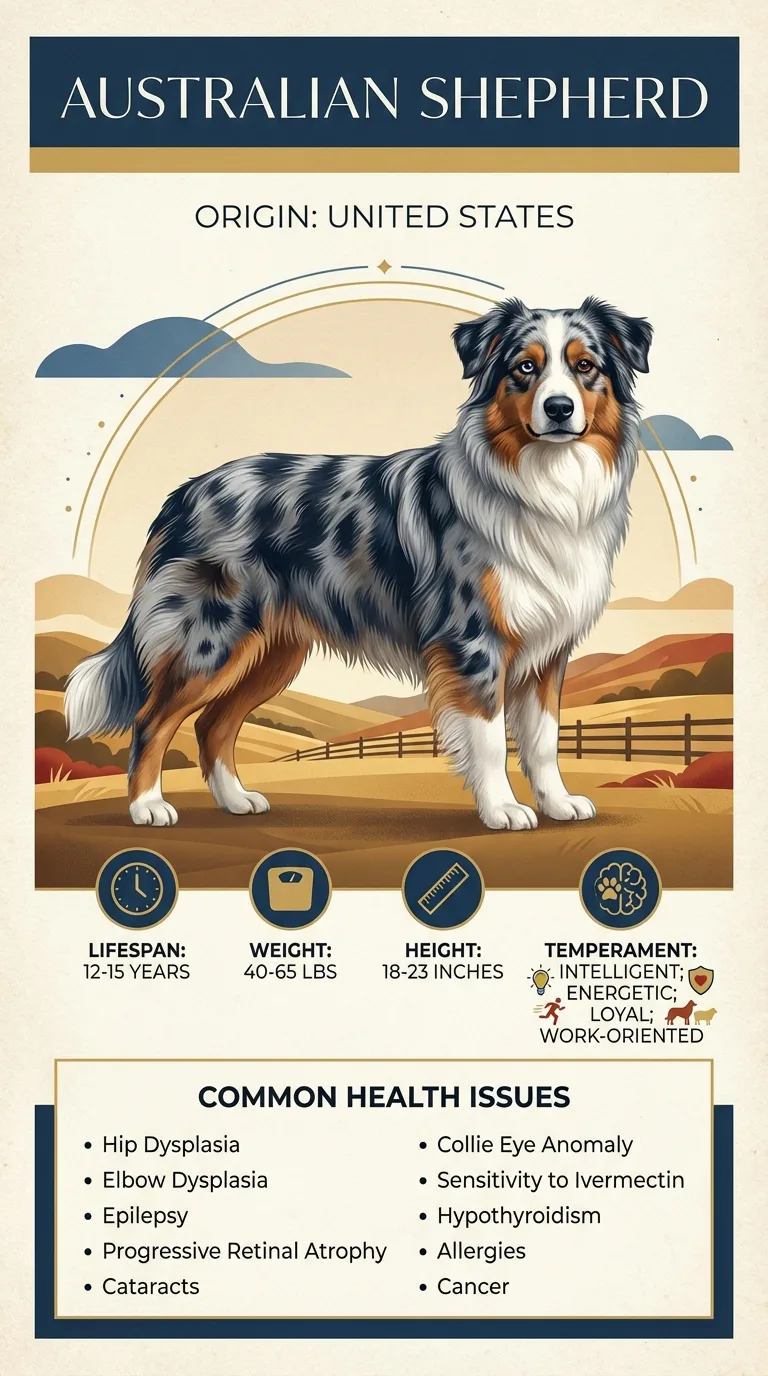
Owners of Aussies in their senior years, especially ones who've watched a once-tireless dog gradually slow down and aren't sure how much of that is 'just old age' versus something worth a vet visit.
This guide is not medical advice. If your dog shows pain, sudden behavior change, or worsening symptoms, consult a licensed veterinarian.
Some links may be affiliate links. We may earn a commission at no extra cost to you. We only suggest products we believe are helpful for dog owners.
We research and check what we publish, but we do not warrant that any figure, date, price, or statement is accurate, complete, or current, and we accept no liability for any loss, cost, injury, or other harm arising from the use of this site. Use it as one reference among several. You remain responsible for your own decisions and for your dog's care - confirm anything that matters with a licensed veterinarian or another qualified professional before you act on it. Full disclaimer.
Degenerative heart disease in an older Australian Shepherd develops gradually as valve tissue or heart muscle wears down over years of normal use. It isn't a condition this breed is specifically prone to, but it's a realistic part of aging in any dog that lives well into its teens, and the slow, quiet way it starts is exactly what makes early detection hard without routine vet checks.
This isn't documented as a hallmark risk for the breed, but age-related heart disease becomes more common in dogs generally the older they get, and Aussies routinely live long enough for it to become a realistic senior-year consideration.
There's no documented breed-specific genetic driver here. What the breed contributes is simply longevity — a 12-to-15-year lifespan gives more time for ordinary age-related valve or muscle wear to accumulate than a shorter-lived breed would see.
Nothing environmental causes this condition, but sustained hard exercise in a dog with undiagnosed early disease can make symptoms more noticeable sooner, since exertion places the most demand on a heart that's already working with reduced capacity.
Book a visit for a new or worsening cough, faster resting breathing than usual, reduced appetite, or a noticeable drop in exercise tolerance. Labored breathing at rest, a swollen belly, or sudden collapse is an emergency — go immediately rather than waiting for a scheduled appointment.
See all Australian Shepherd health problems, which breeds are prone to heart disease, or the full Australian Shepherd breed guide for temperament, exercise needs and ownership costs.
Many dogs live comfortably for a year or more after an early diagnosis with appropriate monitoring, though this varies widely by how advanced the disease is at diagnosis. Rechecks are typically every three to six months once a diagnosis is confirmed.
Success looks like stable or slowly progressing disease caught early enough that your dog maintains good quality of life and comfortable activity levels for as long as possible, with symptoms managed rather than a return to youthful stamina.
Degenerative heart disease in dogs rarely announces itself. The most common early pattern is a soft cough, often worse right after the dog lies down or first gets up, sometimes dismissed as 'just clearing its throat.' Alongside that, exercise tolerance drops gradually — walks that used to be easy now end with more panting than usual, or the dog wants to turn back sooner.
Because an Aussie's baseline energy is so high, the early drop can look like normal aging rather than anything specific. A dog going from tirelessly herding for two hours to wanting one hour still looks, on the surface, like an energetic senior dog. The gap between 'still pretty active for its age' and 'something is actually going on with the heart' is where this disease hides for months at a time.
That's exactly why routine senior wellness exams matter here — a vet listening with a stethoscope twice a year can catch a new murmur or muffled heart sounds well before the dog's own behavior gives it away.
Once diagnosed, degenerative heart disease is managed, not reversed. That typically means periodic rechecks (often every three to six months once symptomatic), monitoring resting respiratory rate at home, and adjusting activity to what the dog can comfortably sustain rather than what it used to do at five years old.
Most dogs live comfortably with early-stage disease for a long stretch, especially with consistent monitoring. The honest caveat is that later stages do progress, and quality of life becomes the guiding question rather than trying to return the dog to its younger fitness level.

If you think your Aussie has heart disease, the plan is three steps: write down what you have seen and when it started, book a veterinary appointment rather than waiting for the next flare, and take video of the behaviour or symptom before you go — the thing you are worried about rarely happens in the consulting room. Screening in the parents covers hip dysplasia, elbow dysplasia, epilepsy.
What the vet visit should produce is a diagnosis and a written plan, not just reassurance: what is being ruled out, what the monitoring interval is, and which signs mean you come back sooner. Ask what the treatment costs across a year rather than per visit, because that is the number that decides whether you are managing this condition or reacting to it.
Between appointments, keep a short log — dates, what you saw, what changed. It is the single most useful thing an owner brings to a follow-up, and for heart disease it is often what separates a clear pattern from a guess.
Walter, a ten-year-old retired working Aussie, had started coughing softly most nights after settling onto his bed — a couple of huffs, then quiet. His owner assumed it was just a dry throat or dust and didn't think much of it for a few months, especially since Walter still greeted every morning walk with his usual enthusiasm. At a routine senior wellness visit, the vet asked directly about any coughing, and the pattern — worse lying down, better once he'd been up and moving a few minutes — was exactly what prompted a stethoscope listen that turned up a new soft murmur. An echocardiogram confirmed early mitral valve changes. Because it was caught early, Walter's management plan started with monitoring and modest activity adjustments rather than anything drastic, and he kept going on daily walks — just shorter, cooler ones — for a long while afterward.
Key takeaway: A cough that seems minor and only happens at rest is exactly the kind of clue that's easy to write off in an otherwise energetic dog — mentioning it specifically at a checkup is what catches it early.
Degenerative heart disease is overwhelmingly a senior-onset problem, most often appearing from around seven or eight years onward, with most cases diagnosed even later. It's uncommon in young or middle-aged dogs.
No — coughing has plenty of other causes, including kennel-cough-type infections, allergies, and tracheal irritation. But a soft, recurring cough that appears mainly after lying down or waking is a pattern worth mentioning specifically to your vet.
No. Degenerative heart disease is a lifelong, progressive condition that's managed rather than cured. The goal of treatment is to slow progression and maintain comfort and quality of life, not to reverse the underlying valve or muscle changes.
A puppy murmur usually points to something congenital — present from birth. Age-related heart disease develops later in life as tissue gradually wears down, and it isn't something the dog was born with.
Not usually — most dogs benefit from continuing gentle, consistent activity matched to their current tolerance rather than stopping altogether. Your vet can help set a realistic activity level based on the specific diagnosis and stage.
An echocardiogram (heart ultrasound) is the main diagnostic tool, often paired with chest X-rays to check for fluid buildup and bloodwork to assess overall organ function before starting any treatment plan.
Twice-yearly wellness exams with a stethoscope check are standard for seniors generally. If a murmur or symptom has already been found, your vet will set a more specific recheck schedule, often every three to six months.
A soft cough after lying down or first standing, often paired with a gradual drop in exercise tolerance.
No — it's a progressive, lifelong condition that's managed with monitoring and treatment, not reversed.
At least twice a year at routine wellness visits, more often if a murmur or symptom has already been found.
Usually yes, at a level matched to current tolerance rather than stopped altogether — ask your vet to help set that level.
No — this is age-related and develops over years; a congenital issue is present from birth and usually found much earlier in life.
A one-page prep sheet for this condition: the signs, the questions to ask, what to get priced. Unlocks here.
You get: Vet visit prep sheet
No spam. One-click unsubscribe. See our privacy policy.
Preview page 1 before you decide.