Health
What is the fastest sign of glaucoma to watch for?
A sudden red, cloudy or visibly larger eye combined with squinting warrants a same-day vet visit rather than a wait-and-see approach.

Quick answer
What is the fastest sign of glaucoma to watch for?
A sudden red, cloudy or visibly larger eye combined with squinting warrants a same-day vet visit rather than a wait-and-see approach.
A Chow Chow squinting and pawing at one eye is sometimes just irritated. Sometimes the pressure inside that eye is climbing toward levels that cause permanent damage within hours, and there is no reliable way to tell the difference without a vet checking it directly.
Owners of a Chow Chow with existing cataracts, since lens changes are one route to secondary glaucoma in this breed, and anyone who has been told a red or watery eye can simply be watched for a few days before deciding whether it matters.
This guide is not medical advice. If your dog shows pain, sudden behavior change, or worsening symptoms, consult a licensed veterinarian.
Some links may be affiliate links. We may earn a commission at no extra cost to you. We only suggest products we believe are helpful for dog owners.
Glaucoma is elevated pressure inside the eye that damages the optic nerve, documented as a condition affecting the Chow Chow. It differs from most of the breed's other documented eye issues in speed: where cataracts progress over months, acute glaucoma can cause permanent vision loss within a single day if left untreated.
Documented as a condition affecting the breed. Because the Chow Chow also carries documented cataracts, secondary glaucoma arising from lens changes is a meaningful route into this diagnosis alongside any primary, inherited form.
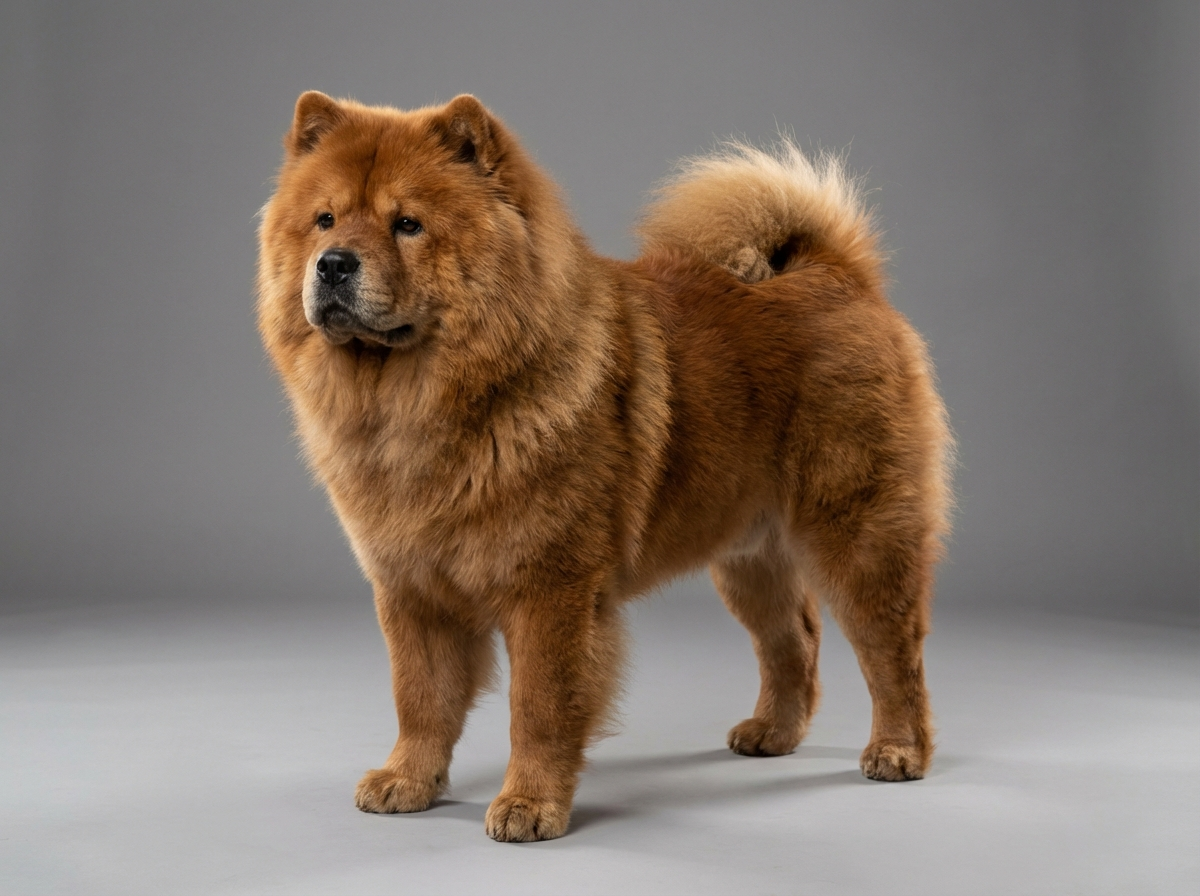
The Chow Chow's documented cataracts create a direct mechanical pathway to secondary glaucoma: a swollen or displaced lens can block the angle through which fluid normally drains from the eye, allowing pressure to build. The breed's small, deep-set eyes, framed by heavy brow and facial fur, also make early visual signs of pressure change harder for an owner to notice without a deliberate, close look.
Delay is the main environmental driver here, since owners who wait several days to see if a red or watery eye resolves on its own give sustained high pressure more time to damage the optic nerve before treatment begins.
Treat sudden squinting, a visibly red or cloudy eye, one eye appearing larger than the other, or apparent vision loss as a same-day emergency, not something to monitor overnight, since acute glaucoma can cause irreversible optic nerve damage within hours.
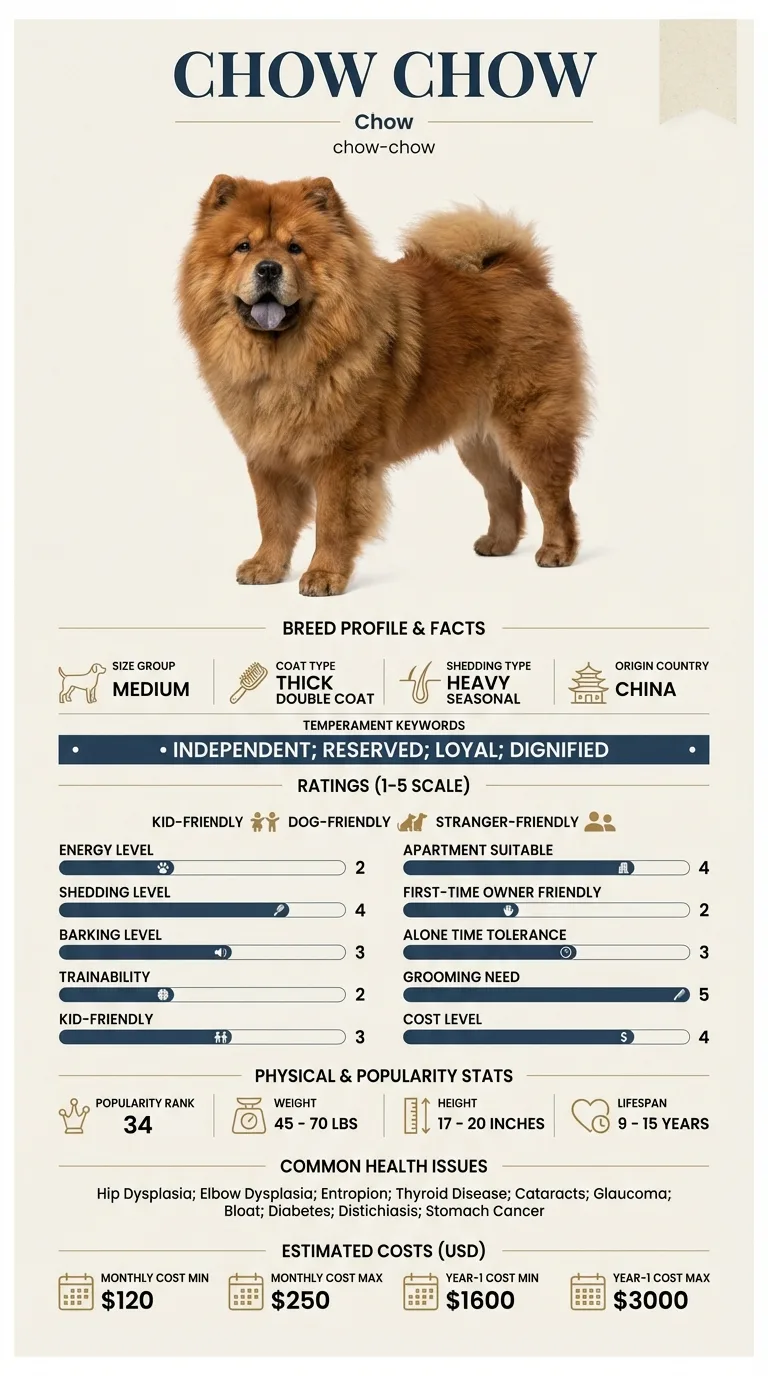
See all Chow Chow health problems, which breeds are prone to glaucoma, or the full Chow Chow breed guide for temperament, exercise needs and ownership costs.
Emergency pressure-lowering treatment typically begins working within hours, but the window to preserve vision is narrow, often described in terms of the first day of symptoms rather than days or weeks.
Success is controlled pressure and a comfortable, pain-free eye, even if some vision has already been lost by the time treatment starts, since full vision restoration is not typically possible once optic nerve damage has occurred.
None of these signs are exclusive to glaucoma, which is exactly the problem. They overlap with far less urgent conditions, so the only way to know actual eye pressure is a same-day measurement with a tonometer, not a guess based on how the eye looks.
Cataracts are documented in the Chow Chow, and a lens that has become cloudy or swollen can physically block the eye's normal drainage pathway, since fluid inside the eye needs to flow past the lens to exit properly. When that pathway narrows or closes, pressure builds behind it, producing secondary glaucoma. This is different from primary glaucoma, which stems from an inherited drainage angle abnormality present from birth rather than developing as a consequence of another eye disease.
This connection matters practically: a Chow Chow already diagnosed with cataracts is not just managing reduced vision, he is carrying an ongoing risk that needs monitoring even after the cataract diagnosis itself feels settled. Regular pressure checks during routine eye rechecks catch this transition before it becomes a crisis.

If you think your Chow has glaucoma, the plan is three steps: write down what you have seen and when it started, book a veterinary appointment rather than waiting for the next flare, and take video of the behaviour or symptom before you go — the thing you are worried about rarely happens in the consulting room. Screening in the parents covers hip dysplasia, elbow dysplasia, entropion.
What the vet visit should produce is a diagnosis and a written plan, not just reassurance: what is being ruled out, what the monitoring interval is, and which signs mean you come back sooner. Ask what the treatment costs across a year rather than per visit, because that is the number that decides whether you are managing this condition or reacting to it.
Between appointments, keep a short log — dates, what you saw, what changed. It is the single most useful thing an owner brings to a follow-up, and for glaucoma it is often what separates a clear pattern from a guess.
Duke had been diagnosed with cataracts in both eyes the previous year, and his owner Felix had grown used to periodic rechecks that mostly confirmed slow, expected progression. One morning Duke's right eye looked a little redder than usual and he squinted more than normal light seemed to justify, but he was eating and acting otherwise fine, so Felix planned to wait and see how it looked that evening. A reminder from Duke's eye specialist's office about an unrelated recheck happened to fall that same afternoon, and the vet measured pressure in the right eye at a level far above normal. Duke was started on emergency pressure-lowering treatment within the hour. His vision in that eye was already partially affected by the time treatment began, but the remaining vision and the eye's comfort were preserved with ongoing drops.
Key takeaway: A subtly red, squinting eye in a Chow Chow with existing cataracts is not a wait-and-see situation. The margin between manageable and permanently damaged is measured in hours, not days.
Acute glaucoma, with sudden significant pressure rise, is an emergency measured in hours because the optic nerve can suffer permanent damage quickly. Chronic, slowly rising pressure is more gradual but still needs prompt attention once identified.
Yes, this is one of the more common routes to secondary glaucoma in dogs generally, since a cataract-affected lens can block the eye's fluid drainage pathway, and cataracts are specifically documented in the Chow Chow.
With a tonometer, a device that measures pressure inside the eye directly. This is a quick, non-invasive test performed at a vet clinic and is the only reliable way to distinguish glaucoma from other causes of a red or painful eye.
No, it is managed rather than cured. Treatment aims to lower pressure and preserve remaining vision or manage pain, but any vision already lost to optic nerve damage generally does not return.
Sustained high pressure damages the optic nerve and can cause permanent blindness in the affected eye within as little as a day or two, along with significant ongoing pain.
Yes, often significantly so, even though dogs frequently mask pain well. Reduced appetite, withdrawal or reluctance to be touched near the face can be signs of discomfort beyond the visible eye changes.
Yes. Whether the cause is primary or secondary, the fellow eye is often at elevated risk and should be monitored closely going forward, sometimes with preventive treatment.
A sudden red, cloudy or visibly larger eye combined with squinting warrants a same-day vet visit rather than a wait-and-see approach.
Emergency treatment to lower pressure plus ongoing eye drops can run several hundred to over a thousand dollars depending on severity and whether surgery is needed.
Not entirely, but regular pressure checks during cataract follow-up appointments can catch the shift toward secondary glaucoma before it becomes an emergency.
Vision loss in the affected eye is common once pressure has caused optic nerve damage, though prompt treatment can sometimes preserve some vision if caught early.
You generally cannot reliably tell from home, since both can cause redness and discomfort. Any red, painful or cloudy eye needs a same-day vet check to measure actual pressure.
A one-page prep sheet for this condition: the signs, the questions to ask, what to get priced. Unlocks here.
You get: Vet visit prep sheet
No spam. One-click unsubscribe. See our privacy policy.
Preview page 1 before you decide.