Health
What is the first sign in this breed?
Often smell rather than sight. A sour or yeasty odour from a coat that looks normal usually means the skin underneath is already inflamed.

Quick answer
What is the first sign in this breed?
Often smell rather than sight. A sour or yeasty odour from a coat that looks normal usually means the skin underneath is already inflamed.
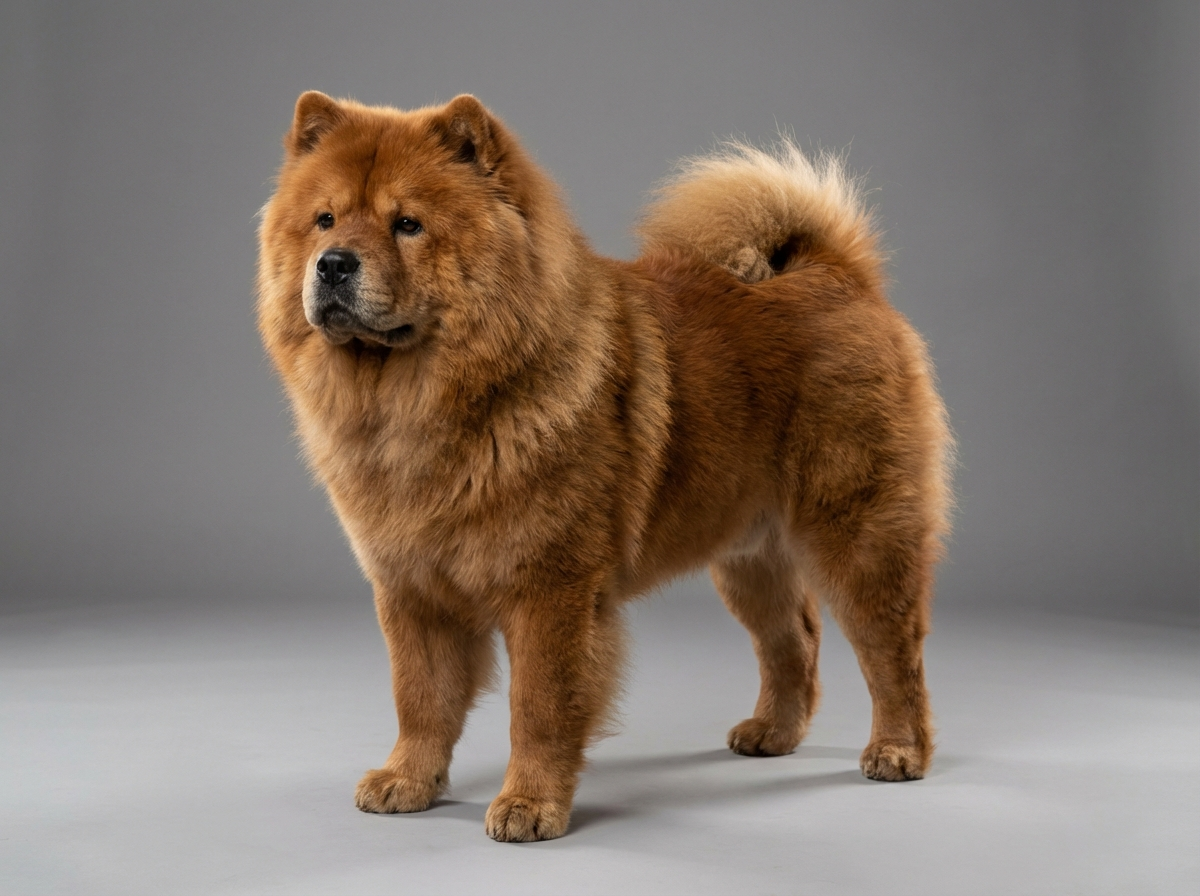
The itch is rarely what brings a Chow owner to the clinic. What brings them in is the smell - the sour, warm odour rising off a coat that looks perfectly fine from the outside, because a layer of damp, infected skin is sitting underneath it.
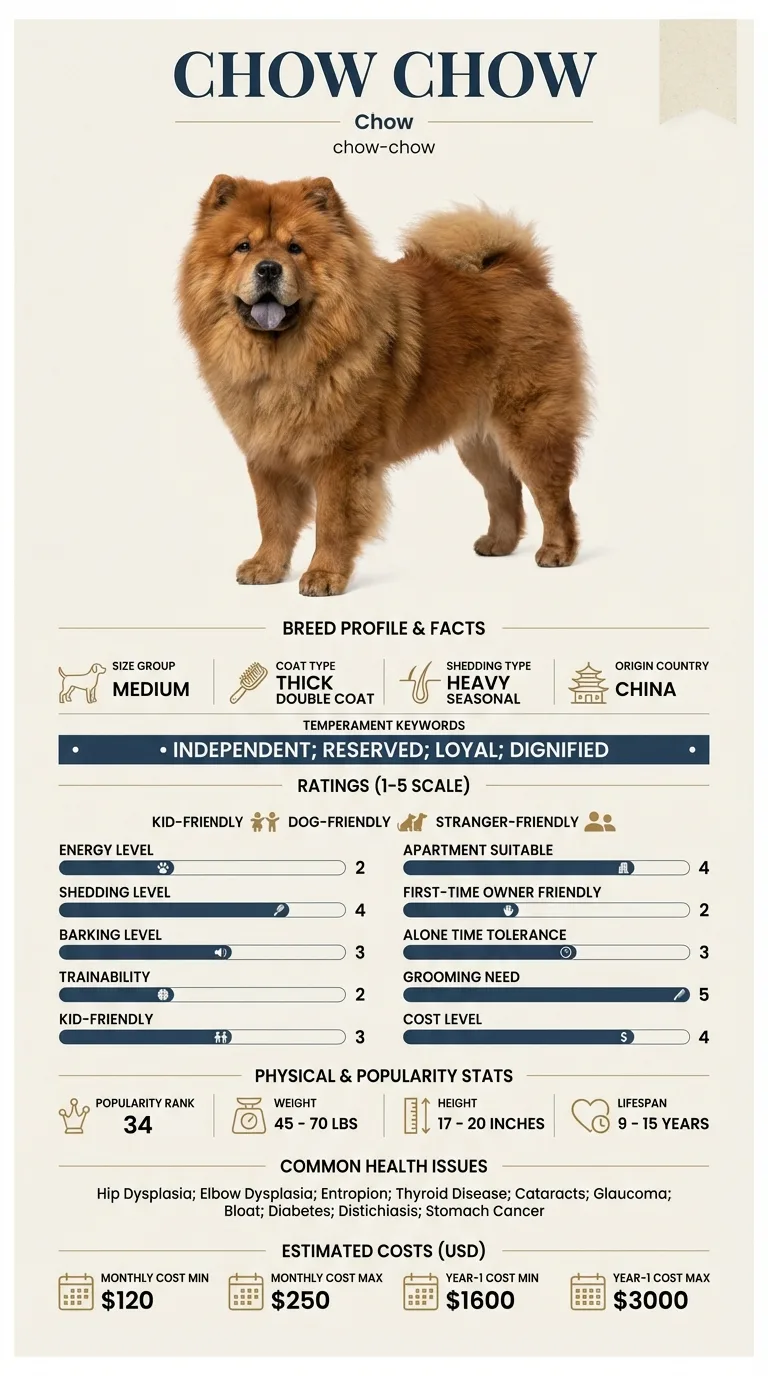
Owners who groom on a schedule tend to catch this early. Owners who groom when the coat looks untidy tend to catch it late, because a Chow's coat can look excellent while the skin beneath it is in trouble. It is also hard on households in humid climates and on anyone managing their first heavy-coated breed.
This guide is not medical advice. If your dog shows pain, sudden behavior change, or worsening symptoms, consult a licensed veterinarian.
Some links may be affiliate links. We may earn a commission at no extra cost to you. We only suggest products we believe are helpful for dog owners.
We research and check what we publish, but we do not warrant that any figure, date, price, or statement is accurate, complete, or current, and we accept no liability for any loss, cost, injury, or other harm arising from the use of this site. Use it as one reference among several. You remain responsible for your own decisions and for your dog's care - confirm anything that matters with a licensed veterinarian or another qualified professional before you act on it. Full disclaimer.
Chronic allergy shows up as itching, licking, recurrent ear disease and inflamed skin that flares and settles over months and years. In a Chow Chow it typically presents late and as an infection, because a thick moisture-holding undercoat conceals the early stages and then accelerates the bacterial and yeast overgrowth that follows.
Allergic skin disease is one of the most frequent reasons dogs of every breed are seen by a vet. Chow Chows are not singled out for it in the way they are for joint, eyelid and thyroid problems, but the breed's coat means that when it happens the case tends to be more advanced at diagnosis and harder to keep on top of afterwards.
The relevant breed feature is structural rather than immunological. A thick double coat with a heavy undercoat holds warmth and moisture against the skin, which suits a dog bred in northern China and works against a dog with a compromised skin barrier. The breed's heavy seasonal shedding produces felted undercoat that traps damp if it is not stripped out. Small ear openings under thick furnishings ventilate poorly. And documented thyroid disease in this breed can produce skin and coat changes that look like allergy and sometimes sit underneath it.
Humidity is the main external multiplier: warm damp air keeps the undercoat from drying and gives yeast a foothold. Homes with soft furnishings, carpet and infrequent vacuuming carry higher dust-mite loads. Inconsistent flea prevention matters more than owners expect, because a single bite is enough for a flea-allergic dog. Because Chow Chows need little exercise and are often mostly indoors, the household environment carries more weight for them than it would for a dog spending hours outdoors each day.
Book an appointment for any smell coming off the coat, hair loss, moist or crusted patches, head shaking, or itching that keeps the dog awake. Go the same day if you find a hot, painful, spreading wet patch, if the skin is ulcerated or bleeding, if there is a sudden foul discharge from an ear, or if your dog has become head-tilted, off balance or reluctant to have its head touched, since a ruptured eardrum or a deep ear infection is painful and needs prompt treatment. Do not use leftover ear drops from a previous episode without your vet checking the eardrum first.
See all Chow Chow health problems, which breeds are prone to allergies, or the full Chow Chow breed guide for temperament, exercise needs and ownership costs.
Clearing a secondary skin or ear infection usually takes three to six weeks of consistent treatment. Establishing whether food is involved takes an eight to twelve week elimination trial. Working out an environmental picture takes a full year, because you need to see the dog through every season before you know what is seasonal and what is constant.
A realistic good outcome is a dog that has one or two manageable flares a year instead of continuous disease, ears that stay clear between check-ups, and a coat you can part anywhere without finding damp inflamed skin. It is not a dog that never scratches. Judge progress by how quickly a flare is caught and settled, not by whether flares happen at all.
A Chow Chow's thick double coat is built for a cold northern Chinese winter. The outer guard coat sheds water and the undercoat holds warm air against the skin. That architecture works beautifully until the dog starts scratching and licking. Saliva and serum wet the undercoat, the undercoat holds that moisture against warm skin, and yeast and bacteria that live harmlessly on every dog get an environment they can multiply in.
This is why allergy in this breed so often arrives at the clinic as a secondary infection rather than as itching. By the time the owner notices, the primary allergy is only half the problem. Treating the infection without addressing the allergy means it returns; addressing the allergy without clearing the infection means the dog stays miserable through the wait.
The grooming requirement for this breed is at the maximum of the scale, and during a seasonal coat blow the shed undercoat mats into felted pads that trap moisture even more efficiently. An unbrushed Chow in a humid August is running an incubator on its own back.

Rather than scanning the whole dog, learn the handful of sites where allergic skin disease starts in a heavily coated breed and check those every week.
If you think your Chow has allergies, the plan is three steps: write down what you have seen and when it started, book a veterinary appointment rather than waiting for the next flare, and take video of the behaviour or symptom before you go — the thing you are worried about rarely happens in the consulting room. Screening in the parents covers hip dysplasia, elbow dysplasia, entropion.
What the vet visit should produce is a diagnosis and a written plan, not just reassurance: what is being ruled out, what the monitoring interval is, and which signs mean you come back sooner. Ask what the treatment costs across a year rather than per visit, because that is the number that decides whether you are managing this condition or reacting to it.
Between appointments, keep a short log — dates, what you saw, what changed. It is the single most useful thing an owner brings to a follow-up, and for allergies it is often what separates a clear pattern from a guess.
Mei, a four-year-old Chow, was booked in for a routine groom in early September. Her owner, Daniel, had not thought anything was wrong; she was eating normally and her coat looked full. The groomer stopped twenty minutes in and called him. Underneath the outer coat along both flanks the undercoat had felted into dense pads, and beneath those the skin was pink, damp and sore. Mei had been quietly licking her sides for weeks and Daniel had never seen it happen, because she did it in the evening while lying against the sofa. Her vet treated the infection first, then started an eight-week diet trial. The infection cleared in a month. The trial was inconclusive, which was disappointing but useful, and Mei was worked up for environmental allergy instead. Daniel now rakes her coat out twice a week and knows exactly which four places to check.
Key takeaway: On this breed the coat is not a bystander. A Chow can look immaculate on the surface while the skin underneath is weeks into an infection, so allergy management here starts with a brush that actually reaches the skin.
Allergy is not among the conditions most consistently flagged for this breed - hip and elbow dysplasia, eyelid problems, thyroid disease and eye conditions carry more weight. But when a Chow does become allergic, the coat makes the consequences worse and the detection slower, so it deserves the same attention as a breed-linked condition.
That is a decision for your vet in a specific case, not a general strategy. Clipping the affected area to let air and medicated shampoo reach the skin is sometimes genuinely necessary; shaving the whole dog removes insulation from a breed that already struggles with heat. Discuss a partial clip rather than a full one.
A properly run elimination diet takes eight to twelve weeks with absolutely nothing else passing the dog's lips. Most trials fail on a family member giving a treat, not on the diet. Agree the rules with everyone in the house before you start, or you will spend three months learning nothing.
Recurrent ear infection is usually a symptom, not the disease. If a Chow's ears flare repeatedly, the underlying driver is often an allergy or, given that thyroid disease is documented in this breed, a hormonal one. Ask your vet what is being treated as the cause, not just what is being put in the ear.
Bathing helps if the dog is dried properly and hurts if it is not. A Chow's undercoat can stay damp for many hours after a bath. Budget real drying time with a stand dryer or a long towel-and-air routine, because a wet undercoat left to its own devices is exactly the environment you are trying to prevent.
No. Atopic disease is managed for life, and the goal is a dog that is comfortable most of the time with occasional flares, not a dog that never itches. Owners who accept that early tend to do better than owners who keep switching treatments looking for a permanent fix.
Often smell rather than sight. A sour or yeasty odour from a coat that looks normal usually means the skin underneath is already inflamed.
Daily during a coat blow, and several times a week otherwise, working right down to the skin rather than over the surface.
They can reduce indoor dust-mite and pollen load, which helps some dogs modestly. They are a supporting measure, never a substitute for treating the skin.
Ongoing skin cases sit among the higher recurring expenses in a breed already rated as expensive to keep, mainly through repeat consultations, medicated shampoos and diet.
A one-page prep sheet for this condition: the signs, the questions to ask, what to get priced. Unlocks here.
You get: Vet visit prep sheet
No spam. One-click unsubscribe. See our privacy policy.
Preview page 1 before you decide.