Behavior
How can I prevent Miniature Schnauzer ear infections?
Keep your Miniature Schnauzer's ears dry and clean by using a vet-recommended ear cleaner regularly.

Quick answer
How can I prevent Miniature Schnauzer ear infections?
Keep your Miniature Schnauzer's ears dry and clean by using a vet-recommended ear cleaner regularly.
Miniature Schnauzer ear infections can be a persistent issue for many owners. These infections can cause discomfort and lead to more serious health problems if left untreated.
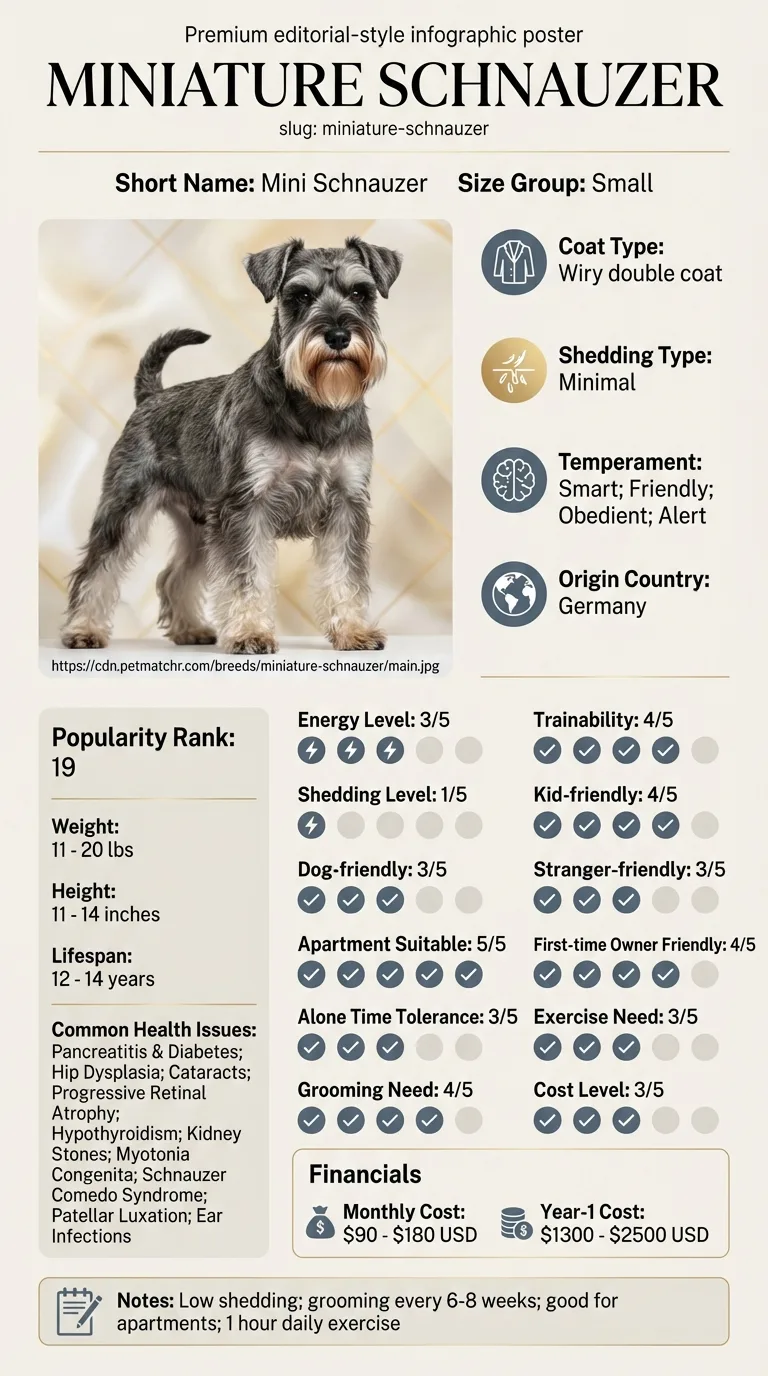
Owners who notice their Miniature Schnauzers shaking their heads, scratching at their ears, or showing signs of discomfort often find themselves struggling with this issue. First-time dog owners or busy families may feel overwhelmed by the necessary care and maintenance to prevent these infections.
This guide is not medical advice. If your dog shows pain, sudden behavior change, or worsening symptoms, consult a licensed veterinarian.
Some links may be affiliate links. We may earn a commission at no extra cost to you. We only suggest products we believe are helpful for dog owners.
We research and check what we publish, but we do not warrant that any figure, date, price, or statement is accurate, complete, or current, and we accept no liability for any loss, cost, injury, or other harm arising from the use of this site. Use it as one reference among several. You remain responsible for your own decisions and for your dog's care - confirm anything that matters with a licensed veterinarian or another qualified professional before you act on it. Full disclaimer.
Check this first
Red-flag signs that indicate an emergency include: persistent shaking of the head, excessive scratching at the ears, or if you notice a strong odor coming from the ear. Additionally, if your dog shows signs of pain, such as whining or reluctance to let you touch their ears, you should seek veterinary care right away.
Mild cases that can be monitored include occasional scratching or slight redness in the ear. If you see these symptoms, you can start with gentle cleaning and keep an eye on their behavior. Make sure to consult your vet for a proper cleaning technique and see if a follow-up is necessary.
Remember, it’s better to be safe than sorry. If you are ever in doubt about your Miniature Schnauzer’s health, calling your vet for advice is a smart choice.
If any of these apply, call your vet or an emergency clinic now. The rest of this page is for the cases that are not an emergency.
Miniature Schnauzer ear infections are a common issue that can cause discomfort and pain for your dog. These infections often manifest as scratching at the ears, shaking the head, or a foul odor coming from the ear canal. If left untreated, they can lead to more serious health concerns and affect your Schnauzer's overall well-being.
Ear infections are quite common in Miniature Schnauzers, with many owners reporting at least one episode in their dog's lifetime. Due to their ear structure and grooming needs, these infections can occur more frequently than in other breeds.
Miniature Schnauzers are prone to ear infections due to their ear structure. Their floppy ears can trap moisture and debris, creating an ideal environment for bacteria and yeast. Additionally, their wiry double coat can lead to excess earwax buildup, which can further complicate things.
Environmental factors play a significant role as well. Allergens in the home, like dust or pollen, can irritate the ears. If your Miniature Schnauzer is frequently in water or has exposure to damp conditions, this can increase the risk of ear infections.
If your dog's ear infections are frequent or do not improve with at-home care, it's time to see a vet. Persistent infections may require prescription medication or further evaluation to rule out underlying health issues.
Avoiding these common mistakes can help improve your Miniature Schnauzer's ear infections. Here are some behaviors to reconsider.
Start here: Miniature Schnauzer Most Common Genetic Disorders: Screening
See all Miniature Schnauzer health problems, which breeds are prone to ear infections, or the full Miniature Schnauzer breed guide for temperament, exercise needs and ownership costs.
With consistent care and attention, you can see improvements in your Miniature Schnauzer's ear health within 4 to 8 weeks. Long-term management may take several months, depending on the severity of the infections.
Success means your Miniature Schnauzer experiences fewer ear infections, shows no signs of discomfort, and maintains healthy ears. You'll also notice a decrease in scratching or shaking their head.
Emily, a busy nurse from Atlanta, struggled with her Miniature Schnauzer Bella's recurring ear infections. At first, Emily felt overwhelmed; she tried home remedies but only saw temporary relief. After consulting a vet, she learned that regular cleaning and a specific diet could help. With a dedicated routine and some training to keep Bella calm during ear cleaning, Emily noticed significant improvements over a few months. Bella now enjoys her walks and playtime without constant ear discomfort.
Key takeaway: Consistency is key. Regular ear care and professional guidance can greatly reduce the frequency of Miniature Schnauzer ear infections.
Miniature Schnauzers can develop ear infections due to factors like moisture, allergens, or excess wax buildup. Their floppy ears can trap moisture, creating an ideal environment for bacteria or yeast. Regular ear cleaning and monitoring can help prevent these issues.
To stop Miniature Schnauzer ear infections, establish a regular ear cleaning routine. Use a vet-recommended cleaner and gently wipe the ear canal to remove debris. Consult your vet if infections persist or if your dog shows signs of discomfort.
Signs of ear infections in Miniature Schnauzers include frequent shaking of the head, scratching at the ears, unpleasant odors, and redness inside the ear canal. If you notice these symptoms, it's best to visit your vet for an evaluation.
Yes, diet can impact ear health. Some dogs may develop allergies to certain ingredients, leading to ear infections. A vet can help determine if a dietary change is necessary to help reduce your dog's risk of infections.
For Miniature Schnauzers, cleaning their ears every 1-2 weeks is recommended. However, if they’re prone to infections, you may need to clean them more often. Always follow your vet's advice for the best cleaning schedule.
Treatments for ear infections in Miniature Schnauzers typically include prescription ear drops or oral medications. Your vet will identify the cause of the infection and recommend the appropriate treatment based on your dog's specific needs.
Miniature Schnauzers can get ear infections due to allergies, moisture, or wax buildup. Their unique ear structure makes them more prone to these issues, especially if they're frequently in humid environments.
To prevent Miniature Schnauzer ear infections, keep their ears clean and dry. Regular grooming and checking for moisture or debris can help, along with ensuring they have a healthy diet to minimize allergies.
If your Miniature Schnauzer is frequently shaking their head, scratching at their ears, or has a bad smell coming from them, it's time to visit the vet. Chronic infections can lead to serious complications if not treated promptly.
Yes, older Miniature Schnauzers may be more susceptible to ear infections due to changes in their immune system and ear structure. Regular vet check-ups can help catch these issues early.
Treatments for Miniature Schnauzer ear infections typically include medicated ear drops prescribed by a vet. It's crucial to follow the vet's instructions and ensure the full course of treatment is completed for the best results.
Keep your Miniature Schnauzer's ears dry and clean by using a vet-recommended ear cleaner regularly.
Visit your vet for a proper diagnosis and treatment plan if you suspect an ear infection.
Yes, regular grooming helps prevent ear infections by reducing wax buildup and debris in the ear canal.
Yes, they are one of the common health issues for this breed due to their ear structure.
Keep their ears dry, clean regularly, and monitor for signs of infection to prevent issues.
A one-page prep sheet for this condition: the signs, the questions to ask, what to get priced. Unlocks here.
You get: Vet visit prep sheet
No spam. One-click unsubscribe. See our privacy policy.
Preview page 1 before you decide.