Health
What counts as exercise intolerance in this breed?
A change from the dog's own established baseline: shorter distance tolerated, longer recovery time, or new reluctance to start moving.

Quick answer
What counts as exercise intolerance in this breed?
A change from the dog's own established baseline: shorter distance tolerated, longer recovery time, or new reluctance to start moving.
A Chihuahua who stops halfway through a walk it used to finish easily is not getting lazy. At this breed's baseline activity level, a real drop in stamina is one of the few reliable early warnings something has changed physically.
Owners of middle-aged and older dogs who attribute slowing down entirely to normal aging, and owners who have never established what their dog's actual baseline stamina looks like, so a real decline has nothing to be compared against.
This guide is not medical advice. If your dog shows pain, sudden behavior change, or worsening symptoms, consult a licensed veterinarian.
Some links may be affiliate links. We may earn a commission at no extra cost to you. We only suggest products we believe are helpful for dog owners.
Exercise intolerance is a gradual reduction in a dog's ability to sustain activity it previously managed easily, distinct from sudden collapse. In a breed whose baseline exercise need is already rated low, this decline is easy to miss because the dog's normal routine was never demanding to begin with. It is frequently the earliest visible sign of a developing heart or airway condition, both documented in this breed, or of weight gain adding load to an already limited system.
Reduced activity tolerance is a commonly reported concern in older dogs of this breed, though it is inconsistently investigated because a low baseline activity level makes changes subtle and easy to attribute to personality or age rather than to an emerging medical cause.
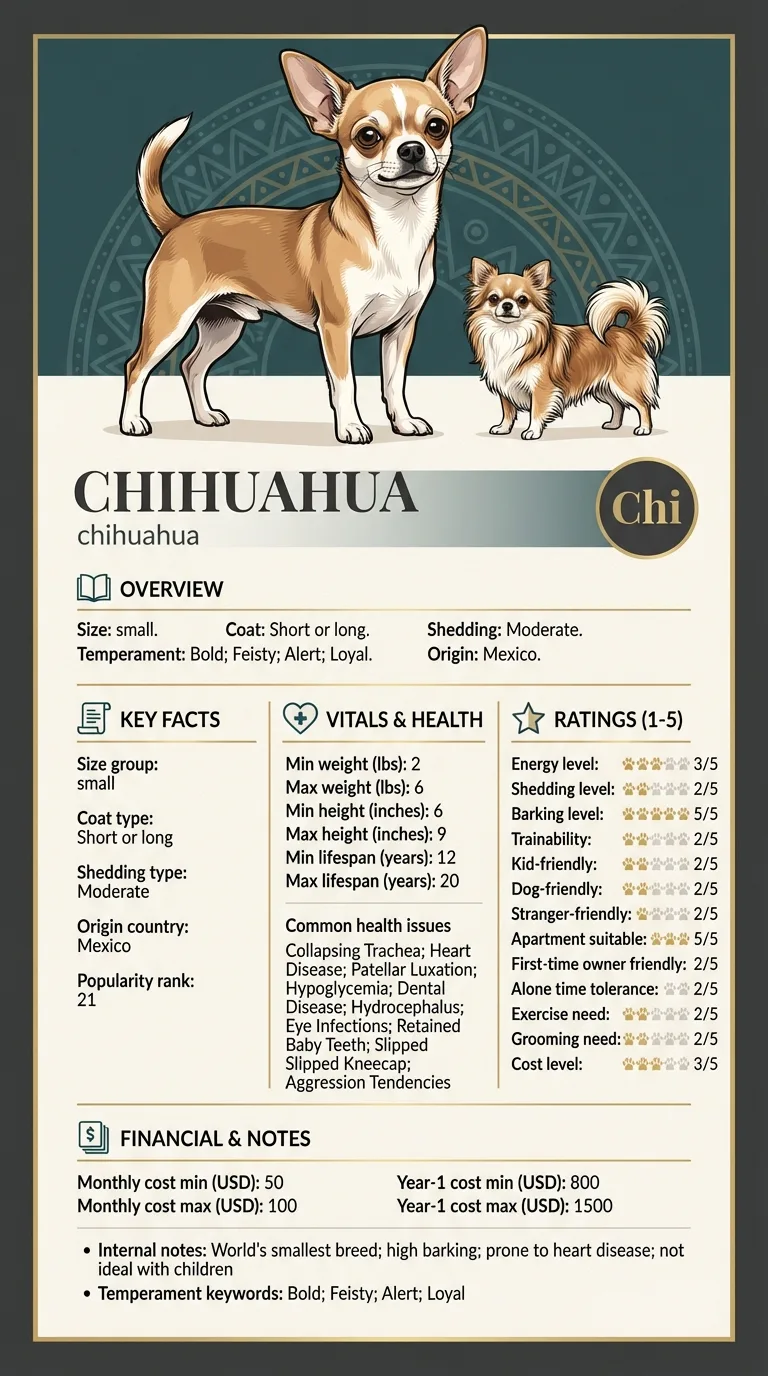
This breed's exercise need is rated low, meaning owners rarely have a demanding baseline to compare against when stamina begins to drop. Heart disease and collapsing trachea, both documented in this breed, tend to be well compensated at rest and only reveal themselves under the increased demand of exertion, which makes exercise tolerance one of the most sensitive early indicators available for either condition.
Warm weather reduces exercise tolerance in this breed regardless of underlying health, given its minimal thermal buffer. Gradual weight gain, easy to miss on a small frame, adds proportional strain to the heart and joints over time. A household that has quietly reduced walk length and distance to match a dog's declining stamina, without noticing the pattern, can also mask how much has actually changed.
Book an appointment for any noticeable, sustained drop in exercise tolerance, particularly if it has occurred over weeks rather than years, so heart and airway causes can be ruled in or out through a physical exam and appropriate follow-up testing. Seek same-day care if reduced tolerance is accompanied by fainting, blue or pale gums, persistent coughing, or labored breathing at rest.
See all Chihuahua health problems, which breeds are prone to exercise intolerance, or the full Chihuahua breed guide for temperament, exercise needs and ownership costs.
If the cause is weight, modest improvement in stamina can appear within a few weeks of measured feeding, with fuller improvement over several months alongside gradual weight loss. If the cause is a diagnosed heart or airway condition, expect ongoing management rather than a return to unrestricted activity, with the goal being stability at a safe level rather than reversal.
Success is a dog whose activity tolerance is stable and predictable for its diagnosed condition and current fitness, with no further unexplained decline. It does not necessarily mean returning to a level of activity from years earlier, especially for a dog managing a genuine cardiac or airway diagnosis.
Exercise intolerance is a gradual, chronic pattern rather than a single dramatic event. It looks like a dog who used to walk two blocks now stopping and sitting after one, who pants harder and longer than before for the same distance, who wants to be carried partway through a walk they used to finish on their own feet, or who seems reluctant to start moving at all. It is easy to mistake for simple aging or for a dog who has always been a light walker having an off day, and that is exactly why it gets missed for months.
The distinction matters because this pattern is frequently the first visible sign of a condition that is otherwise silent at rest. Early heart disease, a documented issue in this breed, often shows no obvious signs when the dog is resting quietly on the sofa; it shows up first as reduced tolerance for exertion, because that is the moment the heart's compensations are actually being tested. The same is true of an emerging collapsing trachea, where mild airway narrowing may produce nothing more than reduced enthusiasm for exercise before it produces an audible honking cough.
Body condition plays a role too. Extra weight, even a small amount on a frame with such a narrow healthy range, adds a proportionally large load to both the heart and any joint already prone to instability, which independently reduces stamina. Separating a weight problem from a developing medical condition, or recognizing when both are happening together, is exactly the kind of judgment a vet visit settles far faster than months of guessing at home.

Because the baseline is already low-effort, tracking specifics beats relying on impression.
If you think your Chi has exercise intolerance, the plan is three steps: write down what you have seen and when it started, book a veterinary appointment rather than waiting for the next flare, and take video of the behaviour or symptom before you go — the thing you are worried about rarely happens in the consulting room. Screening in the parents covers collapsing trachea, heart disease, patellar luxation.
What the vet visit should produce is a diagnosis and a written plan, not just reassurance: what is being ruled out, what the monitoring interval is, and which signs mean you come back sooner. Ask what the treatment costs across a year rather than per visit, because that is the number that decides whether you are managing this condition or reacting to it.
Between appointments, keep a short log — dates, what you saw, what changed. It is the single most useful thing an owner brings to a follow-up, and for exercise intolerance it is often what separates a clear pattern from a guess.
Flaca's owner Renata had quietly shortened their evening walk three times over about four months, each time telling herself Flaca was just getting older and preferred the shorter route. At eleven years old, that explanation seemed reasonable enough not to question. A routine annual exam included a stethoscope check that picked up a soft heart murmur that had not been there at the previous visit. Renata mentioned, almost as an aside, that Flaca seemed to tire faster on walks lately. That detail was what moved the visit from a note-and-monitor plan to an echocardiogram, which showed early mitral valve changes consistent with documented heart disease in this breed. With a medication plan and a walk length matched to what Flaca could actually manage rather than gradually retreated from, her energy on the shortened route improved within a few weeks. Renata's regret was specific: she had been tracking the shrinking walk distance in her head the whole time and had still filed it under normal aging rather than mentioning it as a symptom.
Key takeaway: A walk that keeps quietly getting shorter is data, not a preference. In a breed whose activity needs are already modest, that kind of gradual retreat is one of the clearest early signals available, and it is worth saying out loud at the next vet visit rather than adapting around silently.
A naturally low-energy dog has a consistent, stable baseline: the same modest walk, done the same way, week after week. Exercise intolerance is a change from that baseline, a dog doing noticeably less than it used to, or recovering more slowly than it used to, for the same activity.
Age-related slowing is real and gradual, but it should still be gradual and proportionate. A sharper or faster decline, especially over weeks rather than years, deserves a veterinary check to rule out heart, airway or weight-related causes before being attributed to age alone.
No. A low rated exercise need means short activity is usually sufficient, not that activity should be skipped. Regular, modest movement helps maintain joint health, weight and cardiovascular fitness, all of which matter for a breed with documented risks in each area.
Typically a physical exam listening for a heart murmur or abnormal tracheal sounds, a weight and body condition check, and bloodwork. Depending on findings, imaging such as chest radiographs or an echocardiogram may follow if a cardiac or respiratory cause is suspected.
Yes, and it is a very typical pattern for early heart or airway disease specifically, since these conditions are often compensated well enough at rest to produce no visible signs until demand increases during exertion.
Occasionally, for a known and managed condition, it can be reasonable. As a new or increasing habit in a dog who previously walked the same route unaided, it is a signal worth mentioning to your vet rather than simply adopting as the new normal.
A change from the dog's own established baseline: shorter distance tolerated, longer recovery time, or new reluctance to start moving.
This breed's baseline exercise need is low, so modest effort is normal. A new or worsening drop from that baseline is not.
Early heart disease and collapsing trachea are the two most common documented causes, alongside excess weight adding load to both.
Short, regular activity is generally enough given this breed's low exercise need rating, but consistency matters more than duration.
A one-page prep sheet for this condition: the signs, the questions to ask, what to get priced. Unlocks here.
You get: Vet visit prep sheet
No spam. One-click unsubscribe. See our privacy policy.
Preview page 1 before you decide.