Health
What's the quickest way to check my Brittany for hidden skin irritation?
Run your hands through the coat weekly, not just look at it, since redness and scabs under a wavy coat are easy to miss visually.

Quick answer
What's the quickest way to check my Brittany for hidden skin irritation?
Run your hands through the coat weekly, not just look at it, since redness and scabs under a wavy coat are easy to miss visually.
It is rarely one dramatic symptom. It is a slow accumulation of small signs that owners often dismiss individually until they add up.

Owners of an otherwise healthy, active Brittany are often blindsided by allergies because the dog looks fine in every other way. It is especially frustrating for first-time owners who expect a clear diagnosis and a quick fix, rather than the trial-and-error process allergy management actually requires.
This guide is not medical advice. If your dog shows pain, sudden behavior change, or worsening symptoms, consult a licensed veterinarian.
Some links may be affiliate links. We may earn a commission at no extra cost to you. We only suggest products we believe are helpful for dog owners.
We research and check what we publish, but we do not warrant that any figure, date, price, or statement is accurate, complete, or current, and we accept no liability for any loss, cost, injury, or other harm arising from the use of this site. Use it as one reference among several. You remain responsible for your own decisions and for your dog's care - confirm anything that matters with a licensed veterinarian or another qualified professional before you act on it. Full disclaimer.
Allergies are one of the documented health concerns for this breed, and they rarely announce themselves loudly. Most Brittanys show a slow build of paw licking, face rubbing, and subtle coat changes rather than one dramatic flare, which means the problem is often well established by the time an owner brings it up with a vet.
Allergies appear consistently enough on documented health lists for this breed that most Brittany owners should expect at least mild symptoms at some point, even if a small share of dogs never develop anything beyond an occasional itchy week.
Allergic disease is listed among this breed's documented health concerns, reflecting an immune system that reacts more readily to substances a less sensitive dog would tolerate without issue. This isn't unique to Brittanys, but it is common enough in the breed to warrant proactive attention rather than a wait-and-see approach.
A Brittany's active, outdoor lifestyle means more exposure to pollen, grasses, and seasonal allergens than a dog kept mostly indoors. Homes with carpeting, forced-air heating that circulates dust, or infrequent laundering of dog bedding can also raise the background allergen load a sensitive dog is dealing with at any given time.
Bring your Brittany in if scratching or licking is constant rather than occasional, if you see open sores, hair loss, or a change in skin color, or if symptoms return quickly after each round of treatment. A vet can also guide you through allergy testing or a proper elimination diet rather than guessing at triggers on your own.
See all Brittany health problems, which breeds are prone to allergies, or the full Brittany breed guide for temperament, exercise needs and ownership costs.
Expect several weeks to see meaningful change from any new plan, whether that's a food trial or a new bathing routine. Allergy management is rarely a one-visit fix; most owners land on a workable routine only after a season or two of adjustment.
Success looks like fewer and shorter flare-ups, not zero symptoms ever again. A well-managed allergic Brittany still has occasional itchy days, especially during high-pollen weeks, but the baseline discomfort is low and manageable.
The two get lumped together as 'allergies' but they behave differently and call for different management, so figuring out which one (or both) your Brittany has changes the whole plan.
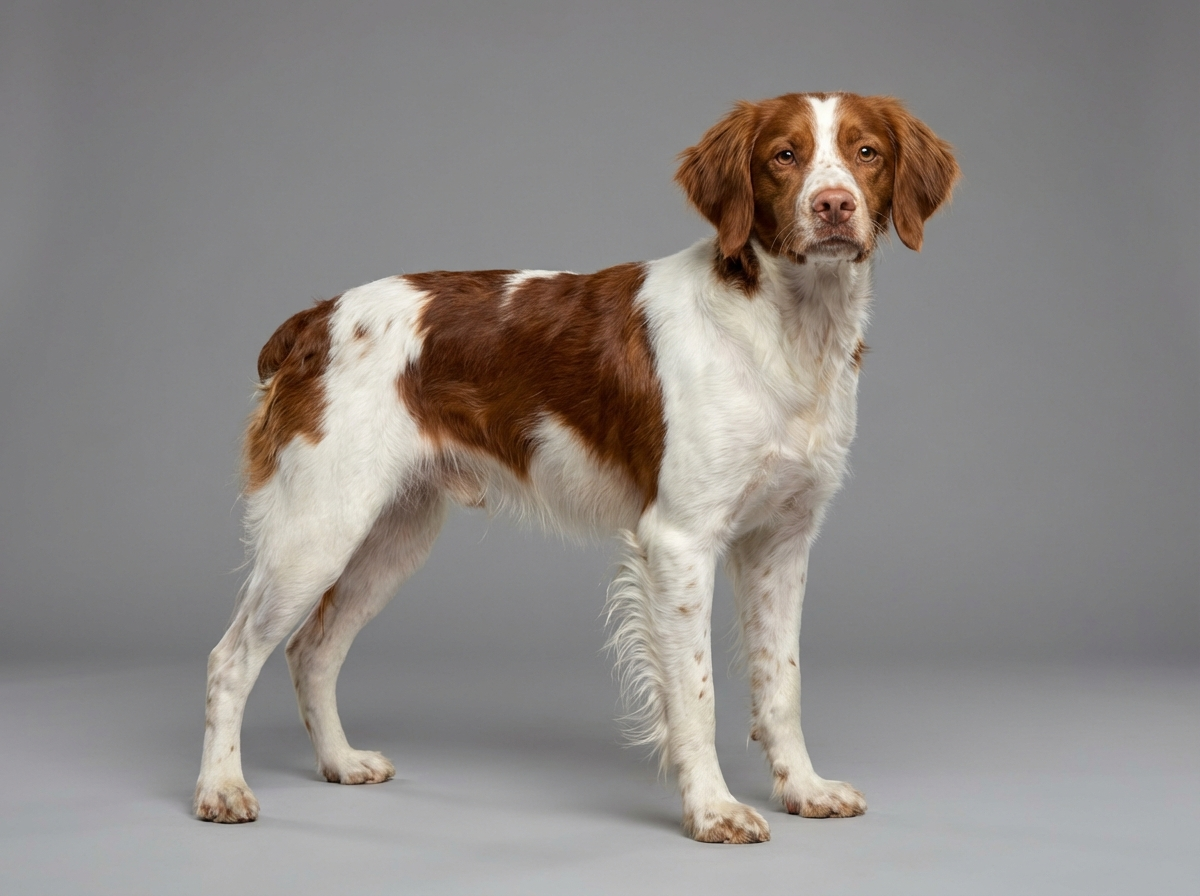
A Brittany's medium, wavy coat with moderate shedding hides early skin changes better than a short, tight-coated breed would. Redness, small scabs, or thinning patches can sit under the coat for weeks before an owner runs a hand over the area and actually feels the difference.
By the time it's visible without parting the coat, the skin has usually been inflamed long enough that a simple bath won't resolve it on its own. Regular hands-on checks, not just visual glances, are what actually catch this early in a Brittany specifically.

Priya almost didn't mention Ruger's paw licking at his annual checkup, since it seemed minor and he was otherwise thriving at four years old. Her vet asked her to part his coat along the belly and inner thighs, and they found faint redness and a few small scabs Priya hadn't noticed under his wavy coat. A closer history revealed the licking had actually started nearly a year earlier and had just slowly gotten more frequent. They started with flea prevention and a hypoallergenic shampoo, which helped some but not fully, so Priya committed to a strict novel-protein food trial. By week ten, the improvement was clear enough that reintroducing his old food brought symptoms back within days, confirming a food component alongside a milder environmental sensitivity. Ruger now stays on the new diet permanently and gets a seasonal boost in bathing frequency each spring.
Key takeaway: Allergy symptoms build slowly enough that owners often underestimate how long they've been present. A proper elimination trial, run the full length, is what actually separates food triggers from environmental ones.
Paw licking or chewing, rubbing the face on furniture or carpet, and a coat that looks duller or slightly greasy are usually the earliest signs, often before any obvious redness appears.
Allergies broadly are a documented concern for the breed, and food sensitivity is one common form. A true food allergy usually needs a supervised elimination diet to confirm, since symptoms alone can't reliably distinguish it from environmental causes.
Most vets recommend 8 to 12 weeks on a strict novel-protein or hydrolyzed diet before drawing conclusions. Stopping early because symptoms haven't improved by week four is the most common reason these trials fail.
Environmental allergies are typically managed rather than cured, since the underlying immune sensitivity doesn't go away. Food allergies can be effectively controlled long-term once the trigger ingredient is identified and avoided consistently.
Yes, allergic skin inflammation often extends into the ear canal and is one of the most common reasons Brittanys develop recurring ear infections. If ears are a bigger concern than skin, our dedicated ear infection guide covers that in more depth.
For most dogs with pollen-driven allergies, spring and fall tend to be the roughest stretches, though dust and mold sensitivity can cause year-round symptoms indoors regardless of season.
No. Frequent food switching actually makes it harder to identify a true food trigger, since you lose the ability to track which change caused which reaction. Stick with one diet plan for the length of a proper trial.
Not inherently. Most food allergies in dogs involve a protein source like chicken or beef rather than grains, so switching to grain-free without identifying the actual trigger rarely solves the problem on its own.
The early signs are set out in the sections above, and they are the reason to book a veterinary appointment rather than wait. Allergies in Brittanys is diagnosed by a vet, not from a symptom list, and the sooner it is on record the more options remain open.
The early signs are set out in the sections above, and they are the reason to book a veterinary appointment rather than wait. Allergies in Brittany Spaniels is diagnosed by a vet, not from a symptom list, and the sooner it is on record the more options remain open.
Run your hands through the coat weekly, not just look at it, since redness and scabs under a wavy coat are easy to miss visually.
A vet-recommended medicated or hypoallergenic shampoo every one to two weeks during a flare-up is common, though over-bathing can dry the skin further, so follow your vet's specific guidance.
Prescription or novel-protein diets typically run higher than standard commercial food, and a full diagnostic workup for allergies can add a few hundred dollars if allergy testing is involved.
Redirecting the behavior helps a little, but it does not address the underlying itch. Behavioral redirection works best alongside medical management, not as a replacement for it.
Many dogs see allergies worsen or broaden in triggers through early middle age before leveling off, which is why early identification of a management routine pays off over the dog's lifetime.
A one-page prep sheet for this condition: the signs, the questions to ask, what to get priced. Unlocks here.
You get: Vet visit prep sheet
No spam. One-click unsubscribe. See our privacy policy.
Preview page 1 before you decide.