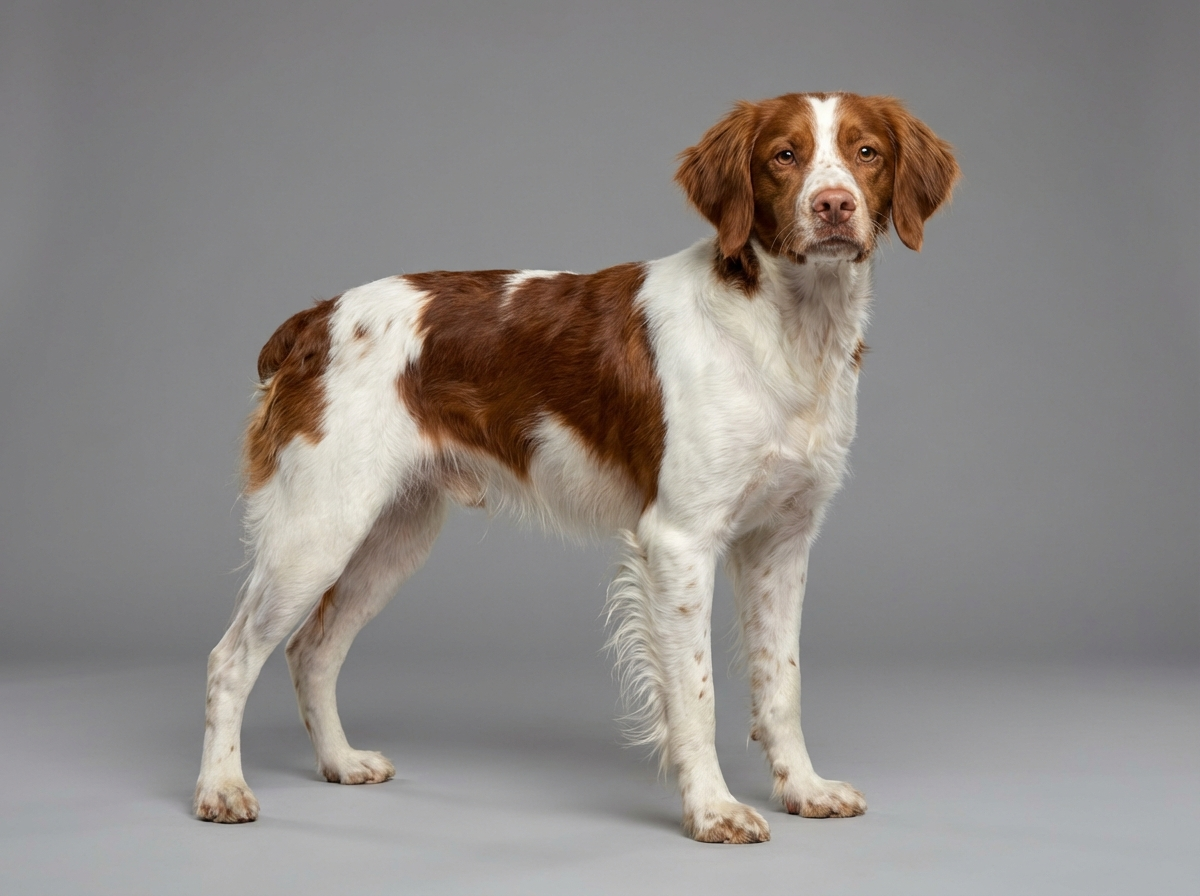
Costs
Brittany cost in Omaha
About $72–$138/month, $1,050–$1,880 for year one — below average, in a stable market with genuine pheasant hunting access nearby.

See Brittany price across all cities →
Quick answer
Brittany cost in Omaha
About $72–$138/month, $1,050–$1,880 for year one — below average, in a stable market with genuine pheasant hunting access nearby.
A Brittany Spaniel in Omaha costs about $72–$138 a month, with the first year around $1,050–$1,880 — below the national average, in a state with genuine pheasant hunting and a stable, moderate climate.

Chronic and acute risks both apply to this breed. Epilepsy and heart murmurs fall into the first category — manageable with monitoring once found. Bloat falls squarely into the second — a sudden emergency demanding immediate surgery.
These figures adjust the Brittany's typical national cost range down for Omaha's below-average, stable market, with a genuine four-season climate keeping seasonal costs reasonable.
Estimate · source: estimation · confidence: medium · updated 2026-09-05 · not a quote
| Item | Cost range |
|---|---|
One-time setup (initial vet visit, spay/neuter, gear) Covers the first exam, vaccinations, spay/neuter if needed, and basic gear — priced at Omaha's generally affordable rates. | $240 - $405 |
| Item | Cost range |
|---|---|
Food Below the national average, consistent with Nebraska's generally lower price level. | $33 - $53 |
Grooming The medium wavy coat needs regular brushing; most owners handle this at home without frequent professional grooming. | $7 - $14 |
Flea & tick prevention Clearly seasonal and moderate, consistent with Omaha's genuine four-season climate. | $8 - $16 |
Each range starts from a national baseline for this breed's size class and is then adjusted for local cost of living and veterinary pricing. The baselines, and the source each one came from, are listed on our sources page (dataset 2026.09). Two inputs, the purchase price and the emergency reserve, have no published national figure we could verify, so we leave them to you rather than invent them.
These are planning estimates, not quotes. Your own numbers will move with the individual dog, your vet and your insurer. Build a budget with your own figures.
For a Brittany in Omaha, insurance is especially worth taking seriously given the breed's documented epilepsy, heart murmur and bloat risk, even though the local vet market itself runs at a below-average, unremarkable level.
Buy the policy while the dog is healthy. This breed's epilepsy and heart-murmur rates are well-documented enough that waiting until symptoms appear usually means paying full price out of pocket instead.
For owners who'd rather self-insure, the key is having the reserve actually set aside and untouched — not just a hypothetical willingness to cover a bill if one comes up.
Omaha already starts from a low, stable cost base for this breed; the real lever remaining is using the state's genuine hunting access for this breed's anxiety management.
Nebraska maintains genuine pheasant hunting seasons, particularly across the state's western and central regions, and a Brittany's versatile pointing instincts find real purpose there, a useful outlet for this breed's documented separation-anxiety tendency for an owner willing to make the drive.
Omaha's broader regional economy, historically anchored by insurance, agriculture and, more recently, a diversified corporate base, has helped keep the city's overall price level notably stable rather than subject to the sharper swings a more volatile economy might produce elsewhere.
Omaha's general cost of living runs comfortably under the national average, and Nebraska's genuine four-season climate keeps flea-and-tick prevention clearly seasonal, both working in this breed's favor for the routine budget.

An Omaha Brittany owner, curious about the breed's hunting heritage, began driving to western Nebraska each fall for pheasant season, a few hours from home but genuinely worth it. The dog's pointing and retrieving instincts proved strong, and the annual trip became a family tradition that gave the dog real structured field time, noticeably reducing its anxiety-driven restlessness the rest of the year.
Key takeaway: Even when genuine hunting terrain requires a drive from the immediate metro, as it does from Omaha, that access can meaningfully address this breed's documented anxiety tendency in a way daily walks alone often can't.
About $72–$138, below the national average, consistent with Nebraska's generally lower cost of living.
Roughly $1,050–$1,880, including the initial vet exam, spay/neuter if needed, and gear on top of ongoing monthly costs.
Genuinely, yes — the state maintains real pheasant hunting seasons, particularly in its western and central regions, giving this breed genuine access to its original working purpose, though it typically means a drive outside the immediate Omaha metro.
Generally, yes — the city's diversified economy has kept local pricing notably stable rather than subject to sharp swings, a real advantage for long-term budgeting.
Given this breed's real risk profile — epilepsy, heart murmurs, bloat — insurance purchased in puppyhood is one of the more sensible financial moves an owner here can make.
Around $440 covers a typical significant vet visit in this market, reflecting Omaha's below-national-average general pricing.
About $72–$138/month, $1,050–$1,880 for year one — below average, in a stable market with genuine pheasant hunting access nearby.
This guide is not medical advice. If your dog shows pain, sudden behavior change, or worsening symptoms, consult a licensed veterinarian.
Some links may be affiliate links. We may earn a commission at no extra cost to you. We only suggest products we believe are helpful for dog owners.
We research and check what we publish, but we do not warrant that any figure, date, price, or statement is accurate, complete, or current, and we accept no liability for any loss, cost, injury, or other harm arising from the use of this site. Use it as one reference among several. You remain responsible for your own decisions and for your dog's care - confirm anything that matters with a licensed veterinarian or another qualified professional before you act on it. Full disclaimer.
One sheet with every line item, the emergency fund and when insurance pays off - unlocks on this page.
You get: 12-month budget sheet
No spam. One-click unsubscribe. See our privacy policy.
Preview page 1 before you decide.