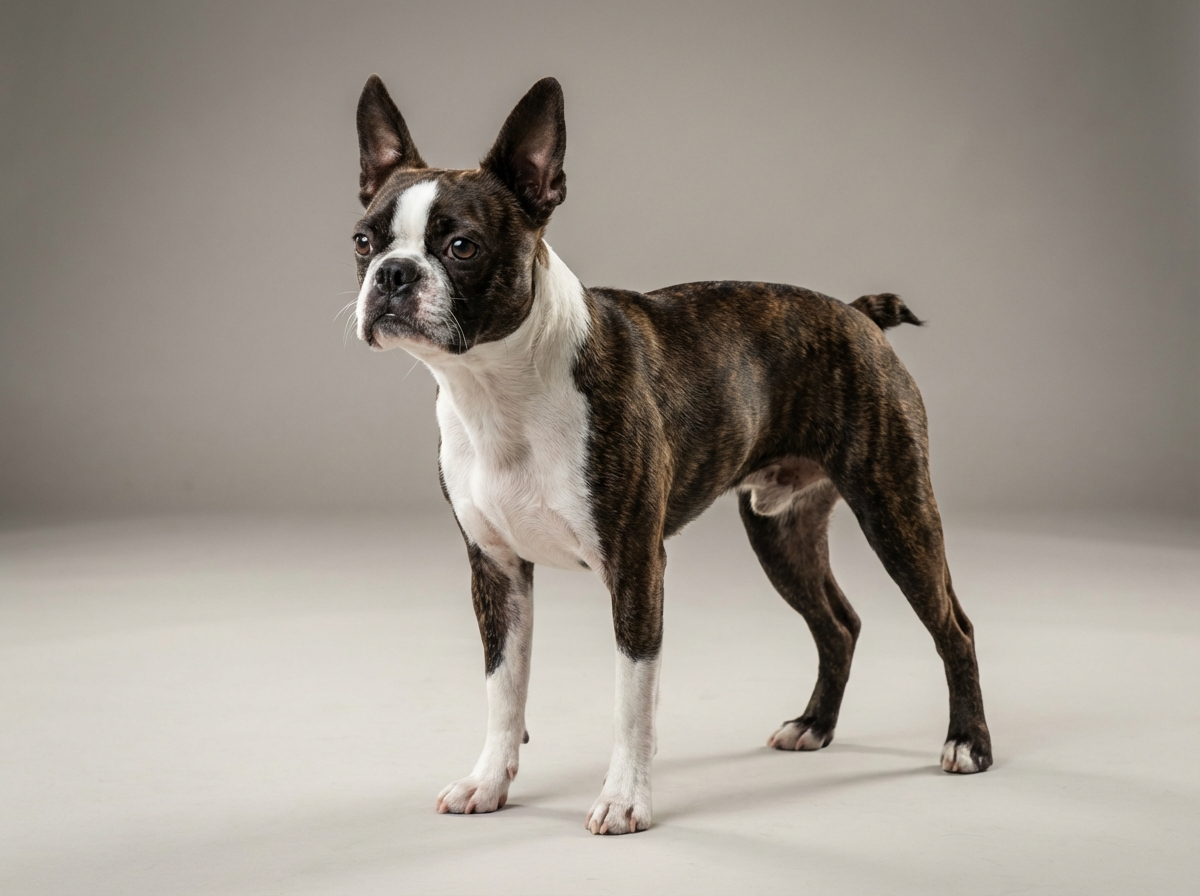
Health
What is the single most urgent sign?
Noisy or laboured breathing paired with facial swelling. In a short-faced breed that combination means the airway is being squeezed, and it is an emergency.

Quick answer
What is the single most urgent sign?
Noisy or laboured breathing paired with facial swelling. In a short-faced breed that combination means the airway is being squeezed, and it is an emergency.
A reaction that would be a bad afternoon for a Labrador can become a breathing emergency for a 12 to 25 pound Boston, because the swelling has almost no room to expand into.
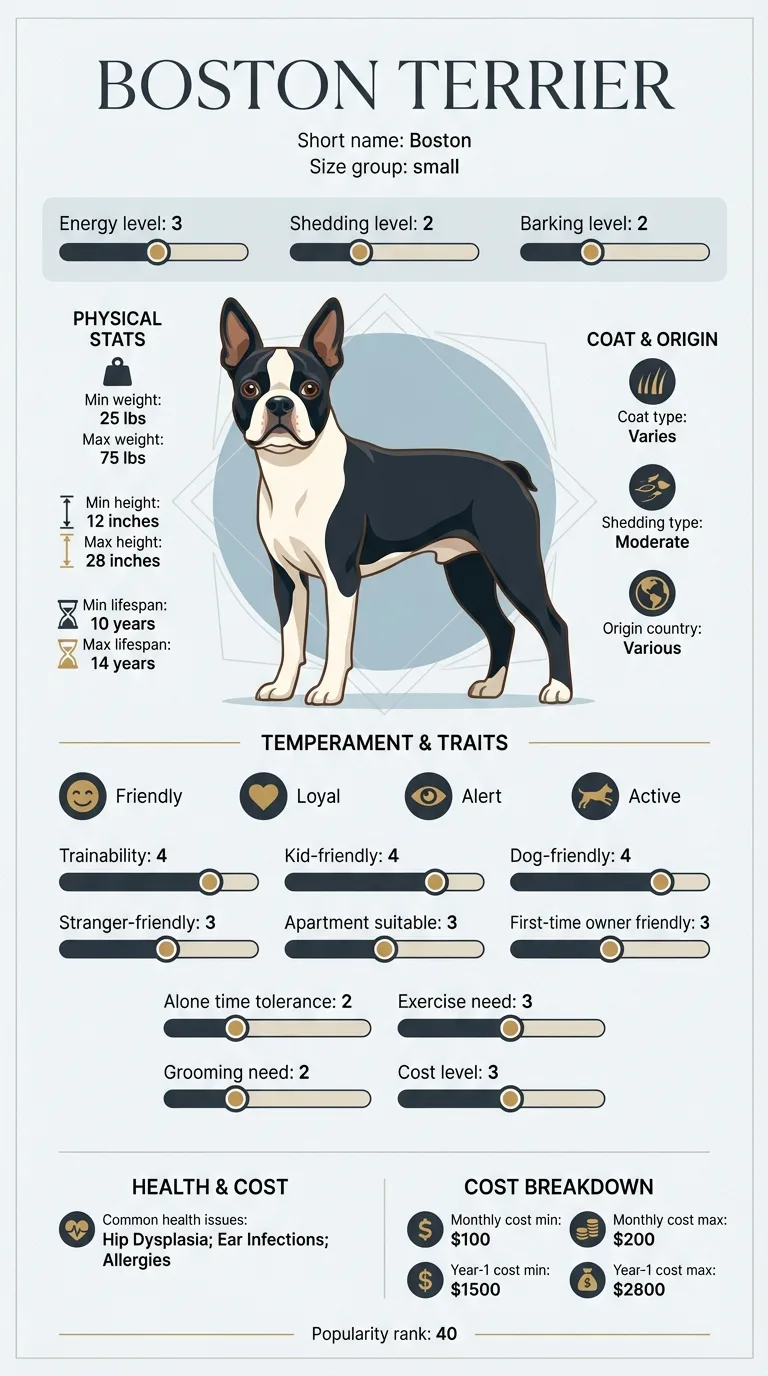
Owners who just came home from a puppy vaccine appointment, people whose Boston nosed a wasp in the yard, and anyone who has watched their dog's muzzle balloon and had no idea whether to wait it out or drive.
This guide is not medical advice. If your dog shows pain, sudden behavior change, or worsening symptoms, consult a licensed veterinarian.
Some links may be affiliate links. We may earn a commission at no extra cost to you. We only suggest products we believe are helpful for dog owners.
We research and check what we publish, but we do not warrant that any figure, date, price, or statement is accurate, complete, or current, and we accept no liability for any loss, cost, injury, or other harm arising from the use of this site. Use it as one reference among several. You remain responsible for your own decisions and for your dog's care - confirm anything that matters with a licensed veterinarian or another qualified professional before you act on it. Full disclaimer.
An acute allergic reaction is a fast immune response to something the body has met before. In Boston Terriers it usually appears as hives, a swollen muzzle and rubbing at the face, and less often as vomiting, weakness or collapse. The breed's short muzzle and narrow airway mean that swelling around the head carries more risk than the same swelling would in a longer-nosed dog of similar weight.
Severe reactions are uncommon in absolute terms; most Bostons go through life without one. Mild hives after a vaccine visit are far more frequent, and short-faced breeds are over-represented in records of reactions serious enough to need treatment.
Two features do the work. The compressed skull that gives the Boston its face also gives it tight nostrils and a soft palate crowding the throat - documented in the breed as brachycephalic airway syndrome - so swelling there has nowhere to go. And at 12 to 25 pounds, a Boston takes more vaccine or medication per pound than a large dog.
Reactions cluster where exposures cluster: clinic visits, spring and summer insect activity, and the weeks after a new medication or food is introduced. Warm weather adds a second layer, since a dog struggling to breathe is also struggling to cool. Ground-nesting wasps in a familiar lawn are a common source.
Go in immediately for any change in breathing sound or effort, swelling on the face or throat, pale, grey or blue gums, vomiting or diarrhoea after an injection or sting, wobbling or collapse. Those are same-hour signs, not next-day signs. Call the same day for hives that spread, hives that return after settling, or any reaction in a dog who has reacted before.
See all Boston Terrier health problems, which breeds are prone to allergic reactions, or the full Boston Terrier breed guide for temperament, exercise needs and ownership costs.
Treated skin reactions usually flatten within twelve to twenty-four hours, leaving a day or two of puffiness. Anything that touched the airway or circulation means longer observation, sometimes overnight. Identifying the trigger takes longer, and often only emerges across two or three episodes.
Success is not a dog that never reacts. It is an owner who spots the reaction in the first ten minutes, knows which tier it is, and has a plan already agreed with a vet - and a dog whose file lists the trigger so no future appointment repeats it by accident.
Acute reactions sort into three tiers, and the tier decides how fast you move.
Skin-only reactions are the most common. Raised welts push up through the short, smooth coat and are unusually easy to find on a Boston - run your palm against the lie of the hair along the flanks and you will feel them before you see them. The dog rubs its face on the carpet, the eyelids thicken, but it breathes normally and still wants dinner.
Facial and pharyngeal swelling is the middle tier and the one that matters most here. The muzzle puffs, the lips thicken, the eyes narrow. The danger is not the visible change but the fluid collecting in tissue you cannot see, around the soft palate and the entrance to the larynx.
Systemic reactions are the third tier: sudden vomiting or diarrhoea, pale gums, weakness, wobbling, collapse. In dogs the gut and liver are hit early in anaphylaxis, so a vomiting dog after a bee sting is more alarming than most owners realise.

Airflow through a tube falls off steeply as the tube narrows. A Boston Terrier starts at the wrong end of that curve: brachycephalic airway syndrome is documented in the breed, and even an undiagnosed Boston usually has some mix of tight nostrils and a soft palate crowding the throat.
Add two or three millimetres of allergic swelling and the work of breathing climbs sharply. The dog pulls harder on each breath, which drags the soft tissues further inward, which narrows things again. That loop is why a middle-tier reaction in this breed deserves the response most people reserve for a top-tier one.
Heat compounds it. A dog that cannot breathe easily cannot pant efficiently, and cannot shed heat. Air conditioning on for the drive, and no sitting in the clinic car park hoping it settles.
Dylan's Boston Terrier, Marlowe, was fourteen months old and due for a booster. The nurse suggested sitting in the waiting room for a quarter of an hour rather than heading straight home. Dylan almost didn't - the car was on a meter. At eleven minutes Marlowe started rubbing his face along the bench. By thirteen his upper lip had thickened and welts stood up along his ribs. By the time Dylan waved the nurse down, there was a faint whistle on the way in that had not been there in the car. He was back in a treatment room inside a minute, and stayed on observation for the afternoon. The whistle went before the swelling did. His record now flags the reaction, and boosters are given singly with a longer wait.
Key takeaway: The fifteen-minute wait after a vaccine exists for a reason, and in a short-faced breed it is the cheapest insurance you will ever buy.
Usually within twenty minutes to two hours of the trigger, though delayed reactions up to twelve hours happen. Stings and injections are the fast ones; a food-driven reaction lags because the material must be absorbed first.
Treat it as one. In a longer-nosed dog a puffy muzzle is often just uncomfortable. In a Boston Terrier the airway behind that muzzle is already narrow, so swelling has far less margin to work with. Call the clinic while you are getting the leash.
Any new noise on the way in - honking, high-pitched wheeze, snoring while wide awake - plus stretched-out neck, elbows held away from the chest, or gum colour that has gone from pink toward grey, blue or brick red. Those are drive-now signs.
Do not dose from the internet. Call your vet or an emergency line first and let them decide on product and amount for your dog's weight and history. Human formulations often contain decongestants that are genuinely dangerous to dogs.
Reactions to a specific trigger tend to repeat and can escalate, which is why the written record matters. Once a trigger is named, your vet can pre-treat before future vaccines or switch products.
Short-faced breeds show up disproportionately in veterinary records for acute allergic reactions, and small dogs receive a larger dose per pound of body weight than big ones. Whether Bostons react more often or simply get sicker when they do is honestly still debated.
Bee, wasp and ant stings, spot-on and oral parasite products, some antibiotics, and food proteins the dog has met before. Something must have been encountered previously for the immune system to be primed.
Noisy or laboured breathing paired with facial swelling. In a short-faced breed that combination means the airway is being squeezed, and it is an emergency.
They itch more than they hurt. Dogs rub their faces, roll and scratch. The welts are easy to feel on a Boston's short coat before they are easy to see.
Costs vary widely by region and severity, from a modest after-hours consult and injection to a multi-day hospital stay if the airway is involved. Ask your clinic for an estimate range before you need it.
Often yes. Your vet may split the visit, change products, or pre-treat beforehand. Make sure the reaction is written into the file, not just remembered.
A one-page prep sheet for this condition: the signs, the questions to ask, what to get priced. Unlocks here.
You get: Vet visit prep sheet
No spam. One-click unsubscribe. See our privacy policy.
Preview page 1 before you decide.