Health
How do I tell back pain from back weakness?
Pain produces flinching, a rigid posture and temperament change. Weakness produces scuffed toes and crossing legs with no sign of discomfort. They mean different things.

Quick answer
How do I tell back pain from back weakness?
Pain produces flinching, a rigid posture and temperament change. Weakness produces scuffed toes and crossing legs with no sign of discomfort. They mean different things.
Ask one question before anything else. Does your dog seem to be in pain, or has the back end simply stopped obeying?
Owners of Berners over five who have noticed a reluctance to jump into the car, a yelp when picked up under the belly, or a dog who now sits crooked with one hip rolled under.
This guide is not medical advice. If your dog shows pain, sudden behavior change, or worsening symptoms, consult a licensed veterinarian.
Some links may be affiliate links. We may earn a commission at no extra cost to you. We only suggest products we believe are helpful for dog owners.
We research and check what we publish, but we do not warrant that any figure, date, price, or statement is accurate, complete, or current, and we accept no liability for any loss, cost, injury, or other harm arising from the use of this site. Use it as one reference among several. You remain responsible for your own decisions and for your dog's care - confirm anything that matters with a licensed veterinarian or another qualified professional before you act on it. Full disclaimer.
Back problems in this breed cluster at the lower spine and split into two groups. One group hurts: joint and disc changes at the lumbosacral junction, muscle strain, spondylosis. The other does not hurt but takes function away: spinal cord disease that leaves the dog uncoordinated behind while entirely comfortable.
Lower back discomfort is common in large working breeds from middle age, and in a Bernese middle age begins around four or five given a seven to ten year lifespan. Serious spinal cord compression is much rarer, but it is the version that has to be excluded first.
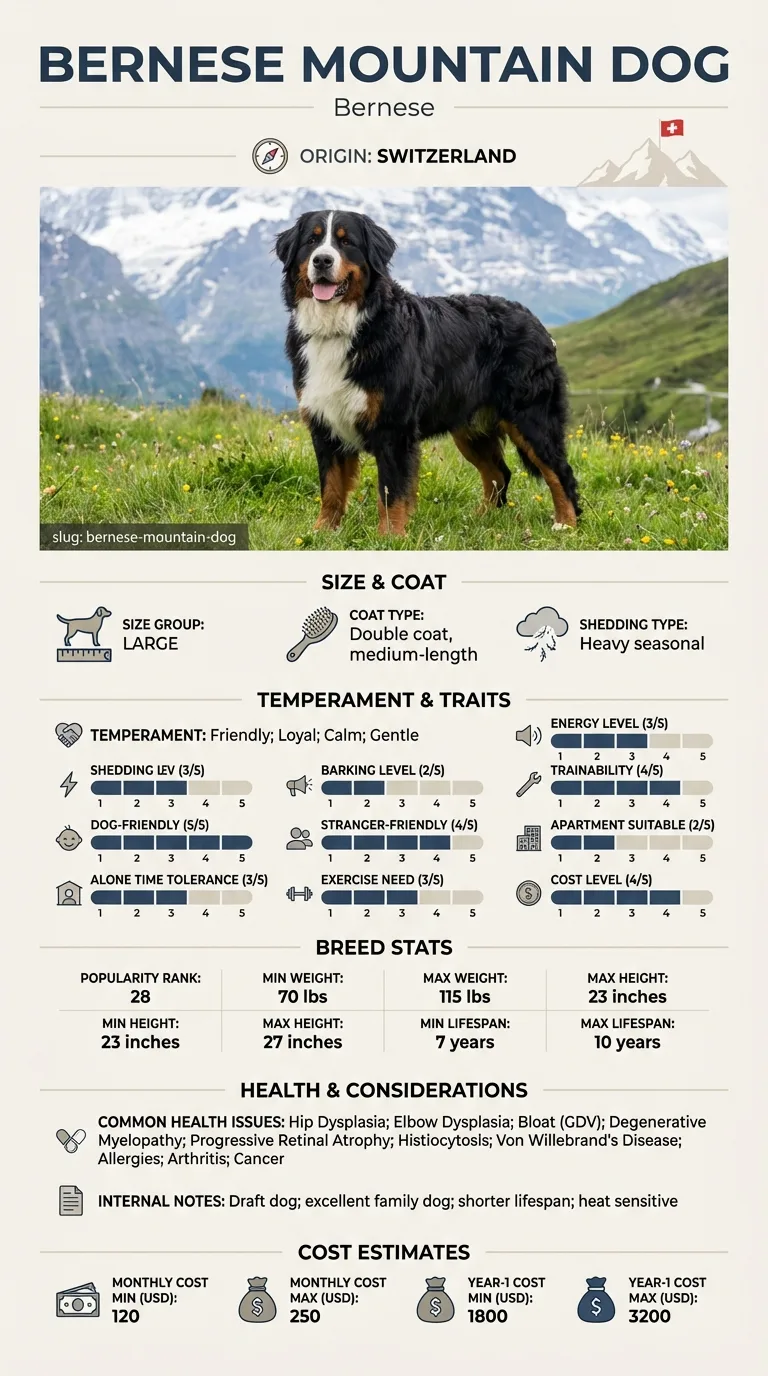
The relevant Bernese traits are mass and purpose, not proportion. This is a Swiss draft breed developed to pull loaded carts, which places sustained force through the hindquarters and the junction of spine and pelvis. Degenerative myelopathy also sits on the breed's documented health list, which is why any hind-end change in a Berner gets assessed for weakness as well as pain.
Smooth flooring and car boots are the two everyday hazards. A dog that slips on the way up from a nap, or lands hard from a tailgate twice a day, accumulates loading events. Excess weight, easy to acquire in a breed with a moderate exercise requirement, adds constant background load to every one of them.
Go to an emergency service straight away for hind legs that will not support the dog, dragging of one or both back feet, loss of bladder or bowel control, or any decline that has happened over hours rather than weeks. Spinal cord compression can become irreversible quickly, and a large dog that goes down is difficult to move once it does. Book within days for a yelp on handling, a new reluctance to jump or climb, or a change in how your dog sits. Tell your vet plainly whether you think the problem is pain or weakness, because that single observation shapes the whole examination.
Half of back management in a big dog is handling. These are the everyday errors that add insult to an existing injury.
Start here: Bernese Mountain Dog Most Common Genetic Disorders
See all Bernese Mountain DOG health problems, which breeds are prone to back problems, or the full Bernese Mountain DOG breed guide for temperament, exercise needs and ownership costs.
Muscle strain and mild lumbosacral pain often settle over two to six weeks of restricted activity and prescribed pain relief. Structural disease is managed long term, with a plan reviewed rather than completed.
A dog that rises comfortably, walks a consistent daily distance without shortening its stride, and no longer flinches when the lower back is touched.
Pain looks like this. The dog flinches or vocalises when you run a hand down the lower back, holds its spine rigid, refuses to lift its head to eat from a raised bowl, or turns the whole body rather than the neck. Some dogs pant at rest or tremble. A normally calm Bernese who has become snappy when handled is often a Bernese in pain, because temperament change is how a stoic breed reports it.
Weakness looks different. The dog does not flinch. It scuffs the tops of the hind toes, crosses its back legs, knuckles a paw over and does not correct it, or slides on a smooth floor without seeming distressed. There is often wear on the nails of the hind feet. Nothing about this is painful, which is exactly why it is worrying: painless progressive hind-limb weakness in a Berner raises the question of degenerative myelopathy, which is on the breed's documented health list.
The lumbosacral junction, where the spine meets the pelvis, is the region that most often produces pain in large working breeds. It is also the region under the greatest load in a dog built to push forward against a harness. Signs there include difficulty rising, reluctance to jump, an unwillingness to lift the tail, and discomfort when pressure is applied just in front of the tail base.
One combination overrides all of the above. A dog that cannot use its back legs at all, that has lost bladder or bowel control, or that has gone from normal to non-walking within hours needs emergency assessment immediately. Spinal cord compression is a race against time.

Emmi's owner Tomasz noticed she had stopped sitting square, rolling one hip under instead, and that she now waited at the tailgate rather than jumping in. She was six, still eating well and still keen on her walks. Nothing looked dramatic enough to book an appointment about. He went anyway. Examination localised pain to the lumbosacral region, radiographs showed bony change, and Emmi started a course of prescribed pain relief with a restricted exercise plan and a car ramp. Six weeks later she was sitting square again. Tomasz kept the ramp permanently and stopped throwing a ball on wet grass.
Key takeaway: The crooked sit was the diagnosis, not the yelp. Stoic breeds change posture long before they complain, and posture is something an owner can actually see.
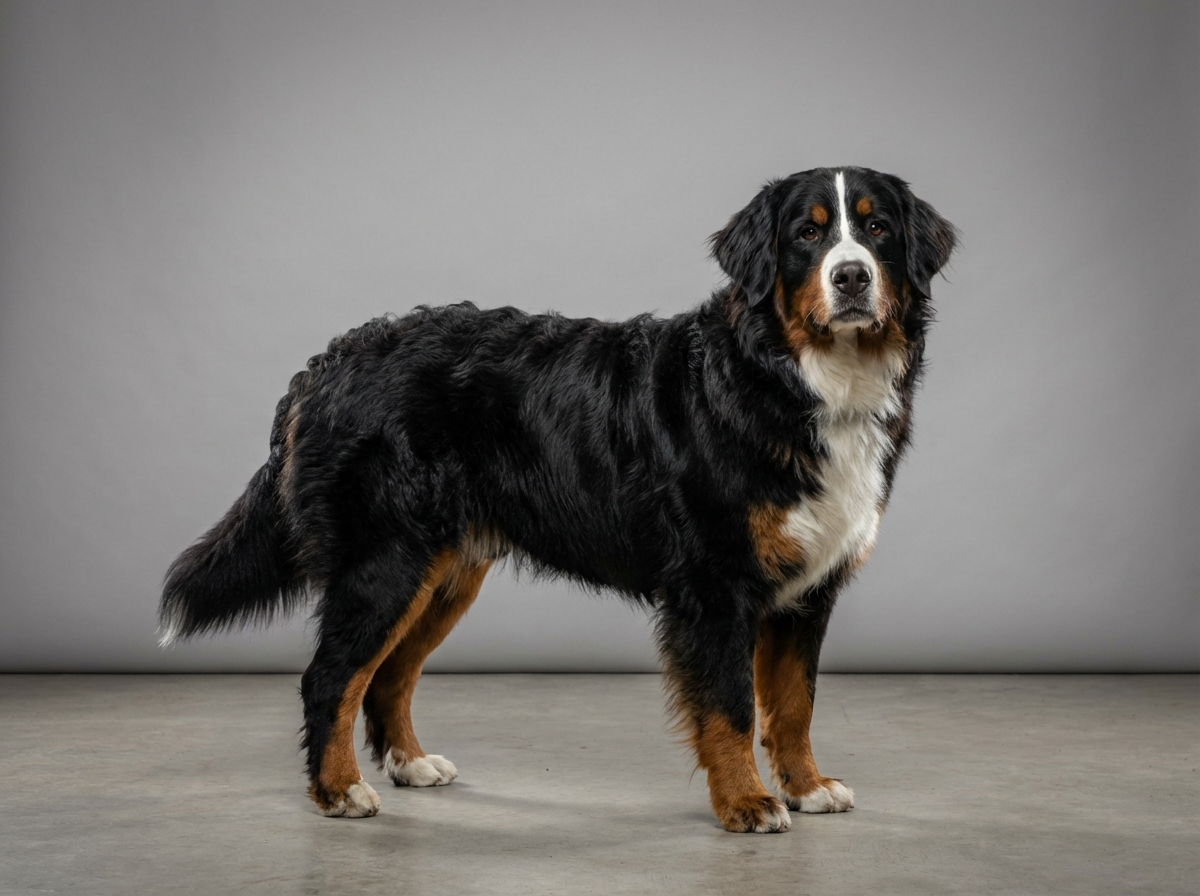
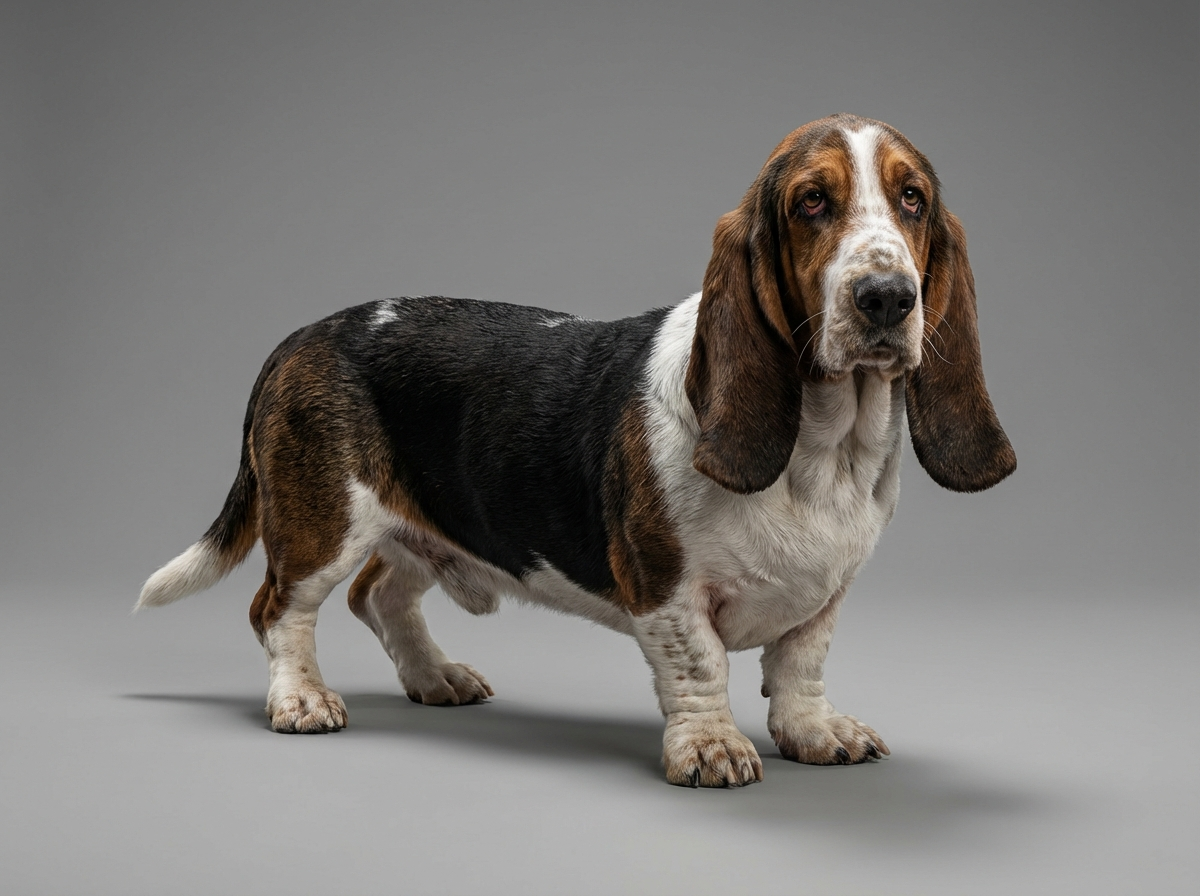
No. They are a balanced, squarely built large breed standing 23 to 27 inches at the shoulder, quite unlike the elongated, short-legged body shape that carries a well-known disc-disease risk. Back descriptions written for those breeds do not transfer to this one.
Because load matters as much as shape. A 70 to 115 pound dog puts substantial force through the lumbosacral junction with every push-off, and this is a breed developed for draft work in Switzerland, which is forward-driving hindquarter effort. Years of that produce wear.
Never under the belly with two hands. Support the chest with one forearm behind the front legs and the hindquarters with the other, keeping the spine level, or use a two-handled support harness. For a dog over ninety pounds, use two people whenever you can.
It may be. Spondylosis, which is bony bridging along the underside of the spine, is common in older large dogs and often shows on radiographs. Whether it is causing the pain is a separate judgement your vet makes from the exam, not from the image alone.
That depends entirely on the diagnosis, and it is a question for your vet, not a general rule. Draft work is part of this breed's history and many enjoy it, but harness pressure runs directly across the region most likely to be sore.
Plain radiographs come first and show bone. Discs, nerve roots and the spinal cord need advanced imaging such as MRI, usually at a referral centre and under general anaesthesia. Your vet will only advance to that if the findings would change the plan.
Pain produces flinching, a rigid posture and temperament change. Weakness produces scuffed toes and crossing legs with no sign of discomfort. They mean different things.
Inability to walk on the hind legs, loss of bladder control, or a fast decline over hours. Go immediately, because spinal compression is time-critical.
Restrict them while the cause is unknown, and use a ramp for the car. Landing impact from a jump is the load a sore lower back handles worst.
Radiographs are moderate; MRI at a referral centre is a major expense and requires anaesthesia. Ask what each test would change before agreeing to it.
Yes. Teach a ramp with food placed along it and a release cue, and stop rewarding the jump. Most Berners take to a ramp within a week.
A one-page prep sheet for this condition: the signs, the questions to ask, what to get priced. Unlocks here.
You get: Vet visit prep sheet
No spam. One-click unsubscribe. See our privacy policy.
Preview page 1 before you decide.