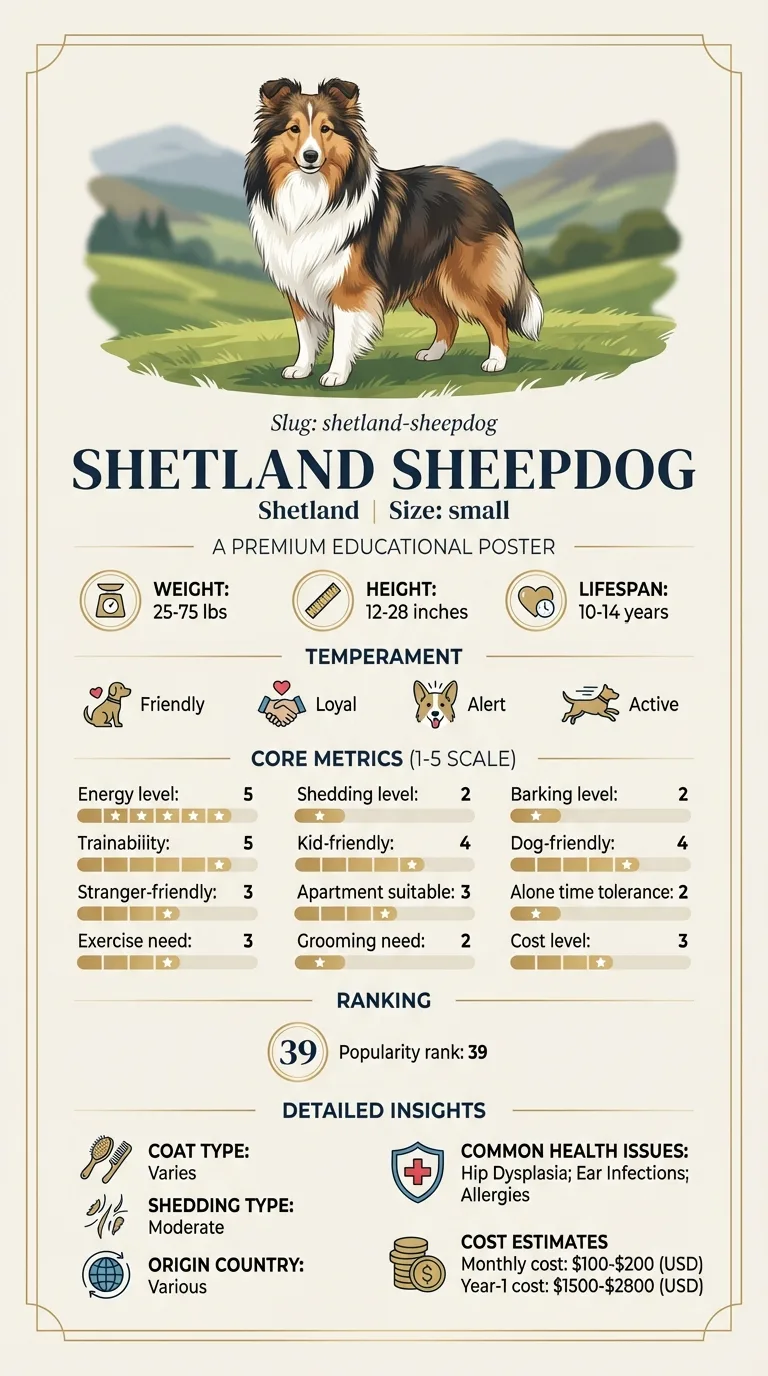
The Sheltie is one of the most trainable breeds there is, and that is the main reason to want one. It learns fast, retains sequences, works for interaction and thrives on having something to do. Agility, obedience, rally, tricks, scent work and herding all suit it, and its size makes all of that accessible in a way a large breed does not.
The temperament keywords are bright, sensitive, vocal and devoted, and sensitive is the one to plan around. Shelties are soft dogs. Harsh handling produces shutdown rather than resistance, loud households can overwhelm them, and a bad experience sticks. The training that works is upbeat, clear and generous.
The 2/5 with strangers is the herding breed's reserve, and it needs deliberate work. An unsocialised Sheltie does not become aggressive so much as fearful — backing away, barking from behind furniture, or shrinking from hands. Early, positive, unhurried exposure to new people, places, surfaces and noises through the first year is what produces a confident adult. Do not force greetings; let the dog approach.
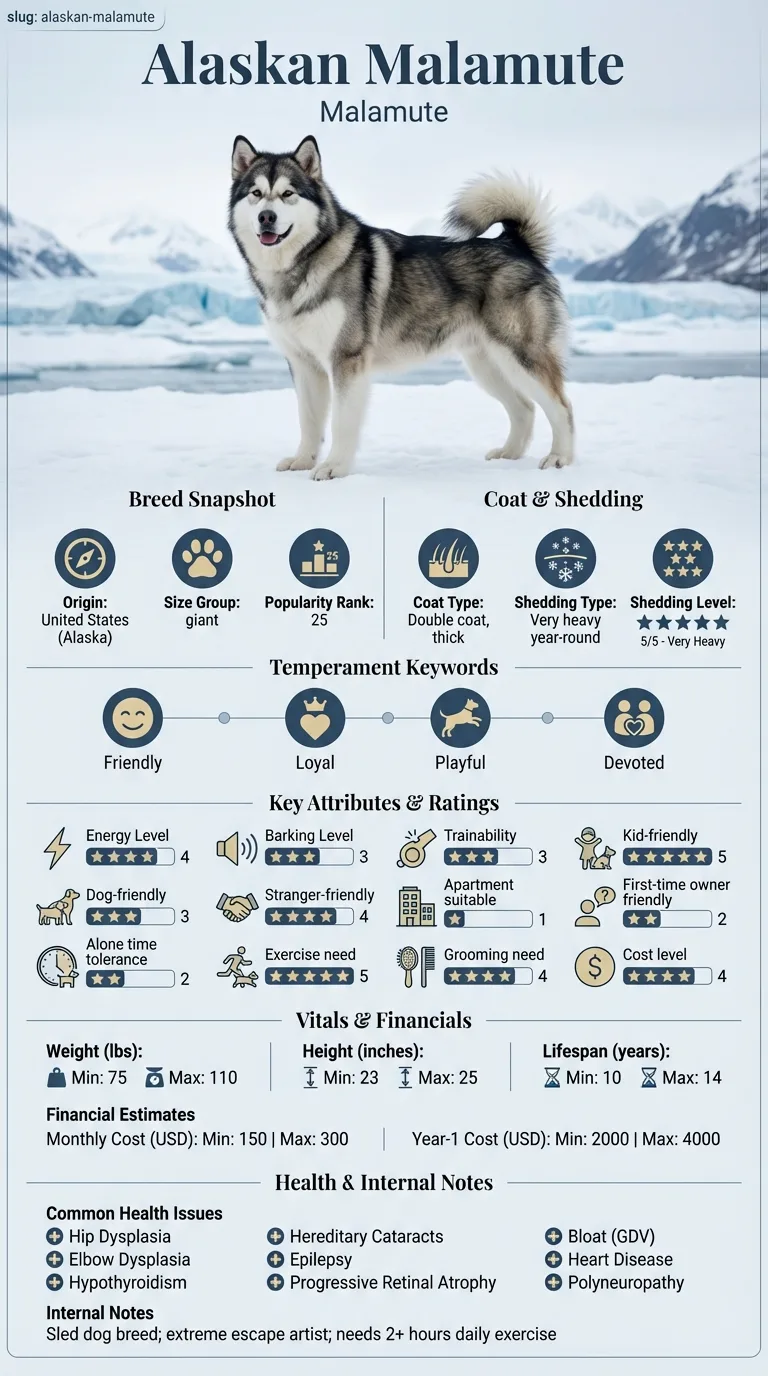
With children it rates 4/5 against the Malamute's 5/5, and the practical caution is herding instinct: circling, chasing and occasionally nipping at running heels. It redirects well onto ball work and games if addressed early.
With other dogs the Sheltie is easy at 4/5 against 3/5.
On solitude both rate 2/5. A Sheltie left alone tends toward anxious vocalising, which in a flat is the compounding version of the barking problem. The Malamute digs instead.
On beginners the Sheltie's 4/5 against 2/5 is fair. It is forgiving, portable and eager, and the errors that matter are under-socialising and letting the barking establish itself.