DogBreedCompass

Akita or Golden Retriever: The Same Hair, Opposite Dogs

These two breeds share the highest shedding rating on the site, weigh in the same bracket and both need securely fenced space. Then the temperament rows arrive: 5/5 for first-time owners against 1/5, 5/5 with children against 3/5, 4/5 with other dogs against 2/5. There is no wider gap on this site.

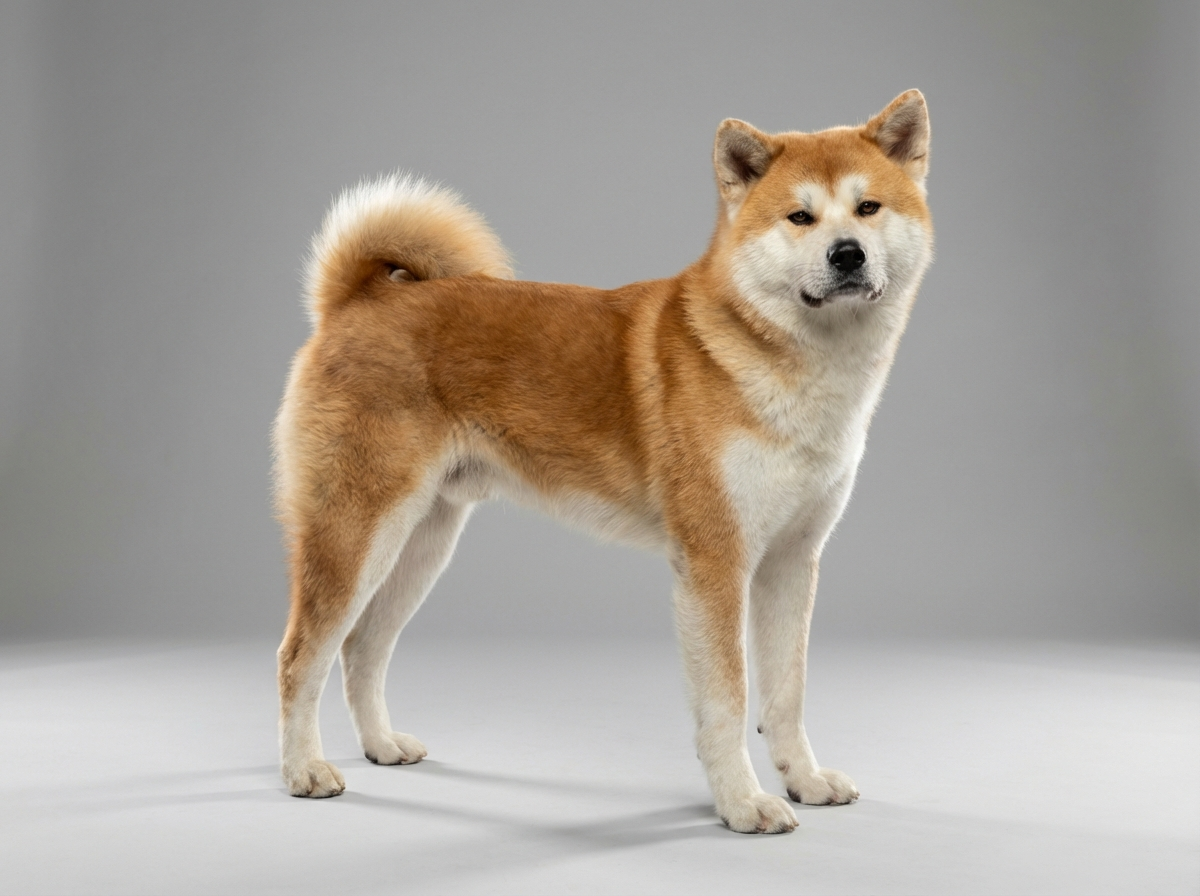
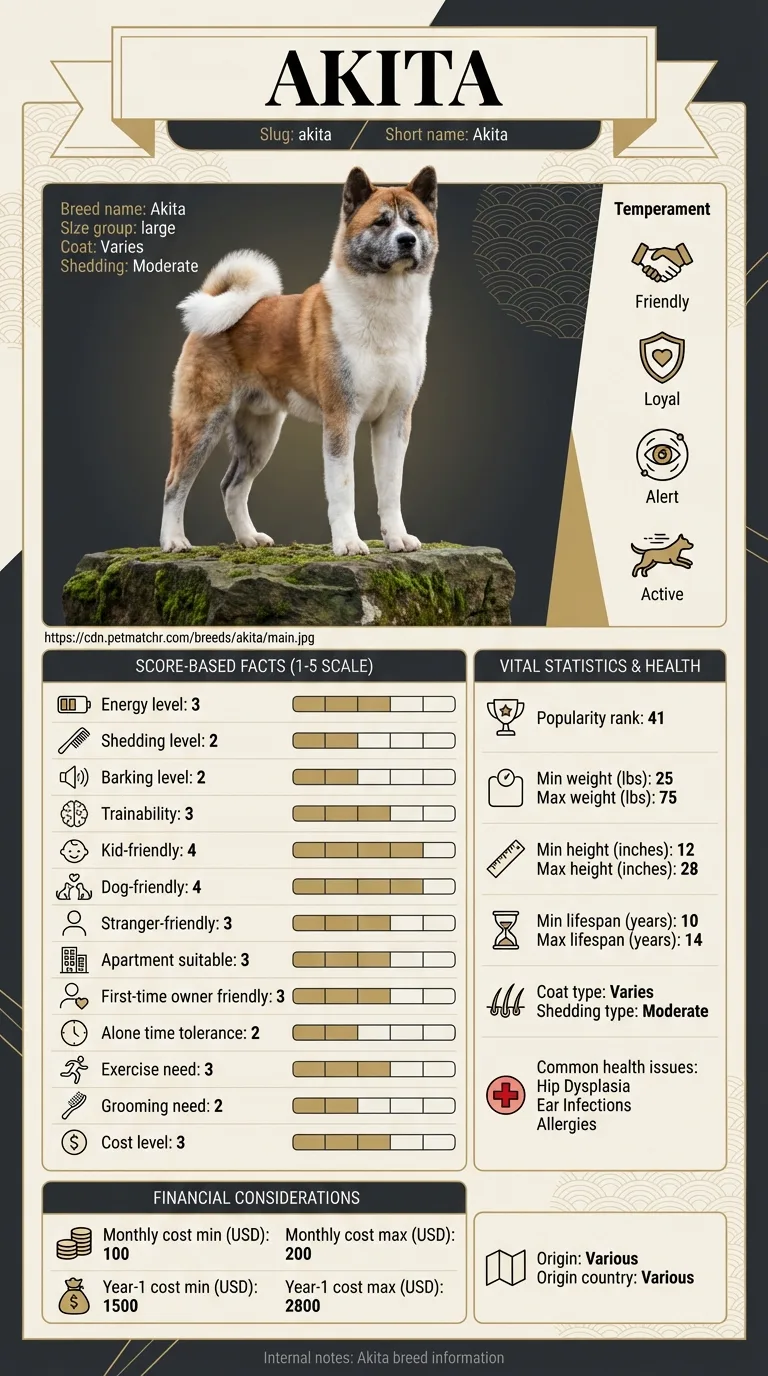
akita infographic
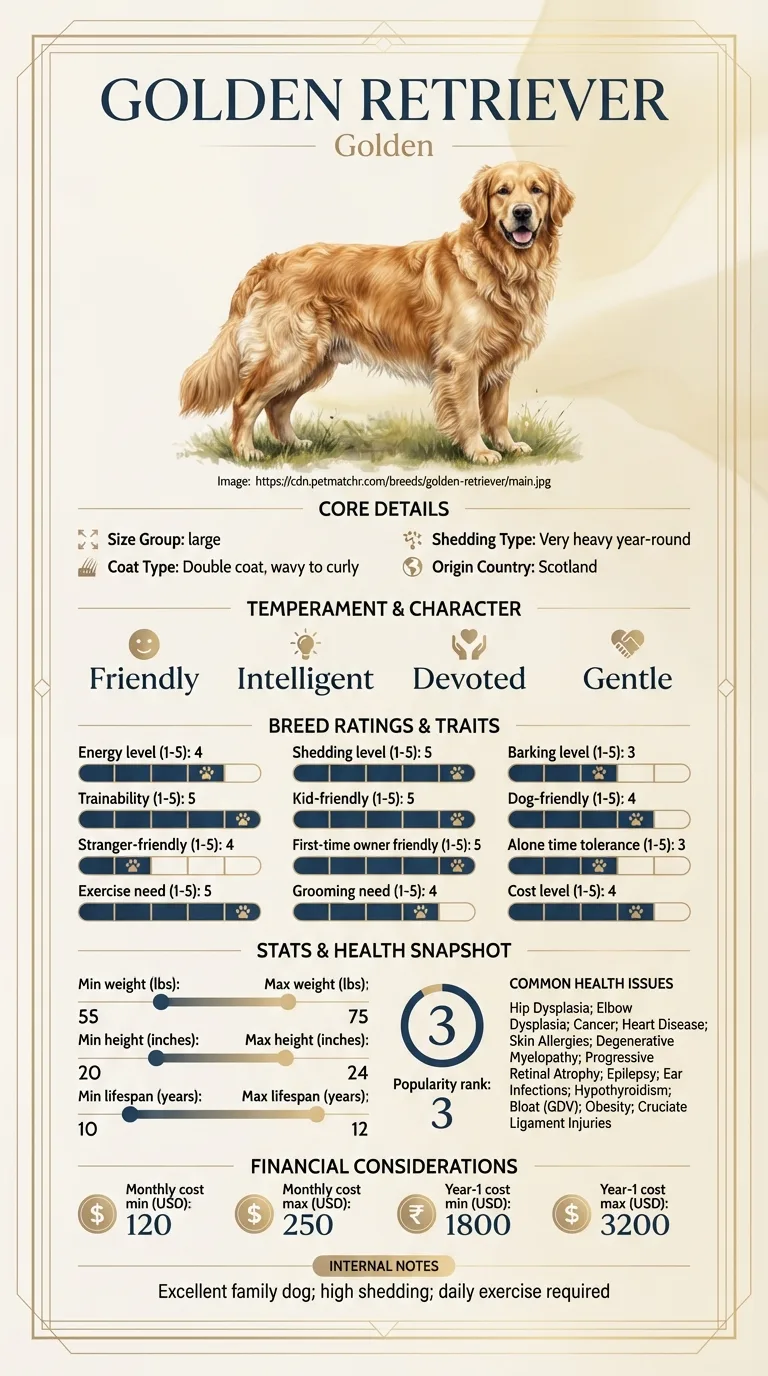
golden retriever infographic

This page is for someone weighing the most popular family dog in the large-breed category against a guardian. It covers what the temperament gap really means, the Golden's very high cancer burden, exercise, shedding — which is heavy in both — and running costs.

Quick verdict

The Golden Retriever is the easier dog by a wide margin on every measure except health, where it carries one of the heaviest cancer burdens of any breed.

Choose akita if...

Choose the Akita if you want a guardian and cannot commit to hard daily exercise. It needs 3/5 exercise against the Golden's 5/5, grooms at 3/5 against 4/5, and barks at 2/5 against 3/5. You are accepting 1/5 for first-time owners, 2/5 with other dogs and strangers, and a dog that decides rather than asks.

Choose golden retriever if...

Choose the Golden Retriever if you want a family dog and will exercise it properly. It rates 5/5 for trainability, first-time owners and children, 4/5 with other dogs and strangers, and costs $120–$250 a month. You are accepting 5/5 exercise, 4/5 grooming, 5/5 shedding and a genuinely high lifetime cancer risk.

Head-to-head comparison

Featureakitagolden retrieverWinner
Weight70–130 lbs55–75 lbsEqual
Height24–28 in20–24 inEqual
Lifespan10–13 years10–12 yearsakita
CoatDense double coatWavy double coatEqual
Grooming needModerate (3/5)High (4/5)akita
SheddingVery high (5/5)Very high (5/5)Equal
Energy levelModerate (3/5)High (4/5)Equal
Exercise needModerate (3/5)Very high (5/5)akita
TrainabilityModerate (3/5)Very high (5/5)golden retriever
BarkingLow (2/5)Moderate (3/5)akita
Good with kidsModerate (3/5)Very high (5/5)golden retriever
Good with other dogsLow (2/5)High (4/5)golden retriever
Friendly to strangersLow (2/5)High (4/5)golden retriever
Apartment suitabilityLow (2/5)Low (2/5)Equal
Good for first-time ownersVery low (1/5)Very high (5/5)golden retriever
Tolerates being aloneModerate (3/5)Moderate (3/5)Equal
Typical monthly cost$110–$240$120–$250akita
Typical first-year cost$1,700–$3,200$1,800–$3,200akita

Deep dive

Willingness as a breed trait

The Golden's 5/5 trainability and 4/5 with strangers describe the same underlying quality: it wants the interaction. Retrievers were selected for generations to work cooperatively, hand back what they had found, and tolerate being handled by anyone. That is why the breed dominates assistance and therapy work.

The practical consequence is that a Golden is easy and not automatic. It is also mouthy as a young dog, slow to mature, and inclined to greet enthusiastically — a seventy-pound dog that jumps at visitors is a training problem, and 5/5 trainability means it is a solvable one.

With children at 5/5 it is as reliable as any large breed gets, with the usual caveat about size around toddlers.

The Akita is not unfriendly so much as uninterested in approval. Its 2/5 with strangers is territorial rather than nervous — it assesses and then settles. Its 2/5 with other dogs, frequently same-sex, usually appears at social maturity around two years old, which is why socialisation has to continue past the first year rather than finishing with a puppy class.

The Golden Retriever's cancer burden

Cancer appears third on the Golden Retriever's condition list and it is the reason this breed's lifespan is 10 to 12 rather than higher.

The rate in Goldens is among the highest recorded in any breed. Haemangiosarcoma — a cancer of blood vessel walls, most often in the spleen or heart — and lymphoma are the two that dominate, along with mast cell tumours and bone cancer.

Haemangiosarcoma is the one worth understanding, because it is often silent until it is not. A splenic tumour can bleed suddenly, and the first sign an owner sees is collapse, pale gums and weakness in a dog that seemed well that morning. That presentation is an emergency.

What you can do is limited but real: buy from a breeder who will discuss the age and cause of death of dogs in the line rather than deflecting, keep the dog lean, and treat sudden lethargy or collapse as urgent rather than as an off day.

The rest of the list is hip and elbow dysplasia, heart disease, skin allergies, ear infections, hypothyroidism, cruciate ligament injuries, epilepsy and bloat.

The Akita's burden is autoimmune and endocrine instead, and its lifespan is slightly longer at 10 to 13 despite the greater size.

5/5 exercise and two very heavy coats

The Golden needs around ninety minutes to two hours a day, and it should include swimming or retrieving where possible — this is a breed that is genuinely satisfied by fetching, which is convenient.

An under-exercised Golden gets fat rather than destructive, which is why obesity appears on its own condition list. Weight matters more here than in most breeds, because cruciate ligament injuries and joint disease are both on the list and both are loaded by every extra pound.

On coat, both breeds rate 5/5 for shedding, and the difference is character rather than quantity. The Golden sheds heavily all year with two worse periods, and the hair is long, blonde and clings to dark fabric. The Akita is undemanding for ten months and then blows a dense undercoat in clumps for two or three weeks.

Grooming is 4/5 against 3/5. The Golden's feathering on the ears, chest, legs and tail mats and needs brushing through several times a week; its drop ears need drying after every swim, since ear infections are on the list.

Neither coat should ever be clipped.

What each costs to run

The Golden runs $120–$250 a month against the Akita's $110–$240, with first-year totals of $1,800–$3,200 and $1,700–$3,200. On paper they are the same dog to budget for.

The difference is what sits behind the figures. The Akita's expensive risks — autoimmune disease, bloat — are serious and not certainties. The Golden's are common enough to plan for: joint disease and cruciate repair in an active large dog, recurring ear and skin treatment, and oncology, which is the largest and least predictable of all.

Insurance is worth taking out in puppyhood and keeping unbroken. A Golden diagnosed with anything at four years old will find that condition excluded from any new policy afterwards, and this is a breed where something is more likely than not over a decade.

Grooming adds a smaller recurring cost for the Golden — many owners use a groomer periodically for feathering and feet — where the Akita needs nothing but a rake and a garden.

Lifespan runs 10 to 13 years against 10 to 12.

Akita vs Golden Retriever: the widest temperament gap here

Four points separate these two on the first-time owner rating — 5/5 against 1/5 — and that is the largest single gap on this site.

It is not a comment on intelligence. It is a comment on how much a mistake costs. A Golden Retriever raised badly is an unruly, over-friendly, jumping dog. An Akita raised badly is a hundred-pound guardian that has drawn its own conclusions about strangers and other dogs.

The rows that tie are the practical ones: shedding at 5/5 each, apartments at 2/5 each, time alone at 3/5 each. Neither is a flat dog and both cope reasonably with a working day.

What the Akita offers is a much smaller claim on your time — 3/5 exercise against 5/5 — and a quieter house at 2/5 barking against 3/5. What the Golden offers is a dog almost anyone can live with, provided the exercise happens.

Frequently asked questions

Which is better for a first-time owner?

The Golden Retriever at 5/5 against the Akita's 1/5, the widest gap on this site. The difference is what a mistake costs: a badly raised Golden is unruly and over-friendly, while a badly raised Akita is a hundred-pound guardian that has formed its own conclusions about strangers and other dogs.

How high is the cancer risk in Golden Retrievers?

Among the highest recorded in any breed, and it is the main reason the lifespan sits at 10 to 12 years. Haemangiosarcoma and lymphoma dominate, with mast cell tumours and bone cancer also elevated. Buy from a breeder who will discuss the age and cause of death of dogs in the line.

What is haemangiosarcoma and why does it matter?

A cancer of blood vessel walls, most often in the spleen or heart, and it is often silent until a tumour bleeds. The first sign is frequently sudden collapse, pale gums and weakness in a dog that seemed fine that morning. That presentation is an emergency and should never be treated as an off day.

Which sheds more?

They tie at 5/5 — both are among the heaviest shedders here. The difference is pattern. The Golden sheds long blonde hair all year with two worse periods, while the Akita is undemanding for ten months and then blows a dense undercoat in clumps for two or three weeks. Grooming effort is 4/5 against 3/5.

How much exercise does a Golden Retriever need?

Ninety minutes to two hours a day at 5/5 exercise, ideally including swimming or retrieving, which genuinely satisfies the breed. An under-exercised Golden tends to get fat rather than destructive, which matters because obesity loads joints and the breed already carries cruciate ligament injuries on its condition list.

Which is quieter?

The Akita at 2/5 against the Golden's 3/5. Akitas bark only when something genuinely warrants it. Golden barking is usually excitement or greeting rather than alarm, and it responds well to training given the breed's 5/5 trainability.

Which costs more to keep?

They are effectively the same on paper — $120–$250 a month against $110–$240 — but the Golden's likely veterinary spend is higher over a lifetime. Joint disease, recurring ear and skin treatment and oncology are all realistic. Insure from puppyhood and keep the policy unbroken.

Quick answers

View more answers
Living

Akita vs Golden Retriever: which should I choose?

The Golden Retriever for almost any family that will exercise it properly — 5/5 for first-time owners, children and trainability. The Akita if you want a guardian, a quieter house and a much smaller claim on your week.

Costs

How much does each cost per month?

The Golden runs $120–$250 a month and the Akita $110–$240, with first-year totals of $1,800–$3,200 and $1,700–$3,200. The Golden's lifetime veterinary spend tends to run higher.

Living

Do both breeds shed heavily?

Yes — both rate 5/5, the highest on the site. The Golden sheds year-round with two worse periods; the Akita concentrates it into two intensive weeks-long blows. Neither coat should ever be clipped.

Health

Which lives longer?

The Akita marginally, at 10 to 13 years against the Golden's 10 to 12, despite being the heavier breed. The Golden's figure is driven by cancer more than by size.

Related DogBreedCompass guides

  • Akita breed guideThe Akita profile covers guardian temperament and the long socialisation window the breed needs.
  • Golden Retriever breed guideThe Golden Retriever profile covers exercise, coat care and the breed's health screening.
  • Golden Retriever vs Labrador RetrieverThe Labrador is the breed most often cross-shopped against the Golden Retriever.
  • Akita vs GoldendoodleThe Goldendoodle is the low-shedding cross people consider when the coat is the obstacle.
  • Golden Retriever cancer riskCancer risk is the defining health question for anyone considering a Golden Retriever.
  • Akita autoimmune diseasesAutoimmune disease is the Akita's most distinctive burden and the first question for a breeder.

Related guides

Important reminder

Health information here is general and is not veterinary advice. If your dog shows pain, sudden behaviour change, or worsening symptoms, consult a licensed veterinarian.

Some links on this site are affiliate links. We may earn a commission at no extra cost to you, and we only suggest products we believe are helpful for dog owners.

Find Your Perfect Breed

Match your lifestyle to the right dog.

Take quiz

Find your match

Not sure which breed is right for you? Take our 2-minute quiz to find out.

Take the quiz