Akita or Chow Chow: Two Ancient Breeds That Do Not Fuss
Quick answer
Akita vs Chow Chow: which should I choose?
The Chow Chow if you want the same reserved character in a smaller dog that suits a flat and you will commit to serious grooming. The Akita if you would rather deal with two shedding seasons than several brushing sessions a week.
The Chow Chow rates 5/5 for grooming, the highest on this site, and the Akita rates 5/5 for shedding, also the highest. Between them they cover both ways a thick double coat can take over a household, and they are otherwise remarkably similar dogs.
This page is for someone drawn to aloof, dignified, low-drama breeds and weighing two of the oldest. It covers where the temperaments overlap, the enormous difference in grooming work, the Chow's eye problems and restricted vision, heat tolerance, and what each costs to run.
Quick verdict
The Chow Chow is a smaller Akita with a heavier grooming bill and a much worse set of eyes; the Akita costs you less time at the brush and more space in the house.
Choose akita if...
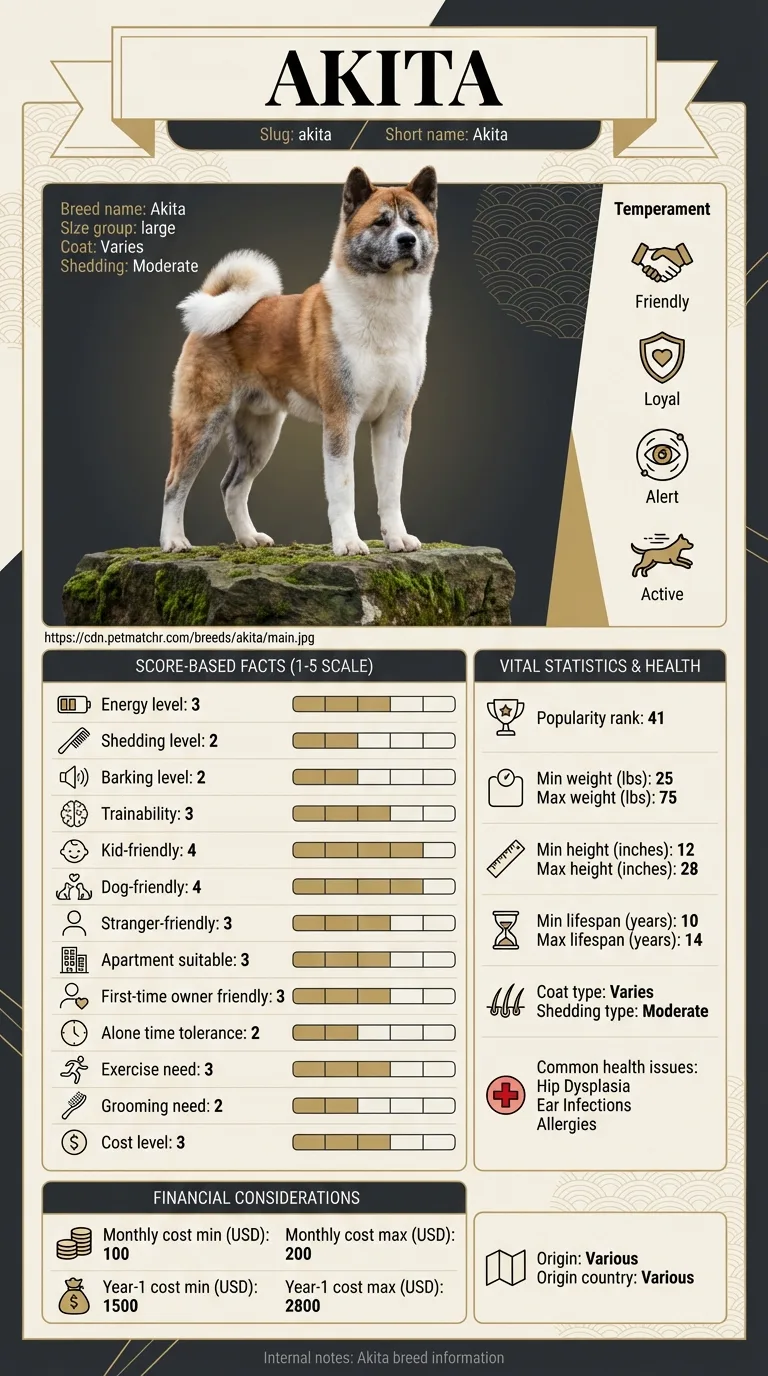
Choose the Akita if you would rather deal with shedding twice a year than brushing several times a week. It rates 3/5 for grooming against the Chow's 5/5, trains at 3/5 against 2/5, barks at 2/5 against 3/5, and has a far lighter eye disease burden. You are accepting 5/5 shedding, up to 130 pounds and a 2/5 apartment rating.
Choose chow chow if...
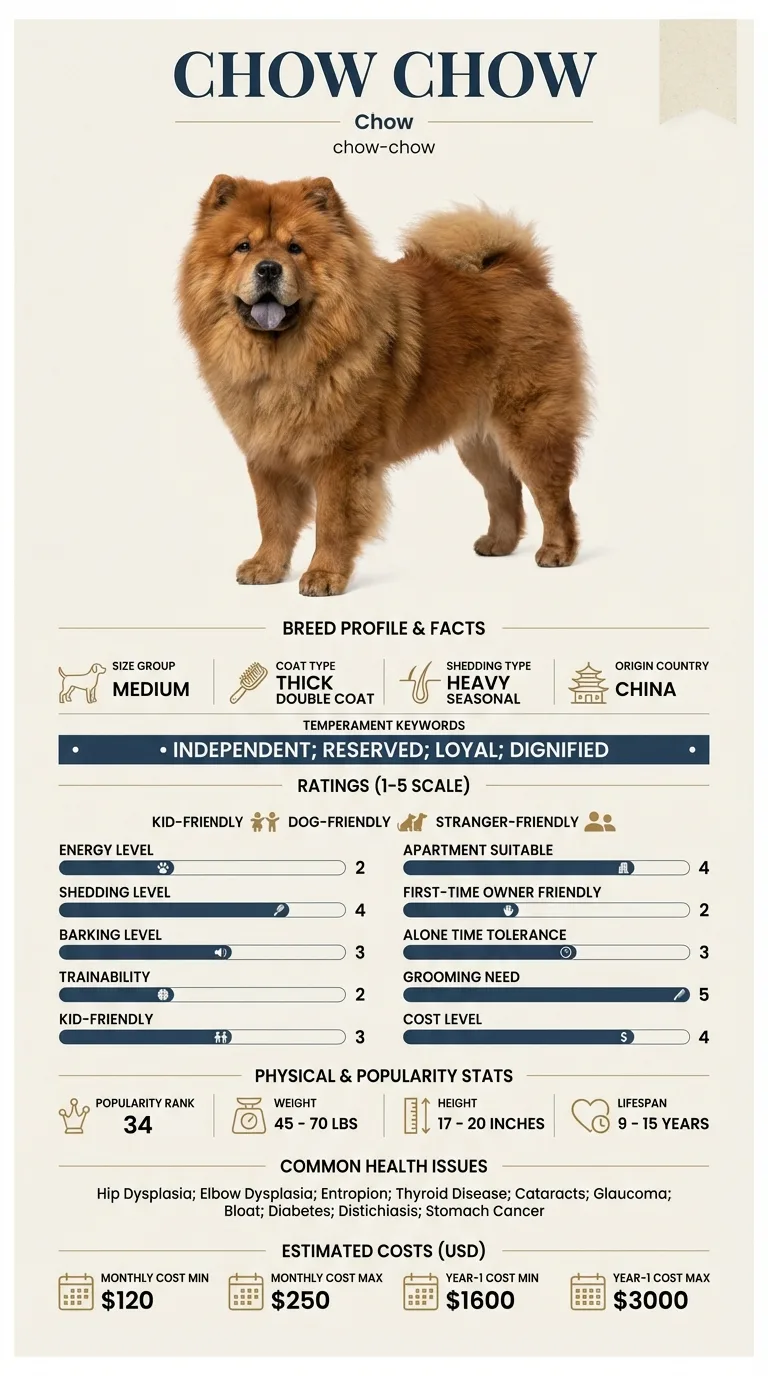
Choose the Chow Chow if you want the same reserved character in a 45 to 70 pound dog that suits a flat. It rates 4/5 for apartments against 2/5, needs only 2/5 exercise, and can live 9 to 15 years. You are accepting 5/5 grooming, entropion and glaucoma risk, real heat sensitivity, and a dog with genuinely restricted peripheral vision.
Head-to-head comparison
Feature
akita
chow chow
Winner
Weight
70–130 lbs
45–70 lbs
Equal
Height
24–28 in
17–20 in
Equal
Lifespan
10–13 years
9–15 years
chow chow
Coat
Dense double coat
Thick double coat
Equal
Grooming need
Moderate (3/5)
Very high (5/5)
akita
Shedding
Very high (5/5)
High (4/5)
chow chow
Energy level
Moderate (3/5)
Low (2/5)
Equal
Exercise need
Moderate (3/5)
Low (2/5)
chow chow
Trainability
Moderate (3/5)
Low (2/5)
akita
Barking
Low (2/5)
Moderate (3/5)
akita
Good with kids
Moderate (3/5)
Moderate (3/5)
Equal
Good with other dogs
Low (2/5)
Low (2/5)
Equal
Friendly to strangers
Low (2/5)
Low (2/5)
Equal
Apartment suitability
Low (2/5)
High (4/5)
chow chow
Good for first-time owners
Very low (1/5)
Low (2/5)
chow chow
Tolerates being alone
Moderate (3/5)
Moderate (3/5)
Equal
Typical monthly cost
$110–$240
$120–$250
akita
Typical first-year cost
$1,700–$3,200
$1,600–$3,000
chow chow
Deep dive
Aloofness in two ancient breeds
Chows are frequently described as catlike, and the description holds: they choose their moments, dislike being handled by people they do not know, and are entirely indifferent to a stranger's approval.
The Akita is the same in outline with a slightly different edge. Where the Chow tends to withdraw, the Akita tends to interpose — it will place itself between its household and something it has not resolved.
Both firm up their adult opinions at social maturity rather than in puppyhood, and both are frequently intolerant of same-sex dogs. Socialisation for either has to begin at eight weeks and continue past two years, with an emphasis on calm exposure rather than enthusiastic greeting.
On training the Akita has the edge, 3/5 against 2/5. The Chow's low rating is genuine stubbornness combined with a strong dislike of repetition. It learns quickly and then declines to demonstrate, and correction makes it less cooperative rather than more.
Barking is 3/5 against 2/5. Neither is noisy by small-breed standards, but the Chow is the more likely of the two to announce something.
The Chow's eyes deserve their own section
Three separate eye conditions appear on the Chow Chow's list — entropion, cataracts and glaucoma — plus distichiasis, and together they make this the breed's defining medical concern.
Entropion is the common one. The eyelid rolls inward and the lashes abrade the cornea, which is painful and progressively damages sight. The Chow's heavy facial furnishings and deep-set eyes make it more likely here than in most breeds, and surgical correction is frequently needed.
Distichiasis is related: extra lashes growing from the wrong place along the lid margin, rubbing the eye. Glaucoma is the dangerous one, because rising pressure inside the eye destroys sight quickly and is an emergency rather than an appointment.
There is also a practical consequence that is not a disease. The Chow's deep-set eyes and heavy ruff genuinely restrict its peripheral vision. Chows startle when approached from the side more than other breeds do, and it is worth teaching children and visitors to approach from the front and speak first.
The Akita carries progressive retinal atrophy but not this cluster, and its eyes are open and unobstructed.
Joints, thyroid, bloat and the heat problem
Beyond the eyes, the Chow's list runs to hip and elbow dysplasia, thyroid disease, diabetes, bloat and stomach cancer. The Akita's is autoimmune disorders, hypothyroidism, progressive retinal atrophy, hip dysplasia and bloat.
The overlap is worth noting: both breeds carry hip dysplasia, both carry thyroid disease, and both are deep-chested enough for gastric dilatation-volvulus to be a genuine emergency risk. Every household with either dog should know the signs — unproductive retching, a distending abdomen, restlessness — and know where the nearest out-of-hours surgery is in advance.
Heat is the other shared limitation and the Chow has it worse. A thick standing coat, a relatively short muzzle for its skull and a heavy ruff make it a poor heat regulator, and Chows overheat faster than their activity level suggests. Summer walks move to early morning and late evening for both breeds.
Neither coat should ever be clipped. It insulates against heat as well as cold, and a clipped double coat frequently grows back with a damaged texture that insulates worse than before.
Lifespan is 9 to 15 years against 10 to 13 — a wider range, with well-bred Chows often at the upper end.
What each costs to run
The Chow runs $120–$250 a month against the Akita's $110–$240, with first-year totals of $1,600–$3,000 and $1,700–$3,200. Those are close enough to be treated as equivalent.
What the monthly figures hide is the grooming line. A 5/5 coat that most owners cannot maintain alone means a professional groom every six to eight weeks for the life of the dog, and for a large heavily coated breed that is not a small recurring sum. The Akita's coat needs no professional attention at all if you own a rake and a garden.
Eye surgery is the Chow's other realistic line item. Entropion correction is common and it is not cheap, and glaucoma management is worse.
The Akita's veterinary risk is autoimmune disease — expensive to diagnose, often lifelong to manage — and bloat, which is a four-figure emergency in a large deep-chested dog.
On space the Chow rates 4/5 for apartments against the Akita's 2/5, needing only 2/5 exercise against 3/5. For a flat, the Chow is a workable choice provided the grooming is honestly budgeted.
Akita vs Chow Chow: two coats, two different problems
The Chow's grooming rating is 5/5 and the Akita's is 3/5. The Akita's shedding rating is 5/5 and the Chow's is 4/5. Both numbers describe a lot of hair; they describe it arriving in your life on different schedules.
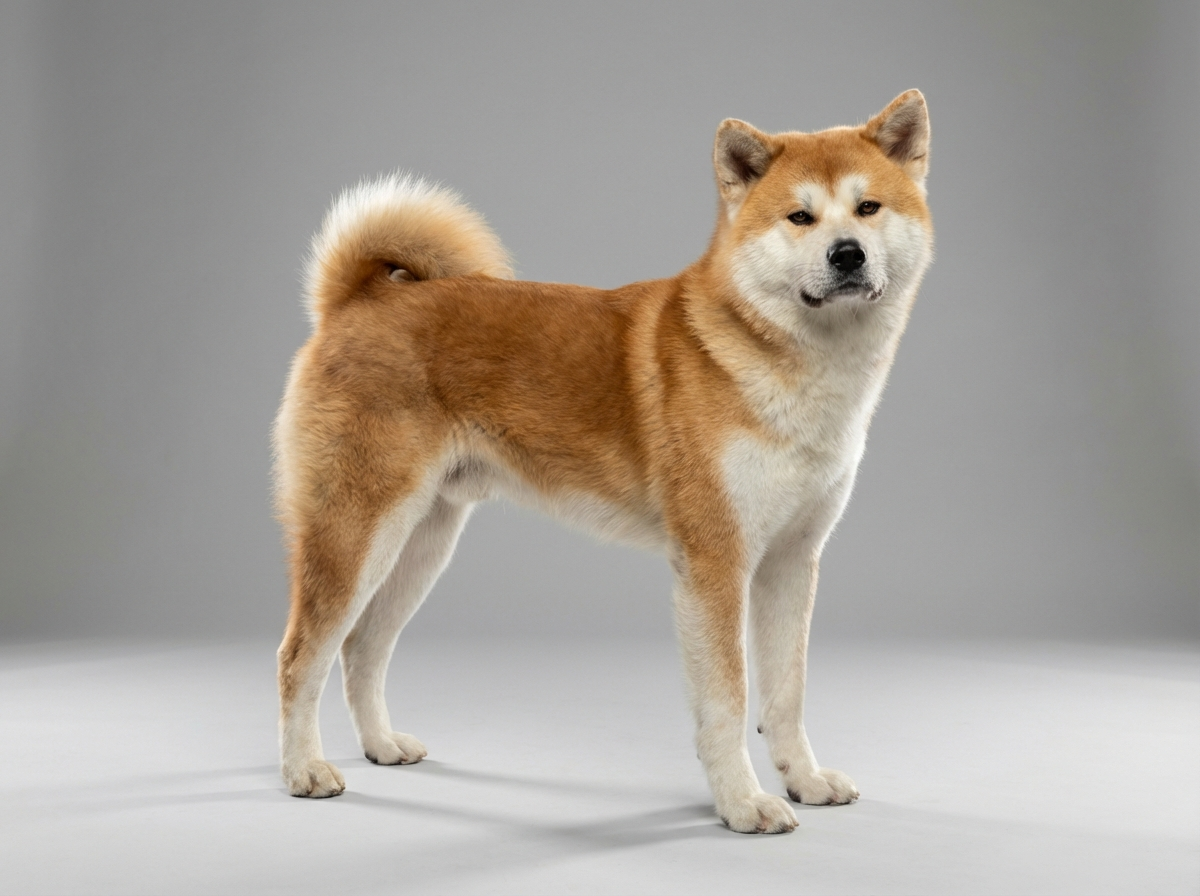
The Akita's work is concentrated. For most of the year a weekly brush is enough. Twice a year the undercoat comes out in handfuls over two or three weeks, and during that period you will fill bin bags.
The Chow's work is constant. Its coat is not just dense but stands off the body, and the ruff, trousers and tail mat readily. Several sessions a week are the minimum, and a rough-coated Chow that is left for a fortnight develops mats to the skin that have to be cut out.
On everything social they are close to identical: 2/5 with other dogs, 2/5 with strangers, 3/5 with children, 3/5 for time alone. Both are aloof, both are clean, both are undemonstrative, and neither will perform affection on request.
Akita or Chow Chow: Two Ancient Breeds That Do Not Fuss - Akita vs Chow Chow: two coats, two different problems
Frequently asked questions
Which needs more grooming, an Akita or a Chow Chow?
The Chow Chow by a long way — 5/5 against the Akita's 3/5, and the highest grooming rating on this site. Its standing coat mats readily at the ruff, trousers and tail, so several sessions a week are the minimum and most owners also need a professional groom every six to eight weeks. The Akita's work is concentrated into two shedding periods a year.
Which sheds more?
The Akita at 5/5 against the Chow's 4/5, though both shed heavily. The difference is timing: the Akita blows its undercoat in clumps twice a year and is undemanding in between, while the Chow sheds more steadily as well as seasonally. Neither coat should ever be clipped.
Are Chow Chows aggressive?
They are aloof rather than aggressive, rating 2/5 with strangers — the same as the Akita. A Chow dislikes being handled by people it does not know and is indifferent to a stranger's approval. Poor socialisation turns that reserve into a problem, which is why exposure from eight weeks and continuing past two years matters.
Why do Chows startle so easily?
Because their deep-set eyes and heavy ruff genuinely restrict peripheral vision. A Chow approached from the side often does not see the hand coming until it arrives. It is worth teaching children and visitors to approach from the front and speak first — a simple habit that prevents most incidents.
What eye problems do Chow Chows get?
Entropion, in which the eyelid rolls inward and the lashes abrade the cornea, is the common one and often needs surgery. Distichiasis — extra lashes on the lid margin — is related. Cataracts appear on the list, and glaucoma is the dangerous one, since rising pressure destroys sight quickly and is an emergency.
Which is better for an apartment?
The Chow Chow at 4/5 against the Akita's 2/5. It weighs 45 to 70 pounds and needs only 2/5 exercise, so two moderate walks cover the day. The trade-off is grooming, which does not get easier in a small space, and 3/5 barking against the Akita's 2/5.
Which lives longer?
The Chow Chow potentially, at 9 to 15 years against the Akita's 10 to 13. The range is wide because outcomes depend heavily on breeding — a well-bred Chow from screened parents often reaches the upper end, while joint and eye problems shorten the lives of poorly bred ones considerably.
The Chow Chow if you want the same reserved character in a smaller dog that suits a flat and you will commit to serious grooming. The Akita if you would rather deal with two shedding seasons than several brushing sessions a week.
Costs
How much does each cost per month?
The Chow runs $120–$250 a month and the Akita $110–$240, with first-year totals of $1,600–$3,000 and $1,700–$3,200. Budget separately for professional grooming with a Chow — it is a lifelong recurring cost.
Living
Can either be clipped in summer?
No. A double coat insulates against heat as well as cold, and a clipped coat often grows back with a damaged texture that insulates worse. Move summer walks to early morning and late evening instead — both breeds are heat sensitive and the Chow more so.
Training
Which is easier to train?
The Akita at 3/5 against the Chow's 2/5, though neither is eager to please. The Chow learns quickly and then declines to demonstrate, and correction makes it less cooperative rather than more. Short sessions and food work for both.
Related DogBreedCompass guides
Akita breed guide – The Akita profile covers guardian temperament and the long socialisation window the breed needs.
Chow Chow breed guide – The Chow Chow profile covers coat maintenance, eye health and the breed's reserve.
Akita vs Chinese Shar-Pei – The Shar-Pei is the other reserved Chinese breed most often weighed against the Chow.
Akita vs Siberian Husky – The Siberian Husky is the other heavy-coated northern breed worth comparing on grooming.
Chow Chow genetic disorders – The inherited conditions worth screening for before buying a Chow Chow puppy.
Akita autoimmune diseases – Autoimmune disease is the Akita's most distinctive burden and the first question for a breeder.
Health information here is general and is not veterinary advice. If your dog shows pain, sudden behaviour change, or worsening symptoms, consult a licensed veterinarian.
Some links on this site are affiliate links. We may earn a commission at no extra cost to you, and we only suggest products we believe are helpful for dog owners.
We research and check what we publish, but we do not warrant that any figure, date, price, or statement is accurate, complete, or current, and we accept no liability for any loss, cost, injury, or other harm arising from the use of this site. Use it as one reference among several. You remain responsible for your own decisions and for your dog's care - confirm anything that matters with a licensed veterinarian or another qualified professional before you act on it. Full disclaimer.