Behavior
What are quick tips for managing IVDD in English Cocker Spaniels?
Keep your dog at a healthy weight, avoid high-impact activities, and provide supportive bedding to help manage IVDD.

Quick answer
What are quick tips for managing IVDD in English Cocker Spaniels?
Keep your dog at a healthy weight, avoid high-impact activities, and provide supportive bedding to help manage IVDD.
English Cocker Spaniel intervertebral disc disease (IVDD) is a serious condition that affects your dog's spinal health. It can lead to pain and mobility issues, significantly impacting their quality of life.
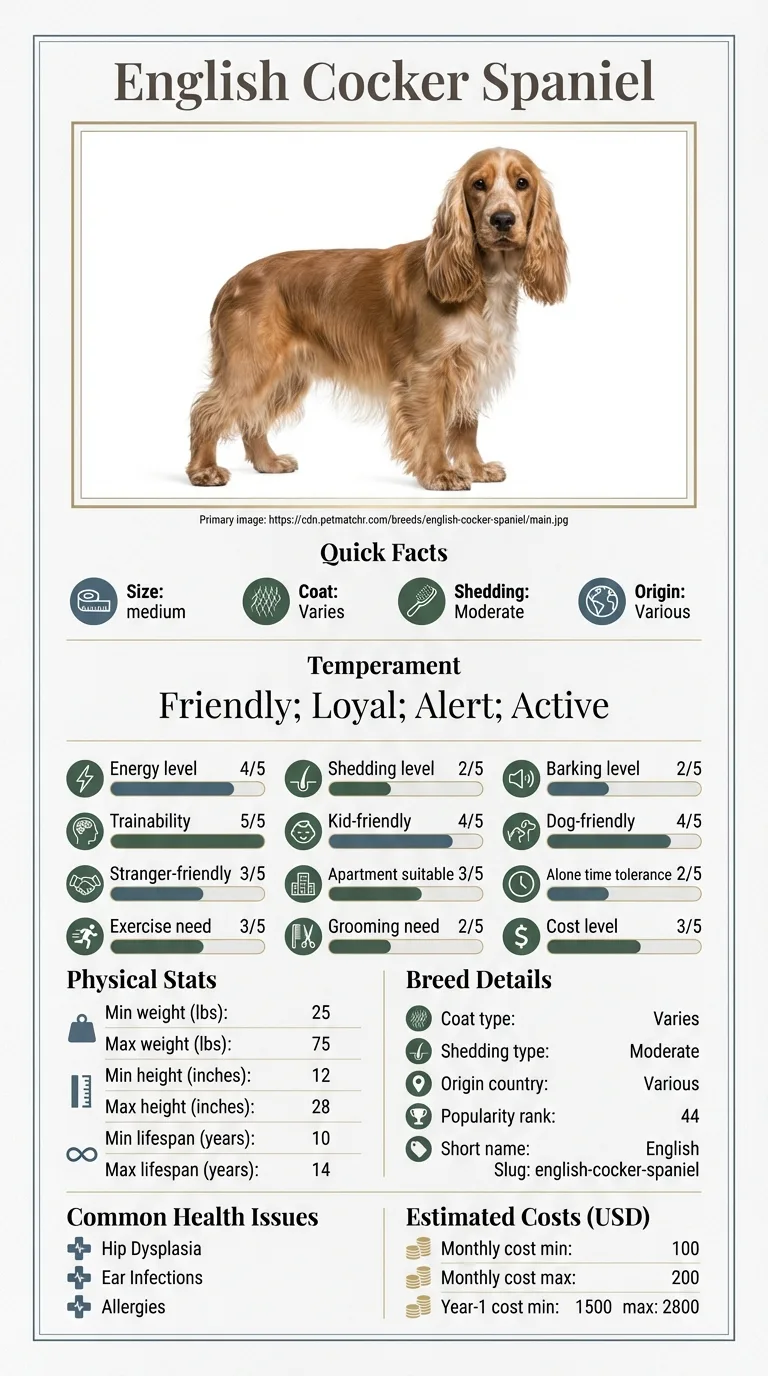
Owners of English Cocker Spaniels, especially those with active lifestyles or older dogs, often face challenges related to IVDD. Busy families or first-time dog owners may find it overwhelming to recognize and address the symptoms of this debilitating condition.
This guide is not medical advice. If your dog shows pain, sudden behavior change, or worsening symptoms, consult a licensed veterinarian.
Some links may be affiliate links. We may earn a commission at no extra cost to you. We only suggest products we believe are helpful for dog owners.
We research and check what we publish, but we do not warrant that any figure, date, price, or statement is accurate, complete, or current, and we accept no liability for any loss, cost, injury, or other harm arising from the use of this site. Use it as one reference among several. You remain responsible for your own decisions and for your dog's care - confirm anything that matters with a licensed veterinarian or another qualified professional before you act on it. Full disclaimer.
Check this first
Emergency signs include sudden paralysis, severe pain when touched, or loss of bowel or bladder control. If your dog is unable to stand or walk, or if you notice significant swelling or deformity in the back, it's time to seek veterinary help right away. These red flags mean your dog's condition could worsen without prompt treatment.
Mild cases of IVDD might include slight limping, reluctance to jump, or occasional yelping when playing. If your English Cocker Spaniel shows these signs but still seems to enjoy their daily activities, you can monitor their behavior. Keep an eye on their movements and provide a calm environment to help ease their discomfort.
If symptoms persist or worsen over a few days, consult your vet for advice. Early intervention can help manage the condition and prevent emergencies down the line. Remember, it's always better to be safe than sorry when it comes to your furry friend’s health.
If any of these apply, call your vet or an emergency clinic now. The rest of this page is for the cases that are not an emergency.
English Cocker Spaniel intervertebral disc disease (IVDD) can lead to significant pain and mobility issues. Day-to-day, owners may notice their dog struggling to jump, walk, or even sit comfortably. This disease affects the spine, often causing nerve compression, which can manifest as weakness or stiffness in the hindquarters.
IVDD is relatively common in English Cocker Spaniels, especially as they age. Many dogs may show early signs of discomfort which can escalate if not addressed promptly.
English Cocker Spaniels are prone to intervertebral disc disease (IVDD) due to their body structure. Their long backs and relatively short legs can create pressure on their spine, making them more vulnerable to disc problems. Additionally, genetic factors may play a role, as some lines of this breed may inherit traits that increase the risk of IVDD.
Environmental factors also contribute to IVDD. For instance, excessive jumping or rough play can strain their spine. Additionally, being overweight puts extra pressure on their back, increasing the likelihood of disc issues.
If you notice your English Cocker Spaniel is limping, having trouble walking, or seems to be in pain, contact your vet immediately. Early intervention can prevent further damage and improve recovery outcomes.
Avoid these common mistakes that could worsen your English Cocker Spaniel's intervertebral disc disease (IVDD). Making small adjustments can lead to better outcomes for your furry friend.
Start here: English Cocker Spaniel Most Common Genetic Disorders
See all English Cocker Spaniel health problems, which breeds are prone to intervertebral disc disease ivdd, or the full English Cocker Spaniel breed guide for temperament, exercise needs and ownership costs.
It can take several weeks to months of consistent care and follow-up with your vet to see improvements in your dog’s condition. Regular vet check-ups will help monitor progress.
Success means your English Cocker Spaniel shows reduced discomfort, improved mobility, and a positive response to treatment, allowing them to enjoy daily activities.
When Lisa adopted Max, her English Cocker Spaniel, he was full of energy. But soon after, he began showing signs of pain and difficulty moving. After a vet diagnosis of intervertebral disc disease (IVDD), Lisa felt overwhelmed. She committed to a treatment plan, which included medication and physical therapy. With patience and daily exercises, Max slowly regained strength. After several months, he was back to playing fetch in the park, a sight that brought tears of joy to Lisa’s eyes.
Key takeaway: Consistency in care and following a vet’s guidance can lead to significant improvements in your dog's quality of life with IVDD.
English Cocker Spaniels can develop intervertebral disc disease (IVDD) due to genetic factors, age, and weight. Overweight dogs are at a higher risk because excess weight puts more strain on their spine. Regular vet check-ups can help monitor your dog's health and catch problems early.
To help prevent intervertebral disc disease (IVDD), maintain a healthy weight for your English Cocker Spaniel through a balanced diet and regular exercise. Limit jumping and rough play, as these activities can put stress on their spine. Consider using ramps for getting in and out of cars or up stairs.
Yes, intervertebral disc disease (IVDD) is relatively common in English Cocker Spaniels, especially as they age. Understanding the risk factors and keeping your dog healthy can help manage the risk. Regular vet check-ups are essential for early detection.
Treatment options for intervertebral disc disease (IVDD) range from medication and physical therapy to surgery in severe cases. Your vet can recommend the best course of action based on the severity of the condition. Early intervention often leads to better outcomes.
Early signs of English Cocker Spaniel intervertebral disc disease (IVDD) may include reluctance to jump or climb stairs, a change in walking patterns, or noticeable stiffness. Dogs may also show signs of pain, such as whining or guarding their back.
As English Cocker Spaniels age, they become more susceptible to intervertebral disc disease (IVDD). Older dogs often experience more wear on their spine, increasing the risk of disc degeneration and associated pain.
Training can play a role in managing English Cocker Spaniel intervertebral disc disease (IVDD) by promoting proper posture and gentle movements. However, it’s crucial to consult a vet for a tailored plan that includes physical therapy or specific exercises to avoid exacerbating the condition.
If you notice your English Cocker Spaniel showing signs of discomfort, difficulty moving, or sudden changes in behavior, it’s time to see a vet. Prompt attention can help manage intervertebral disc disease (IVDD) effectively and prevent further complications.
Yes, activities that involve high-impact movements, like jumping or running on hard surfaces, should be avoided. Instead, focus on low-impact exercises and consult your vet for safe activities tailored to your dog’s condition.
Keep your dog at a healthy weight, avoid high-impact activities, and provide supportive bedding to help manage IVDD.
Look for signs such as yelping, reluctance to move, or changes in appetite. Consult your vet if you notice any of these symptoms.
Yes, gentle training focused on low-impact exercises can help maintain mobility and strength without overstraining their back.
Contact your vet immediately for advice and potential treatment options. Early intervention is key.
Yes, consider supportive harnesses, ramps, and orthopedic beds designed to reduce strain on your dog's spine.
A one-page prep sheet for this condition: the signs, the questions to ask, what to get priced. Unlocks here.
You get: Vet visit prep sheet
No spam. One-click unsubscribe. See our privacy policy.
Preview page 1 before you decide.