Health
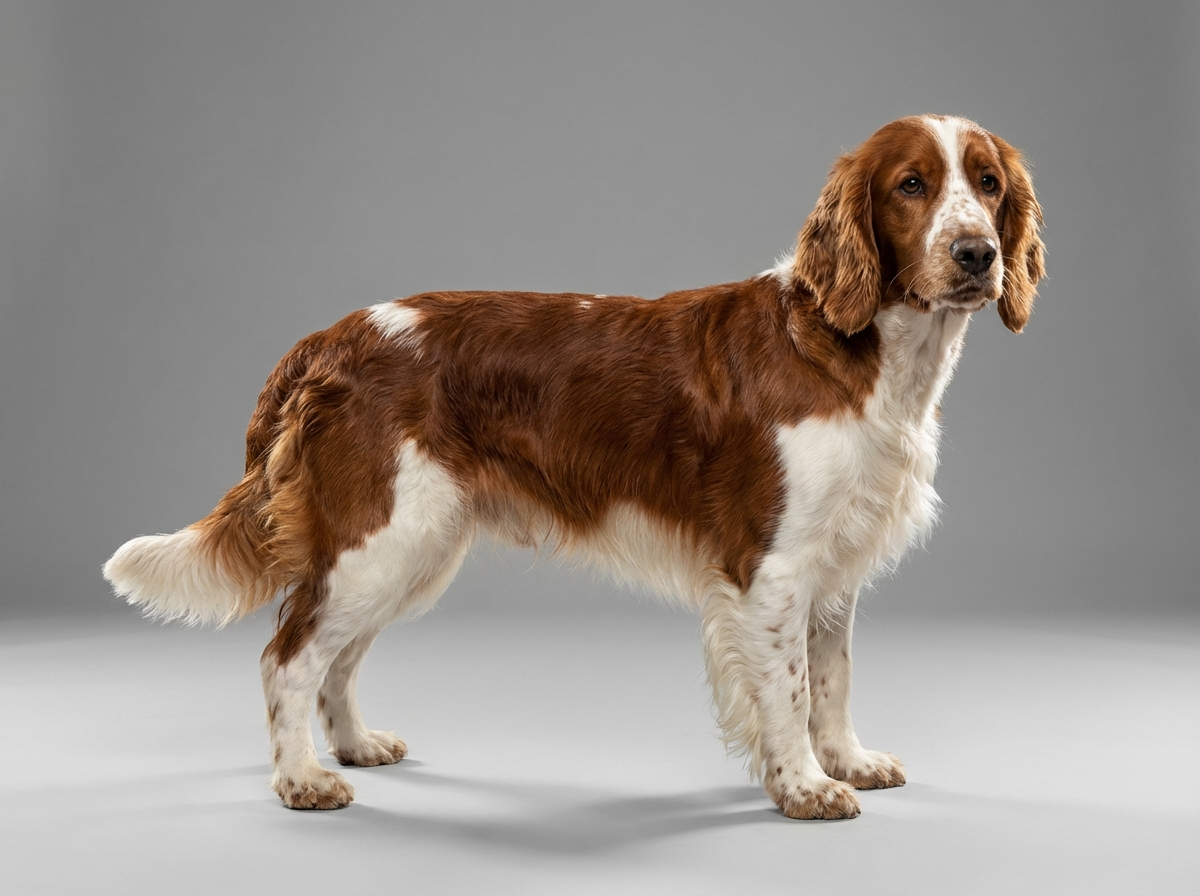
Does genetic load research apply to Welsh Springer Spaniels?
No — the highest-variant-load finding is documented in the Norwegian Lundehund, not this breed.

Quick answer
Does genetic load research apply to Welsh Springer Spaniels?
No — the highest-variant-load finding is documented in the Norwegian Lundehund, not this breed.
A phrase like "highest genetic variant load among studied breeds" sounds alarming attached to any dog, but it describes one breed's uniquely narrow founder population, and the Welsh Springer Spaniel isn't that breed.
Owners and prospective buyers who ran across a genetic-load ranking or a "breeds with the worst genetics" article while researching Welsh Springer Spaniels, and want to know whether the claim actually belongs to this breed.
This guide is not medical advice. If your dog shows pain, sudden behavior change, or worsening symptoms, consult a licensed veterinarian.
Some links may be affiliate links. We may earn a commission at no extra cost to you. We only suggest products we believe are helpful for dog owners.
We research and check what we publish, but we do not warrant that any figure, date, price, or statement is accurate, complete, or current, and we accept no liability for any loss, cost, injury, or other harm arising from the use of this site. Use it as one reference among several. You remain responsible for your own decisions and for your dog's care - confirm anything that matters with a licensed veterinarian or another qualified professional before you act on it. Full disclaimer.
The "highest concentration of harmful genetic variants among studied breeds" finding is documented in the Norwegian Lundehund, a breed that passed through a severe population bottleneck, and it is not established for the Welsh Springer Spaniel. For this breed, hip dysplasia, ear infections, epilepsy, glaucoma, and hypothyroidism are the genuinely documented concerns worth a breeder conversation and screening budget.
Extreme genetic-load rankings are specific to a small number of severely bottlenecked breeds, and the Welsh Springer Spaniel isn't among them in any published comparison. The breed's own documented health picture — centered on hips, ears, seizures, eyes, and thyroid function — is what owners should track instead.
The elevated variant load documented in comparative genomic research traces specifically to the Norwegian Lundehund's population history, where a near-extinction event left only a small number of founding dogs. No equivalent bottleneck event has been documented in Welsh Springer Spaniel breeding records, and the breed's larger, longer-established gene pool is the more likely reason no comparable finding exists for it.
Because the genetic-load finding itself isn't relevant to this breed, there's no environmental trigger to discuss for it here. The breed's actual documented conditions do have environmental components worth noting instead — ear infections are influenced by moisture and ear structure, and hip dysplasia risk is influenced by growth rate and weight during puppyhood.
See a vet promptly for a first seizure, sudden eye pain or cloudiness, a head tilt with ear odor or discharge, or any new lameness — these map to the breed's actual documented conditions and warrant real evaluation. None of these signs relate to genetic load, so there's no reason to bring that specific term into the conversation.
Genetic load comparisons get passed around out of context more than almost any other dog genetics topic. Here's where that goes wrong for Welsh Springer Spaniel owners specifically.
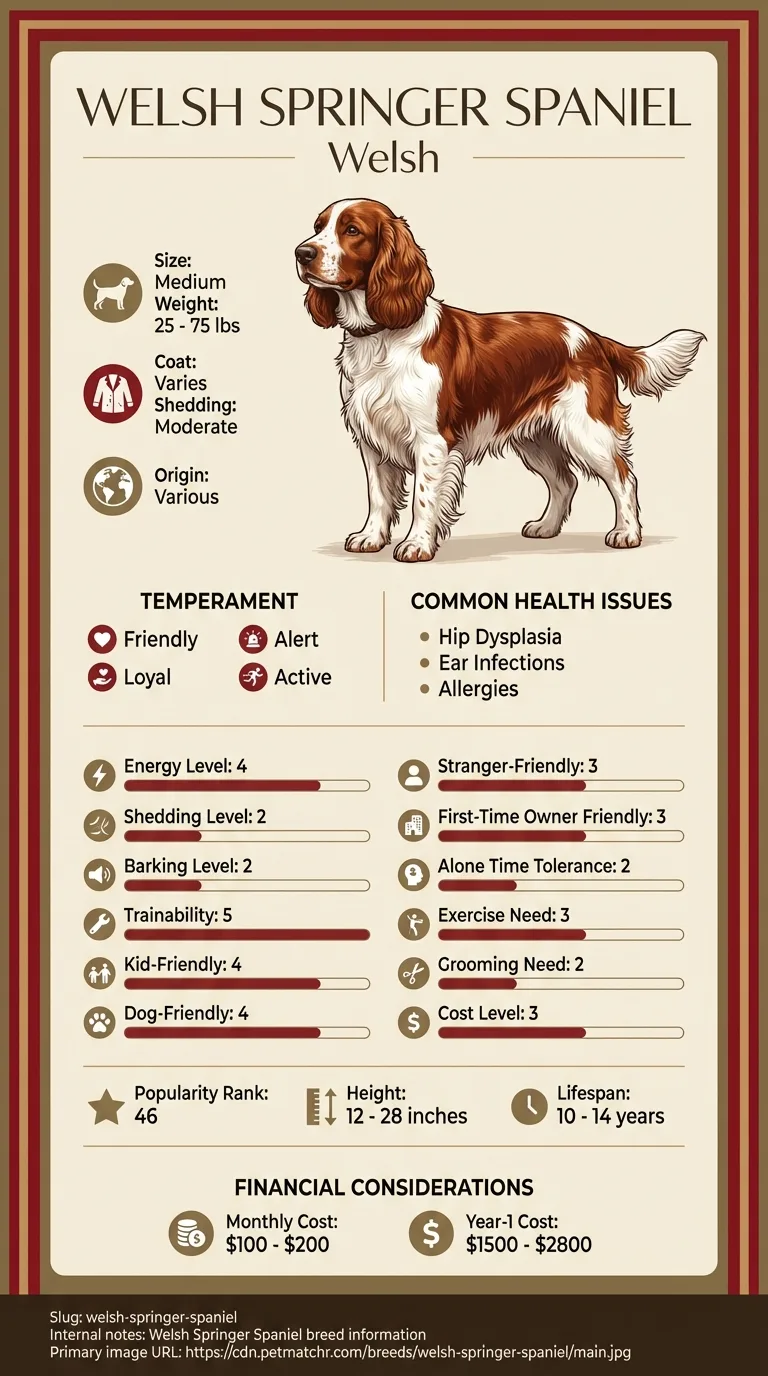
See all Welsh Springer Spaniel health problems, which breeds are prone to genetic load, or the full Welsh Springer Spaniel breed guide for temperament, exercise needs and ownership costs.
There's no meaningful timeline to track for a genetic-load risk that isn't established in this breed. For the conditions that actually apply, expect hip screening around two years of age, annual eye exams starting in adulthood, and periodic thyroid panels as your vet recommends.
Success here is redirecting the concern productively: confirming a breeder's hip, eye, and thyroid clearances, and staying current on the screening this breed's real health profile calls for. That's a far more useful outcome than worrying about a statistic that belongs to a different breed's population history.
Comparative genomic studies across dog breeds count harmful variants each population carries and rank breeds against each other; the Norwegian Lundehund consistently stands out because its population dropped to only a handful of dogs after near-extinction in Norway in the 1940s-60s. That kind of extreme bottleneck concentrates whatever harmful variants those few founders carried, which is why the breed also has a well-documented intestinal disease linked to its genetics.
The Welsh Springer Spaniel has a longer, broader breeding history as an established gun dog with a larger registered population and no comparable founder-collapse event on record. No published genomic comparison has placed this breed at the top of a genetic-load ranking, and it isn't part of the Lundehund's bottleneck story.
Every purebred dog carries some degree of genetic load simply from having a closed studbook, so the concept isn't irrelevant to any breed. But "highest among studied breeds" is a specific superlative that belongs to whichever breed the original comparison actually ranked highest, and that isn't a title the Welsh Springer Spaniel holds.

For a Welsh Springer Spaniel, the screening worth spending money and vet time on is hip evaluation through OFA or PennHIP given the breed's documented hip dysplasia risk, an eye certification for glaucoma, and a thyroid panel for hypothyroidism. These are established, breed-relevant checks with real predictive value, unlike a genetic-load statistic that doesn't apply here.
Epilepsy in this breed is suspected to have a hereditary component that's tracked through breeding-line history rather than a single genetic test, so ask a breeder directly about seizure activity in parent and sibling dogs. Recurring ear infections are also worth discussing, though they're driven more by ear structure and moisture than by inherited variant load.
None of this connects to the Lundehund's mutational-load research. It's the Welsh Springer Spaniel's own, independently documented set of concerns, and it's where a genuinely useful genetics conversation with a vet or breeder should focus.

While comparing breeds before bringing home a Welsh Springer Spaniel puppy, Priya in Asheville came across a genetics article ranking breeds by "harmful variant load" with the Norwegian Lundehund at the top, and worried the number might apply to her chosen breed too. Her breeder walked her through the actual source: the ranking reflected the Lundehund's near-extinction history, a founder bottleneck the Welsh Springer Spaniel never went through. Instead, they spent the conversation on hip and eye clearances for the litter's parents and a thyroid panel result Priya hadn't thought to ask for. She left with a health picture specific to her puppy's actual breed rather than a borrowed statistic from an unrelated one.
Key takeaway: A genetic-load ranking that belongs to one breed's specific population history doesn't transfer to another breed just because both are purebred dogs. The productive move is confirming the screening genuinely documented for the breed you're getting.
It's a population-genetics measurement of how many harmful gene variants show up across a breed's population, usually tied to how narrow that breed's founding gene pool was. It describes a breed as a whole, not any individual dog's health outlook.
No. The "highest concentration of harmful genetic variants among studied breeds" finding is associated with the Norwegian Lundehund, whose population went through a severe bottleneck in the mid-1900s, not with the Welsh Springer Spaniel.
The breed nearly went extinct in Norway during the 1940s-60s, leaving only a small handful of founding dogs to rebuild the population. That extreme bottleneck concentrated whatever harmful variants those few dogs carried, which researchers have linked to the breed's known intestinal disease.
Not in the sense the genetic-load research describes. A health issue in this breed is far more likely to be one of its documented conditions — hip dysplasia, ear infections, epilepsy, glaucoma, or hypothyroidism — than evidence of an elevated overall variant load.
Ask for OFA or PennHIP hip results, a current eye certification, and thyroid panel results on both parents, plus any known seizure history in the line. These four areas map directly to the breed's actual documented risks.
It has a longer, broader breeding history than breeds like the Norwegian Lundehund and no documented extreme founder bottleneck, though like all purebred dogs it carries some degree of reduced diversity from a closed studbook. No published research has flagged it as an outlier for genetic load.
There's no documented reason to, since the specific finding doesn't apply to this breed. A more useful step is confirming hip, eye, and thyroid clearances with a breeder, which addresses the conditions actually established in Welsh Springer Spaniels.
No — the highest-variant-load finding is documented in the Norwegian Lundehund, not this breed.
Hip dysplasia, ear infections, epilepsy, glaucoma, and hypothyroidism are the breed's established concerns.
Hip, eye, and thyroid screening typically costs far less than managing an untested hereditary condition later.
Routine ear checks and joint-friendly exercise matter far more than any genetic-load statistic.
No — trainability in the Welsh Springer Spaniel has no documented connection to the Lundehund's unrelated genetic findings.
A one-page prep sheet for this condition: the signs, the questions to ask, what to get priced. Unlocks here.
You get: Vet visit prep sheet
No spam. One-click unsubscribe. See our privacy policy.
See a sample page before you decide.
Early access list
The free prep sheet covers the same-day warning signs, a symptom log and the questions to ask. We are considering a fuller kit that adds a cost worksheet for the usual tests and treatments (US price ranges with their sources) and a plain-English guide to ways of covering the bill. It is not built yet; this list tells us whether it is worth building.
One email, no spam, unsubscribe anytime. Information only, not veterinary advice.