Behavior
Why does my Welsh Springer Spaniel bark at strangers?
This breed's documented reserved temperament toward unfamiliar people makes strangers a common, specific trigger for alert barking.

Quick answer
Why does my Welsh Springer Spaniel bark at strangers?
This breed's documented reserved temperament toward unfamiliar people makes strangers a common, specific trigger for alert barking.
That knock at the door, the delivery van pulling up, a stranger walking past the fence, all of it registers as worth flagging to a dog that's naturally more watchful of the unfamiliar.
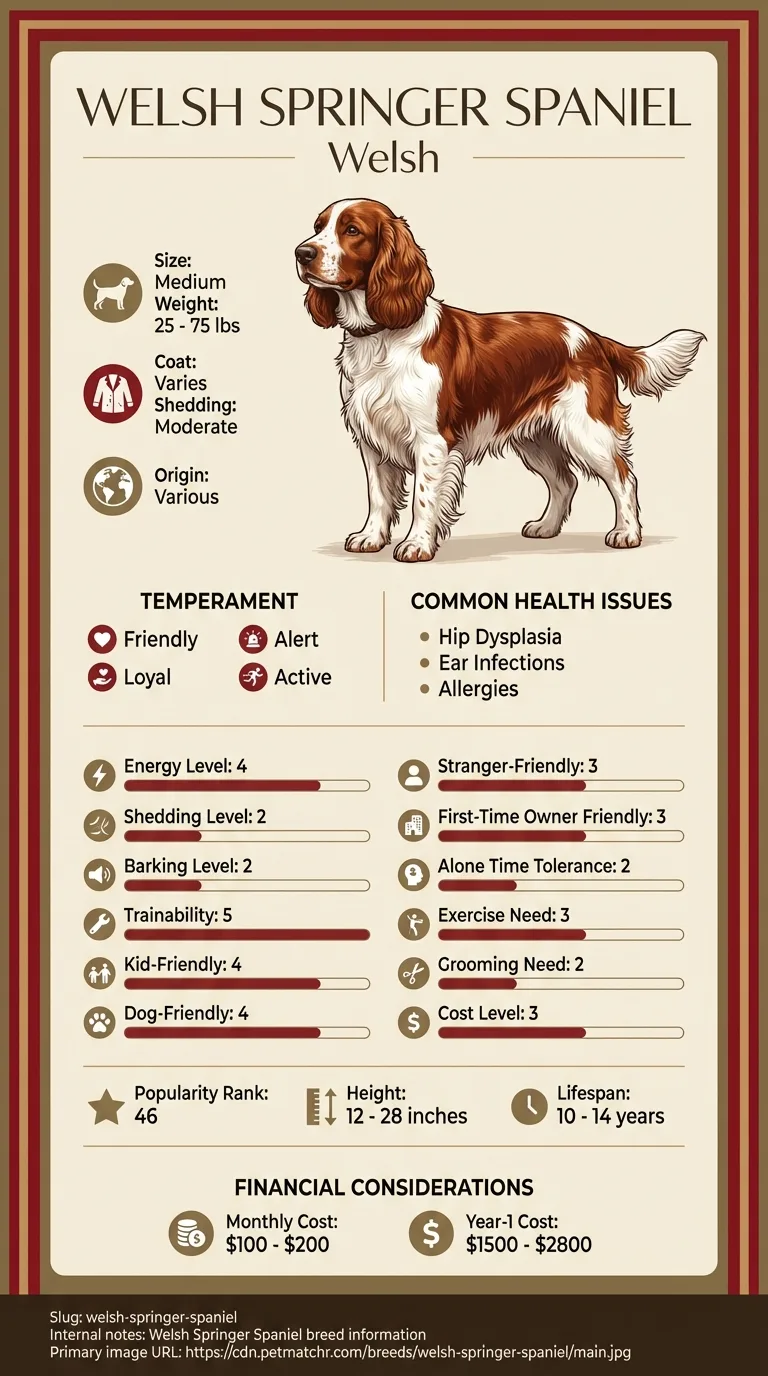
Owners in busier neighborhoods, with frequent visitors, deliveries, or noise, tend to fight this the most, since there's simply more for a naturally reserved, alert dog to react to throughout the day.
This guide is not medical advice. If your dog shows pain, sudden behavior change, or worsening symptoms, consult a licensed veterinarian.
Some links may be affiliate links. We may earn a commission at no extra cost to you. We only suggest products we believe are helpful for dog owners.
We research and check what we publish, but we do not warrant that any figure, date, price, or statement is accurate, complete, or current, and we accept no liability for any loss, cost, injury, or other harm arising from the use of this site. Use it as one reference among several. You remain responsible for your own decisions and for your dog's care - confirm anything that matters with a licensed veterinarian or another qualified professional before you act on it. Full disclaimer.
Excessive barking in the Welsh Springer Spaniel is most often alert barking, triggered by strangers, unfamiliar sounds, or environmental changes, rooted in the breed's documented reserved temperament toward unfamiliar people. This differs from constant, triggerless barking and typically responds well to structured training and management.
Barking level for this breed is documented as moderate rather than extreme, but the specific combination of reserved-with-strangers temperament and high energy needs makes alert barking a common, manageable behavior pattern for many owners of this breed.
The breed's documented temperament keywords include being reserved with strangers alongside loyal and even-tempered, a combination that predisposes many individual dogs toward alert barking at unfamiliar people or situations rather than constant, undirected vocalization.
Busier environments with more foot traffic, deliveries, or ambient noise provide more triggers throughout the day. Insufficient exercise relative to this breed's documented high energy need can also lower a dog's overall threshold for reacting to those triggers.
Consider a trainer if barking doesn't improve with consistent practice over several weeks, if it's paired with other reactive behaviors like lunging or fear responses, or if you'd simply like structured guidance building a reliable 'quiet' cue faster.
Barking itself rarely needs a vet visit, but a sudden, unexplained increase in barking, especially paired with pacing, restlessness, or other behavior changes, is worth mentioning in case an underlying medical or anxiety issue is contributing.
See all Welsh Springer Spaniel health problems, which breeds are prone to excessive barking, or the full Welsh Springer Spaniel breed guide for temperament, exercise needs and ownership costs.
Most owners see meaningful improvement within four to eight weeks of consistent daily practice. A dog with this documented temperament will likely always bark at least once to flag something new, complete silence isn't a realistic or even necessary goal.
Success looks like a dog that gives an initial alert bark and then quiets down on cue, rather than sustained barking that continues well after the trigger has passed or been addressed.
The Welsh Springer Spaniel's documented temperament includes being reserved with strangers alongside being loyal and even-tempered with familiar people and family. That combination, warm at home, wary of the unfamiliar, is a classic setup for alert barking, since the dog is essentially doing its job: flagging anything or anyone it perceives as new or uncertain.
This isn't the same as the more constant, seemingly triggerless barking sometimes seen in breeds bred purely for vocal alerting. It's usually specific and situational, tied to a stranger, an unfamiliar sound, or a change in the environment, rather than barking at nothing in particular for long stretches.
Understanding this distinction matters because the fix is different too. A dog barking from generalized anxiety needs a different approach than a naturally watchful, reserved dog that's simply announcing something it's noticed, which is much more responsive to structured exposure and a clear 'that's enough' cue.
Because this pattern is rooted in a documented, stable temperament trait rather than a passing phase, consistent, gradual training tends to work better than a quick fix.

Every delivery, every passing dog walker, every knock sent Steffan's Welsh Springer Spaniel, Nia, into a sustained barking fit that could last several minutes. Steffan had assumed this was just how the breed was, until a trainer pointed out that Nia's reserved-with-strangers temperament was doing exactly what it was built to do, just without a clear stopping point. They started with a simple 'quiet' cue, rewarding even a one-second pause at first and gradually building up. Steffan also rearranged the living room to block Nia's direct view of the street and made sure her daily exercise needs were consistently met rather than skipped on busy days. Within six weeks, Nia still barked once or twice at a new stranger or knock, but settled quickly on cue instead of escalating into a prolonged episode.
Key takeaway: The goal wasn't eliminating a naturally watchful dog's instinct to alert, it was giving that instinct a clear, trainable stopping point.
This breed isn't documented as an especially vocal breed overall, but its reserved temperament toward strangers means unfamiliar people and situations are a common, specific trigger for alert barking.
Not necessarily. Alert barking triggered by strangers or new sounds is often simply a reserved, watchful temperament at work, distinct from the more constant barking sometimes seen with underlying anxiety.
Most owners see noticeable improvement within four to eight weeks of consistent training, though a naturally watchful dog will likely always bark at least once to flag something new, just more briefly and responsively to a 'quiet' cue.
Punishment can suppress the bark in the moment but often increases underlying anxiety, sometimes worsening the behavior over time. Rewarding a quick, calm response to a cue tends to work better long-term.
For a breed with a documented high exercise need, yes. An under-exercised, understimulated dog often has a lower threshold for reacting to everyday triggers, so consistent daily activity supports training progress.
If barking becomes constant, occurs even without an identifiable trigger, or is paired with signs of distress like pacing or destructive behavior, it's worth discussing with a trainer or vet rather than assuming it's simple alert barking.
This breed's documented reserved temperament toward unfamiliar people makes strangers a common, specific trigger for alert barking.
Not usually; it's typically situational alert barking tied to a specific trigger rather than constant, triggerless barking.
Reward a brief pause in barking with a 'quiet' cue, gradually extending the required pause over consistent daily practice.
Yes, meeting this breed's documented high exercise need helps lower overall reactivity to everyday triggers.
Yes, reducing visibility of common triggers like passersby can meaningfully cut down on alert barking frequency.
Behaviour changes often start with pain. The prep sheet for this page covers what to rule out, and what to ask.
You get: Vet visit prep sheet
No spam. One-click unsubscribe. See our privacy policy.
Preview page 1 before you decide.