Behavior
What are quick tips to manage Miniature Schnauzer excessive barking?
Provide plenty of exercise and mental stimulation, establish a consistent routine, and use positive reinforcement training to encourage quiet behavior.

Quick answer
What are quick tips to manage Miniature Schnauzer excessive barking?
Provide plenty of exercise and mental stimulation, establish a consistent routine, and use positive reinforcement training to encourage quiet behavior.
Miniature Schnauzer excessive barking can be a frustrating issue for many owners. This behavior often stems from alertness and a desire to communicate.
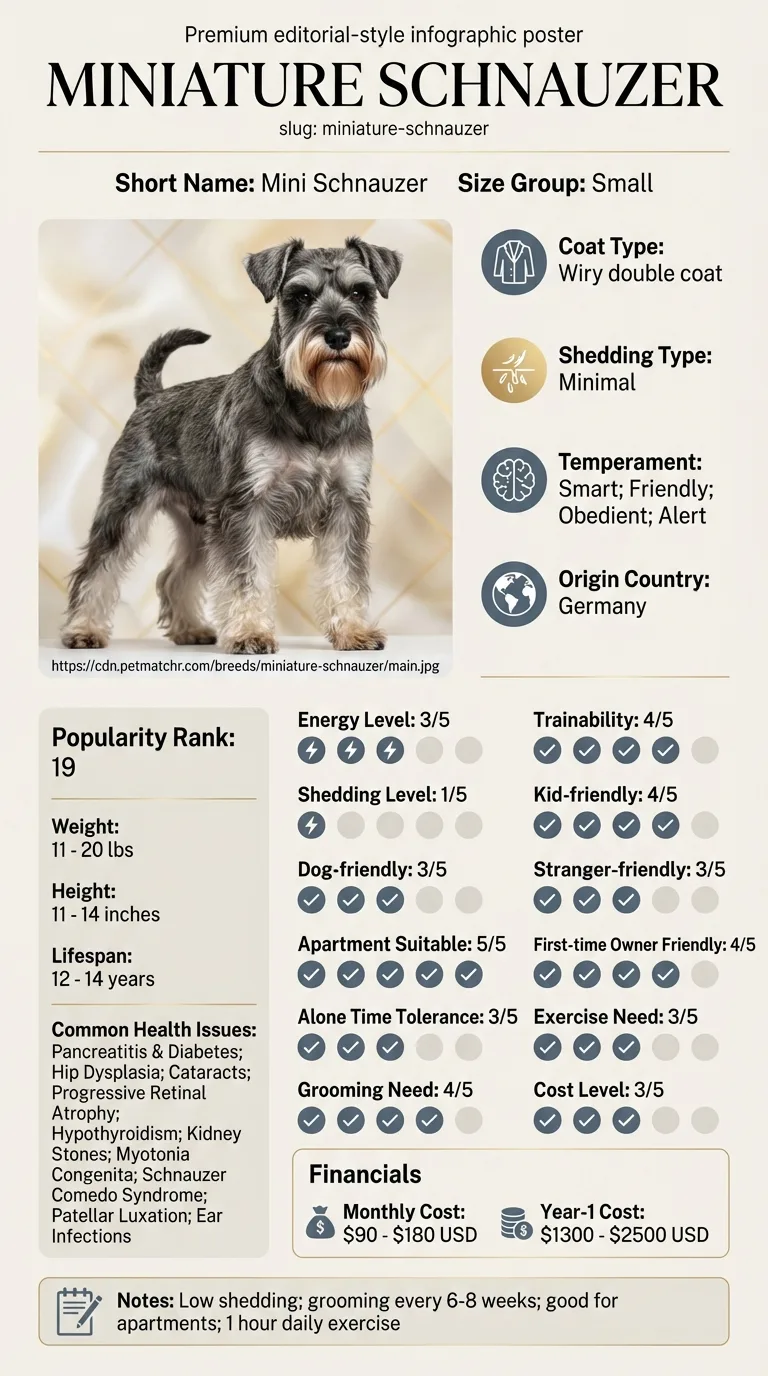
Owners who live in close quarters, such as apartments, or those with busy households often find this issue particularly challenging. First-time dog owners may also struggle to understand the triggers behind their Mini Schnauzer's barking.
This guide is not medical advice. If your dog shows pain, sudden behavior change, or worsening symptoms, consult a licensed veterinarian.
Some links may be affiliate links. We may earn a commission at no extra cost to you. We only suggest products we believe are helpful for dog owners.
We research and check what we publish, but we do not warrant that any figure, date, price, or statement is accurate, complete, or current, and we accept no liability for any loss, cost, injury, or other harm arising from the use of this site. Use it as one reference among several. You remain responsible for your own decisions and for your dog's care - confirm anything that matters with a licensed veterinarian or another qualified professional before you act on it. Full disclaimer.
Miniature Schnauzer excessive barking is a common issue that can be frustrating for owners. These small dogs are known for their alertness and tendency to bark at various stimuli, including people, other dogs, and even noises. This behavior can escalate quickly if not addressed, leading to a noisy household and potential issues with neighbors.
Excessive barking is quite common among Miniature Schnauzers, often rated high on the barking scale. Many owners report this issue, especially if their dogs are not adequately trained or stimulated. Without proper intervention, this behavior can become a significant part of daily life for both the dog and its owner.
Miniature Schnauzers are naturally alert and protective, which can lead to excessive barking. Their intelligence and high energy levels mean they may bark when bored or needing attention. Additionally, their strong instinct to guard can cause them to bark at noises or strangers.
Environmental factors can trigger excessive barking in Miniature Schnauzers. If they lack enough mental and physical stimulation, they may bark out of frustration or boredom. Living in a noisy area or not having a secure space can also contribute to their barking habits.
If your efforts at home don't yield results, consider consulting a professional trainer. A trainer can provide personalized strategies and help you understand your dog's behavior better.
If your Miniature Schnauzer's barking seems excessive or is accompanied by signs of distress, it may be time to consult a vet. They can check for underlying health issues or anxiety problems that may be contributing to the barking.
Start here: Miniature Schnauzer Most Common Genetic Disorders: Screening
See all Miniature Schnauzer health problems, which breeds are prone to excessive barking, or the full Miniature Schnauzer breed guide for temperament, exercise needs and ownership costs.
It typically takes 4 to 8 weeks to notice significant improvement with consistent training.
Success means your Miniature Schnauzer barks less frequently and responds better to commands, making walks and home life more peaceful.
Addressing excessive barking in your Miniature Schnauzer can be challenging. However, certain common mistakes can exacerbate the problem. Here are some behaviors to avoid, along with safer alternatives.
Not all barking is created equal. Some barking is typical behavior for Miniature Schnauzers, but certain signs indicate an emergency. If your Mini Schnauzer exhibits extreme distress or shows signs of aggression while barking, it's time to call your vet. Look for symptoms like rapid breathing, trembling, or inability to calm down. These can signal anxiety or a deeper issue that needs immediate attention.
On the other hand, if your dog is barking at passing cars or visitors but is otherwise calm and healthy, it might just be a behavior to monitor. Create a plan to address the excessive barking through training and redirection. Techniques can include providing distractions or teaching quiet commands.
In summary, trust your instincts as a dog owner. If the barking feels out of control or linked to other concerning behaviors, don’t hesitate to seek professional help. A vet can provide guidance on behavioral training or check for medical issues that might be causing the excessive barking.

Nina, a busy nurse living in a small apartment, struggled with her Miniature Schnauzer, Max, who barked at every passerby. Frustrated, she researched how to stop Miniature Schnauzer excessive barking and started a daily training routine. Over several weeks, she used positive reinforcement techniques and gradually introduced distractions during their walks. Eventually, Max learned to focus on Nina rather than the outside world, leading to fewer barking episodes and a calmer household.
Key takeaway: Patience and consistent training can effectively reduce excessive barking in Miniature Schnauzers, improving both the dog's behavior and the owner's peace of mind.
Miniature Schnauzers are known for their alert nature, which often leads to excessive barking. They may bark to alert you of strangers, express boredom, or seek attention. Understanding the triggers can help you manage their barking.
To stop Miniature Schnauzer excessive barking, first identify the triggers. Use positive reinforcement training to encourage quiet behavior and provide distractions like toys or puzzles to keep them engaged.
Yes, excessive barking can indicate anxiety, especially if your Miniature Schnauzer barks when left alone. Consider providing them with safe spaces or toys that can ease their stress, and consult a vet if the behavior persists.
Miniature Schnauzers require about an hour of exercise daily. Regular walks and playtime can help reduce their energy levels, which may decrease excessive barking. Make sure to mix physical activity with mental challenges.
Positive reinforcement methods, such as rewarding quiet behavior, are effective for training Miniature Schnauzers. Consistency is key, so use commands like 'quiet' during training sessions to reinforce the desired behavior.
While bark collars can deter barking, they may not address the underlying cause. It's best to consult with a trainer or vet to explore more humane training methods that focus on behavior modification.
Yes, excessive barking can sometimes indicate health problems, like pain or discomfort. If your Miniature Schnauzer suddenly increases its barking, it's a good idea to consult your vet to rule out any medical issues.
Older Miniature Schnauzers may bark due to anxiety or confusion. Providing a consistent routine, engaging their mind with puzzle toys, and considering calming aids can help manage their barking. Always consult your vet for tailored advice.
If your Miniature Schnauzer barks at strangers, it's important to socialize them gradually. Exposing them to different people and environments, combined with positive reinforcement, can help reduce this behavior over time.
Absolutely! Training is key to managing excessive barking in Miniature Schnauzers. Techniques like teaching the 'quiet' command and rewarding silence can be effective in curbing unnecessary barking.
Provide plenty of exercise and mental stimulation, establish a consistent routine, and use positive reinforcement training to encourage quiet behavior.
Training costs can vary but expect to spend around $100 to $300 for professional classes or private sessions to address barking issues.
Health issues like anxiety or pain can lead to excessive barking. Regular veterinary check-ups are essential to rule out any health concerns.
Yes, Miniature Schnauzers are known for their vocal nature, often barking more than other breeds. Understanding their barking patterns is crucial for effective training.
Behaviour changes often start with pain. The prep sheet for this page covers what to rule out, and what to ask.
You get: Vet visit prep sheet
No spam. One-click unsubscribe. See our privacy policy.
Preview page 1 before you decide.