Behavior
What are quick tips for Schnauzer (Standard) excessive barking?
Provide regular exercise and mental stimulation to keep your Schnauzer engaged. Use consistent training commands like 'quiet' to help them learn when it's appropriate to bark.

Quick answer
What are quick tips for Schnauzer (Standard) excessive barking?
Provide regular exercise and mental stimulation to keep your Schnauzer engaged. Use consistent training commands like 'quiet' to help them learn when it's appropriate to bark.
Schnauzer (Standard) excessive barking can be a frustrating challenge for many owners. This behavior can disrupt your peace and create tension in your home.
This issue often affects first-time dog owners or those living in apartments where noise can be more problematic. Busy families and individuals who work from home may also find excessive barking particularly challenging.
This guide is not medical advice. If your dog shows pain, sudden behavior change, or worsening symptoms, consult a licensed veterinarian.
Some links may be affiliate links. We may earn a commission at no extra cost to you. We only suggest products we believe are helpful for dog owners.
We research and check what we publish, but we do not warrant that any figure, date, price, or statement is accurate, complete, or current, and we accept no liability for any loss, cost, injury, or other harm arising from the use of this site. Use it as one reference among several. You remain responsible for your own decisions and for your dog's care - confirm anything that matters with a licensed veterinarian or another qualified professional before you act on it. Full disclaimer.
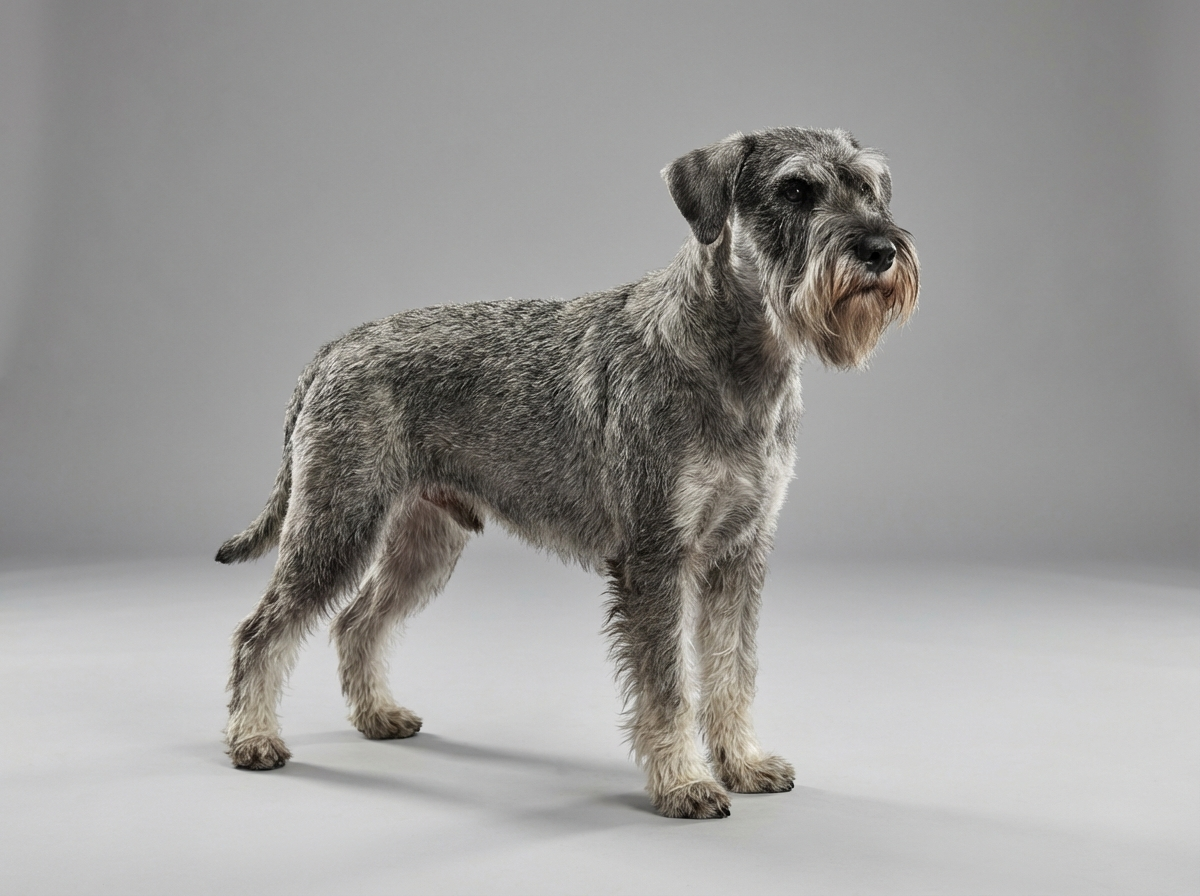
Schnauzer (Standard) excessive barking can be a daily challenge for owners. This breed is known for its alertness and spirited nature, which can lead to barking at passing cars, strangers, or even other pets. For many Schnauzers, barking becomes a default response to their environment, making it essential for owners to address this behavior early on.
Excessive barking is relatively common in Schnauzers (Standard). Many owners report that this breed tends to bark more than average, especially if they're not adequately trained or socialized. Understanding the reasons behind this barking can help owners find effective solutions.
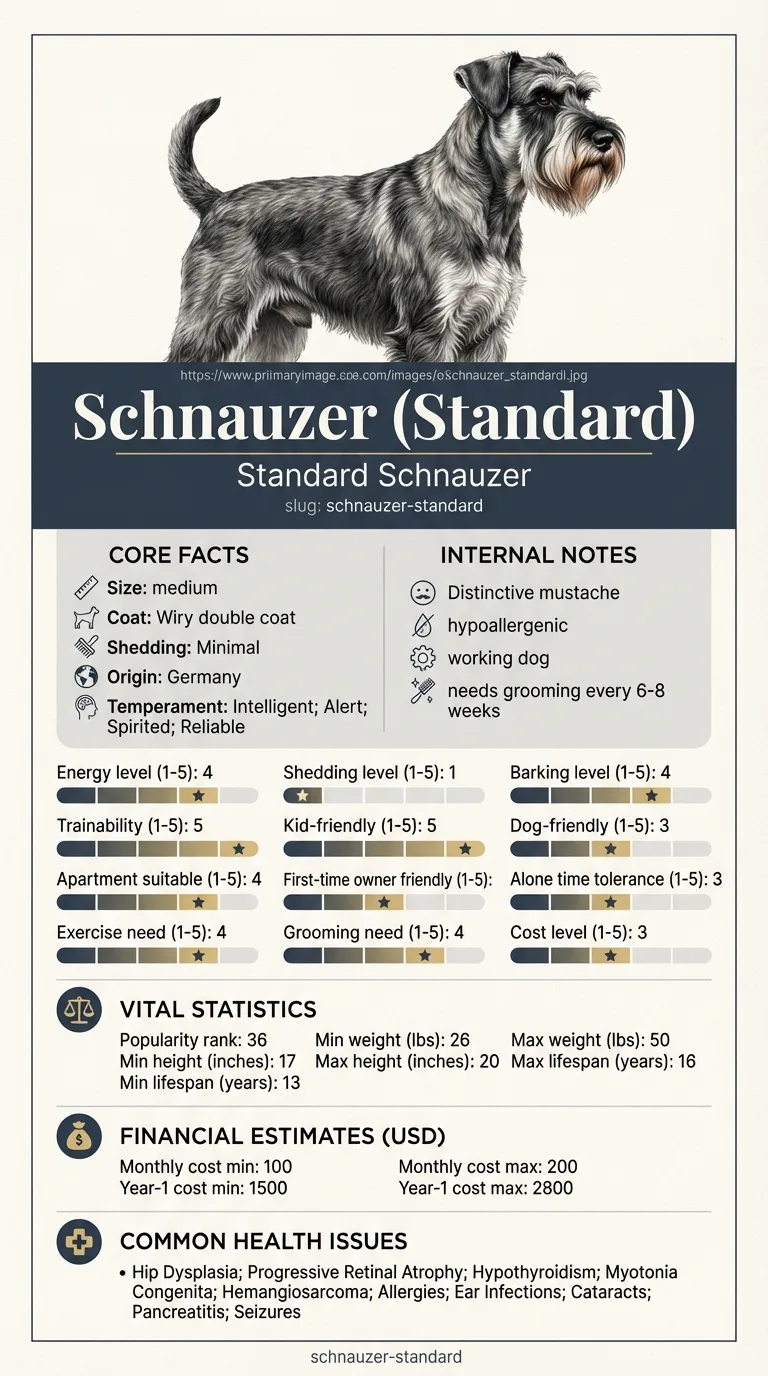
Schnauzers (Standard) are naturally alert and intelligent dogs. Their strong guarding instincts can lead to excessive barking when they perceive threats or unfamiliar sounds. This breed also has a spirited personality, which can make them more vocal.
Excessive barking can be triggered by environmental factors such as lack of stimulation, boredom, or loneliness. If a Standard Schnauzer is left alone for long periods or doesn't receive enough exercise, they may bark more as a way to cope with their feelings.
If your Schnauzer's excessive barking persists despite your efforts, consider consulting a professional trainer. They can provide personalized strategies and help address any underlying behavior issues.
If barking is accompanied by signs of distress, changes in behavior, or if your dog seems unwell, it's important to consult a veterinarian. They can rule out health issues or anxiety disorders that may be contributing to the excessive barking.
Start here: Standard Schnauzer Most Common Genetic Disorders: Screening
See all Schnauzer Standard health problems, which breeds are prone to excessive barking, or the full Schnauzer Standard breed guide for temperament, exercise needs and ownership costs.
With consistent training, you can see improvements in about 4 to 8 weeks.
Success means your Schnauzer (Standard) will bark less frequently and respond better to commands, allowing for a more peaceful home.
When dealing with Schnauzer (Standard) excessive barking, it’s easy for owners to unintentionally reinforce the behavior or delay improvement. Here are some common mistakes to avoid.
Understanding when Schnauzer (Standard) excessive barking is a real emergency can help you protect your dog and ensure their well-being. There are clear signs that indicate it’s time to call your vet. If your Schnauzer is barking excessively and shows signs of distress, such as pacing, panting, or trembling, it's a red flag. These behaviors might indicate anxiety or a medical issue that requires immediate attention.
Additionally, if your Schnauzer suddenly starts barking excessively after being calm, it may signal pain or discomfort. Look for other symptoms like loss of appetite, lethargy, or changes in behavior. These can all point to underlying health issues that need to be addressed right away.
On the other hand, if your Schnauzer barks often but doesn’t show any of these distress signals, you might be dealing with a more manageable situation. Excessive barking can sometimes be due to boredom or a lack of exercise, which you can monitor. Establishing a plan that includes regular exercise, mental stimulation, and training can help reduce the barking over time.

Meet Sarah, a busy nurse living in a small apartment with her Standard Schnauzer named Max. Max loved to bark at every sound, from the mailman to the neighbor’s cat, which made it tough for Sarah to relax after long shifts. After researching how to stop Schnauzer (Standard) excessive barking, Sarah started a training routine with positive reinforcement. She used treats to reward Max for quiet moments and implemented a consistent 'quiet' command. Over time, Max learned to settle down when visitors arrived, and Sarah found herself enjoying her evenings at home again.
Key takeaway: With patience and consistent training, you can successfully reduce your Schnauzer's excessive barking, creating a calmer environment for both of you.
Schnauzers are naturally alert and protective, which can lead to excessive barking. They might bark to alert you of strangers, express boredom, or due to anxiety. Understanding your dog's triggers is key in managing this behavior.
To stop Schnauzer (Standard) excessive barking, try consistent training and positive reinforcement. Redirect their barking by teaching them the 'quiet' command, and ensure they get enough exercise and mental stimulation to reduce boredom.
Positive reinforcement techniques, such as treats and praise, work well for Schnauzers. You can also use a clicker to mark desired behaviors when they stop barking. Consistency and patience are essential in this process.
Consider using anti-bark collars or devices that emit a sound when the dog barks as training aids. However, consult with a trainer or veterinarian before using these tools to ensure they are suitable for your Schnauzer.
Yes, Schnauzers may bark excessively if they're experiencing separation anxiety. If your dog shows signs of distress when left alone, consider working on gradual desensitization and providing comfort items to ease their anxiety.
If your Schnauzer barks excessively during normal situations or if the barking causes issues with neighbors, it's time to evaluate their behavior. Monitoring the frequency and context of the barking will help you determine if intervention is needed.
Schnauzers (Standard) may bark excessively due to boredom, anxiety, or a need for attention. They are alert dogs and might bark at strangers or other animals. Identifying the trigger can help address the issue.
Older Schnauzers (Standard) may bark due to changes in their environment or health issues. It's essential to ensure they are comfortable and not in pain. Consider consulting a vet for health concerns and explore calming techniques like gentle training or anxiety-reducing products.
If your Schnauzer (Standard) has sudden changes in barking habits or shows signs of distress, it's best to consult a vet. Excessive barking can sometimes indicate underlying health issues or anxiety that need professional attention.
Yes, training can significantly reduce excessive barking in Schnauzers (Standard). Consistent reinforcement of quiet commands, along with positive behavior training, can help your dog learn when barking is appropriate and when it's not.
Yes, there are various products designed to help manage excessive barking in Schnauzers (Standard). Consider anti-bark collars, calming sprays, or toys that keep them engaged. Always consult with a trainer or vet before introducing new products.
Provide regular exercise and mental stimulation to keep your Schnauzer engaged. Use consistent training commands like 'quiet' to help them learn when it's appropriate to bark.
Schnauzers generally need at least 30-60 minutes of exercise daily. Activities like walks, playtime, or puzzle toys can help burn off energy and decrease barking.
Yes, effective training can significantly reduce excessive barking. Consistent commands and positive reinforcement are key elements to success.
Yes, Schnauzers are known for their vocal nature. It's important to understand their reasons for barking to manage the behavior effectively.
Behaviour changes often start with pain. The prep sheet for this page covers what to rule out, and what to ask.
You get: Vet visit prep sheet
No spam. One-click unsubscribe. See our privacy policy.
Preview page 1 before you decide.