Health
Is the long-spine, short-legs back problem relevant to Welsh Springer Spaniels?
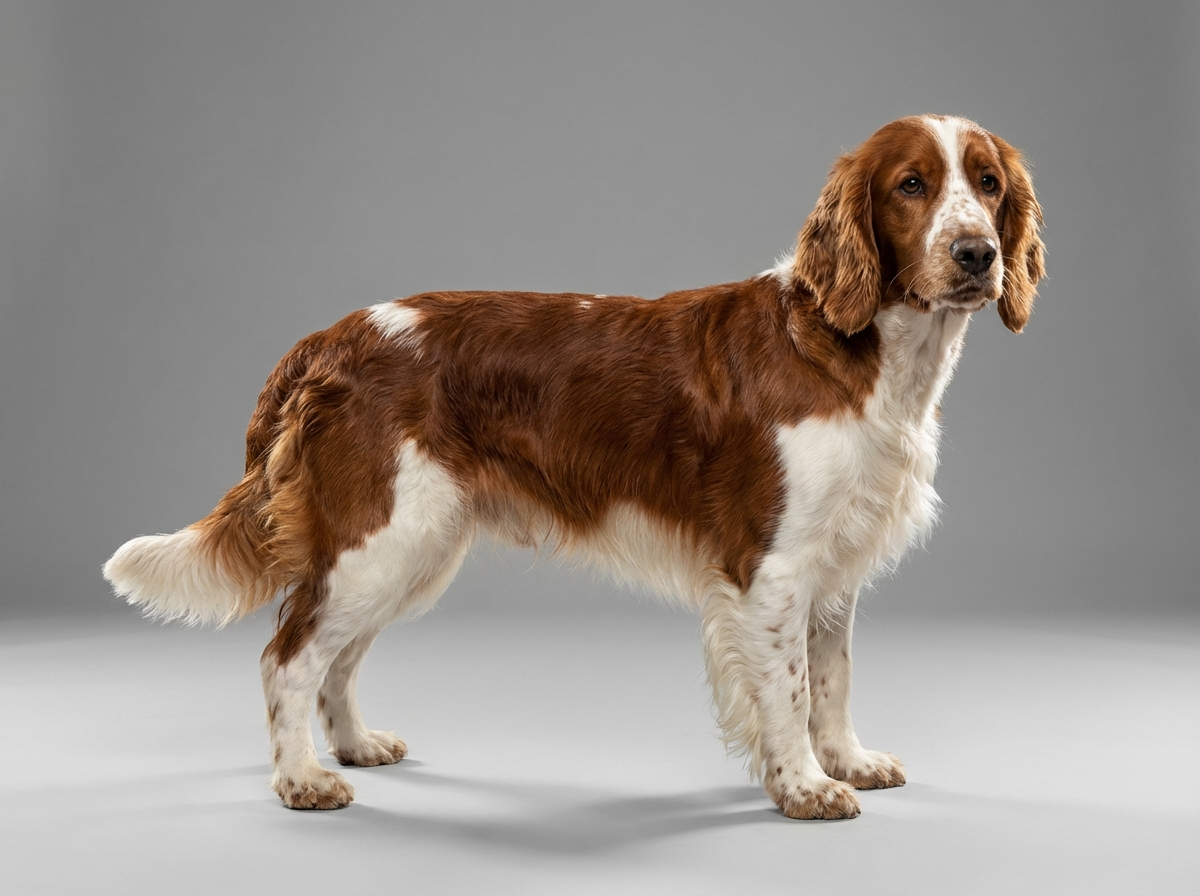
No, that describes chondrodystrophic breeds like Dachshunds and Corgis, and the Welsh Springer Spaniel has a normal body proportion instead.

Quick answer
Is the long-spine, short-legs back problem relevant to Welsh Springer Spaniels?
No, that describes chondrodystrophic breeds like Dachshunds and Corgis, and the Welsh Springer Spaniel has a normal body proportion instead.
A shortened spine and legs genuinely predispose certain breeds to serious back disease, but the Welsh Springer Spaniel simply isn't built that way.
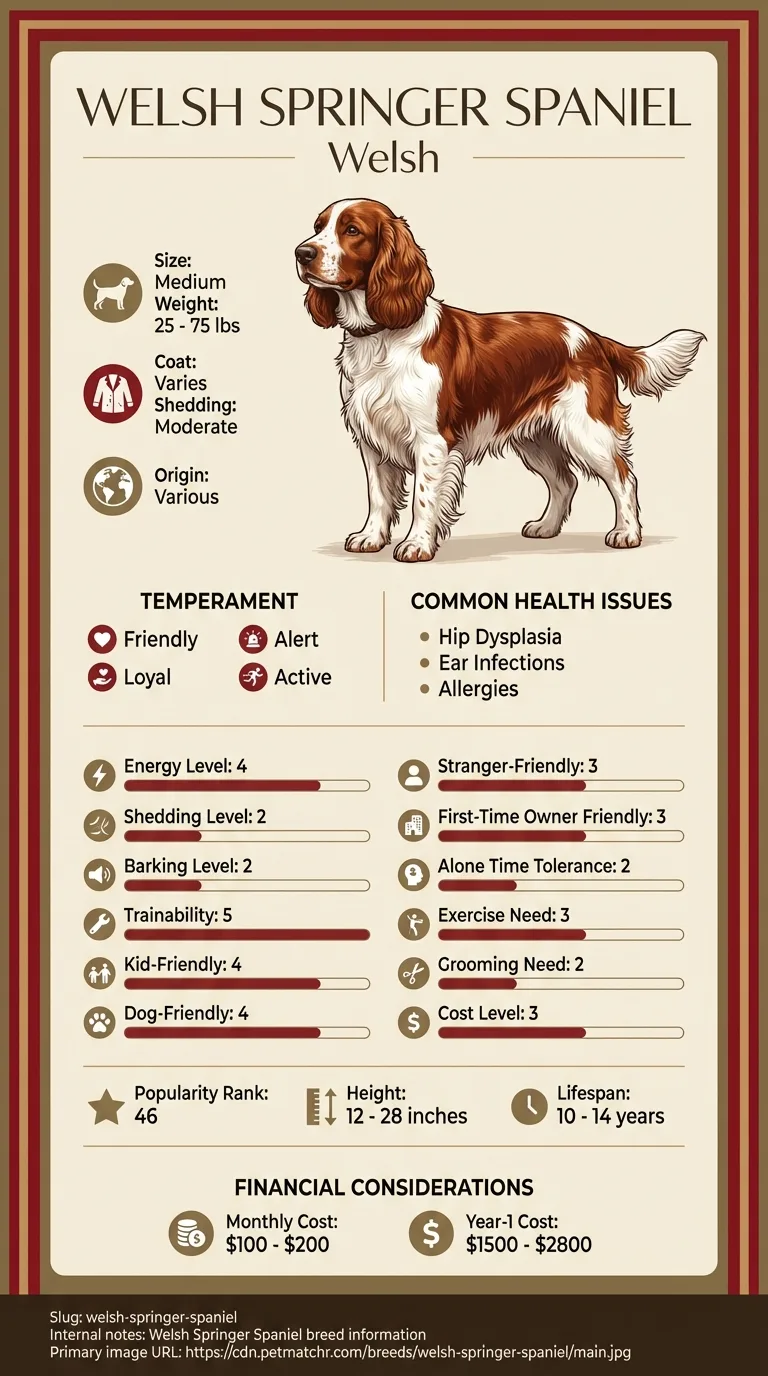
Owners who've read a general breed health list mentioning "long spine, short legs" back problems and want to know whether that risk applies to their normally proportioned Welsh Springer Spaniel are the audience here.
This guide is not medical advice. If your dog shows pain, sudden behavior change, or worsening symptoms, consult a licensed veterinarian.
Some links may be affiliate links. We may earn a commission at no extra cost to you. We only suggest products we believe are helpful for dog owners.
Back problems tied to "a long spine and short legs" describe chondrodystrophy, a dwarfism trait documented in Dachshunds, Corgis, Basset Hounds, and similar breeds, not a characteristic of the Welsh Springer Spaniel's normal, moderately proportioned build. Ordinary soft-tissue back strain can still happen to any active dog, but the breed-specific disc disease this description points to isn't a realistic concern here.
Intervertebral disc disease driven by chondrodystrophy is common enough in breeds like Dachshunds that it's one of their defining health concerns, but it isn't recognized as occurring in Welsh Springer Spaniels at a rate above any other normally-proportioned sporting breed. General back strain from activity can happen to any dog occasionally, which is a far less specific and far less serious picture than the genetic disease this description describes.
The genetic mutation behind chondrodystrophy, an extra FGF4 retrogene, has been identified and studied in breeds like the Dachshund, Corgi, and Basset Hound, where it shortens limb bones and predisposes the spine to disc degeneration. The Welsh Springer Spaniel's genetics don't include this trait, so its spine and legs develop with normal, unshortened proportions.
Because this specific disc disease isn't relevant to the Welsh Springer Spaniel's genetics, there are no body-shape-related environmental triggers to manage for it. The environmental factors that do matter for this breed's general musculoskeletal health are the ordinary ones: excess weight, insufficient conditioning before heavy exertion, and the usual wear of aging joints.
See a vet promptly for sudden reluctance to move, yelping when the back or hips are touched, or any dragging or weakness in the hind legs. These signs deserve attention in any breed, and in a Welsh Springer Spaniel the workup will typically focus on soft-tissue injury or hip-related causes rather than chondrodystrophic disc disease.
Generic breed health lists often describe conditions without specifying which breeds they actually affect, which creates confusion for owners of unrelated breeds. Avoid these mistakes when researching back problems for a Welsh Springer Spaniel.
See all Welsh Springer Spaniel health problems, which breeds are prone to back problems, or the full Welsh Springer Spaniel breed guide for temperament, exercise needs and ownership costs.
Because chondrodystrophic disc disease isn't a relevant risk for this breed, there's no disease-specific timeline to track for it in a Welsh Springer Spaniel. Ordinary soft-tissue back strain in an active dog typically improves within days to a couple of weeks of rest and vet-directed care, regardless of breed.
Success here means redirecting attention away from a genetic disease that doesn't fit this breed's body type and toward the orthopedic screening that actually matters, chiefly hip dysplasia evaluation. It also means responding appropriately to any real mobility change, without assuming it must be the chondrodystrophic disc disease seen in other breeds.
Chondrodystrophy shortens the limb bones relative to the spine through a specific, well-studied genetic mechanism, and it's been characterized in Dachshunds, Corgis, Basset Hounds, Beagles, and French Bulldogs, among others. The Welsh Springer Spaniel doesn't carry this trait, and its legs and spine are proportioned like those of most medium sporting breeds.
That means the disc herniation risk tied to a compressed, dwarfed spine simply isn't part of this breed's genetic picture. What is part of the picture is the breed's actual documented health list: hip dysplasia, ear infections, epilepsy, glaucoma, and hypothyroidism, each backed by real veterinary and breed-club data rather than a generic body-shape description.

A Welsh Springer Spaniel that suddenly won't jump into the car, yelps when its back is touched, or drags a hind leg needs prompt veterinary evaluation, the same as any dog would. In this breed, that workup is far more likely to turn up a soft-tissue strain, an early arthritic hip, or another orthopedic issue than the chondrodystrophic disc disease seen in short-legged breeds.
A dog that's briefly stiff after an unusually long hike or field session, and recovers with a day or two of rest, is a normal part of owning an active sporting breed. The practical guidance mirrors other breed-mismatch topics: don't ignore a real change, but expect the cause to be ordinary rather than the rare, genetically-driven disease this description points toward.

Priya was reading a general list of breed-linked orthopedic conditions before bringing home a Welsh Springer Spaniel puppy in Bozeman, Montana, and the phrase "long spine, short legs" next to a back-problems entry made her pause. Her puppy's legs looked proportionate to her, nothing like the low-slung build she'd seen on Dachshunds at the dog park, so she asked her vet directly at the first checkup. The vet confirmed the Welsh Springer Spaniel has a normal, moderate-boned frame and that this dwarfism-linked back disease simply doesn't apply here, then pointed her toward the breed's real orthopedic priority: hip dysplasia screening as the puppy grew. Priya still keeps an eye on her dog's back after long days of field work and hiking, because any dog can strain soft tissue with heavy activity. But she stopped worrying about a disc disease that was never a realistic risk for this body type, and instead scheduled hip evaluations at the ages her vet recommended.
Key takeaway: A back condition tied to dwarfism genetics in short-legged breeds isn't a meaningful risk for a normally-proportioned Welsh Springer Spaniel, and the breed's genuine orthopedic concern is hip dysplasia.
No. That description refers to chondrodystrophy, a dwarfism trait bred into Dachshunds, Corgis, and Basset Hounds, and the Welsh Springer Spaniel has normal, moderately proportioned legs and spine rather than that shortened-leg body type.
Chondrodystrophy is a genetic trait that shortens limb bones relative to the spine, documented in breeds like Dachshunds, Corgis, Basset Hounds, Beagles, and French Bulldogs. It raises their risk of intervertebral disc disease, a specific mechanism that isn't relevant to a Welsh Springer Spaniel's build.
Yes, in the ordinary sense that any active, medium-sized dog can strain a muscle or ligament from a hard fall, an awkward jump, or overexertion in the field. This is a general soft-tissue injury risk, not the breed-specific disc disease linked to chondrodystrophic body types.
Hip dysplasia is the documented orthopedic concern in Welsh Springer Spaniels, a joint development issue distinct from spinal disc disease. Screening through a vet-recommended evaluation as the dog matures is the useful step here, not disc-disease monitoring.
Sudden reluctance to jump, yelping when touched along the back, dragging a hind leg, or any abrupt change in how the dog moves all warrant a same-day veterinary evaluation. These signs matter regardless of breed and shouldn't be dismissed just because chondrodystrophic disc disease isn't a fit here.
Those precautions exist specifically because chondrodystrophic breeds carry a documented disc-disease risk from their body shape, which doesn't apply to a Welsh Springer Spaniel. Normal activity, exercise, and play are appropriate for this breed's build, within the usual limits of avoiding overexertion in a growing puppy or a senior dog with arthritis.
No spine-specific genetic disease is documented as a breed characteristic for the Welsh Springer Spaniel. The breed's recognized health list centers on hip dysplasia, ear infections, epilepsy, glaucoma, and hypothyroidism, none of which involve the disc anatomy affected by chondrodystrophy.
No, that describes chondrodystrophic breeds like Dachshunds and Corgis, and the Welsh Springer Spaniel has a normal body proportion instead.
Hip dysplasia is the documented joint condition worth screening for in Welsh Springer Spaniels as they grow.
No special restriction is needed for this breed's normal build, beyond the usual sense limits for growing puppies and arthritic seniors.
Disc-disease surgery costs that owners of chondrodystrophic breeds plan for aren't a meaningful budget line for a Welsh Springer Spaniel.
Training isn't the relevant lever here since this specific disc disease isn't a genetic risk for the breed in the first place.
A one-page prep sheet for this condition: the signs, the questions to ask, what to get priced. Unlocks here.
You get: Vet visit prep sheet
No spam. One-click unsubscribe. See our privacy policy.
Preview page 1 before you decide.