Health
What's the earliest sign of PRA in dogs?
Night blindness, such as hesitance or bumping into things in dim light, while daytime vision stays normal at first.

Quick answer
What's the earliest sign of PRA in dogs?
Night blindness, such as hesitance or bumping into things in dim light, while daytime vision stays normal at first.
Vision loss from PRA arrives slowly, over months to years — which gives a dog, and an owner, real time to adapt.
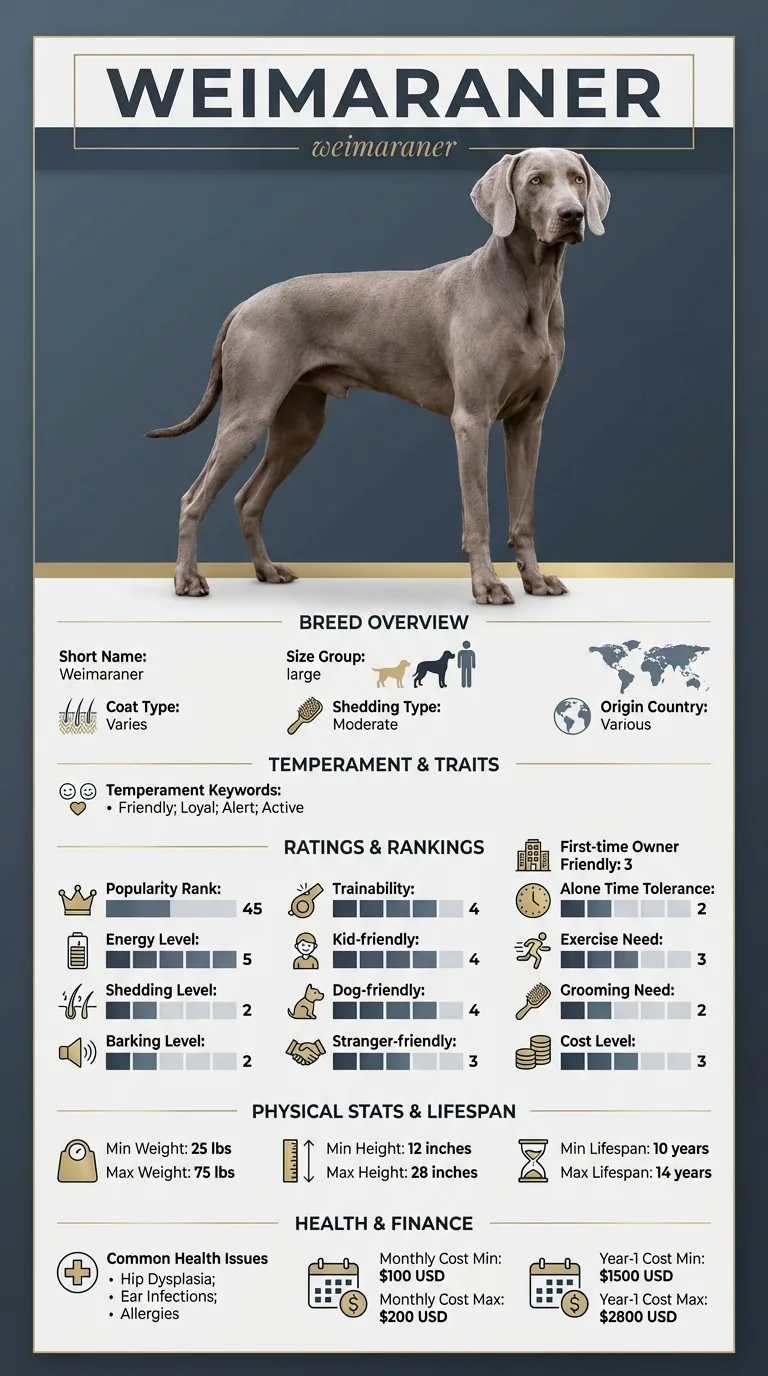
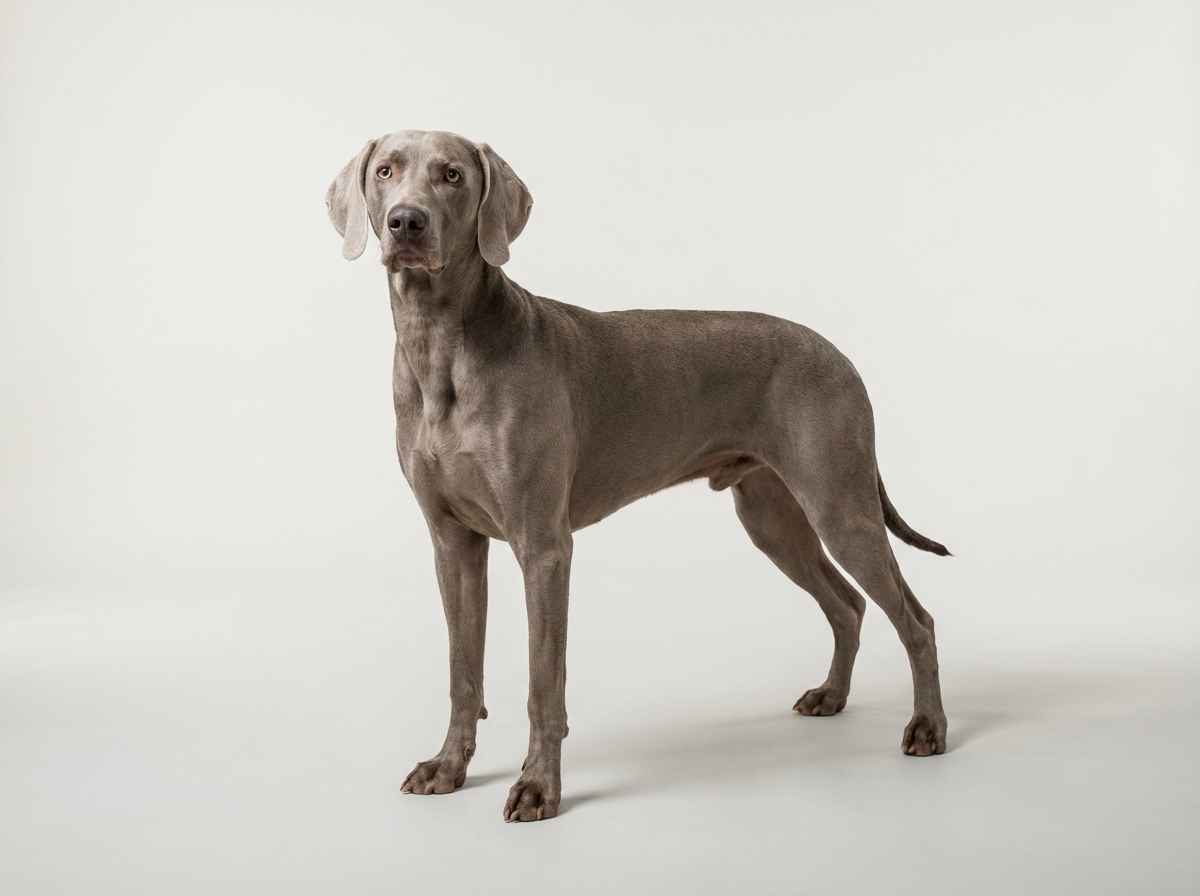
This is most relevant to owners of a Weimaraner diagnosed with PRA, typically identified in adulthood, and to owners noticing early signs like clumsiness in dim light before an official diagnosis is made.
This guide is not medical advice. If your dog shows pain, sudden behavior change, or worsening symptoms, consult a licensed veterinarian.
Some links may be affiliate links. We may earn a commission at no extra cost to you. We only suggest products we believe are helpful for dog owners.
We research and check what we publish, but we do not warrant that any figure, date, price, or statement is accurate, complete, or current, and we accept no liability for any loss, cost, injury, or other harm arising from the use of this site. Use it as one reference among several. You remain responsible for your own decisions and for your dog's care - confirm anything that matters with a licensed veterinarian or another qualified professional before you act on it. Full disclaimer.
Progressive retinal atrophy is a genetic, degenerative eye condition causing gradual vision loss, typically starting with night blindness and eventually progressing to significant or complete blindness over months to years. There's no current cure, but the slow pace of progression means most dogs adapt remarkably well, especially with a consistent home environment and an owner who understands what to expect.
PRA is a well-documented inherited condition across numerous dog breeds, with genetic testing available for many of the specific mutations involved, making it a recognized, if not universally screened, concern in breed health discussions generally, including for Weimaraners.
PRA in dogs is caused by inherited genetic mutations affecting retinal cell health and survival over time, a mechanism found across many breeds rather than tied to a specific Weimaraner physical trait, though the specific mutation and its inheritance pattern can vary from breed to breed.
PRA's progression is driven primarily by the underlying genetic mutation rather than external environmental factors, though a consistent, predictable home environment significantly affects how well an affected dog is able to adapt and remain confident as vision declines.
See a veterinary ophthalmologist if you notice hesitance or clumsiness specifically in dim light or at night, since early diagnosis helps you plan and adapt proactively. This isn't an emergency condition, but a formal diagnosis is useful for understanding your dog's specific progression.
See all Weimaraner health problems, which breeds are prone to progressive retinal atrophy pra, or the full Weimaraner breed guide for temperament, exercise needs and ownership costs.
Progression from early night blindness to significant vision loss commonly spans months to a few years, though this varies by dog and genetic form. There's no treatment timeline for reversal, since PRA doesn't currently have a cure.
Success looks like a dog who continues to move confidently through a familiar, consistent environment, relying on smell and hearing, with an owner who's adapted routines and cues to match the dog's changing needs rather than expecting the dog to navigate as if fully sighted.
PRA affects the retina's rod cells before its cone cells in most forms, which is why night blindness is almost always the first noticeable sign — a dog who's suddenly hesitant on evening walks, bumping into furniture in dim light, or reluctant to go down dark stairs, while still navigating perfectly well in daylight. This stage can last months to years before day vision starts to be affected as well.
As the disease progresses, cone cells are affected too, and day vision gradually declines alongside night vision, eventually leading to complete or near-complete blindness in most cases. There's no way to halt this progression once it's underway — PRA is a genetic, degenerative condition without a current cure — but the gradual pace is genuinely significant for how well most dogs adjust, since it gives them time to build a strong mental map of familiar spaces before vision is fully gone.
Dogs rely heavily on smell and hearing, and a gradual loss of vision lets them lean into those senses more fully than a sudden loss ever could. Many owners are surprised at how confidently a dog navigates a familiar home even after vision is largely gone, provided furniture and layout stay consistent and the dog had time to adapt gradually rather than all at once.
The practical owner tasks are mostly about consistency and communication: keeping furniture in the same place, using a verbal cue before physical contact so the dog isn't startled, adding texture cues like different rugs near stairs or doorways, and being more cautious about off-leash time in unfamiliar or hazardous areas. None of this reverses the vision loss, but it substantially reduces the risk of injury and stress as the dog's world becomes more sound-and-scent based.

If you think your Weimaraner has progressive retinal atrophy (pra), the plan is three steps: write down what you have seen and when it started, book a veterinary appointment rather than waiting for the next flare, and take video of the behaviour or symptom before you go — the thing you are worried about rarely happens in the consulting room. Screening in the parents covers bloat (gdv), hip dysplasia, hypertrophic osteodystrophy.
What the vet visit should produce is a diagnosis and a written plan, not just reassurance: what is being ruled out, what the monitoring interval is, and which signs mean you come back sooner. Ask what the treatment costs across a year rather than per visit, because that is the number that decides whether you are managing this condition or reacting to it.
Between appointments, keep a short log — dates, what you saw, what changed. It is the single most useful thing an owner brings to a follow-up, and for progressive retinal atrophy (pra) it is often what separates a clear pattern from a guess.
Nova's owner Pepper first noticed her hesitating at the bottom of the deck stairs at dusk, something totally out of character for a normally confident dog. An eye exam confirmed early PRA, with her ophthalmologist explaining that day vision would likely stay relatively normal for a while longer even as night vision continued declining. Pepper kept the house arranged exactly as it was, added a textured mat at the top of the stairs, and started using a consistent verbal cue whenever she approached Nova from behind. Over the following year, Nova's vision declined further, but by then she navigated the house and yard with what looked like complete confidence, clearly relying on the map she'd built in her head and the scent trails she knew well.
Key takeaway: The gradual nature of PRA gives dogs real time to adapt — keeping the environment consistent during that window is what makes the eventual vision loss far less disruptive than it sounds.
Night blindness is almost always first — hesitance or bumping into things in dim light or in the evening, while daytime vision remains normal for a while longer.
There's currently no cure or treatment that halts PRA's progression. Management focuses on adapting the home environment and routine to support the dog as vision gradually declines.
This varies by individual dog and the specific genetic form involved, but progression from first noticeable night blindness to significant day vision loss commonly spans months to a few years.
Yes, an eye exam by a veterinary ophthalmologist, sometimes combined with an electroretinogram or genetic testing, can detect changes before an owner would notice symptoms at home.
Many do remarkably well, especially because the gradual progression gives them time to rely more heavily on smell and hearing and build a strong mental map of familiar spaces before vision is fully gone.
Generally, keep furniture and layout as consistent as possible rather than rearranging, since a stable, familiar environment is what allows a dog to navigate confidently by memory as vision declines.
PRA has a documented genetic basis across many breeds, with different specific mutations responsible in different breeds and lines. Genetic testing, where available for the specific mutation involved, can help inform breeding decisions.
Night blindness, such as hesitance or bumping into things in dim light, while daytime vision stays normal at first.
No, there's currently no cure or treatment that halts PRA; management focuses on adapting the environment as vision declines.
Yes, a veterinary ophthalmologist exam or genetic testing can sometimes detect it before symptoms are noticeable at home.
Many adapt remarkably well, especially with gradual vision loss, by relying more on smell, hearing, and a consistent home layout.
Yes, consistency helps a dog navigate confidently from memory as vision gradually declines.
A one-page prep sheet for this condition: the signs, the questions to ask, what to get priced. Unlocks here.
You get: Vet visit prep sheet
No spam. One-click unsubscribe. See our privacy policy.
Preview page 1 before you decide.