Health
Is X-SCID documented in Shetland Sheepdogs?
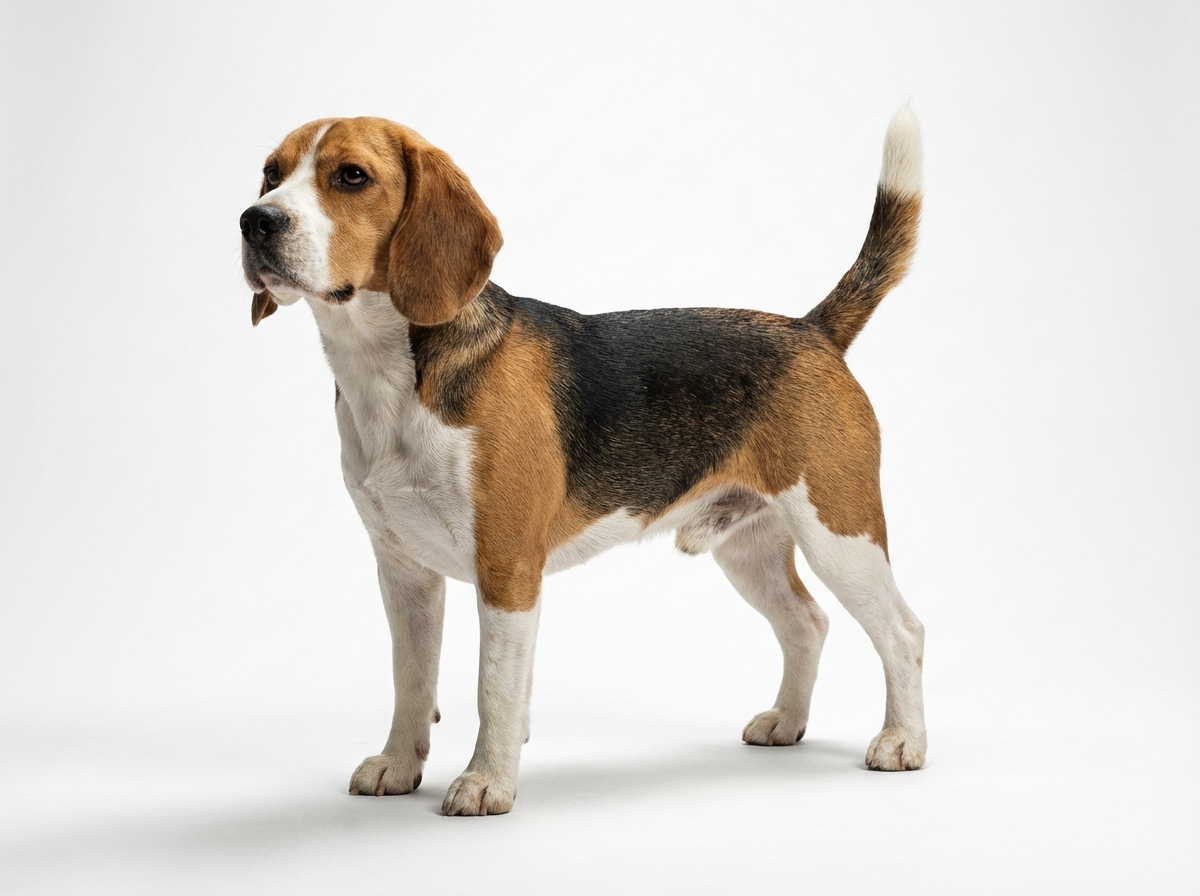
No, it has been specifically characterised in Basset Hounds and Cardigan Welsh Corgis, with no established evidence connecting it to this breed.

Quick answer
Is X-SCID documented in Shetland Sheepdogs?
No, it has been specifically characterised in Basset Hounds and Cardigan Welsh Corgis, with no established evidence connecting it to this breed.
This is one of the rarest conditions on any breed's list, and it deserves to be treated with proportion rather than alarm. X-linked severe combined immunodeficiency has been characterised mainly in a small number of other breeds, and it is not part of the Shetland Sheepdog's documented health profile.
Breeders encountering this condition on a general genetic reference list and wanting to know if it is genuinely relevant to their breeding program. Owners of a puppy with recurrent, unusually severe infections who have read about X-SCID and want context. Anyone trying to understand why some genetic conditions are described as breed-specific and others are not.
This guide is not medical advice. If your dog shows pain, sudden behavior change, or worsening symptoms, consult a licensed veterinarian.
Some links may be affiliate links. We may earn a commission at no extra cost to you. We only suggest products we believe are helpful for dog owners.
We research and check what we publish, but we do not warrant that any figure, date, price, or statement is accurate, complete, or current, and we accept no liability for any loss, cost, injury, or other harm arising from the use of this site. Use it as one reference among several. You remain responsible for your own decisions and for your dog's care - confirm anything that matters with a licensed veterinarian or another qualified professional before you act on it. Full disclaimer.
X-linked severe combined immunodeficiency is a rare, inherited immune deficiency in which affected puppies lack functional immune cells and develop fatal recurrent infections once maternal antibody protection fades around six to eight weeks of age. It has been specifically documented in Basset Hounds and Cardigan Welsh Corgis. There is no established evidence connecting the causative mutation to Shetland Sheepdogs, and it is not part of this breed's documented health profile.
Extremely rare even in the specific breeds where it has been documented, and there is no established evidence it occurs in Shetland Sheepdogs at all. This places it well outside the breed's five actually documented conditions, and Sheltie owners and breeders can reasonably treat it as effectively irrelevant to this breed's health planning.
There is no documented genetic basis for X-SCID in the Shetland Sheepdog. The condition's known genetic basis has been established specifically in Basset Hounds and Cardigan Welsh Corgis, and there is no scientific evidence of the same mutation, or an equivalent one, occurring in this breed's population. Its inclusion on general canine genetic disorder references reflects a species-wide cataloguing approach rather than any breed-specific finding for Shelties.
There is no environmental trigger for this condition, since it is a congenital immune deficiency present from birth in the breeds where it occurs. Environment does determine, in an affected puppy in those specific breeds, which infections it happens to encounter and how quickly illness develops once maternal antibody protection fades, but this has no established relevance to Shetland Sheepdogs given the absence of any documented mutation in this breed.
Seek prompt veterinary assessment for a puppy with infections that recur immediately after treatment, fail to respond to a standard antibiotic course, or occur alongside poor growth and failure to thrive compared with littermates, since this pattern warrants investigation regardless of how rare any specific underlying cause might be. This is not specifically an X-SCID concern for this breed, but the symptom pattern itself always deserves a proper work-up. There is no routine screening recommendation specific to this condition for Shetland Sheepdogs given the absence of documented risk.
See all Shetland Sheepdog health problems, which breeds are prone to x scid, or the full Shetland Sheepdog breed guide for temperament, exercise needs and ownership costs.
There is no diagnostic or treatment timeline to describe for Shetland Sheepdogs specifically, since this is not a documented risk for the breed. For a puppy of any breed presenting with genuinely unusual recurrent illness, a veterinary work-up to identify the actual cause typically proceeds over one to a few weeks depending on what tests are needed.
For the vast majority of Shetland Sheepdog owners, success is simply understanding that this condition is not a meaningful risk for their dog and directing attention and testing budget toward the breed's actual documented conditions instead. For the rare puppy with genuinely unusual, severe illness, success is a thorough, evidence-based work-up rather than assumptions drawn from a generic disorder list.
This pattern has been characterised in the specific breeds where the condition is documented. There is no established evidence that the underlying mutation exists in the Shetland Sheepdog population, so this description is provided for background understanding rather than as a breed-specific warning.
It is worth being direct about why a condition with no documented connection to this breed appears here at all. General reference lists of canine inherited disorders are sometimes compiled across the species as a whole and then applied uniformly to every breed's individual profile, without weighting entries by whether the specific breed has ever actually been shown to carry the relevant mutation. X-SCID is a genuine, well-studied disease, but its documented occurrence sits specifically with Basset Hounds and Cardigan Welsh Corgis, where the causative mutation was identified and confirmed through dedicated research. Extending that finding to every other breed on a generic list, including the Shetland Sheepdog, is not supported by the same evidence.
That does not make the topic entirely irrelevant, for two reasons. First, understanding the general concept of a severe combined immunodeficiency is useful background for any breeder or owner evaluating a puppy with genuinely unusual, severe, recurrent infections, since it illustrates the kind of underlying immune problem that can, in principle, occur in any breed even without a documented mutation, through other rare genetic pathways not yet characterised. Second, it is a useful example of how to evaluate a claimed breed health risk generally: ask whether the specific mutation has been identified in this breed's population, rather than assuming every entry on a general list applies equally everywhere.
For the overwhelming majority of Shetland Sheepdog owners, the practical relevance of X-SCID specifically is close to zero, and there is no recommended routine screening test for it in this breed because there is no established mutation to screen for. What remains genuinely useful, and applies regardless of the specific underlying cause, is recognising when a puppy's pattern of illness looks disproportionate to an ordinary puppyhood infection: repeated infections that do not respond properly to standard treatment, failure to grow and thrive alongside littermates, or any puppy that seems unable to shake off illness the way its siblings do. That pattern deserves a thorough veterinary work-up regardless of whether the eventual explanation turns out to be an immune problem, a different congenital condition, or something entirely acquired and treatable, and a vet is the right person to interpret it rather than a general breed disorder list.

Marguerite, an experienced Sheltie breeder, came across a comprehensive online list of canine inherited genetic disorders while researching health testing options for an upcoming litter. X-SCID appeared partway down the list, described in alarming terms as a fatal immune deficiency, with no breed specified. Concerned, she contacted a veterinary geneticist to ask whether she should be testing her breeding stock for it. The geneticist explained that the documented mutation had only ever been identified in Basset Hounds and Cardigan Welsh Corgis, where it had been used as a research model, and that there was no scientific basis for testing Shetland Sheepdogs for a mutation that had never been shown to exist in the breed. Marguerite redirected her testing budget toward the panel actually relevant to her breed, covering MDR1, Collie Eye Anomaly markers, and the other conditions her breed club recommended, and mentioned the experience to other breeders in her local club who had seen the same list and had the same worry.
Key takeaway: A frightening entry on a general list is not the same as a documented breed risk. Checking whether the underlying evidence actually names your breed is what turns worry into an informed decision.
There is no established evidence that this breed carries the mutation involved, and it is not part of the breed's documented health profile. It has been specifically characterised in Basset Hounds and Cardigan Welsh Corgis, not in Shelties.
Some reference lists compile known canine inherited conditions broadly across the species and are not always filtered by which specific breeds have actually been shown to carry each mutation, which can make an entry look more broadly relevant than the underlying evidence supports.
There is no established, relevant mutation identified in this breed to test for, so routine screening is not indicated the way it is for the breed's actual documented conditions such as MDR1 or Collie Eye Anomaly.
A puppy with genuinely unusual, severe or recurrent infections that do not respond properly to standard treatment deserves a full veterinary work-up, which can include immune function assessment among other tests. This is a reasonable path to pursue based on the puppy's actual symptoms, not because X-SCID specifically is expected in this breed.
The gene involved sits on the X chromosome. Male puppies have only one X chromosome, so a single affected copy causes the disease, while female puppies with one affected and one normal copy are typically unaffected carriers.
In the breeds where the condition is documented, bone marrow transplant has been used as a specialised treatment, primarily in a research context. It is not a routine or widely available treatment in general veterinary practice, and affected puppies without intervention typically do not survive infancy.
No, it has been specifically characterised in Basset Hounds and Cardigan Welsh Corgis, with no established evidence connecting it to this breed.
An inherited immune deficiency where affected puppies lack functional immune cells and develop severe, recurrent infections once maternal antibody protection wanes around six to eight weeks.
There is no established mutation identified in this breed to test for, so it is not part of routine breed-specific screening the way MDR1 or Collie Eye Anomaly testing is.
Pursue a full veterinary work-up based on the puppy's actual symptoms rather than assuming a specific rare condition, since several more common explanations are far more likely in this breed.
To explain honestly why a condition on general disorder lists is not a genuine documented risk here, and to help owners evaluate breed health claims critically.
A one-page prep sheet for this condition: the signs, the questions to ask, what to get priced. Unlocks here.
You get: Vet visit prep sheet
No spam. One-click unsubscribe. See our privacy policy.
Preview page 1 before you decide.