Is von Willebrand's disease one of the Shetland Sheepdog's main documented conditions?
No, the breed's five documented conditions are Collie Eye Anomaly, MDR1, dermatomyositis, hypothyroidism and patellar luxation. Von Willebrand's disease is a less common but recognised additional possibility.
Most owners first hear the term von Willebrand's disease not from a symptom at home, but from a vet asking about it before a scheduled surgery. That is not a coincidence. This is a condition that rarely announces itself until a bleeding challenge exposes it.
Owners whose dog has just been flagged with an abnormal bleeding time or a positive genetic panel result before a scheduled procedure. People whose Sheltie bruises easily or bleeds for longer than expected from a minor cut. Anyone planning a spay, neuter or dental cleaning who wants to understand why this question comes up at all.
Important reminder
This guide is not medical advice. If your dog shows pain, sudden behavior change, or worsening symptoms, consult a licensed veterinarian.
Some links may be affiliate links. We may earn a commission at no extra cost to you. We only suggest products we believe are helpful for dog owners.
We research and check what we publish, but we do not warrant that any figure, date, price, or statement is accurate, complete, or current, and we accept no liability for any loss, cost, injury, or other harm arising from the use of this site. Use it as one reference among several. You remain responsible for your own decisions and for your dog's care - confirm anything that matters with a licensed veterinarian or another qualified professional before you act on it. Full disclaimer.
What this problem looks like
Von Willebrand's disease is an inherited clotting disorder affecting a protein needed for platelets to stick together and to damaged blood vessel walls. It is not among the Shetland Sheepdog's five most prominently documented conditions and is far more associated with breeds such as Doberman Pinschers, but it is a recognised finding on genetic screening panels used across many breeds and can affect individual Shelties, most often becoming relevant around surgery or significant injury rather than in everyday life.
Common triggers
Inherited deficiency or dysfunction of von Willebrand factor, present from birth
Surgical procedures, which expose the clotting deficiency as a genuine bleeding risk
Significant trauma, deep lacerations or dental extractions
Certain medications that further impair platelet function on top of the underlying deficiency
Absence of pre-procedure screening, allowing the condition to go unrecognised until a bleeding complication occurs
Uncommon relative to the Shetland Sheepdog's five primary documented conditions, and far less prevalent in this breed than in classic high-risk breeds. It remains a recognised possibility identified through modern multi-condition genetic panels, and mild, unrecognised cases likely exist in the wider breed population without ever causing a visible problem in daily life.
Why this happens
Breed factors
Von Willebrand's disease is inherited, and while it is not one of the conditions the Shetland Sheepdog is specifically and prominently documented for, it can be present in individual dogs and lines within any breed, including this one, as part of the broader background of inherited variants that circulate in closed-registry populations. It does not relate mechanistically to any of the breed's five headline conditions, though a dog with a bleeding disorder and, separately, documented MDR1 status both need to be on record before any surgical or anaesthetic decision.
Environment factors
There is no environmental trigger for the underlying deficiency itself, since it is present from birth. What determines whether it ever becomes clinically apparent is exposure to a genuine bleeding challenge: surgery, significant trauma, or dental extraction. A dog that never faces one of these situations may live its entire life with an undiagnosed mild form and never show a sign of it.
What you can do at home (once it is not an emergency)
When to talk to your vet
Seek urgent care for bleeding that will not stop with firm, direct pressure after ten to fifteen minutes, for spontaneous nosebleeds without an obvious cause, or for blood appearing in urine or stool without another explanation. Book a routine appointment to discuss testing before any planned surgery, or if you have noticed a pattern of excessive bruising or slower-than-expected healing from minor injuries. A single minor bruise or slightly prolonged nail-trim bleed on its own does not need urgent attention, but is worth mentioning at the next visit.
At home, alongside your vet's plan
Ask your vet about a bleeding time test or genetic panel before any elective surgery, particularly a first spay, neuter or dental cleaning.
Watch for and note any unusually prolonged bleeding from minor cuts, nail trims or lost puppy teeth, and mention the pattern at your next visit rather than dismissing it as a one-off.
Keep any known diagnosis clearly recorded and easily accessible for any veterinary team, especially in an emergency.
Maintain good dental hygiene to reduce the likelihood of needing more invasive extractions later in life.
If breeding is being considered, test before any pairing to avoid producing significantly affected puppies.
Diagnostic testing, whether a bleeding time test or a genetic panel, typically returns results within days to a couple of weeks. There is no treatment timeline for daily life in mild cases, since ongoing management is not usually needed; the relevant timeline is entirely about advance planning ahead of any surgical procedure.
Success is a documented status on file well before any surgery is scheduled, allowing your veterinary team to plan appropriately rather than discover the condition mid-procedure. For most affected Shelties, day-to-day success looks identical to an unaffected dog's life, since the condition rarely intrudes outside of specific bleeding-risk situations.
The signs, and why many affected dogs show none of them
Mild forms of this condition can be entirely silent for a dog's whole life unless it faces a genuine clotting challenge such as surgery, trauma, or a deep dental extraction, which is exactly why pre-surgical screening exists as a routine step rather than a reaction to a specific symptom.
Prolonged bleeding after a minor injury: a nail trimmed slightly too short, a small cut, or a puppy tooth falling out that bleeds noticeably longer than expected.
Excessive bruising: small bruises appearing after minimal contact, or bruising that seems disproportionate to whatever knock caused it.
Nosebleeds without an obvious cause, sometimes recurring.
Blood in the urine or stool without another explanation, in more significantly affected dogs.
Heavier than expected bleeding during a routine surgical procedure, sometimes the first time the condition becomes apparent at all.
Many carriers and mildly affected dogs show no signs whatsoever in ordinary daily life and are only identified through screening before a planned surgical or dental procedure.
What knowing your dog has this actually changes day to day
A diagnosis of von Willebrand's disease does not typically change ordinary daily life at all for a mildly affected dog. It is not a condition managed with daily medication, dietary restriction, or activity limitation in the way many of this breed's other documented conditions are. What it changes is planning around anything that carries a genuine bleeding risk, and it changes that planning meaningfully.
Before any surgery, from a routine spay or neuter through to a dental cleaning with extractions, a vet who knows a dog's von Willebrand status can take specific precautions: having compatible blood products available or arranged in advance for a more significantly affected dog, choosing surgical technique and timing with bleeding risk in mind, and avoiding certain medications that further impair clotting on top of the underlying condition. Without that knowledge in advance, the same procedure carries a real risk of a bleeding complication that is harder to manage reactively than it would have been to plan for.
The same logic applies to everyday injury. A minor cut that would be a non-event in a normal dog is worth watching a little more closely in a dog with a known bleeding disorder, and any deep puncture wound, significant laceration, or unexplained excessive bruising deserves veterinary assessment rather than a wait-and-see approach. Dental health also matters more than usual, since a dog prone to bleeding benefits from avoiding the kind of periodontal disease that eventually necessitates more invasive extractions.
The practical takeaway for most Sheltie owners is straightforward. This is not one of the breed's headline conditions and most Shelties will never be affected by it in a way that changes their daily life. But because a definitive diagnosis before a planned surgery is inexpensive and turns an unpredictable risk into a manageable, plannable one, testing before any elective procedure, and certainly asking about it if your dog has ever bled or bruised more than expected, is a genuinely worthwhile step rather than an unnecessary precaution.
Von Willebrand's Disease in Shetland Sheepdogs - What knowing your dog has this actually changes day to day
What to do next about von willebrand's disease in Shetlands
If you think your Shetland has von willebrand's disease, the plan is three steps: write down what you have seen and when it started, book a veterinary appointment rather than waiting for the next flare, and take video of the behaviour or symptom before you go — the thing you are worried about rarely happens in the consulting room. Screening in the parents covers collie eye anomaly, mdr1 drug sensitivity, dermatomyositis.
What the vet visit should produce is a diagnosis and a written plan, not just reassurance: what is being ruled out, what the monitoring interval is, and which signs mean you come back sooner. Ask what the treatment costs across a year rather than per visit, because that is the number that decides whether you are managing this condition or reacting to it.
Between appointments, keep a short log — dates, what you saw, what changed. It is the single most useful thing an owner brings to a follow-up, and for von willebrand's disease it is often what separates a clear pattern from a guess.
Nell, the pre-spay bloodwork, and the surgery that went to plan because of it
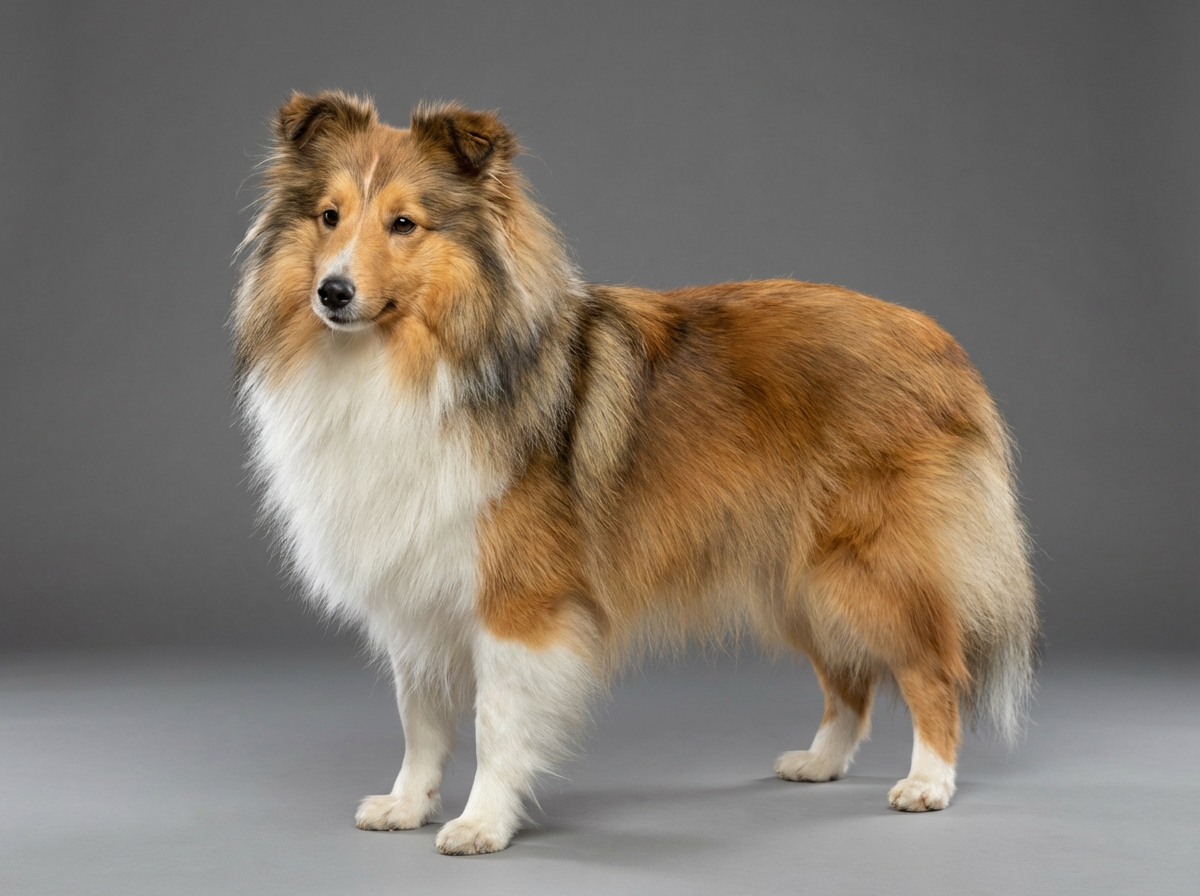
Nell was a young Sheltie scheduled for a routine spay. Her owner, Idris, mentioned during the pre-surgical consultation that Nell had bruised unusually badly after a minor bump against a coffee table a few weeks earlier, a detail he almost did not think worth raising.
The vet suggested a bleeding time test before proceeding, given the history. It came back prolonged, and a follow-up panel confirmed a mild form of von Willebrand's disease. Rather than cancelling the surgery, the team adjusted their approach: extra time built in for careful haemostasis, a specific surgical technique chosen with bleeding risk in mind, and compatible blood product availability confirmed in advance just in case.
The spay went smoothly, with slightly more bleeding than an average case but nothing the team was not already prepared for. Idris was told afterwards that, had the finding come to light mid-surgery instead of beforehand, the situation would have been considerably more stressful to manage.
Key takeaway: A seemingly minor detail, one bad bruise, was the thread that led to a diagnosis before it mattered rather than during an emergency. Mentioning small oddities to your vet is worth more than it seems.
Frequently asked questions
Is von Willebrand's disease common in Shetland Sheepdogs?
It is not among the breed's five most prominently documented conditions and is seen far more frequently in breeds such as Doberman Pinschers. It does appear on genetic screening panels used across many breeds, so it is a recognised, if less common, possibility in this breed rather than something to assume by default.
How is it actually diagnosed?
A blood test measuring von Willebrand factor activity, often alongside a buccal mucosal bleeding time test that assesses how quickly a small standardised cut in the gum stops bleeding. Genetic panel testing can also identify the associated variant directly.
Does every affected dog need to avoid surgery?
No. Many affected dogs, particularly with the milder form, undergo routine surgery safely with appropriate precautions planned in advance. The key is your surgical team knowing the status beforehand rather than discovering it mid-procedure.
Can this condition be cured?
No, it is a lifelong inherited condition, but it is very manageable. Most affected dogs live entirely normal lives with no daily treatment required, and the condition mainly matters at moments of genuine bleeding challenge such as surgery or significant injury.
Should breeding dogs be tested for this?
Yes, if breeding is being considered, testing avoids producing significantly affected puppies and allows informed pairing decisions, in the same way testing is used for the breed's other documented inherited conditions.
Is a bruise or slow-healing cut always a sign of this condition?
Not necessarily, since many things can cause occasional bruising or a slower-than-expected minor bleed. It is worth mentioning to your vet, particularly if it happens more than once or seems disproportionate, but a single incident is not a diagnosis on its own.
Is von Willebrand's disease one of the Shetland Sheepdog's main documented conditions?
No, the breed's five documented conditions are Collie Eye Anomaly, MDR1, dermatomyositis, hypothyroidism and patellar luxation. Von Willebrand's disease is a less common but recognised additional possibility.
Health
What does von Willebrand's disease actually affect?
A protein that helps platelets stick together and to damaged vessel walls at the start of clotting, so affected dogs bleed or bruise more than expected.
Health
Does an affected dog need daily medication?
No, most affected dogs need no ongoing treatment and live entirely normal lives, with the condition mainly relevant around surgery or significant injury.
Costs
How much does testing cost?
A bleeding time test or genetic panel test is a modest one-time cost, well worth it before any elective surgery given the breed's monthly running costs.
Health
Should I mention this before a routine dental cleaning?
Yes, always tell your vet about any known or suspected bleeding tendency before a dental procedure, since extractions carry a genuine bleeding risk.
Related DogBreedCompass guides
Von Willebrand's disease Type 1 genetics – The Type 1 genetic subtype most relevant to inheritance and DNA testing is covered in its own dedicated page.
MDR1 drug sensitivity in Shelties – Any surgery involving a dog with a bleeding disorder also depends on the breed's inherited drug sensitivity.
most common genetic disorders in Shetland Sheepdogs – A broader look at the breed's most frequently diagnosed inherited conditions for context.
genetic load in Shetland Sheepdogs – The population genetics background behind the breed's documented and lesser-known inherited conditions.
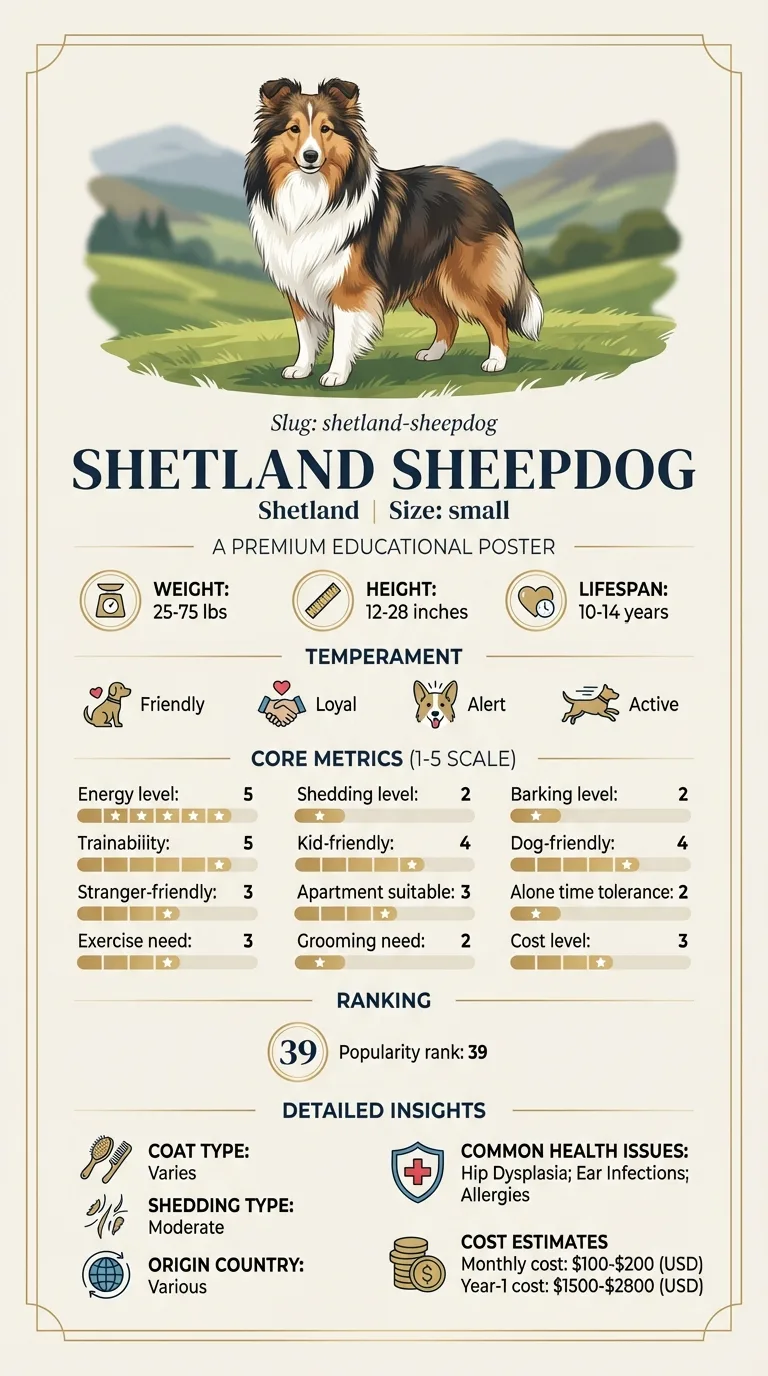
Shetland Sheepdog breed guide – Full breed profile listing the five primary documented health conditions for context.
Bring the right questions to the vet
A one-page prep sheet for this condition: the signs, the questions to ask, what to get priced. Unlocks here.
You get: Vet visit prep sheet
No spam. One-click unsubscribe. See our privacy policy.