Behavior
What should I do if my Schnauzer (Standard) bleeds?
If your Schnauzer (Standard) starts to bleed, apply pressure to the wound and seek veterinary help immediately. Prompt treatment is essential.

Quick answer
What should I do if my Schnauzer (Standard) bleeds?
If your Schnauzer (Standard) starts to bleed, apply pressure to the wound and seek veterinary help immediately. Prompt treatment is essential.
Schnauzer (Standard) von Willebrand's disease is a genetic bleeding disorder that can pose serious health risks.
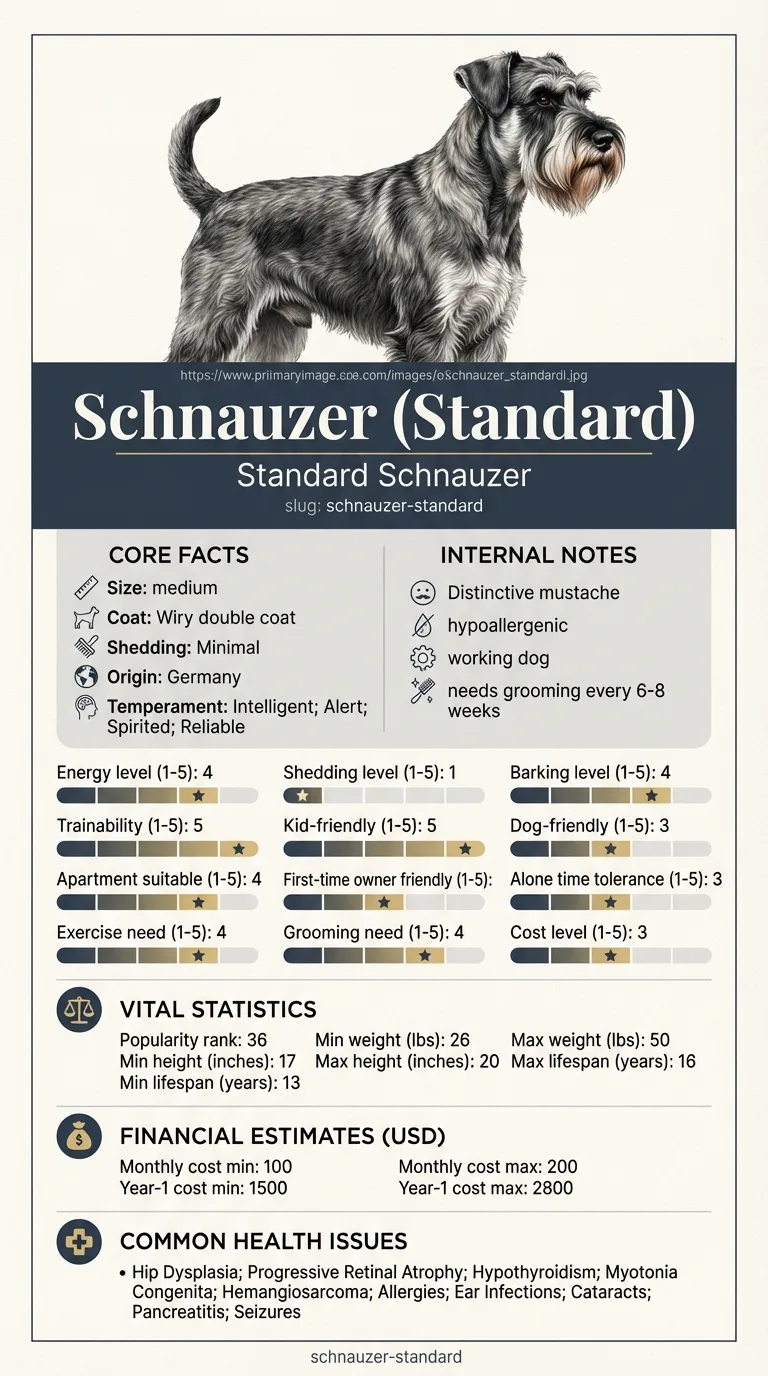
Owners of Schnauzers (Standard) may struggle with this issue, especially those new to dog ownership or unfamiliar with this specific health concern. If your pup bleeds easily or has unusual bruising, you might be facing this condition.
This guide is not medical advice. If your dog shows pain, sudden behavior change, or worsening symptoms, consult a licensed veterinarian.
Some links may be affiliate links. We may earn a commission at no extra cost to you. We only suggest products we believe are helpful for dog owners.
We research and check what we publish, but we do not warrant that any figure, date, price, or statement is accurate, complete, or current, and we accept no liability for any loss, cost, injury, or other harm arising from the use of this site. Use it as one reference among several. You remain responsible for your own decisions and for your dog's care - confirm anything that matters with a licensed veterinarian or another qualified professional before you act on it. Full disclaimer.
Check this first
Schnauzer (Standard) von Willebrand's disease is a bleeding disorder that can lead to serious complications. Knowing when to act is crucial for your dog's health. Emergencies typically involve visible signs of severe bleeding, while mild symptoms can often be monitored at home.
If any of these apply, call your vet or an emergency clinic now. The rest of this page is for the cases that are not an emergency.
Schnauzer (Standard) von Willebrand's disease is a bleeding disorder that affects your dog's ability to clot blood properly. This condition can result in excessive bleeding from minor injuries, spontaneous nosebleeds, or even more serious internal bleeding. Owners may notice their Schnauzer bruising easily or bleeding longer than expected after a cut or surgery.
Von Willebrand's disease is one of the most common inherited bleeding disorders in dogs, particularly affecting Schnauzers. While not every Schnauzer will develop this condition, it's estimated that around 30% of Standard Schnauzers may be affected to some degree.
Schnauzers (Standard) are prone to von Willebrand's disease due to their genetics. This bleeding disorder is inherited and affects the blood's ability to clot. If your Schnauzer has a family history of this condition, they may be at higher risk.
Environmental factors can also play a role in the manifestation of von Willebrand's disease. Stressful situations, injuries, or certain medications can exacerbate bleeding issues. Keeping your dog in a calm environment can help manage symptoms.
If you notice any unusual bleeding or suspect your Schnauzer might have von Willebrand's disease, consult your vet immediately. They can conduct tests to confirm the diagnosis and recommend appropriate treatments.
Avoiding certain behaviors can help manage your Schnauzer's von Willebrand's disease more effectively. Here are some common mistakes to avoid:
Start here: Standard Schnauzer Most Common Genetic Disorders: Screening
See all Schnauzer Standard health problems, which breeds are prone to von willebrands disease, or the full Schnauzer Standard breed guide for temperament, exercise needs and ownership costs.
Managing Schnauzer (Standard) von Willebrand's disease is an ongoing process. You can expect to see improvement in your dog's condition within 3 to 6 months with proper care and management.
Success means your Schnauzer is living a comfortable life with minimized bleeding episodes and a tailored care routine that keeps them active and happy.
If you notice any of the following signs, contact your vet immediately: - Heavy bleeding from the nose, mouth, or wounds. - Blood in urine or stool. - Excessive bruising or unusual bleeding after minor injuries. - Signs of shock, such as lethargy, rapid breathing, or pale gums.

In less severe cases, you can monitor your Schnauzer (Standard) at home. Look for minor symptoms like light bleeding or prolonged bleeding after grooming. Keep a close eye on their behavior and consult your vet if symptoms persist or worsen.

Nancy, a new dog owner, was heartbroken when her Standard Schnauzer, Max, was diagnosed with von Willebrand's disease. Initially overwhelmed, she sought guidance from her vet and joined an online support group. Over the next few months, Nancy learned how to manage Max's condition through regular vet check-ups, a careful diet, and training to avoid injuries. With consistent care, Max's episodes became less frequent, and he adapted well to his new routine, bringing joy back into their lives.
Key takeaway: With the right support and knowledge, you can successfully manage your Schnauzer's von Willebrand's disease, allowing them to thrive despite the challenges.
Von Willebrand's disease is a genetic bleeding disorder that affects many breeds, including the Schnauzer (Standard). It occurs due to a deficiency in a specific clotting protein. If your dog shows symptoms like excessive bleeding or bruising, consult your vet for a proper diagnosis.
Managing a Schnauzer (Standard) with von Willebrand's disease involves regular vet check-ups and monitoring for signs of bleeding. Your vet may recommend a specific diet or lifestyle changes to minimize bleeding risks. Keeping your dog calm and avoiding high-impact activities can also help.
Signs of von Willebrand's disease include excessive bleeding from minor cuts, nosebleeds, or prolonged bleeding after surgery. You might also notice unexplained bruising or blood in the urine. If you observe these symptoms, it's essential to consult your veterinarian.
While there is no cure for von Willebrand's disease, treatment focuses on managing symptoms. Your vet may suggest medications to help with clotting and advice on avoiding situations that could lead to bleeding. Regular monitoring and a tailored care plan are crucial.
The long-term outlook for Schnauzers (Standard) with von Willebrand's disease varies based on severity. With proper management and care, many dogs live normal lives. However, it’s essential to remain vigilant and consult your vet regularly.
You cannot stop von Willebrand's disease itself, but you can manage symptoms. This includes regular vet visits, avoiding high-risk activities, and ensuring your Schnauzer doesn’t experience injuries that could lead to bleeding. A focused care plan is key.
Yes, von Willebrand's disease is an inherited condition, especially prevalent in Schnauzer (Standard) breeds. If your dog has this disease, consider discussing with your vet about screening options for other dogs in your home or breeding plans.
Many Schnauzers (Standard) with von Willebrand's disease can live normal and active lives with proper management. Regular vet check-ups, avoiding situations that may cause injury, and following treatment recommendations can help maintain their quality of life.
If your Schnauzer (Standard) shows signs of bleeding or bruising, or if they have had a history of excessive bleeding, you should see a vet immediately. Early diagnosis and treatment are crucial for managing the condition effectively.
You can support your Schnauzer (Standard) by creating a safe environment that minimizes injury risk. Avoid rough play, keep them away from sharp objects, and follow your vet's advice on diet and medication to help manage the disease.
If your Schnauzer (Standard) starts to bleed, apply pressure to the wound and seek veterinary help immediately. Prompt treatment is essential.
Yes, high-impact exercise can increase bleeding risks. Choose low-impact activities and keep your Schnauzer calm.
Regular vet check-ups and a stress-free environment are vital. Avoid activities that could lead to injuries.
Keep your Schnauzer safe from injury, monitor for bleeding signs, and maintain open communication with your vet.
While it’s not curable, symptoms can be managed effectively with veterinary guidance.
A one-page prep sheet for this condition: the signs, the questions to ask, what to get priced. Unlocks here.
You get: Vet visit prep sheet
No spam. One-click unsubscribe. See our privacy policy.
Preview page 1 before you decide.