Behavior
What are quick tips for managing von Willebrand's disease?
Maintain regular vet check-ups, manage your dog's activity level, and avoid high-risk situations to reduce injury. Always have a plan in place for emergencies.

Quick answer
What are quick tips for managing von Willebrand's disease?
Maintain regular vet check-ups, manage your dog's activity level, and avoid high-risk situations to reduce injury. Always have a plan in place for emergencies.
Jack Russell Terrier von Willebrand's disease is a bleeding disorder that affects your dog's health and well-being.
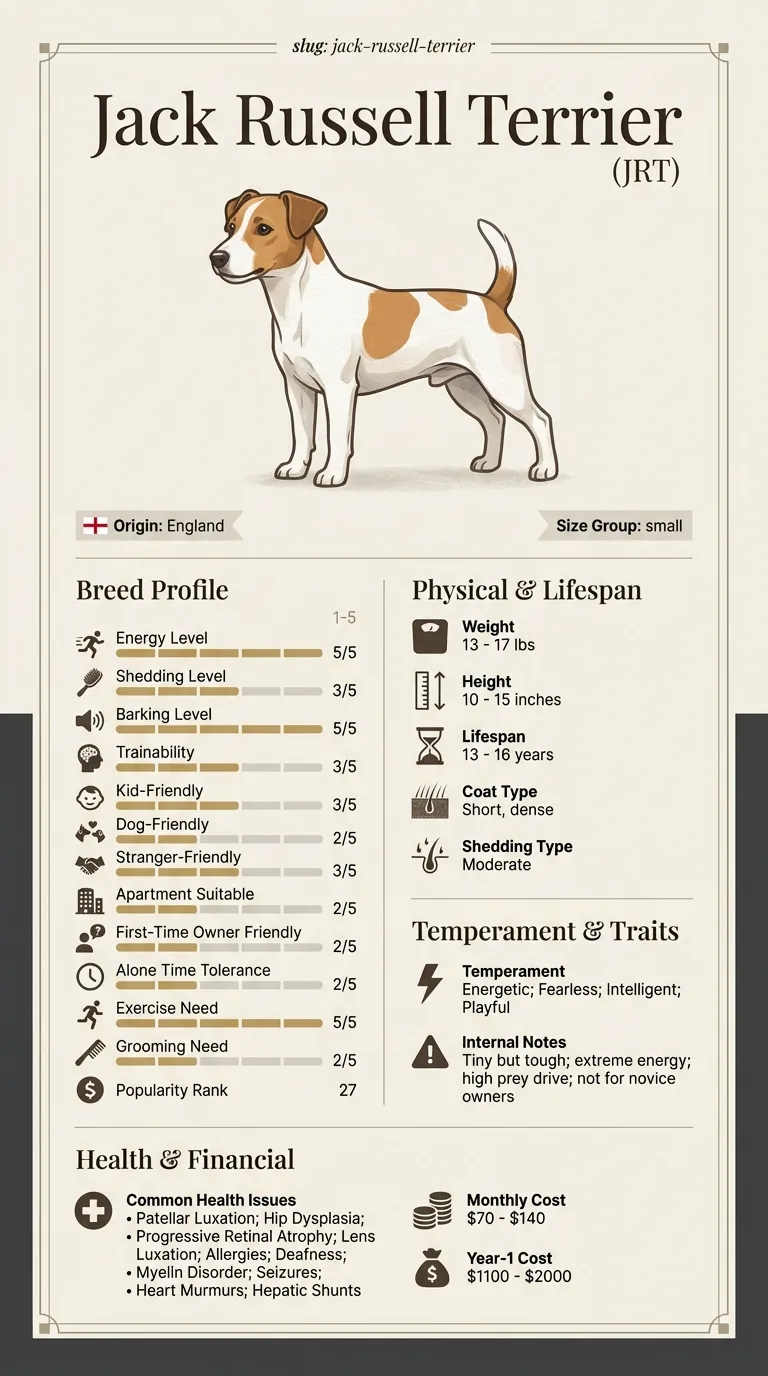
Dog owners who have Jack Russell Terriers often face challenges when their pet is diagnosed with von Willebrand's disease. These owners may worry about their dog's safety, especially during activities that could lead to injuries.
This guide is not medical advice. If your dog shows pain, sudden behavior change, or worsening symptoms, consult a licensed veterinarian.
Some links may be affiliate links. We may earn a commission at no extra cost to you. We only suggest products we believe are helpful for dog owners.
We research and check what we publish, but we do not warrant that any figure, date, price, or statement is accurate, complete, or current, and we accept no liability for any loss, cost, injury, or other harm arising from the use of this site. Use it as one reference among several. You remain responsible for your own decisions and for your dog's care - confirm anything that matters with a licensed veterinarian or another qualified professional before you act on it. Full disclaimer.
Check this first
Knowing when to call your vet about Jack Russell Terrier von Willebrand's disease is crucial. This bleeding disorder can be serious, and some signs indicate an emergency situation. Red flags include excessive bleeding from cuts or injuries, prolonged bleeding after surgery, or blood in the urine or stool. If you notice any of these symptoms, contact your vet immediately.
In less severe cases, you can monitor your dog at home. Mild symptoms may include occasional nosebleeds or minor bruising. If your Jack Russell Terrier shows these signs, keep an eye on them, but prepare to take action if symptoms worsen. A good plan includes noting the frequency and severity of any bleeding episodes.
Always err on the side of caution. If you're ever in doubt about your dog's health, it's best to consult your vet. They can provide tailored advice on how to manage the condition effectively and when to seek immediate help.
If any of these apply, call your vet or an emergency clinic now. The rest of this page is for the cases that are not an emergency.
Jack Russell Terriers can be affected by Von Willebrand's Disease, a bleeding disorder that can lead to excessive bleeding during injuries or surgeries. This condition occurs when a specific protein, von Willebrand factor, is deficient or absent. Everyday activities can become risky if your JRT has this disease, as even minor cuts or scrapes could lead to complications.
Von Willebrand's Disease is relatively common in Jack Russell Terriers compared to other breeds. While not every JRT will develop this condition, it's important for owners to be aware and consult with a vet, especially if they notice unusual bleeding.
Jack Russell Terriers can inherit von Willebrand's disease due to their genetic background. This breed is known for certain health issues, including this bleeding disorder, which affects blood clotting. If your JRT has a family history of this condition, they may be more prone to it.
Environmental factors can also play a role in how this disease manifests. Stress or trauma can exacerbate symptoms in dogs that are already predisposed. Additionally, a lack of proper nutrition may impact their overall health and ability to cope with the disease.
If you notice unusual bleeding or bruising, it's crucial to consult a vet immediately. Regular check-ups can help manage the condition effectively. Your vet may also recommend specific tests to monitor your dog's health related to von Willebrand's disease.
Here are some common mistakes owners make that can worsen their Jack Russell Terrier's von Willebrand's disease, along with safer alternatives.
Start here: Jack Russell Terrier Most Common Genetic Disorders
See all Jack Russell Terrier health problems, which breeds are prone to von willebrands disease, or the full Jack Russell Terrier breed guide for temperament, exercise needs and ownership costs.
Managing Jack Russell Terrier von Willebrand's disease typically takes time and consistent care. Expect to see some improvement within a few months of following your vet's advice and implementing a care routine.
Success means your Jack Russell Terrier experiences fewer bleeding episodes and leads a normal, active life. You'll also feel more confident in managing their health.
Emma adopted Max, a spirited Jack Russell Terrier, and soon learned he had von Willebrand's disease. After a scary incident where Max bled after a minor cut, Emma consulted her vet. They developed a care plan, including regular check-ups and a tailored training routine to keep Max calm during stressful situations. Over the following months, Emma noticed that Max's bleeding episodes decreased significantly, and he became more relaxed around new experiences.
Key takeaway: With the right care and training, owners can help their Jack Russell Terriers with von Willebrand's disease live happy, fulfilling lives.
Von Willebrand's disease is a genetic bleeding disorder that can affect Jack Russell Terriers. It's inherited from their parents, so if your dog has this condition, it's likely due to genetics. Regular vet check-ups can help identify and manage this disease. This answer relates to Jack Russell Terrier von willebrand's disease.
Managing your Jack Russell Terrier with von Willebrand's disease involves regular vet check-ups and monitoring for signs of bleeding. Your vet may recommend medication or lifestyle adjustments to help reduce bleeding risks. Always communicate openly with your vet for the best management strategies.
While training is crucial, focus on gentle, low-impact activities to avoid injury. Positive reinforcement methods work best, as they encourage good behavior without putting your dog at risk. Consult your vet for tailored training advice.
Signs may include excessive bleeding from minor cuts, nosebleeds, or prolonged bleeding after surgery. If you notice these symptoms, take your dog to the vet immediately for evaluation. Early recognition can lead to better management.
Yes, many Jack Russell Terriers with von Willebrand's disease can live healthy lives with proper management. Regular vet care, a safe environment, and careful monitoring are key. However, avoid high-risk activities that could lead to injury.
Yes, von Willebrand's disease is a hereditary condition, meaning it can be passed down from parent to offspring. Breeders should screen for this disease to prevent it in future litters. If you suspect your dog may have it, a genetic test can provide clarity.
While von Willebrand's disease is typically present from birth, symptoms may become more noticeable as your Jack Russell Terrier ages. If your older dog starts showing unusual bleeding or bruising, it's important to see a vet to rule out or confirm this condition.
A balanced diet rich in nutrients is crucial for a Jack Russell Terrier with von Willebrand's disease. Focus on high-quality dog food that supports overall health. Consult your vet for specific dietary recommendations tailored to your dog's condition.
Maintain regular vet check-ups, manage your dog's activity level, and avoid high-risk situations to reduce injury. Always have a plan in place for emergencies.
Treatment costs can vary, but expect to spend between $70 and $140 monthly for ongoing care and medication. Initial diagnostic tests may also incur additional costs.
While there's no specific diet for this condition, a balanced diet can support overall health. Consult your vet for dietary recommendations tailored to your dog's needs.
Yes, but focus on gentle training methods and avoid strenuous activities. Use positive reinforcement to encourage desirable behaviors without putting your dog at risk.
A one-page prep sheet for this condition: the signs, the questions to ask, what to get priced. Unlocks here.
You get: Vet visit prep sheet
No spam. One-click unsubscribe. See our privacy policy.
Preview page 1 before you decide.