Health
What is the most important pre-breeding test for a Sheltie?
The MDR1 genotype for both parents. It predicts the puppies' status and determines safe anaesthesia for the dam if a caesarean is needed.

Quick answer
What is the most important pre-breeding test for a Sheltie?
The MDR1 genotype for both parents. It predicts the puppies' status and determines safe anaesthesia for the dam if a caesarean is needed.
The two things that most reduce risk in a Sheltie litter both happen months before the bitch is ever mated.
First-time breeders planning a litter, owners of an accidentally mated bitch, and anyone sitting up at night with a whelping bitch trying to decide whether what is happening is normal.
This guide is not medical advice. If your dog shows pain, sudden behavior change, or worsening symptoms, consult a licensed veterinarian.
Some links may be affiliate links. We may earn a commission at no extra cost to you. We only suggest products we believe are helpful for dog owners.
We research and check what we publish, but we do not warrant that any figure, date, price, or statement is accurate, complete, or current, and we accept no liability for any loss, cost, injury, or other harm arising from the use of this site. Use it as one reference among several. You remain responsible for your own decisions and for your dog's care - confirm anything that matters with a licensed veterinarian or another qualified professional before you act on it. Full disclaimer.
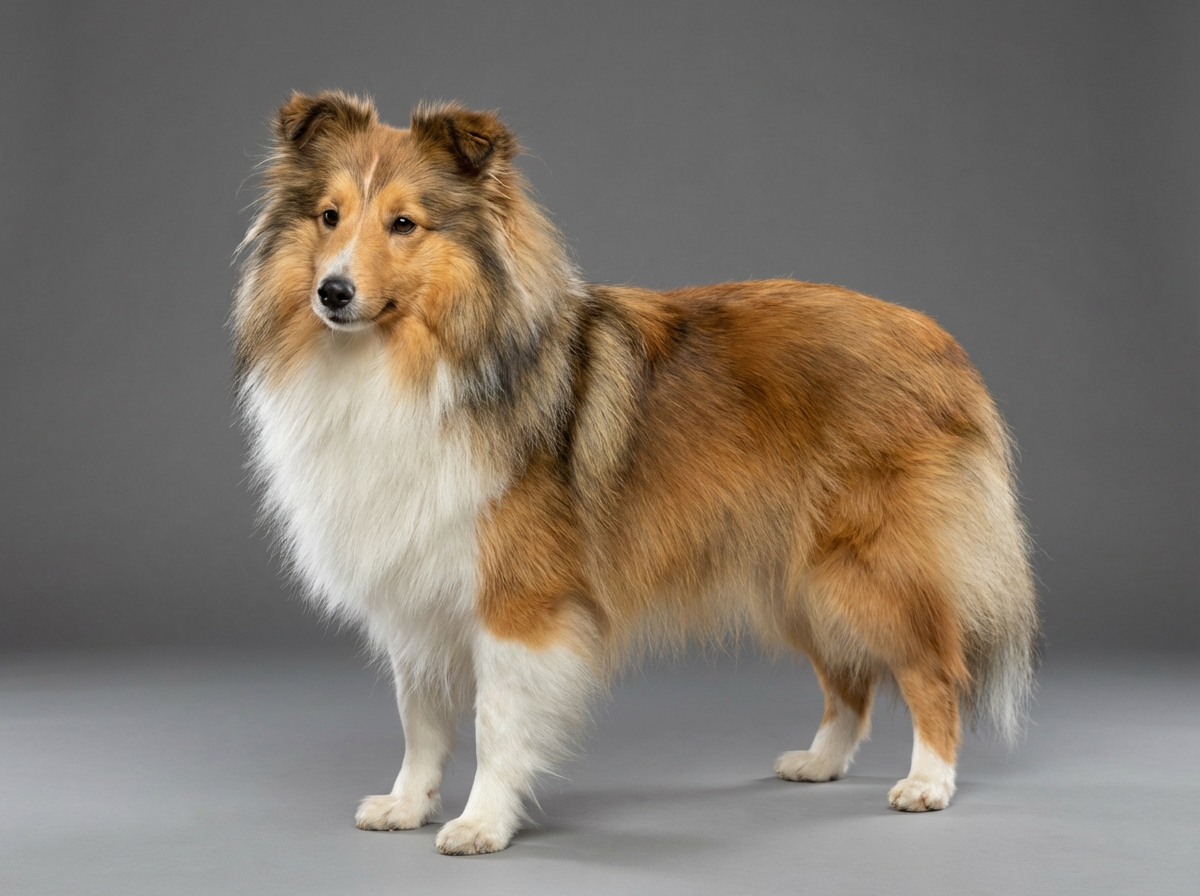
Pregnancy complications in Shetland Sheepdogs range from failure to conceive through to dystocia and post-whelping calcium crisis. The breed whelps naturally in most cases, so the risks are less about anatomy than about preparation. What is distinctive here is that a caesarean in a Sheltie is an anaesthetic decision shaped by MDR1 drug sensitivity, and that the breed's inherited conditions should have been tested for before the mating rather than discovered in the puppies.
Most Sheltie litters are whelped without veterinary intervention, which distinguishes the breed sharply from those where caesarean is routine. Complications are correspondingly less common but not rare, and small-litter dystocia and post-whelping eclampsia are the two that account for a disproportionate share of emergencies in small breeds.
The Shetland Sheepdog's own health list shapes the whole picture. Collie Eye Anomaly means the litter must be examined in a narrow early window. MDR1 drug sensitivity means the dam's anaesthetic plan for a caesarean depends on a genotype that should be known in advance, and it means the puppies' status is predictable from the parents. Hypothyroidism affects fertility and pregnancy. Patellar luxation is hereditary and belongs in the mating decision. Size is the other factor: a fifteen to twenty five pound bitch has limited physiological reserve when labour becomes prolonged.
Preparation and body condition dominate. A bitch that is overweight at mating is more likely to suffer uterine inertia; one that is underweight has less reserve. Whelping environment matters practically: a quiet, warm, familiar space with the breeder present makes problems visible early, whereas a bitch left unobserved overnight can lose hours that matter. Nutritional management around whelping influences calcium regulation, and inappropriate supplementation during pregnancy can itself contribute to eclampsia risk, which is a conversation for a vet.
Go immediately: twenty to thirty minutes of strong active straining with no puppy produced; two hours of weak intermittent straining with no puppy; more than two to four hours between puppies with continued effort; green or black discharge before any puppy has been born; a puppy or membrane visibly stuck and not moving; or a bitch that is collapsed, disoriented, trembling, stiff or seizuring, which suggests eclampsia and can kill within hours. Also go the same day for foul-smelling discharge, a hard hot painful mammary gland, a bitch that will not eat or care for the litter, or any puppy that is not gaining weight. Say the words Shetland Sheepdog and MDR1 when you telephone.
See all Shetland Sheepdog health problems, which breeds are prone to pregnancy complications, or the full Shetland Sheepdog breed guide for temperament, exercise needs and ownership costs.
Canine pregnancy runs roughly sixty three days from ovulation. Active whelping usually takes several hours from first strong contractions to the last puppy, with intervals between puppies of anything from a few minutes to a couple of hours. Eclampsia risk is highest in the first two to four weeks of nursing. Puppies are examined for eye disease at six to eight weeks and typically leave at eight weeks or later. Recovery of the bitch's own condition takes two to three months.
Success is a bitch in good condition afterwards, a litter that has been eye-examined in the correct window with the results given honestly to buyers, and every puppy leaving with its MDR1 status known or predictable from the parents. It is not simply a live litter. In this breed, a successful litter is one where the information the buyers need was generated at the right times and handed over in writing.
In this breed the pre-breeding work is unusually consequential, because two of the documented conditions are testable and one of them affects the anaesthetic that may be needed at three in the morning.
Most Sheltie litters are whelped without intervention. The breed is not brachycephalic and does not have the head-to-pelvis mismatch that makes caesarean sections routine in bulldogs. But small litters are a real risk factor for a single oversized puppy, and a twenty pound bitch has limited reserve.
The warning signs that matter all come with a time limit, and it is those limits, rather than any single observation, that tell you when to stop watching and start driving.
Strong, active straining for twenty to thirty minutes without producing a puppy means something is not moving and needs veterinary assessment. Weak, intermittent straining for two hours without a puppy is equally significant. More than two to four hours between puppies while the bitch is clearly still trying is a reason to call. Green or black discharge before any puppy has been born indicates placental separation and is urgent. So is a puppy or a membrane visibly stuck and not progressing within a few minutes.
Other red flags do not involve straining at all: a bitch who is trembling, weak, disoriented or has a very high temperature, which can indicate eclampsia, a calcium crisis that occurs around whelping and nursing and is rapidly life-threatening.
Have a plan before you need it. Know which emergency clinic will take a whelping bitch, know the drive, and have written on the front of your notes that this is a Shetland Sheepdog with a known MDR1 genotype.

If you think your Shetland has pregnancy complications, the plan is three steps: write down what you have seen and when it started, book a veterinary appointment rather than waiting for the next flare, and take video of the behaviour or symptom before you go — the thing you are worried about rarely happens in the consulting room. Screening in the parents covers collie eye anomaly, mdr1 drug sensitivity, dermatomyositis.
What the vet visit should produce is a diagnosis and a written plan, not just reassurance: what is being ruled out, what the monitoring interval is, and which signs mean you come back sooner. Ask what the treatment costs across a year rather than per visit, because that is the number that decides whether you are managing this condition or reacting to it.
Between appointments, keep a short log — dates, what you saw, what changed. It is the single most useful thing an owner brings to a follow-up, and for pregnancy complications it is often what separates a clear pattern from a guess.
Freya had bred one previous Sheltie litter without incident and had done the full testing on both parents again: eyes, thyroid, stifles and MDR1. Her bitch, Thea, was scanned at four weeks and shown to be carrying only two puppies, which her vet immediately flagged as a risk rather than good news. They planned for it. Freya knew which emergency clinic to use, had the drive timed, and had a printed sheet with Thea's MDR1 carrier status on the top line. Thea started whelping at midnight and strained hard for twenty five minutes without producing anything. Freya did not wait for the half hour. At the clinic the first puppy was found to be too large to pass, and Thea had a caesarean with a protocol chosen around her genotype. Both puppies survived. Both were eye-examined at seven weeks, one clear and one mildly affected, and both buyers were told in writing before collection.
Key takeaway: In this breed the work that prevents a disaster is done before the mating and before labour starts: the genotype on the top of the file, the emergency clinic already chosen, and a scan that tells you a two-puppy litter needs watching rather than celebrating.
Because a caesarean is an anaesthetic performed under time pressure, often out of hours, on a compromised animal. MDR1 drug sensitivity is documented in this breed and determines which sedative and pre-anaesthetic agents are appropriate. It also affects the puppies, who inherit their genotype from both parents. Knowing the answer in advance removes a variable from an already difficult night.
No. This breed whelps naturally in most cases, unlike breeds with a large head relative to the pelvis. The commonest reason a Sheltie ends up in surgery is a single-puppy or two-puppy litter, where the puppies grow large and labour fails to progress, or uterine inertia in a bitch that has run out of energy.
A sudden fall in blood calcium, usually in the first few weeks of nursing though it can occur around whelping. Signs are restlessness, panting, trembling, stiffness, disorientation and seizures. It is a genuine emergency requiring immediate intravenous treatment, and it can kill within hours. Small breeds with proportionally large litters are at higher risk.
Between six and eight weeks, before developing pigment can mask mild Collie Eye Anomaly findings. An examination done later can report a mildly affected puppy as clear, which is misleading for buyers and useless for future breeding decisions.
It can. Thyroid disease is documented in this breed and untreated hypothyroidism is associated with failure to conceive, resorption, small litters and weak puppies. A pre-breeding thyroid assessment is a reasonable part of the workup in a Sheltie rather than an unnecessary extra.
Speak to your vet promptly and honestly. Options depend on timing and on the bitch's age and health. If the pregnancy continues, the same preparation applies: confirm the MDR1 genotype, arrange a whelping plan and an out-of-hours contact, and book the puppy eye examinations for six to eight weeks.
The MDR1 genotype for both parents. It predicts the puppies' status and determines safe anaesthesia for the dam if a caesarean is needed.
Two to four hours with continued straining, or twenty to thirty minutes of hard active straining with no puppy produced, both warrant an immediate call.
No. Green or black discharge before any puppy is born indicates placental separation and is an emergency.
Health testing, progesterone timing, the stud fee, whelping supplies, puppy eye examinations and a possible caesarean easily run into thousands before any puppy is sold.
Litters are typically modest in size for a small breed, and very small litters carry a specific risk of oversized puppies and failed labour.
A one-page prep sheet for this condition: the signs, the questions to ask, what to get priced. Unlocks here.
You get: Vet visit prep sheet
No spam. One-click unsubscribe. See our privacy policy.
Preview page 1 before you decide.