Health
How do I check if my Sheltie is overweight?
By hand, not by eye. Feel for ribs with a flat palm and check for a waist behind the ribcage. The coat makes visual assessment unreliable.

Quick answer
How do I check if my Sheltie is overweight?
By hand, not by eye. Feel for ribs with a flat palm and check for a waist behind the ribcage. The coat makes visual assessment unreliable.
Two extra pounds on a twenty pound dog is the same proportional load as thirty five pounds on a person of average build. You will not be able to see it under that coat.
Owners whose vet has mentioned weight and who genuinely cannot see what the vet is seeing, and owners of ageing or recently spayed Shelties whose food has not changed but whose body has.
This guide is not medical advice. If your dog shows pain, sudden behavior change, or worsening symptoms, consult a licensed veterinarian.
Some links may be affiliate links. We may earn a commission at no extra cost to you. We only suggest products we believe are helpful for dog owners.
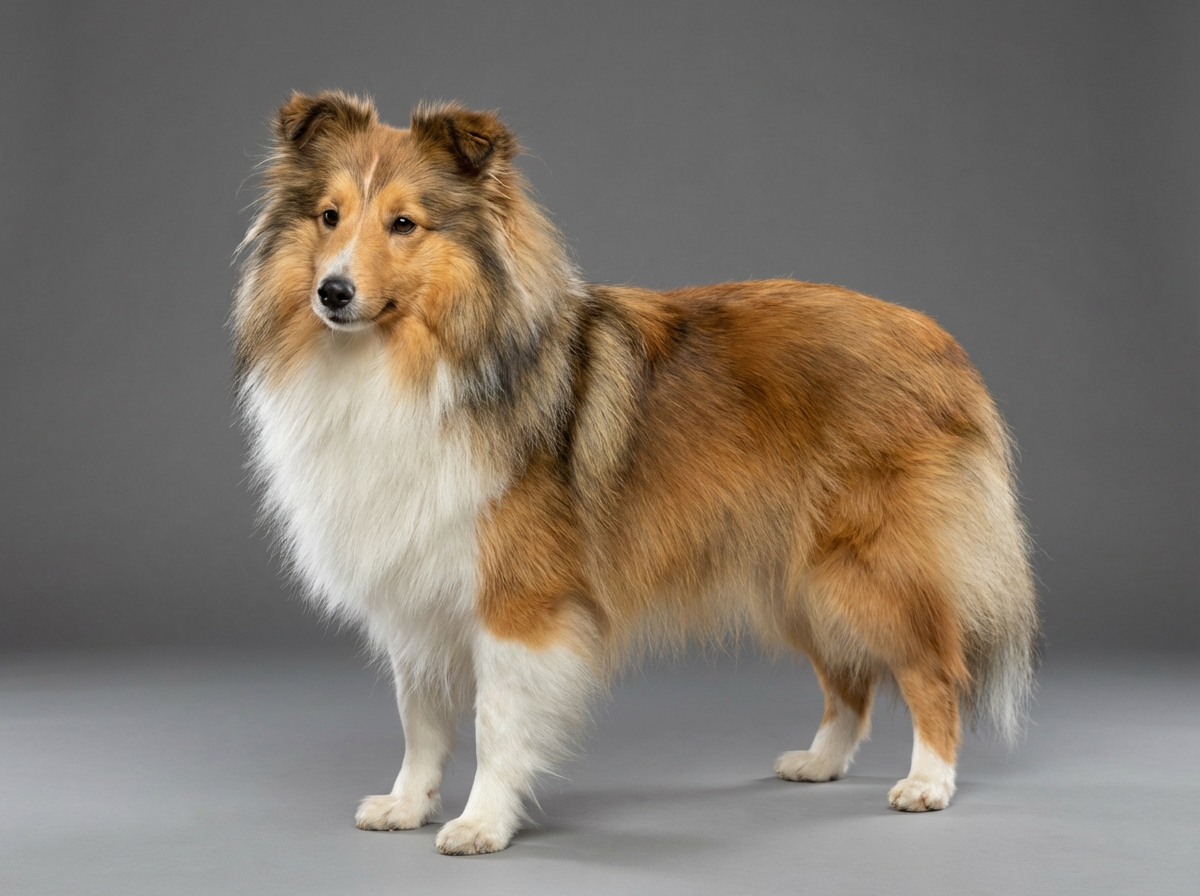
Weight gain in a Shetland Sheepdog is unusually easy to miss and unusually consequential. The breed's long, dense double coat conceals body outline completely, so owners cannot see the change, and its fifteen to twenty five pound frame means a small absolute gain is a large proportional one. The everyday effects are gradual: a dog slightly slower on walks, less tolerant of summer heat, and putting more load through knees that this breed is already prone to problems with.
Very common, and probably the most under-recognised health issue in the breed. Excess weight affects a large share of pet dogs generally, and the Sheltie's coat makes it disproportionately likely to go unnoticed until a vet comments. Most affected dogs are only modestly over, which is precisely why nobody acts.
Three breed traits combine. The coat is the first and most important: a long dense double coat hides ribs, waist and tuck entirely, which removes the ordinary feedback loop that prompts owners to act. The second is size, since at fifteen to twenty five pounds every extra pound is a large proportion of body weight and a small measuring error compounds quickly. The third is trainability, which is a virtue that generates calories, because a breed this rewarding to train receives a great many treats. Hypothyroidism, also documented in Shelties, is the medical driver that must be excluded rather than assumed away.
Household habits do the work. Multiple people feeding the same dog without coordination, treats given for coming in from the garden, food scraps from a table, and a measuring scoop rather than a scale all contribute. Reduced activity is the other half: heat in summer curtails walks in a coated breed, an injury interrupts routine, and food quantities set for an energetic three-year-old are rarely revisited when the dog is nine.
Book within a few weeks if your Sheltie has gained weight without a change in food or exercise, and particularly if that gain comes alongside coat thinning, heat seeking, reduced stamina or skin problems, because that combination points to hypothyroidism rather than to overfeeding. Also book before starting any significant weight loss programme, so an appropriate target and rate are set and any underlying condition is excluded first. Go urgently for the opposite problem: unexplained weight loss, or a dog that is eating well and losing condition, which is a different and often more serious situation. Rapid abdominal enlargement with distress is an emergency regardless of body condition.
See all Shetland Sheepdog health problems, which breeds are prone to obesity, or the full Shetland Sheepdog breed guide for temperament, exercise needs and ownership costs.
Sensible weight loss for a Sheltie runs at one to two percent of body weight per week, which on a twenty two pound dog is a matter of a few ounces and will not be visible for at least six to eight weeks. Expect three to six months to shift two or three pounds properly. Body condition and energy usually improve before the scale looks impressive. Maintaining the loss is indefinite and is where most attempts fail.
Success is being able to feel ribs easily with a flat hand, a clear waist behind the ribcage, and a monthly weight that has not moved in six months. It is not a specific number on the scale, because the correct weight for a thirteen-inch bitch and a sixteen-inch dog differ substantially. In practical terms it is a Sheltie that is keen to keep going at the end of a walk and is comfortable in July.
Visual body condition scoring is close to useless on a Shetland Sheepdog. The long, dense double coat conceals the waist, the tuck and the ribs entirely. Everything below is done with your hands.
Owners rarely gain weight on their dogs through the food bowl. In a Sheltie it is almost always somewhere else.
Training treats are the biggest single source, and this breed makes it worse rather than better. Shelties are highly trainable and enormously rewarding to train, so they get trained a lot, and a dog worked for twenty minutes an evening can easily take in a quarter of its daily calories in small pieces of cheese. The fix is not less training but moving a portion of the daily ration into the treat pouch.
The second source is household drift: a piece of toast crust, the last of the yoghurt pot, something from the children. On a twenty pound dog a single small biscuit is a meaningful fraction of the day's energy, and nobody is counting.
The third is a real drop in output that nobody adjusts for. Neutering reduces energy requirements. So does age. So does an injury, a period of restricted exercise, or a hot summer where walks got shorter. Food quantities are usually set once and never revisited.
And the fourth, which must be excluded rather than assumed, is medical. Hypothyroidism is documented in this breed and causes weight gain on unchanged food. A Sheltie that has gained weight while also losing coat quality and stamina needs a thyroid panel, not a diet.

If you think your Shetland has obesity, the plan is three steps: write down what you have seen and when it started, book a veterinary appointment rather than waiting for the next flare, and take video of the behaviour or symptom before you go — the thing you are worried about rarely happens in the consulting room. Screening in the parents covers collie eye anomaly, mdr1 drug sensitivity, dermatomyositis.
What the vet visit should produce is a diagnosis and a written plan, not just reassurance: what is being ruled out, what the monitoring interval is, and which signs mean you come back sooner. Ask what the treatment costs across a year rather than per visit, because that is the number that decides whether you are managing this condition or reacting to it.
Between appointments, keep a short log — dates, what you saw, what changed. It is the single most useful thing an owner brings to a follow-up, and for obesity it is often what separates a clear pattern from a guess.
Ines was told at a routine appointment that her five-year-old Sheltie, Tamsin, was overweight, and she flatly disagreed. Tamsin looked exactly as she always had, with a full coat and, to Ines's eye, an obvious waist. The vet asked her to put both hands on the dog's ribs. Ines could not find them without pressing. The scale said twenty three pounds; Tamsin had been eighteen and a half at two. What had happened was not the bowl. Ines had taken up competitive obedience and was training six evenings a week with a pouch full of cheese and liver treats, none of which she had counted because they were tiny. She kept the training and changed nothing else except where the treats came from. Tamsin's daily kibble was weighed out in the morning and the training portion came out of it. Cheese became an occasional jackpot rather than the default. Eleven months later Tamsin was nineteen and a half pounds, faster in the ring, and Ines had stopped arguing with the vet.
Key takeaway: In a coated breed you cannot audit weight by looking, and in a highly trainable one the calories are usually in the treat pouch rather than the bowl. Weigh the food, weigh the dog, and move the treats inside the ration rather than cutting the training.
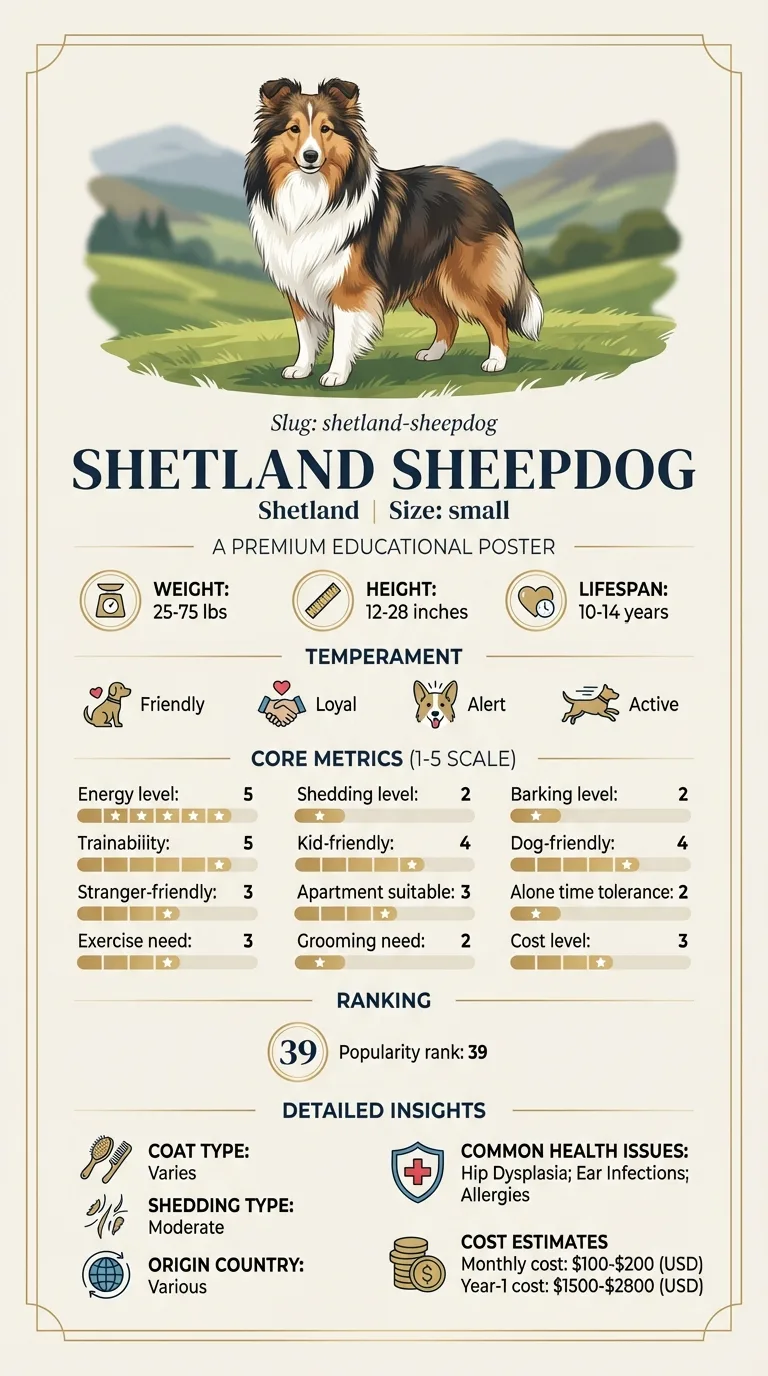
The breed range is fifteen to twenty five pounds, but the range matters less than the individual. A finely built thirteen-inch bitch and a heavier sixteen-inch dog have very different correct weights. Body condition assessed by hand is the reliable measure; the number on the scale is for tracking change in your own dog.
Because a long dense double coat is designed to disguise body outline, and it does so extremely well. This is not a failure of attention. It is the single most common reason Sheltie owners are surprised by a vet's assessment, and it is why hands and scales beat eyes in this breed.
There is no documented obesity-related gene variant in this breed. The much-discussed appetite gene variant is associated with Labradors and Flat-Coated Retrievers, not Shetland Sheepdogs. Weight gain here is a matter of energy balance and, sometimes, of thyroid function.
Weigh out the full daily ration in the morning and take training treats from that allocation rather than adding to it. Kibble works fine as a reward for a food-motivated dog. This preserves the training, which this breed genuinely needs, without adding calories to the day.
Yes, and hypothyroidism is documented in Shetland Sheepdogs. The pattern to watch for is weight gain combined with symmetrical coat thinning, reduced stamina and heat seeking. That combination deserves a blood test before a diet plan, because dieting a hypothyroid dog does not work well.
Slowly. Around one to two percent of body weight per week is a sensible target, which on a small dog is a matter of ounces and is why monthly weighing on the same scale is essential. Rapid weight loss in dogs carries its own risks and should be supervised.
It loads the stifles, which is significant in a breed with documented patellar luxation. It reduces heat tolerance in a heavily coated dog. It raises the workload on an ageing heart. And it shortens active life. None of these are theoretical at fifteen percent excess body weight.
By hand, not by eye. Feel for ribs with a flat palm and check for a waist behind the ribcage. The coat makes visual assessment unreliable.
Around ten percent of body weight on a twenty pound dog, carried through the knees and the heart on every single stride.
No. Take the treats from the measured daily ration instead. This breed needs the training more than it needs the extra calories removed.
Therapeutic weight management diets do cost more per bag, though a dieting dog eats less of it. Against this breed's typical monthly spend it is a modest change.
Monthly, on the same scale, recorded with the date. Most practices have a scale in reception and will not mind you using it.
A one-page prep sheet for this condition: the signs, the questions to ask, what to get priced. Unlocks here.
You get: Vet visit prep sheet
No spam. One-click unsubscribe. See our privacy policy.
Preview page 1 before you decide.