Health
Why do Shetland Sheepdogs get back pain?
Usually from muscular strain, hard landings and compensation for a sore hind leg, rather than from any long-backed conformation.

Quick answer
Why do Shetland Sheepdogs get back pain?
Usually from muscular strain, hard landings and compensation for a sore hind leg, rather than from any long-backed conformation.
A common line online says small dogs get back trouble because of long spines and short legs. That describes a Dachshund. A Shetland Sheepdog is built in normal proportion, and its back problems have a different origin.
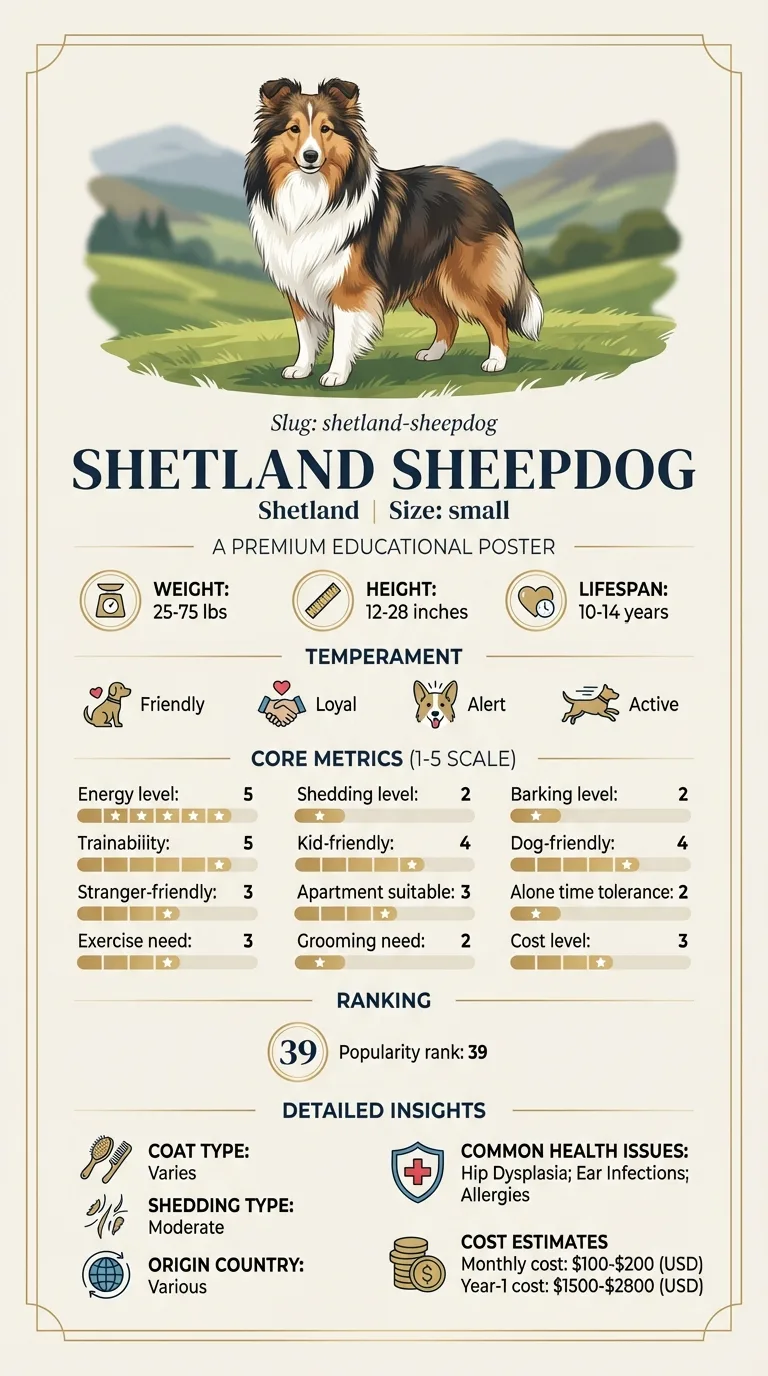
Owners whose dog yelped once jumping off the bed and has been tense ever since. People whose Sheltie has developed a hunched, tucked posture. Anyone with an agility dog who has started refusing weave poles or tight turns in one direction.
This guide is not medical advice. If your dog shows pain, sudden behavior change, or worsening symptoms, consult a licensed veterinarian.
Some links may be affiliate links. We may earn a commission at no extra cost to you. We only suggest products we believe are helpful for dog owners.
We research and check what we publish, but we do not warrant that any figure, date, price, or statement is accurate, complete, or current, and we accept no liability for any loss, cost, injury, or other harm arising from the use of this site. Use it as one reference among several. You remain responsible for your own decisions and for your dog's care - confirm anything that matters with a licensed veterinarian or another qualified professional before you act on it. Full disclaimer.
Back problems in this breed are dominated by soft tissue: strained muscles, irritated ligaments and spasm in the long bands running either side of the spine. The dog is stiff, guards her middle, avoids stairs and stops shaking herself off. It is genuinely painful and genuinely treatable, and the main risk is that it gets dismissed as the dog slowing down. Serious disc and spinal cord disease is a separate, rarer category with far more dramatic signs.
Back pain is not on the Shetland Sheepdog's documented condition list, and this breed is not among those known for disc disease. Muscular back strain, however, turns up regularly in any active dog, and Shelties are active by nature with an energy level rated four out of five. Most episodes an owner will encounter are strains that resolve, not spinal emergencies.
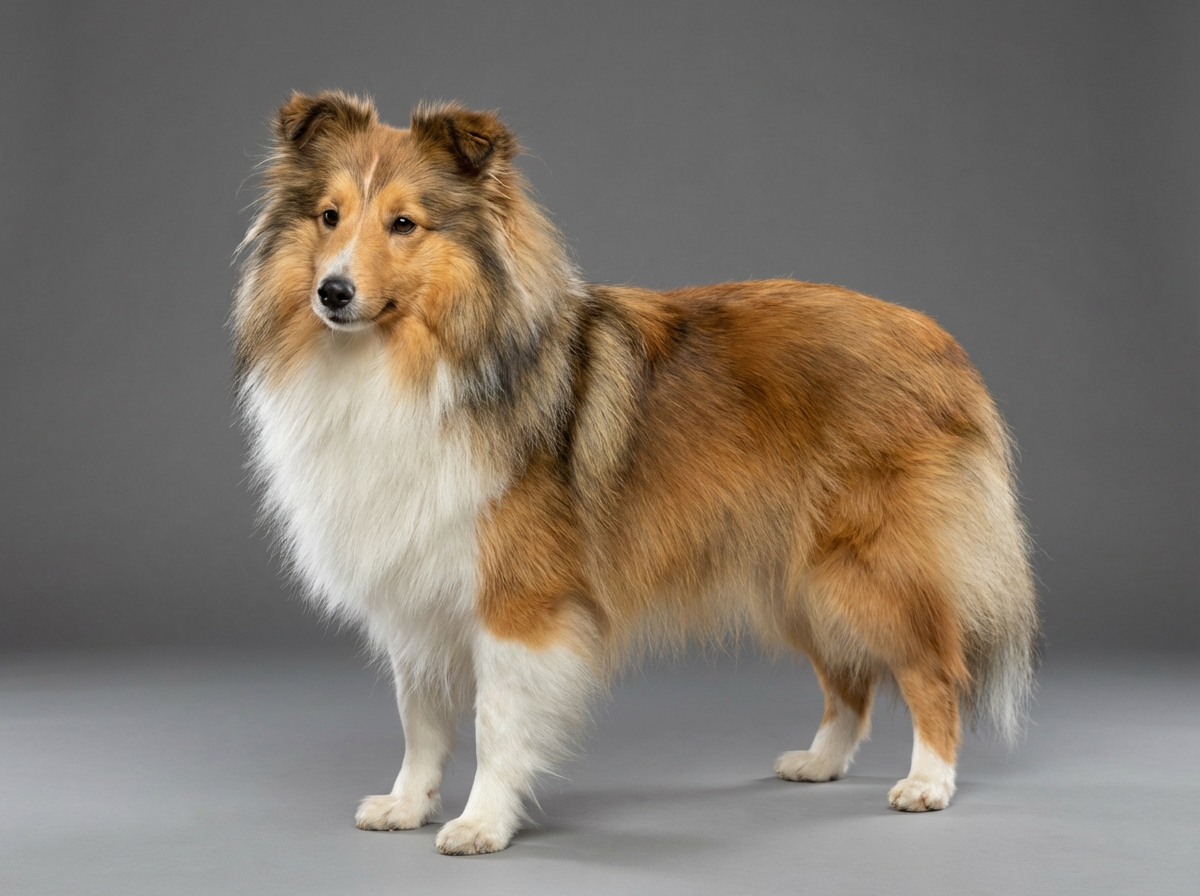
Conformation is not the driver here, which is the most useful thing a Sheltie owner can know. The genuine breed contributions are behavioural and orthopaedic. A strong herding instinct produces sudden directional changes at speed, and a documented tendency to patellar luxation creates the asymmetric weight-bearing that overloads the muscles of the lower back. The dense double coat matters only for detection, hiding both the hunched posture and the muscle loss that develops on the painful side. Body weight sits in a helpful range at 15 to 25 pounds, so long as the dog stays within it.
Hard, slippery flooring is the biggest household factor, because a dog whose hind legs slide out from under her strains everything holding the pelvis to the spine. Furniture height is the second: a 14 inch dog jumping down from a 20 inch sofa is dropping further relative to her own size than the owner imagines. Cold weather stiffens muscles and makes strain more likely in the first ten minutes of a walk, and unbalanced exercise, with nothing midweek and a long hike on Sunday, produces exactly the flare pattern owners find baffling.
Go to an emergency hospital immediately if your dog cannot stand, is dragging or knuckling a hind paw, has lost control of her bladder, is crying continuously, or has gone suddenly weak in the back legs. Those signs point at the spinal cord and the window for effective treatment is measured in hours. Book a routine appointment within a few days for a single yelp, transient stiffness, or reluctance to jump, and treat the dog gently in the meantime. Ask your vet to examine the hind limbs as well as the spine, because a knee problem driving back muscle strain is easy to miss if nobody looks for it.
See all Shetland Sheepdog health problems, which breeds are prone to back problems, or the full Shetland Sheepdog breed guide for temperament, exercise needs and ownership costs.
Simple muscular strain usually settles within one to two weeks of restricted activity and appropriate pain relief. Recurring strain driven by an untreated knee or hip takes as long as that underlying problem takes to address. Rebuilding lost core muscle through physiotherapy runs to two or three months.
A dog who shakes herself off freely, takes stairs without pausing, and moves symmetrically when trotting away from you. The realistic goal is a back that no longer flares every few months, not a dog you never have to think about again.
You cannot see a Sheltie's spine. You have to feel for it, and the useful information is in muscle tone and reaction rather than in any visible curve.
The most common back story in this breed is not a spinal problem at all in the beginning. It starts in a hind leg. Patellar luxation is documented in the Shetland Sheepdog, and a dog with a kneecap that slips will shift weight forwards and to the opposite side without any conscious decision. That asymmetric loading is carried through the muscles of the lower back, which work harder on one side to keep the dog level.
Over weeks the overworked muscles tighten and become painful. The owner then reports back pain, and it is real back pain, but treating only the back leaves the knee driving it. This is why a proper assessment always includes the hind limbs, and why physiotherapy alone often fails when the underlying joint problem has not been addressed.
The other big contributor is landing. A Sheltie leaping off a sofa or out of a car boot lands forelimbs first and transmits the shock straight up through the shoulders and thoracic spine. Do that several times a day for years and the accumulated microtrauma is meaningful. Dogs also injure themselves in ways owners never witness, because a herding breed that spins hard on wet grass to cut off a running child is putting more rotational force through her spine than any activity you deliberately train.
Most of this is manageable with rest, pain relief, and changing the household so the same movements stop happening. What it is not is inevitable ageing, and it should never simply be accepted in a dog with 12 to 14 years of life to get through.

Ossian was a six year old Sheltie whose owner Priya had treated three separate episodes of back stiffness over eighteen months. Each time rest and pain relief worked, and each time it came back within a season. The fourth time, Priya asked for a full orthopaedic assessment rather than another course of tablets. The vet found a grade two luxating patella on the left. Ossian had been shifting weight off that knee for years, and the muscles along the right side of his lower back were doing the work. The plan changed completely: knee surgery, ramps onto the sofa, runners across the tiled kitchen, and twelve weeks of physiotherapy. Two years on he has had no further back episodes.
Key takeaway: Back pain that keeps returning is usually a symptom of something further down. Insist the legs get examined too.
No. Shetland Sheepdogs are normally proportioned dogs of 13 to 16 inches at the shoulder without the shortened limb bones that define chondrodystrophic breeds. Advice written for long-backed dwarf breeds does not transfer cleanly.
Book a check within a few days. A single yelp with a return to normal is often a muscle strain, but dogs mask spinal pain well, and an examination now is far cheaper than an emergency later. Rest her in the meantime.
Ask your vet rather than guessing, but genuine soft tissue strain typically needs one to two weeks of controlled activity: lead walks only, no stairs, no jumping and no play with other dogs. Coming back too early is the usual reason these recur.
A well-fitted Y-shaped harness spreads pull across the chest rather than the neck, which matters for a dog with any neck sensitivity. Check that it does not press across the shoulder blades, because a badly cut harness restricts the very movement you are protecting.
Gentle warmth and stillness help more than untrained hands. Deep pressure on a spine you have not had examined can worsen a disc problem. Ask a veterinary physiotherapist to show you specifically what is safe for your dog.
Yes. If the dog is dragging a hind leg, cannot stand, has lost bladder control or is crying continuously, that is a spinal cord emergency and needs an immediate veterinary hospital, not a morning appointment.
Usually from muscular strain, hard landings and compensation for a sore hind leg, rather than from any long-backed conformation.
Stopping the whole-body shake, hesitating at stairs, or a hunched posture with the belly tucked. All are easy to miss under coat.
Yes. Add steps or a ramp to the sofa and bed, and lift her out of the car rather than letting her land on hard ground.
Poorly conditioned agility can. Tight turns and repeated jumping load the spine, so warm-ups, cool-downs and sensible jump heights matter.
A strain treated conservatively is a modest cost. Imaging and referral for a suspected spinal cord problem run far above a Sheltie's normal monthly budget.
A one-page prep sheet for this condition: the signs, the questions to ask, what to get priced. Unlocks here.
You get: Vet visit prep sheet
No spam. One-click unsubscribe. See our privacy policy.
Preview page 1 before you decide.