Health
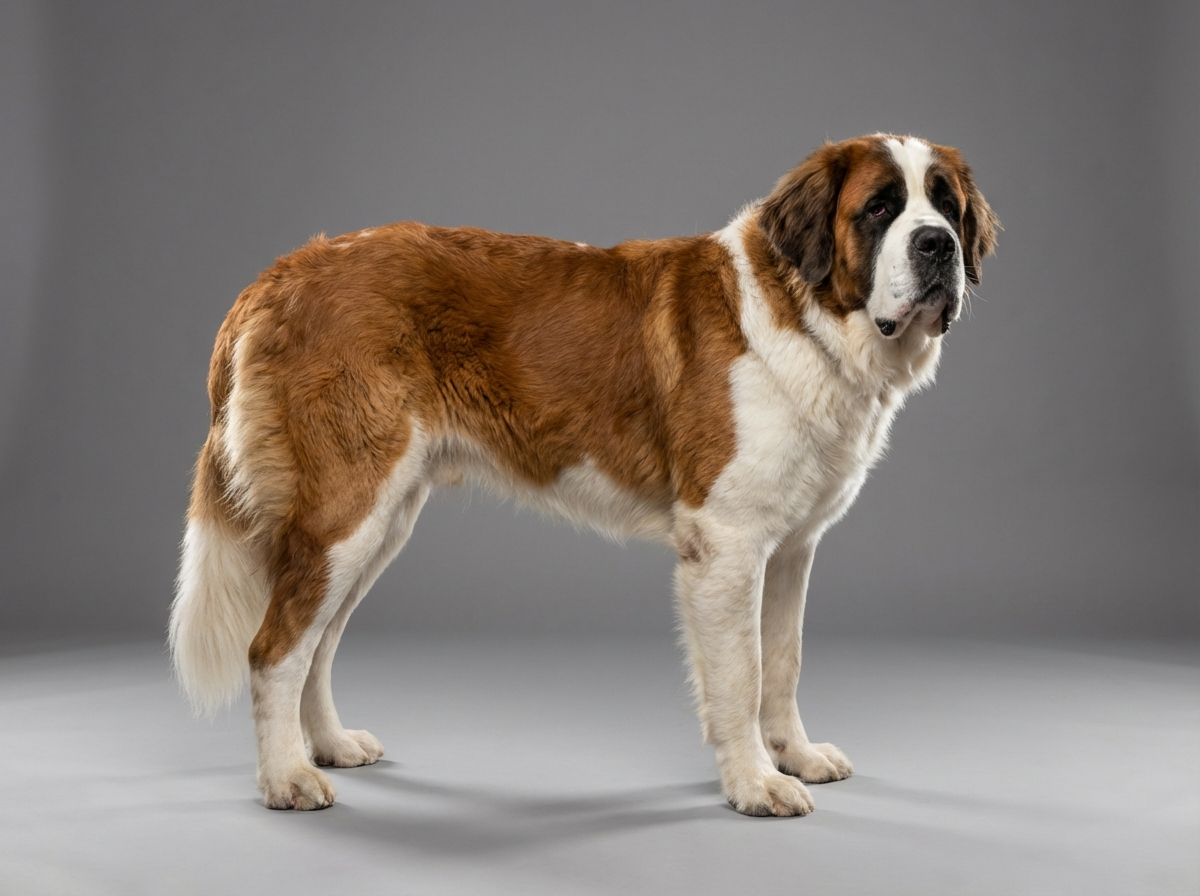
Is the Saint Bernard flat-faced?
No, but it still shows elevated respiratory disease risk due to heavy facial tissue and large body mass.

Quick answer
Is the Saint Bernard flat-faced?
No, but it still shows elevated respiratory disease risk due to heavy facial tissue and large body mass.
Heavy jowls, loose facial and throat skin, and sheer body mass all quietly reduce this breed's breathing reserve, even without the shortened muzzle that defines true brachycephalic breeds.
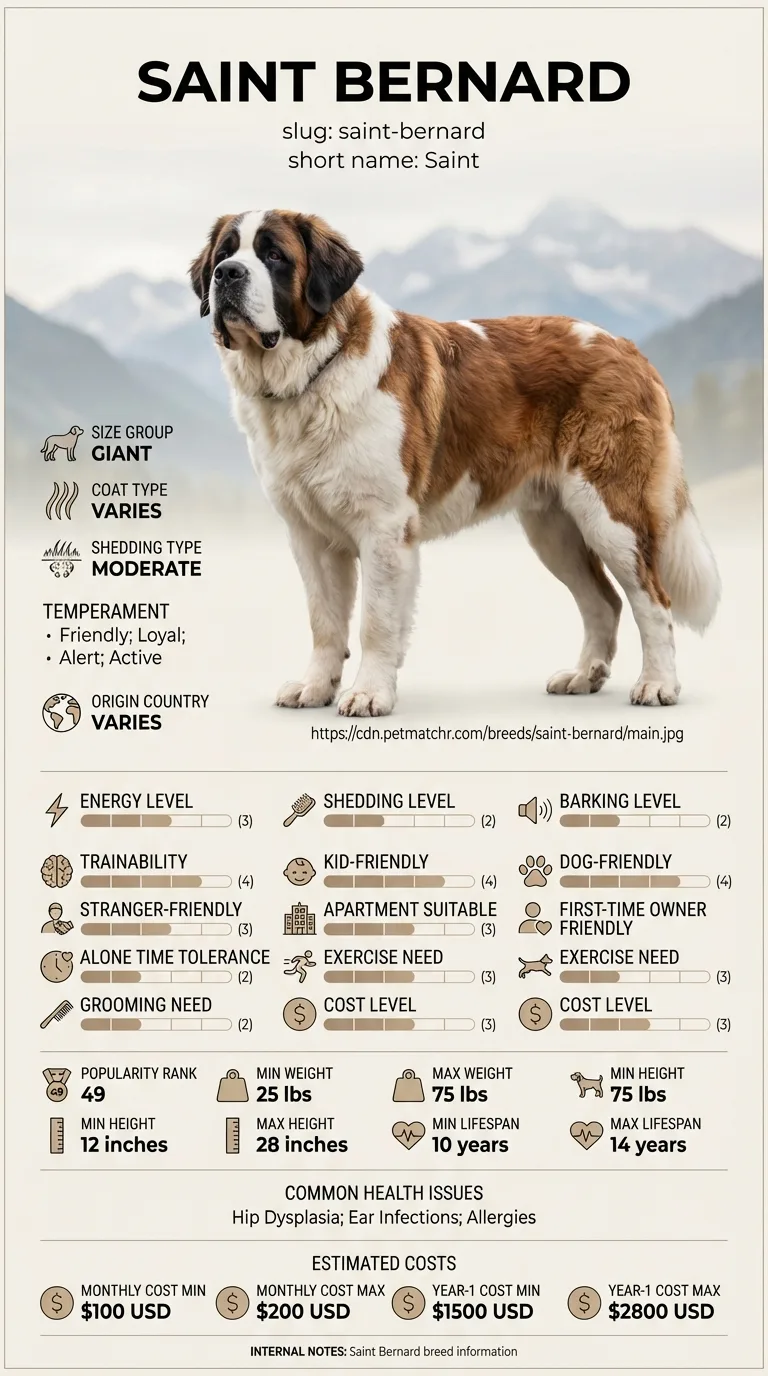
This is most relevant to owners during exercise, heat, or excitement, situations that demand more from the respiratory system than this breed's structure comfortably provides.
This guide is not medical advice. If your dog shows pain, sudden behavior change, or worsening symptoms, consult a licensed veterinarian.
Some links may be affiliate links. We may earn a commission at no extra cost to you. We only suggest products we believe are helpful for dog owners.
Check this first
Labored breathing at rest, blue or gray-tinged gums, extreme distress or panic associated with breathing effort, or collapse are all signs of a respiratory emergency and need immediate veterinary care, since these indicate the dog's airway or oxygen exchange is significantly compromised.
Loud but otherwise normal-effort breathing after exercise, occasional snoring, or breathing that sounds a bit heavier than a smaller breed's is often within this breed's normal range and doesn't require urgent care, though a vet visit is reasonable if it seems to be worsening over time.
The distinction that matters is effort and recovery. A dog that breathes loudly during exercise but returns to quiet, normal breathing within a few minutes of rest is functioning within a reduced but manageable reserve. A dog that struggles to catch its breath even at rest, or whose breathing sounds distressed rather than just loud, is showing a different, more urgent pattern.
If any of these apply, call your vet or an emergency clinic now. The rest of this page is for the cases that are not an emergency.
Despite not carrying the shortened muzzle that defines classic brachycephalic breeds, Saint Bernards show a documented, significantly elevated respiratory disease risk compared to non-brachycephalic dogs generally. The mechanism is different from flat-faced breeds: heavy jowls, loose throat and facial tissue, and the sheer demands of moving air through and around a very large body all quietly reduce this breed's breathing reserve, particularly during exercise, heat, or excitement.
Respiratory disease risk is documented as substantially elevated in Saint Bernards compared to non-brachycephalic dogs broadly, making it a meaningful health consideration despite the breed not fitting the classic flat-faced profile.
The Saint Bernard's heavy jowls, loose facial and throat skin, and generally massive head and body all add a degree of airflow resistance that a leaner, tighter-faced breed doesn't have to contend with, even without the shortened muzzle and narrowed airway structures that define true brachycephalic breeds.
Heat and humidity reduce the effectiveness of panting, the primary way dogs cool themselves and manage respiratory demand, and excess body weight adds physical pressure on the chest, both of which compound this breed's already reduced baseline respiratory reserve during exertion or warm conditions.
Talk to your vet about any noisy breathing that seems to be worsening, or breathing that doesn't quickly return to normal after exercise. Labored breathing at rest, blue or gray gums, extreme distress, or collapse are emergencies requiring immediate veterinary care.
Because this breed doesn't look like a classic brachycephalic dog, its respiratory limits are easy to underestimate.
See all Saint Bernard health problems, which breeds are prone to respiratory disease, or the full Saint Bernard breed guide for temperament, exercise needs and ownership costs.
Respiratory limitations related to this breed's structure are lifelong rather than something that resolves, though they can often be well managed through weight control, heat avoidance, and appropriately paced exercise.
Success means a dog that breathes comfortably during normal daily activity and recovers quickly after exertion, achieved through consistent management of weight, heat exposure, and activity level, rather than expecting this breed's structural limitations to change.
If you think your Saint has respiratory disease, the plan is three steps: write down what you have seen and when it started, book a veterinary appointment rather than waiting for the next flare, and take video of the behaviour or symptom before you go — the thing you are worried about rarely happens in the consulting room. Screening in the parents covers hip dysplasia, elbow dysplasia, dilated cardiomyopathy.
What the vet visit should produce is a diagnosis and a written plan, not just reassurance: what is being ruled out, what the monitoring interval is, and which signs mean you come back sooner. Ask what the treatment costs across a year rather than per visit, because that is the number that decides whether you are managing this condition or reacting to it.
Between appointments, keep a short log — dates, what you saw, what changed. It is the single most useful thing an owner brings to a follow-up, and for respiratory disease it is often what separates a clear pattern from a guess.
Katie worried when her Saint Bernard, Argos, started breathing loudly during their regular walks, especially on warmer days. Her vet's exam confirmed Argos's airway and throat tissue were adding some resistance during exertion, typical for the breed, but found no signs of true respiratory distress or an underlying structural problem needing surgery. Katie adjusted their walk schedule to cooler mornings, added more frequent rest breaks, and kept Argos's weight in a lean range. His breathing during exercise stayed loud but recovered quickly with rest, which her vet confirmed was within the range expected for this breed's structure.
Key takeaway: Learning to distinguish loud-but-recovering breathing from true labored breathing gave Katie a practical way to manage Argos's exercise without unnecessary worry, while still knowing what would actually warrant an urgent vet visit.
No, it doesn't have the shortened muzzle that defines classic brachycephalic breeds like Bulldogs or Pugs, but it still shows elevated respiratory disease risk, driven more by heavy facial and throat tissue and sheer body mass than by muzzle length.
Heavy jowls, loose throat skin, and a large overall body mass can all narrow the effective airway or add resistance to airflow during exertion, producing louder breathing sounds than a leaner, tighter-faced breed might make during the same activity.
Elevated general respiratory disease risk is documented in data comparisons, and while classic brachycephalic obstructive airway syndrome doesn't apply the same way it does to flat-faced breeds, soft palate elongation and airway tissue laxity can still contribute to breathing difficulty in some individuals.
A vet exam assessing breathing sounds and effort, sometimes combined with imaging or a specialist airway exam under light sedation, helps identify whether soft tissue structures are contributing to breathing difficulty.
Yes, heat and humidity both reduce how effectively panting can cool the body and move air, which compounds any existing airway resistance and is part of why this breed's heat sensitivity and respiratory risk are closely connected.
Management typically focuses on weight control, avoiding heat and overexertion, and in some cases surgical correction of specific soft tissue issues like an elongated soft palate if they're significantly contributing to breathing difficulty.
A basic vet exam is relatively affordable, while advanced airway imaging or surgical correction for a specific structural issue represents a more significant cost, generally comparable to other soft-tissue surgeries in a large dog.
No, but it still shows elevated respiratory disease risk due to heavy facial tissue and large body mass.
Heavy jowls, throat tissue, and body mass all add airflow resistance during exertion.
Often yes, as long as it eases quickly with rest; labored breathing at rest is different and needs a vet.
Yes, heat and humidity both reduce breathing efficiency further in a breed already working with limited reserve.
Yes, excess weight adds pressure on the chest and airway, further reducing breathing efficiency.
A one-page prep sheet for this condition: the signs, the questions to ask, what to get priced. Unlocks here.
You get: Vet visit prep sheet
No spam. One-click unsubscribe. See our privacy policy.
Preview page 1 before you decide.