Health
Is myotonia congenita common in giant breeds?
No, it's rare in giant breeds and documented far more often in a small number of other specific breeds.

Quick answer
Is myotonia congenita common in giant breeds?
No, it's rare in giant breeds and documented far more often in a small number of other specific breeds.
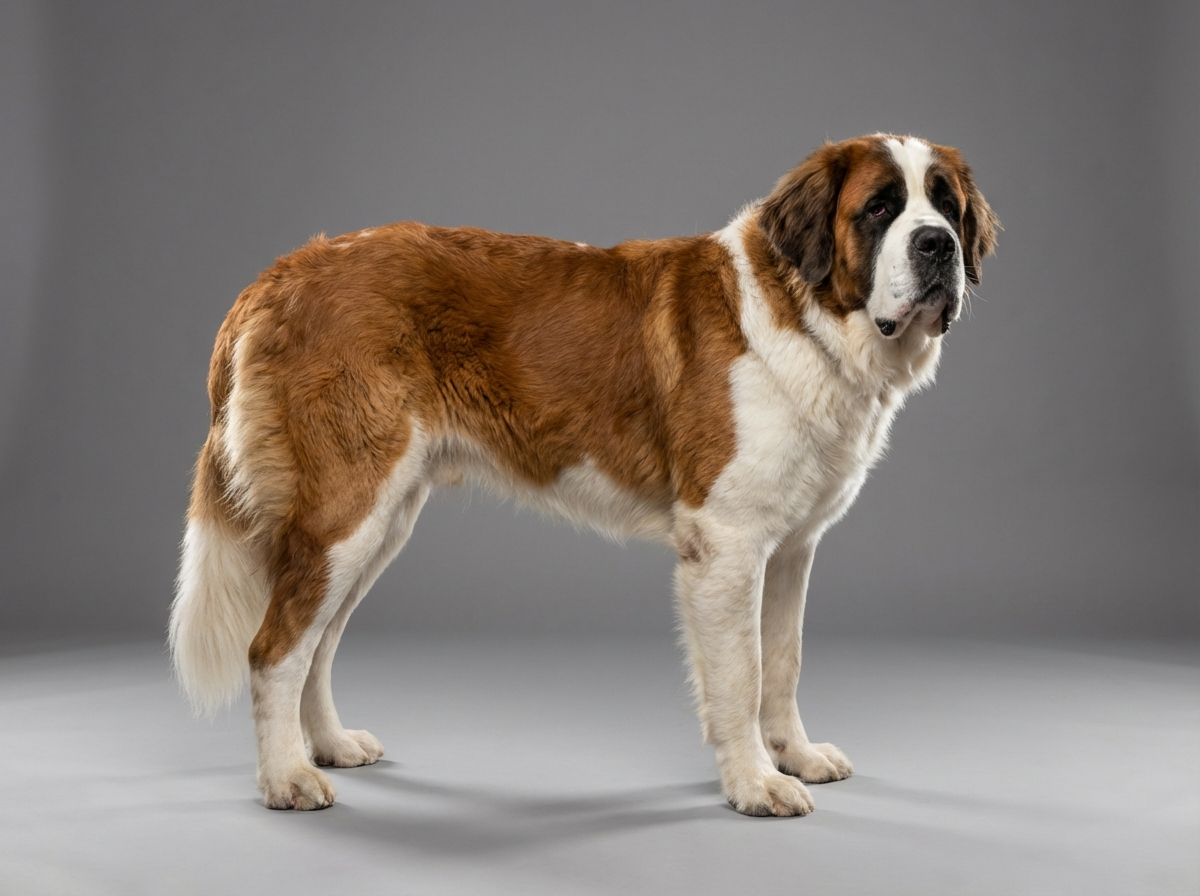
This condition is documented far more often in a small number of specific breeds, which makes it an unusual and uncommon finding in a Saint Bernard, worth understanding clearly rather than confusing with the far more common stiffness this breed experiences from joint disease.
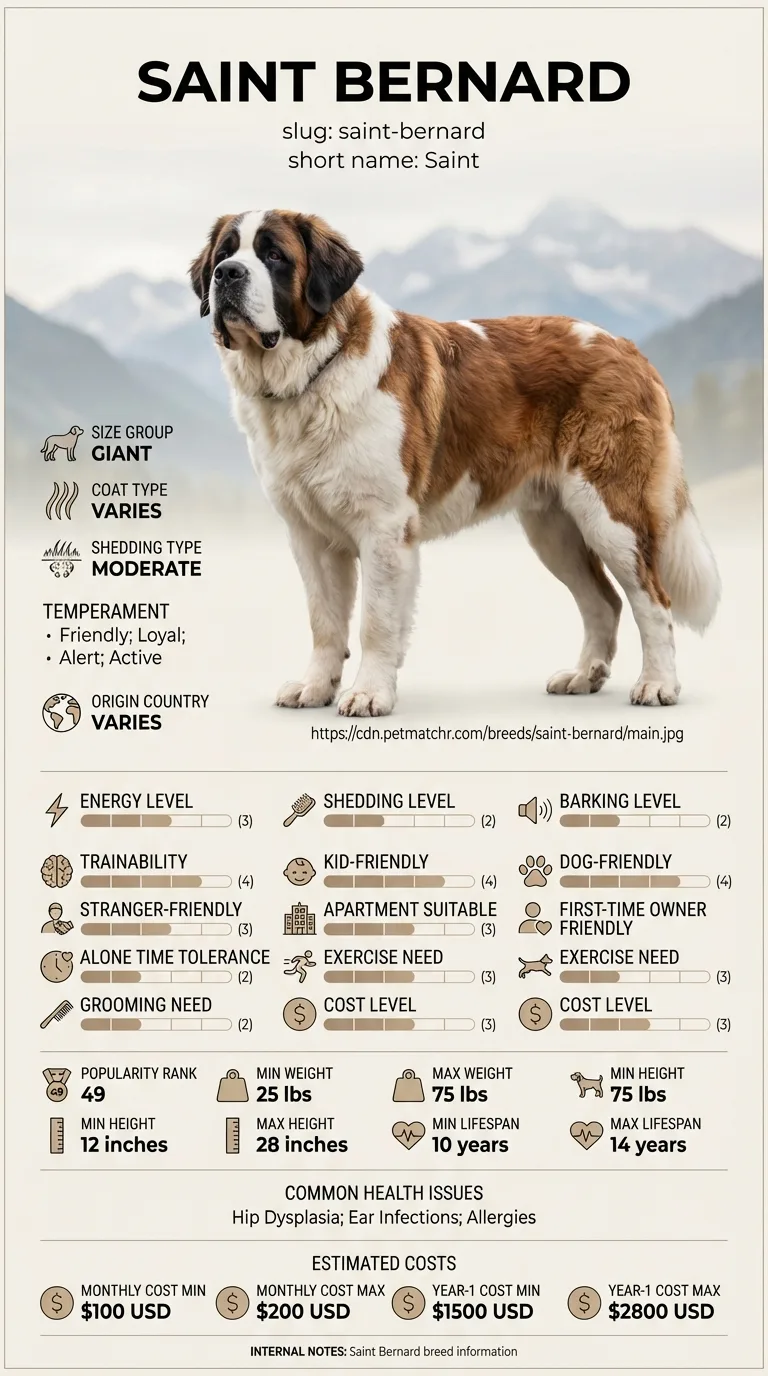
This mostly comes up for owners who've noticed genuine muscle stiffness, not joint pain, and are trying to figure out whether it fits this rare pattern or a much more likely explanation like arthritis or a neurological issue.
This guide is not medical advice. If your dog shows pain, sudden behavior change, or worsening symptoms, consult a licensed veterinarian.
Some links may be affiliate links. We may earn a commission at no extra cost to you. We only suggest products we believe are helpful for dog owners.
Check this first
True myotonia congenita itself isn't typically an emergency condition; it usually presents as a chronic pattern of stiffness that's most noticeable after rest and eases somewhat with movement. However, any dog showing sudden, severe muscle rigidity, difficulty breathing, or an inability to move at all needs prompt veterinary evaluation, since these signs could indicate something more urgent than a chronic muscle disorder.
The far more common scenario in a Saint Bernard is stiffness related to joint disease, like hip or elbow dysplasia, which also tends to be worse after rest and improve somewhat with gentle movement, making it easy to confuse the two without a proper exam. This distinction matters because the treatment paths are completely different.
For an owner noticing genuine stiffness, the practical step is a vet visit to determine which of the far more common giant-breed joint issues might be responsible, with true myotonia congenita only considered after those more likely explanations have been ruled out through appropriate exam and imaging.
If any of these apply, call your vet or an emergency clinic now. The rest of this page is for the cases that are not an emergency.
Myotonia congenita is a rare inherited disorder affecting how muscle cells relax after contracting, producing a stiff gait that's most noticeable after rest. It's documented far more consistently in a small number of other specific breeds, making it an atypical finding in a Saint Bernard, where genuine muscle stiffness is far more often explained by joint disease like hip or elbow dysplasia than by this specific muscle channel disorder.
True myotonia congenita is rare in giant breeds overall, and a Saint Bernard showing muscle or gait stiffness is statistically far more likely to have a joint-related condition than this specific inherited muscle disorder.
The genetic mutations documented to cause myotonia congenita are concentrated in a handful of specific breeds, and there isn't strong evidence that Saint Bernards carry a meaningful predisposition to this particular disorder, unlike their well-documented risk for orthopedic conditions like hip dysplasia that can produce superficially similar stiffness.
In the rare confirmed cases across dog breeds generally, cold temperatures and rest periods are known to worsen the muscle stiffness associated with this disorder, but since it's not established as a breed-typical condition in Saint Bernards, environmental drivers specific to this breed developing it aren't well documented.
Talk to your vet about any genuine muscle stiffness, especially if it's most pronounced after rest and improves with movement, so an accurate diagnosis can be reached through proper exam and testing. Sudden severe rigidity, difficulty breathing, or inability to move at all need prompt veterinary evaluation.
Because this condition is genuinely rare in giant breeds, most of the mistakes here involve misattributing symptoms rather than mismanaging a confirmed case.
See all Saint Bernard health problems, which breeds are prone to myotonia congenita, or the full Saint Bernard breed guide for temperament, exercise needs and ownership costs.
Given how rare this condition is in the breed, getting an accurate diagnosis through proper exam and testing generally takes priority over assuming a timeline for this specific disorder; most Saint Bernards presenting with stiffness will have a joint-related diagnosis and timeline instead.
Success means reaching an accurate diagnosis first, whatever it turns out to be, since the right treatment path depends entirely on distinguishing between a rare muscle channel disorder and the far more likely joint-related explanations in this breed.
If you think your Saint has myotonia congenita, the plan is three steps: write down what you have seen and when it started, book a veterinary appointment rather than waiting for the next flare, and take video of the behaviour or symptom before you go — the thing you are worried about rarely happens in the consulting room. Screening in the parents covers hip dysplasia, elbow dysplasia, dilated cardiomyopathy.
What the vet visit should produce is a diagnosis and a written plan, not just reassurance: what is being ruled out, what the monitoring interval is, and which signs mean you come back sooner. Ask what the treatment costs across a year rather than per visit, because that is the number that decides whether you are managing this condition or reacting to it.
Between appointments, keep a short log — dates, what you saw, what changed. It is the single most useful thing an owner brings to a follow-up, and for myotonia congenita it is often what separates a clear pattern from a guess.
Felix noticed his Saint Bernard, Thor, seemed stiff getting up after naps but moved more normally once he'd been walking for a few minutes. Felix had read about myotonia congenita online and wondered if that fit, but his vet explained the condition is rare in giant breeds and recommended hip and elbow X-rays first. The imaging showed early arthritic changes consistent with mild hip dysplasia, which fully explained Thor's stiffness pattern. Thor started a joint-support plan, and his morning stiffness noticeably improved within a couple of months.
Key takeaway: Investigating the far more likely joint-related explanation first, rather than assuming the rare condition applied, got Thor an accurate diagnosis and a treatment plan that actually helped.
It's a rare inherited condition affecting how muscle cells manage chloride ions, causing muscles to stay contracted longer than normal after use, which produces a stiff gait that classically improves somewhat with continued movement.
No, it's documented far more frequently in a small number of other breeds and is considered rare and atypical in Saint Bernards, where joint conditions like hip dysplasia are a much more likely explanation for stiffness.
Diagnosis typically involves a neurological exam, electromyography to assess muscle electrical activity, and in some cases genetic testing, ideally after more common causes of stiffness have been ruled out.
Affected dogs often show a stiff, sometimes bunny-hopping gait that is most pronounced after rest and tends to ease somewhat as the dog continues moving, along with visible muscle bulk in some cases.
There's no cure, but some medications can help reduce muscle stiffness symptoms in confirmed cases, and a vet or veterinary neurologist can discuss options if this rare diagnosis is confirmed.
Joint-related stiffness from hip or elbow dysplasia, or general arthritis, is far more likely in this breed and should be the first thing ruled out with imaging.
In breeds where it's well documented, genetic testing exists, though it's not a standard or widely used screening test in Saint Bernard breeding programs given how rare the condition is in this breed.
No, it's rare in giant breeds and documented far more often in a small number of other specific breeds.
A stiff, sometimes bunny-hopping gait that's worse after rest and eases somewhat with continued movement.
Joint conditions like hip or elbow dysplasia are far more likely explanations for stiffness in this breed.
Through a neurological exam, electromyography, and sometimes genetic testing, after more common causes are ruled out.
There's no cure, but some medications can help manage stiffness symptoms in confirmed cases.
A one-page prep sheet for this condition: the signs, the questions to ask, what to get priced. Unlocks here.
You get: Vet visit prep sheet
No spam. One-click unsubscribe. See our privacy policy.
Preview page 1 before you decide.