Health
What does myotonia congenita look like day to day?
A dog appears stiff or stilted right after rest, then visibly loosens up and moves more normally as it continues walking or playing.

Quick answer
What does myotonia congenita look like day to day?
A dog appears stiff or stilted right after rest, then visibly loosens up and moves more normally as it continues walking or playing.
A dog that walks stiffly for the first few steps after a nap, then loosens up like nothing was wrong, might have a muscle channel quirk rather than a joint problem at all.
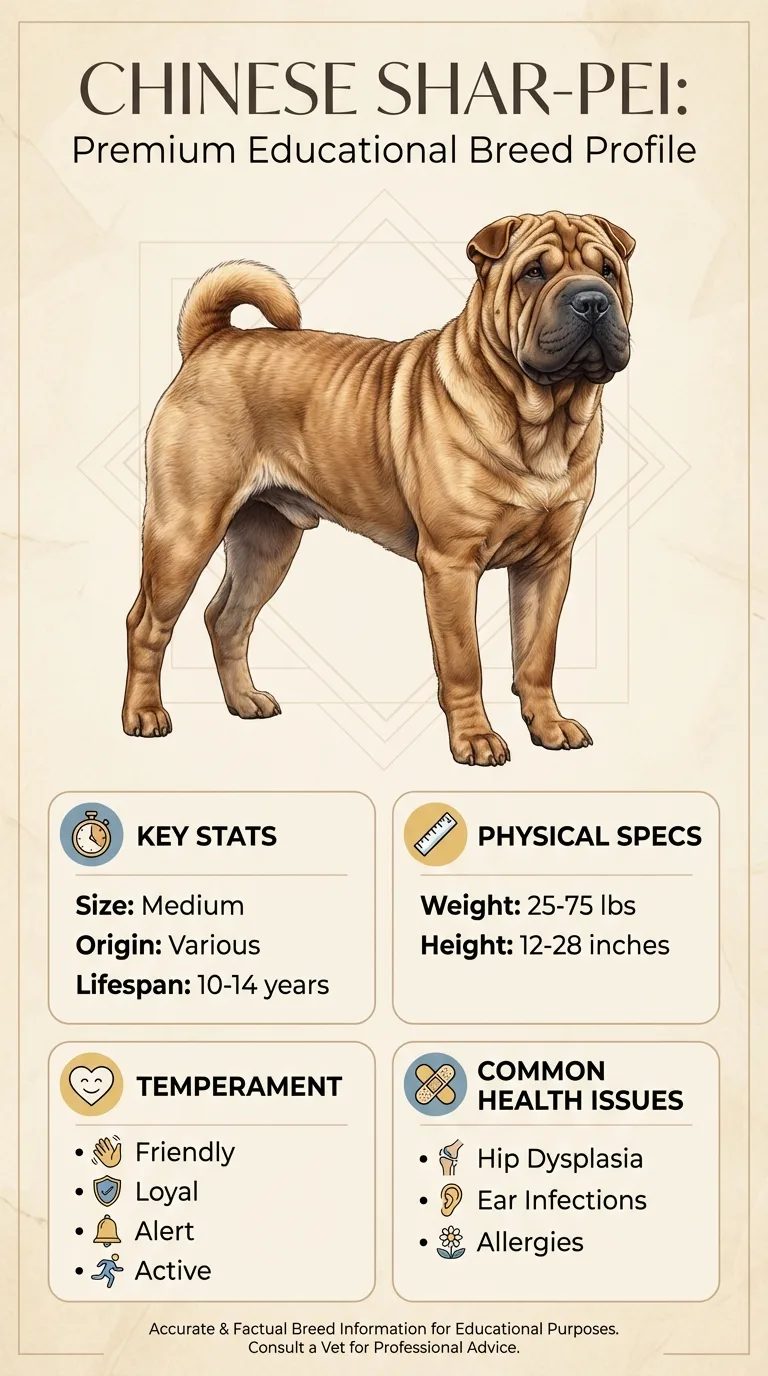
Owners of young Shar-Peis showing an unusual stiff, almost stilted gait right after rest or in cold weather that visibly eases once the dog starts moving around.
This guide is not medical advice. If your dog shows pain, sudden behavior change, or worsening symptoms, consult a licensed veterinarian.
Some links may be affiliate links. We may earn a commission at no extra cost to you. We only suggest products we believe are helpful for dog owners.
We research and check what we publish, but we do not warrant that any figure, date, price, or statement is accurate, complete, or current, and we accept no liability for any loss, cost, injury, or other harm arising from the use of this site. Use it as one reference among several. You remain responsible for your own decisions and for your dog's care - confirm anything that matters with a licensed veterinarian or another qualified professional before you act on it. Full disclaimer.
Myotonia congenita is a rare inherited condition caused by a chloride channel defect in muscle fibers, preventing muscles from relaxing normally after contracting. It produces a distinctive stiffness that's worst right after rest and eases with continued movement, a pattern that helps distinguish it from joint conditions like arthritis, which typically follow the opposite pattern.
This is a genuinely rare condition, documented in only a handful of dog breeds historically, and it isn't considered a defining or common issue for the Chinese Shar-Pei specifically, but its distinctive symptom pattern is worth recognizing if it does appear.
Myotonia congenita stems from an inherited genetic mutation affecting chloride channel function in muscle fibers, and while it isn't documented as a hallmark condition for this breed, the Chinese Shar-Pei's narrow genetic founder history means rare inherited traits can occasionally surface within certain lines.
Cold temperatures and sudden, vigorous movement straight out of rest both tend to make the underlying muscle stiffness more pronounced, while a gradual warm-up and warmer conditions generally ease symptoms.
Discuss any unusual stiffness pattern with your vet, particularly one that eases with continued movement rather than worsening, since this distinctive pattern is worth investigating with specialized testing. Sudden severe stiffness, pain, or an inability to move normally at all warrants prompt evaluation.
See all Chinese Shar PEI health problems, which breeds are prone to myotonia congenita, or the full Chinese Shar PEI breed guide for temperament, exercise needs and ownership costs.
This is a lifelong genetic trait rather than something that resolves, though many dogs manage well with routine adjustments and show a fairly stable symptom pattern over their lives rather than significant worsening.
Success looks like a dog whose stiffness is minimized through consistent warm-up routines and cold-weather protection, maintaining comfortable mobility and normal daily activity despite the underlying muscle trait.
Muscle fibers rely on tiny chloride channels in their cell membranes to help the muscle relax properly after each contraction. In myotonia congenita, a genetic mutation affects how these channels function, and the muscle has trouble relaxing normally, staying contracted a beat or two longer than it should after each movement. The practical result is a dog that looks stiff, sometimes almost bunny-hopping or waddling, particularly right after getting up from rest or in cold weather, and that stiffness visibly eases as the dog warms up and moves around more, since repeated muscle activity temporarily improves the channel's function. This rest-then-loosen pattern is one of the more distinctive tells that separates myotonia from arthritis or a joint problem, where stiffness more typically follows the opposite pattern, getting worse rather than better with continued activity.
There's no cure for myotonia congenita since it's a structural genetic trait in the muscle's own channels, but most affected dogs live comfortable, largely normal lives once the pattern is understood and managed sensibly. Keeping a consistent, gentle warm-up period before more vigorous exercise, essentially giving the muscles a chance to loosen up gradually rather than asking for a sudden sprint straight out of a nap, tends to reduce how pronounced the stiffness looks day to day. Cold weather can worsen symptoms noticeably, so a warm coat and shorter outdoor stints in winter are practical, low-effort adjustments. Some more significantly affected dogs benefit from a muscle relaxant medication prescribed by a vet, though many mild cases are managed entirely through routine and environment without needing medication at all.

If you think your Chinese has myotonia congenita, the plan is three steps: write down what you have seen and when it started, book a veterinary appointment rather than waiting for the next flare, and take video of the behaviour or symptom before you go — the thing you are worried about rarely happens in the consulting room. Screening in the parents covers skin fold dermatitis, entropion, familial shar-pei fever.
What the vet visit should produce is a diagnosis and a written plan, not just reassurance: what is being ruled out, what the monitoring interval is, and which signs mean you come back sooner. Ask what the treatment costs across a year rather than per visit, because that is the number that decides whether you are managing this condition or reacting to it.
Between appointments, keep a short log — dates, what you saw, what changed. It is the single most useful thing an owner brings to a follow-up, and for myotonia congenita it is often what separates a clear pattern from a guess.
Bear, a young Shar-Pei in Boise, moved almost robotically for the first minute or two every time he got up from a nap, especially during the colder months, then would loosen up completely once he'd walked around the living room a bit. His owner initially worried about early arthritis, but his vet noted that arthritis symptoms typically worsen rather than improve with continued movement, the opposite of what Bear was showing. Electromyography testing confirmed myotonia congenita. Bear's owner started giving him a warm coat for winter walks and a gentle few minutes of slow walking before any real exercise, and his stiffness became a minor, well-understood part of his routine rather than a mystery.
Key takeaway: The detail that seemed like it should point toward arthritis, stiffness after rest, actually pointed away from it once his vet noticed the stiffness improved rather than worsened with movement, the opposite of what a joint problem would do.
It's a rare inherited condition where a chloride channel defect in muscle fibers prevents them from relaxing normally after contracting, causing a distinctive stiffness that's worst right after rest and eases with continued movement.
No, it's a completely different mechanism. Arthritis is a joint disease that typically worsens with continued activity, while myotonia is a muscle channel issue that actually improves somewhat as the muscle warms up and moves.
A vet may suspect it based on the distinctive rest-then-loosen stiffness pattern, and specialized testing called electromyography can confirm the characteristic muscle activity pattern associated with the condition.
It's generally more of a functional stiffness and altered gait than an overtly painful condition, though severely affected dogs may show some discomfort, particularly right after getting up from rest.
Yes, cold temperatures commonly worsen the stiffness associated with this condition, making a warm coat and shorter outdoor sessions in winter a practical management step.
There's no cure since it's a structural genetic trait, but a gentle warm-up routine, cold-weather protection, and in more significant cases a prescribed muscle relaxant can meaningfully manage the day-to-day impact.
It's a rare condition overall, documented in a handful of breeds over the years, and it isn't considered a hallmark Shar-Pei issue, but it's worth knowing about if your dog shows this specific stiffness pattern.
A dog appears stiff or stilted right after rest, then visibly loosens up and moves more normally as it continues walking or playing.
No, arthritis tends to worsen with activity, while myotonia's stiffness actually improves somewhat as the muscle warms up with movement.
Yes, cold temperatures commonly worsen the stiffness, making warm clothing and shorter winter outings a helpful adjustment.
Not always; many mild cases are managed with routine and environment alone, while more significant cases may benefit from a vet-prescribed muscle relaxant.
Electromyography testing can confirm the characteristic muscle activity pattern associated with the condition, alongside the classic rest-then-loosen symptom pattern.
A one-page prep sheet for this condition: the signs, the questions to ask, what to get priced. Unlocks here.
You get: Vet visit prep sheet
No spam. One-click unsubscribe. See our privacy policy.
See a sample page before you decide.
Early access list
The free prep sheet covers the same-day warning signs, a symptom log and the questions to ask. We are considering a fuller kit that adds a cost worksheet for the usual tests and treatments (US price ranges with their sources) and a plain-English guide to ways of covering the bill. It is not built yet; this list tells us whether it is worth building.
One email, no spam, unsubscribe anytime. Information only, not veterinary advice.