Behavior
What are quick tips for Jack Russell Terrier myotonia congenita?
Keep exercise gentle and consistent, focusing on short walks and play. Monitor their movements closely and consult your vet for any changes.

Quick answer
What are quick tips for Jack Russell Terrier myotonia congenita?
Keep exercise gentle and consistent, focusing on short walks and play. Monitor their movements closely and consult your vet for any changes.
Jack Russell Terrier myotonia congenita is a condition that causes muscle stiffness, impacting your dog's mobility and quality of life.
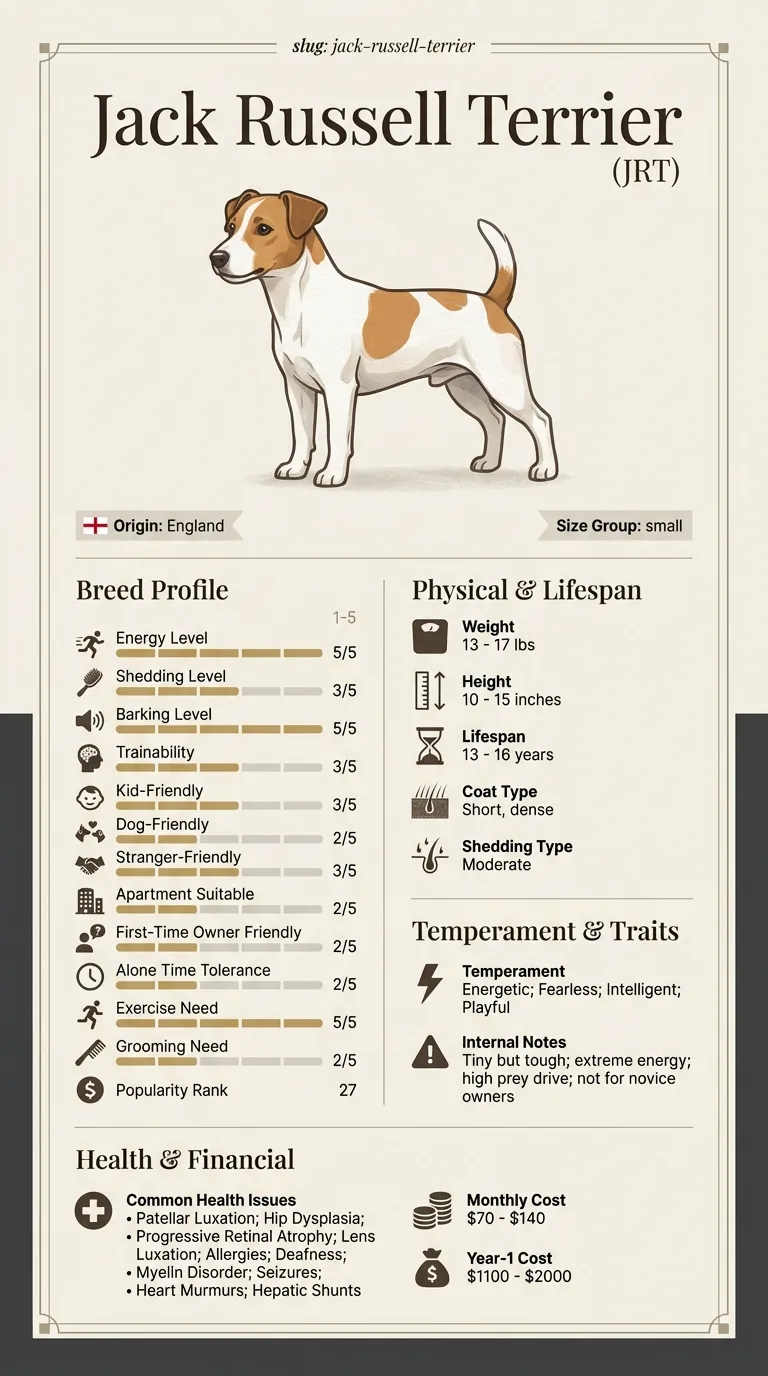
Typically, owners of Jack Russell Terriers who are active and energetic may struggle with this problem. If your dog is frequently stiff after play or seems to have difficulty moving, this condition could be affecting them.
This guide is not medical advice. If your dog shows pain, sudden behavior change, or worsening symptoms, consult a licensed veterinarian.
Some links may be affiliate links. We may earn a commission at no extra cost to you. We only suggest products we believe are helpful for dog owners.
We research and check what we publish, but we do not warrant that any figure, date, price, or statement is accurate, complete, or current, and we accept no liability for any loss, cost, injury, or other harm arising from the use of this site. Use it as one reference among several. You remain responsible for your own decisions and for your dog's care - confirm anything that matters with a licensed veterinarian or another qualified professional before you act on it. Full disclaimer.
Check this first
Recognizing the signs of Jack Russell Terrier myotonia congenita is crucial. Some symptoms can indicate a serious problem, while others might be manageable at home. If your dog shows severe muscle stiffness that prevents movement, collapses, or has difficulty breathing, it's time to call your vet immediately.
Other red flags include excessive drooling, signs of pain, or if your Jack Russell Terrier seems unresponsive. These situations can indicate a medical emergency that requires prompt attention. On the other hand, if your dog occasionally shows mild muscle stiffness after exercise but quickly recovers, you might not need an urgent vet visit.
Monitoring your dog's condition is important. If the stiffness happens infrequently or is mild and short-lived, you can keep an eye on it. Create a plan to track any changes in symptoms and consult your vet if they worsen. Always err on the side of caution; when in doubt, it's better to seek professional advice.
If any of these apply, call your vet or an emergency clinic now. The rest of this page is for the cases that are not an emergency.
Jack Russell Terrier myotonia congenita is a condition that causes muscle stiffness, making everyday movements challenging. Owners may notice their dog having difficulty getting up after resting or experiencing stiffness during playtime. This condition can lead to frustration for both the dog and the owner, as it limits the dog's natural energetic behavior.
Myotonia congenita is not extremely common but can occur in Jack Russell Terriers. It's important for owners to be aware of the signs and consult with a vet for proper management.
Jack Russell Terriers may inherit myotonia congenita due to their genetic makeup. This condition causes muscle stiffness and can vary in severity among individuals. Highly energetic breeds like the JRT are also more prone to displaying symptoms as they frequently engage in physical activity.
Environmental factors, such as stress or inadequate exercise, can exacerbate myotonia congenita symptoms. A lack of mental and physical stimulation may lead to increased muscle stiffness. Additionally, changes in routine or environment can trigger anxiety, which may worsen the condition.
If you notice significant changes in your dog's mobility, or if symptoms worsen, it's essential to consult a veterinarian. They can assess the condition and recommend further treatment options.
Avoiding these common mistakes can help improve your Jack Russell Terrier's myotonia congenita.
Start here: Jack Russell Terrier Most Common Genetic Disorders
See all Jack Russell Terrier health problems, which breeds are prone to myotonia congenita, or the full Jack Russell Terrier breed guide for temperament, exercise needs and ownership costs.
With consistent care and management, you can expect noticeable improvements in your Jack Russell Terrier's myotonia congenita symptoms within 4 to 6 months.
Success means your Jack Russell Terrier can move more easily, show reduced stiffness after resting, and enjoy longer play sessions without excessive fatigue.
Sarah, a busy nurse living in a small apartment, noticed her Jack Russell Terrier, Max, often struggled with muscle stiffness after playtime. Concerned about his comfort, she researched Jack Russell Terrier myotonia congenita and connected with a vet. With a tailored exercise routine and gentle stretching, she made gradual adjustments to Max's daily activities. Over time, Max became more agile, and their bond deepened through shared training sessions.
Key takeaway: With patience and the right approach, you can improve your Jack Russell Terrier's mobility and quality of life, making every day a little brighter.
Jack Russell Terrier myotonia congenita is a genetic condition that causes muscle stiffness. This stiffness can make it difficult for your dog to move normally, especially after resting. It's important to monitor their activity and consult your vet for management options.
To help your Jack Russell Terrier, incorporate gentle exercises that promote mobility. Regular, short walks can help keep their muscles active without overexerting them. Always consult your vet for tailored exercise recommendations.
Positive reinforcement training works well for dogs with myotonia congenita. Use treats and praise to encourage desired behaviors. Keep training sessions short to prevent stress on their muscles.
In some cases, myotonia congenita can lead to increased muscle stiffness as your dog ages. Regular veterinary check-ups will help monitor their condition and adapt care as necessary.
While there’s no cure for myotonia congenita, management strategies can improve your dog's quality of life. These include physical therapy, proper exercise, and sometimes medication as advised by your vet.
Myotonia congenita in Jack Russell Terriers is usually a genetic condition. It affects muscle function, leading to stiffness after exercise or rest. If you notice these symptoms, consult your vet for a proper diagnosis.
Positive reinforcement training works well with Jack Russell Terriers, including those with myotonia congenita. Training sessions should be short to prevent fatigue, and focus on building their confidence while accommodating their condition.
If your Jack Russell Terrier shows persistent muscle stiffness, difficulty moving, or pain, you should see a vet. Regular check-ups are important to monitor any changes in their condition.
While myotonia congenita itself may not directly affect lifespan, associated complications can arise. It’s essential to manage their health through routine vet visits and appropriate care to ensure a happy, healthy life.
Keep exercise gentle and consistent, focusing on short walks and play. Monitor their movements closely and consult your vet for any changes.
Regular check-ups every 6 to 12 months are recommended to monitor their condition and adjust care as needed.
Avoid high-impact activities like jumping or running on hard surfaces to prevent injury and stress on their muscles.
Yes, many dogs with myotonia congenita can lead happy lives with proper management and care.
Watch for increased stiffness, reluctance to move, or changes in behavior. Consult your vet if you notice any concerning signs.
A one-page prep sheet for this condition: the signs, the questions to ask, what to get priced. Unlocks here.
You get: Vet visit prep sheet
No spam. One-click unsubscribe. See our privacy policy.
Preview page 1 before you decide.