Health
How is this diagnosed?
Through direct examination under sedation or anesthesia, since palate length can't be reliably assessed from symptoms alone.

Quick answer
How is this diagnosed?
Through direct examination under sedation or anesthesia, since palate length can't be reliably assessed from symptoms alone.
This is not a general description of 'breathing issues' — it is one specific piece of tissue, measurable and visible under anesthesia, that either does or does not extend further than it should. That specificity is what makes it something a vet can actually confirm or rule out, rather than infer from symptoms alone.
Owners whose vet has specifically mentioned soft palate length as a possible contributor to their dog's breathing or snoring, and who want to understand what that diagnosis actually means and whether correction is worth pursuing.
This guide is not medical advice. If your dog shows pain, sudden behavior change, or worsening symptoms, consult a licensed veterinarian.
Some links may be affiliate links. We may earn a commission at no extra cost to you. We only suggest products we believe are helpful for dog owners.
We research and check what we publish, but we do not warrant that any figure, date, price, or statement is accurate, complete, or current, and we accept no liability for any loss, cost, injury, or other harm arising from the use of this site. Use it as one reference among several. You remain responsible for your own decisions and for your dog's care - confirm anything that matters with a licensed veterinarian or another qualified professional before you act on it. Full disclaimer.
An elongated soft palate is a specific anatomical finding where the soft tissue at the back of the mouth extends further than ideal into the airway, confirmed only through direct examination under sedation or anesthesia rather than inferred from symptoms alone. It is an individual variation, not a universal feature of this breed, and correction is a case-by-case surgical decision.
This specific, confirmed finding is less commonly documented in Saint Bernards than in extreme brachycephalic breeds, but it remains a plausible individual contributor worth checking directly in a dog with significant, persistent breathing or sleep-quality symptoms.
This breed's moderately shortened muzzle creates less room for normal soft tissue structures at the back of the throat, making an elongated soft palate a biologically plausible individual finding, though it is far less consistently documented here than in extreme brachycephalic breeds.
Excess body weight adds soft tissue around the throat that can worsen the practical breathing impact of an existing elongated palate, even though weight itself does not cause the anatomical elongation.
Raise this specifically if your dog shows persistent gagging, real exercise intolerance, or genuinely disrupted sleep, and ask whether direct examination is warranted. Treat as an emergency any acute breathing distress, blue-tinged gums, or collapse, since these require immediate veterinary attention regardless of the underlying cause.
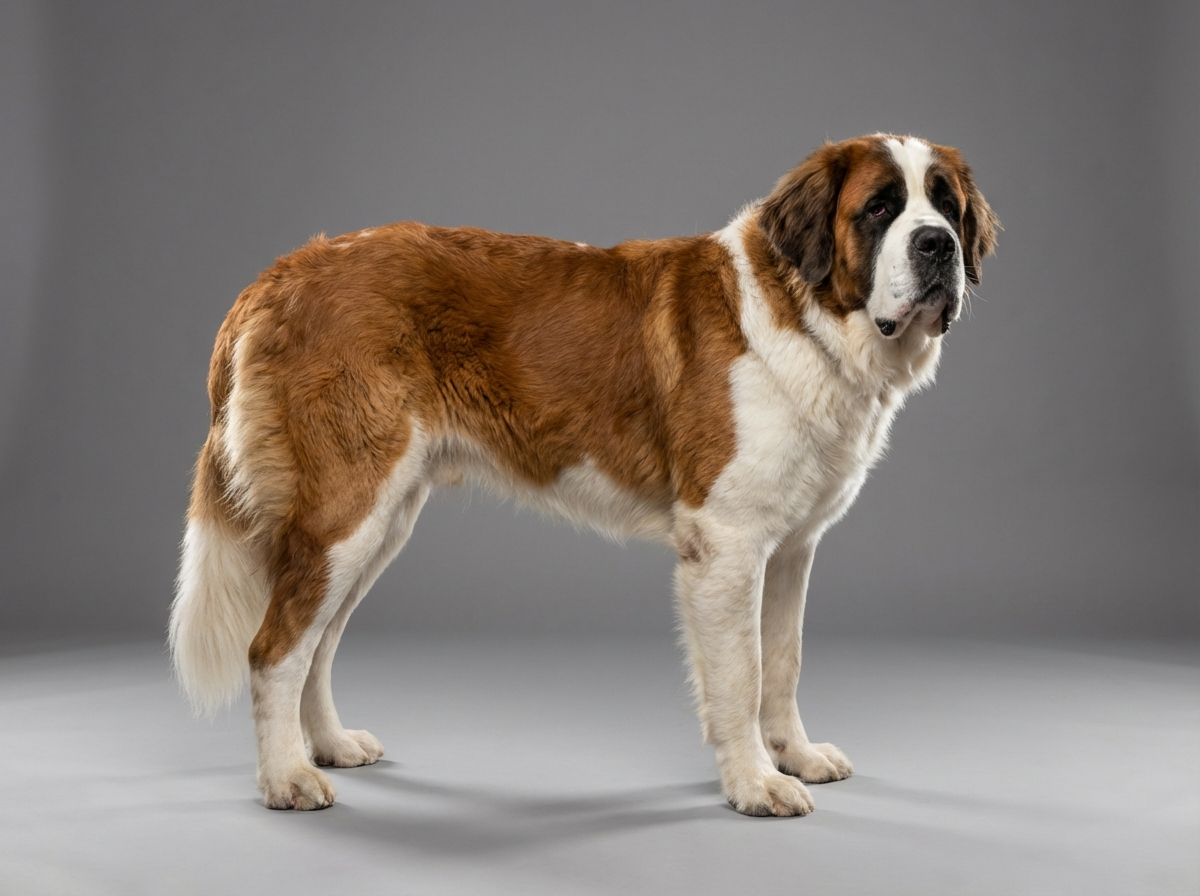
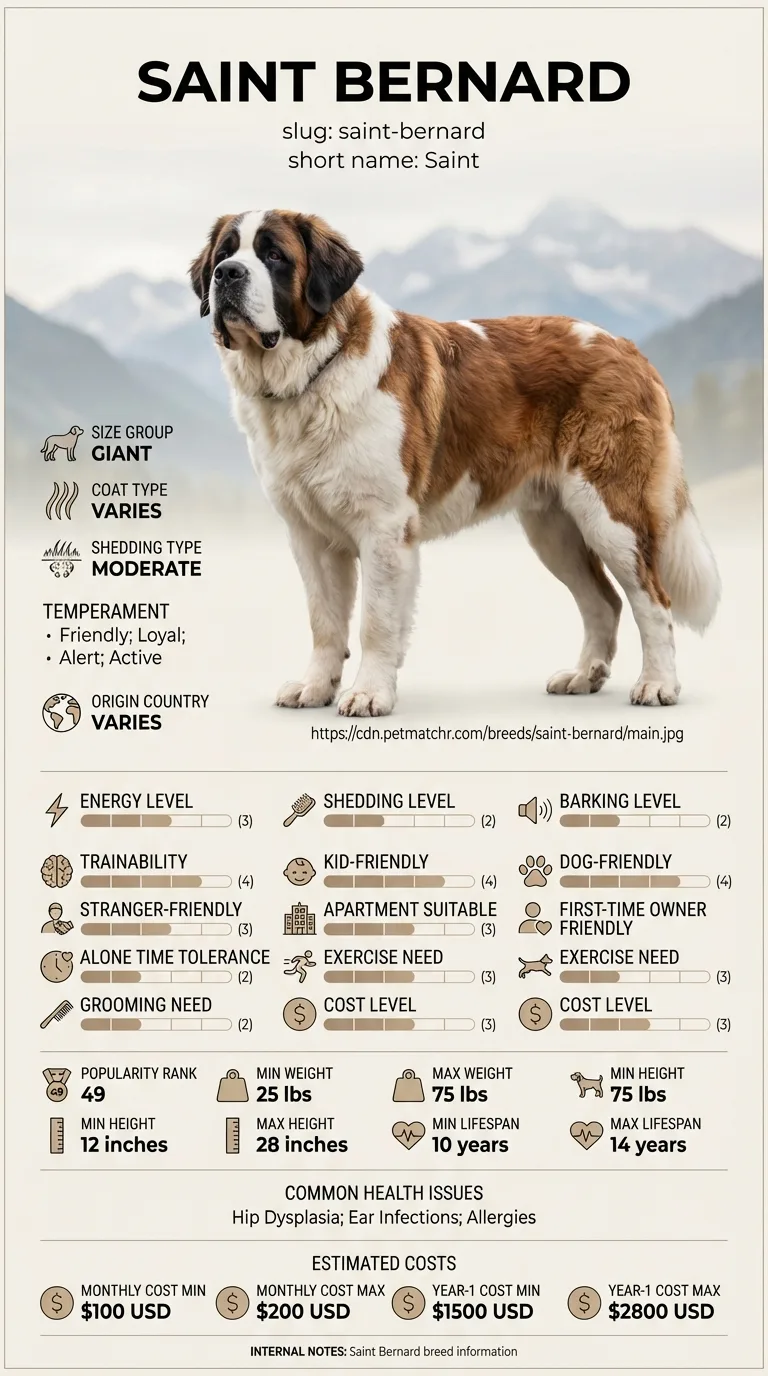
See all Saint Bernard health problems, which breeds are prone to elongated soft palate, or the full Saint Bernard breed guide for temperament, exercise needs and ownership costs.
Diagnosis requires a single procedure under sedation or anesthesia. If surgical correction is pursued, recovery typically takes one to two weeks, with symptom improvement often noticeable once healing is complete.
Success is an accurate, confirmed diagnosis rather than a guess based on symptoms, and, where correction is pursued and warranted, a meaningful improvement in breathing ease and quality of life.
Unlike many airway concerns that are inferred from symptoms at home, an elongated soft palate is typically confirmed through direct visual examination under sedation or light anesthesia, since the palate's exact length and how far it extends past the tip of the epiglottis can only be assessed reliably this way. A vet performing this exam, often alongside a planned dental cleaning or other procedure requiring anesthesia anyway, can measure the palate directly and note whether it appears to meaningfully obstruct the airway.
This matters because symptoms alone — snoring, occasional gagging, reduced exercise tolerance — can result from several different structural features working together, not just the soft palate specifically. A confirmed direct examination gives a much clearer answer than guessing based on symptoms, and it is the basis on which a vet would actually recommend, or not recommend, surgical correction.
Not every mild finding needs correction — this is a case-by-case decision made with direct examination findings and a specific dog's actual symptom severity in view, not a reflexive recommendation.

Chief, a four-year-old Saint Bernard, had mild but persistent snoring and occasional gagging after drinking water quickly, which his family had always assumed was just normal breed character. During a routine dental cleaning requiring anesthesia, his vet took the opportunity to examine his airway directly and found a soft palate extending noticeably past where it should for comfortable breathing. Given the confirmed finding and Chief's persistent symptoms, his family opted for surgical correction performed during a follow-up procedure. His recovery took about ten days, and his family noticed reduced gagging and quieter, more restful-sounding sleep within a few weeks of healing.
Key takeaway: The diagnosis only became possible because Chief happened to be under anesthesia for an unrelated reason — a reminder that symptoms alone rarely confirm this specific finding, and a direct look is what actually settles the question.
Through direct visual examination under sedation or light anesthesia, since the palate's exact length relative to the airway can only be reliably assessed this way, not from symptoms alone.
No — it is an individual anatomical variation, not a universal breed feature, though moderate muzzle shortening makes it a plausible contributing factor worth checking in a dog with significant breathing symptoms.
Not necessarily — the decision depends on how obstructive the finding is, how significantly it affects the dog's quality of life, and the dog's overall candidacy for anesthesia and surgery.
A veterinary surgeon trims the excess portion of the soft palate to reduce airway obstruction, performed under general anesthesia, typically with a recovery period of one to two weeks.
Yes — since a dog is already under anesthesia for something like a dental cleaning, some vets take the opportunity to examine the palate directly rather than requiring a separate procedure.
It can meaningfully improve symptoms when the soft palate was a significant contributing factor, though other structural features may continue to play some role depending on the individual dog.
Through direct examination under sedation or anesthesia, since palate length can't be reliably assessed from symptoms alone.
No — it's an individual anatomical variation, not a feature every Saint Bernard has.
No — it depends on how obstructive the finding is and how much it affects the specific dog's quality of life.
Trimming the excess soft palate tissue under general anesthesia, with a recovery period of one to two weeks.
Yes — some vets examine the palate while a dog is already under anesthesia for something like a dental cleaning.
A one-page prep sheet for this condition: the signs, the questions to ask, what to get priced. Unlocks here.
You get: Vet visit prep sheet
No spam. One-click unsubscribe. See our privacy policy.
See a sample page before you decide.
Early access list
The free prep sheet covers the same-day warning signs, a symptom log and the questions to ask. We are considering a fuller kit that adds a cost worksheet for the usual tests and treatments (US price ranges with their sources) and a plain-English guide to ways of covering the bill. It is not built yet; this list tells us whether it is worth building.
One email, no spam, unsubscribe anytime. Information only, not veterinary advice.