Cavalier King Charles Spaniel Elongated Soft Palate
Quick answer
What are quick tips for managing Cavalier King Charles Spaniel elongated soft palate?
Keep your Cavalier calm and avoid strenuous activities during hot weather to help with breathing issues. Regular vet visits are important to monitor their condition.
Cavalier King Charles Spaniel elongated soft palate can lead to serious breathing issues. It's crucial for owners to recognize and address this condition.
Owners of Cavalier King Charles Spaniels, especially first-time dog parents, may find themselves struggling with this issue. It can be particularly challenging for those who are unaware of the signs and symptoms.
Important reminder
This guide is not medical advice. If your dog shows pain, sudden behavior change, or worsening symptoms, consult a licensed veterinarian.
Some links may be affiliate links. We may earn a commission at no extra cost to you. We only suggest products we believe are helpful for dog owners.
We research and check what we publish, but we do not warrant that any figure, date, price, or statement is accurate, complete, or current, and we accept no liability for any loss, cost, injury, or other harm arising from the use of this site. Use it as one reference among several. You remain responsible for your own decisions and for your dog's care - confirm anything that matters with a licensed veterinarian or another qualified professional before you act on it. Full disclaimer.
Check this first
When to Call Your Vet for Cavalier King Charles Spaniel Elongated Soft Palate
Recognizing when your Cavalier King Charles Spaniel's elongated soft palate is an emergency is crucial for their health. This condition can lead to airway obstruction, which may require immediate attention. Here are some signs that mean you should call your vet right away.
Severe difficulty breathing
Gasping for air or excessive panting
Blue-tinged gums or tongue
Unresponsive or lethargic behavior
Coughing up blood
If any of these apply, call your vet or an emergency clinic now. The rest of this page is for the cases that are not an emergency.
What this problem looks like
Cavalier King Charles Spaniel elongated soft palate is a common issue that affects breathing. This condition occurs when the soft palate, a flap of tissue at the back of the throat, is longer than normal, which can obstruct the airway. Daily life for these dogs may include coughing, gagging, or difficulty breathing, especially during exercise or in hot weather.
Common triggers
Physical activity or excitement
Heat and humidity
Stressful situations
This problem is quite common among Cavalier King Charles Spaniels due to their unique anatomy. Many owners report symptoms, especially in younger dogs or those with a more active lifestyle.
Why this happens
Breed factors
Cavalier King Charles Spaniels are prone to an elongated soft palate due to their brachycephalic (short-nosed) structure. This breed's unique anatomy can lead to airway obstruction, especially when they get excited or stressed. Their gentle and affectionate nature makes them prone to certain behavioral triggers that can exacerbate breathing issues.
Environment factors
Environmental factors such as heat, humidity, and high-stress situations can worsen the breathing difficulties associated with an elongated soft palate. Additionally, excessive exercise or excitement can trigger episodes of labored breathing. Homes with high noise levels or chaotic environments may also increase stress for your Cavalier.
What you can do at home (once it is not an emergency)
When to talk to your vet
If your Cavalier frequently struggles to breathe, coughs, or shows signs of distress, it's time to talk to your vet. A veterinarian can evaluate your dog's condition and recommend treatments, which may include medication or surgery in severe cases.
At home, alongside your vet's plan
Create a calm environment by minimizing loud noises and sudden movements around your dog.
Limit exercise during hot weather; opt for short, gentle walks instead of vigorous play.
Monitor your Cavalier's weight; obesity can worsen breathing problems, so ensure a balanced diet.
Teach basic commands to help manage your dog's excitement levels, using treats as rewards for calm behavior.
Use a harness instead of a collar to reduce pressure on the neck during walks.
Mistakes that make Elongated Soft Palate worse
Certain behaviors can inadvertently worsen the situation for your Cavalier King Charles Spaniel with an elongated soft palate. Here are some common mistakes to avoid.
Ignoring symptoms: If you notice your Cavalier struggling to breathe or snoring excessively, don't brush it off. Consult a vet to address these issues promptly.
Feeding inappropriate food: Giving your dog dry kibble or large chunks can lead to choking or further airway obstruction. Opt for soft, easily digestible food.
Overexerting during exercise: Cavaliers enjoy playtime, but too much physical activity can strain their breathing. Stick to short walks and gentle play.
Neglecting weight management: Overweight dogs face more breathing issues. Keep your Cavalier at a healthy weight with proper diet and regular exercise.
Using harsh training methods: Stressful training can increase anxiety, worsening breathing problems. Use positive reinforcement and gentle training techniques.
Skipping regular vet visits: Regular check-ups are essential for monitoring your dog's health. Don’t skip these appointments, as they can catch issues early.
Not providing a calm environment: A noisy or chaotic home can stress your dog. Create a peaceful space for relaxation, especially during training or feeding.
More Cavalier King Charles Spaniel health & behavior issues
You can expect to see improvements in your Cavalier King Charles Spaniel's breathing and overall comfort within a few weeks of implementing care and management strategies.
Success means your Cavalier is breathing more easily, showing less distress during exercise, and enjoying a happier, more active life.
When to Monitor and Wait
In less severe cases, you can monitor your Cavalier's condition at home. If you notice mild signs of discomfort, such as occasional coughing or light wheezing, it might be manageable. Keep an eye on their behavior, and if symptoms worsen, consult your vet.
Understanding Cavalier King Charles Spaniel Elongated Soft Palate - When to Monitor and Wait
Mild coughing or gagging
Light wheezing without distress
Temporary difficulty while exercising
Finding Relief for Charlie's Breathing Issues
Jessica, a first-time dog owner from San Diego, noticed that her Cavalier King Charles Spaniel, Charlie, struggled to breathe during walks. After a vet visit confirmed he had an elongated soft palate, she felt overwhelmed. With guidance, she learned to manage his condition by monitoring his weight, avoiding hot weather, and using gentle training techniques to help him adapt. Gradually, Charlie's breathing improved, allowing him to enjoy their outdoor adventures together.
Key takeaway: With the right knowledge and management, you can help your Cavalier King Charles Spaniel live a comfortable, active life despite health challenges.
Frequently asked questions
Why does my Cavalier King Charles Spaniel have an elongated soft palate?
An elongated soft palate in Cavalier King Charles Spaniels is a common genetic issue that leads to airway obstruction. This occurs because their short snouts can cause the soft palate to be too long, making breathing difficult. Regular vet check-ups can help monitor this condition. This answer relates to Cavalier King Charles Spaniel elongated soft palate.
How can I tell if my Cavalier has an elongated soft palate?
Signs of an elongated soft palate may include snoring, coughing, or difficulty breathing, especially during exercise. If your dog seems to struggle for air or has frequent gagging, it’s essential to consult your vet for an evaluation.
What are the treatment options for an elongated soft palate in Cavalier King Charles Spaniels?
Treatment can vary from lifestyle adjustments, like weight management, to surgical options that shorten the soft palate. Your vet will help determine the best approach based on your dog's specific needs and severity of the condition.
Can training help with my Cavalier King Charles Spaniel's elongated soft palate?
Training alone won't fix an elongated soft palate, but it can help you manage your dog's stress, which might worsen breathing issues. Gentle training techniques can promote calm behavior, especially during exercise.
What should I do if my Cavalier is having breathing difficulties?
If your Cavalier shows signs of breathing problems, like choking or excessive panting, seek veterinary help immediately. Quick action is crucial, as this condition can lead to serious complications.
Can an elongated soft palate affect my Cavalier's exercise routine?
Yes, an elongated soft palate can make breathing more difficult during exercise. It's essential to monitor their activity levels and consult your vet about suitable exercise options.
Is surgery necessary for a Cavalier King Charles Spaniel with an elongated soft palate?
Surgery is sometimes recommended, especially if the condition causes severe breathing problems. Your vet can help you weigh the pros and cons based on your dog's specific situation.
How can I help my older Cavalier King Charles Spaniel with an elongated soft palate?
Older dogs may benefit from a gentle exercise routine and a comfortable environment that minimizes stress. Always consult with your vet for tailored advice and potential treatment options.
What is the long-term outlook for a Cavalier King Charles Spaniel with an elongated soft palate?
With proper management and care, many dogs lead happy lives despite this condition. Regular vet check-ups and monitoring your dog's breathing can help maintain their quality of life.
What are quick tips for managing Cavalier King Charles Spaniel elongated soft palate?
Keep your Cavalier calm and avoid strenuous activities during hot weather to help with breathing issues. Regular vet visits are important to monitor their condition.
Living
Are there special foods for a Cavalier with an elongated soft palate?
Soft, easy-to-eat foods may be better for Cavalier King Charles Spaniels with this condition. Consult your vet for diet recommendations that support their health.
Costs
How much does treatment for elongated soft palate cost?
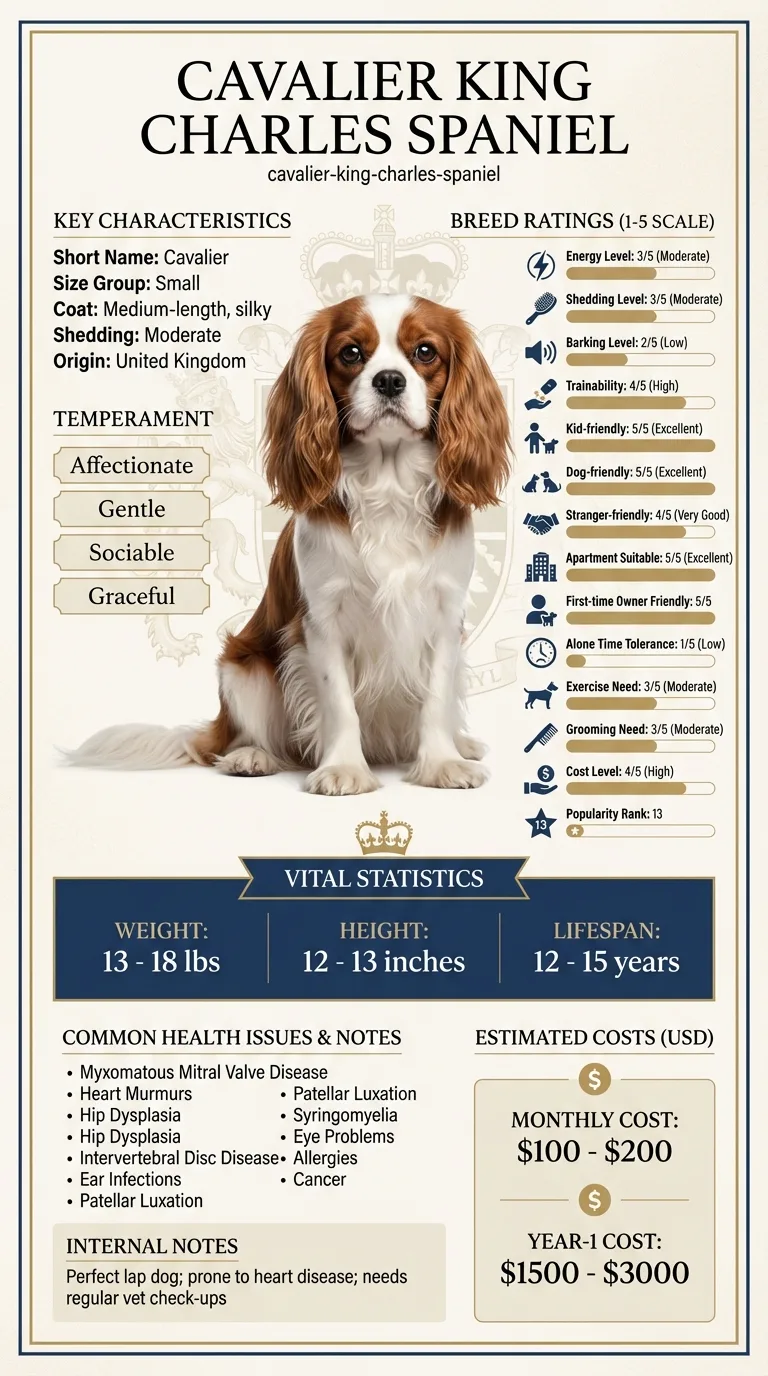
Costs can vary widely, but expect to spend between $1,500 and $3,000 in the first year, depending on treatment options and vet care.
Cavalier King Charles Spaniel health issues – Get to know the Cavalier’s health issues and how they relate to the elongated soft palate.
Cavalier King Charles Spaniel training techniques – Find effective training strategies specifically for Cavalier King Charles Spaniels dealing with health-related challenges.
Bring the right questions to the vet
A one-page prep sheet for this condition: the signs, the questions to ask, what to get priced. Unlocks here.
You get: Vet visit prep sheet
No spam. One-click unsubscribe. See our privacy policy.
A fuller vet-visit kit for Cavalier King Charles Spaniel Elongated Soft Palate
The free prep sheet covers the same-day warning signs, a symptom log and the questions to ask. We are considering a fuller kit that adds a cost worksheet for the usual tests and treatments (US price ranges with their sources) and a plain-English guide to ways of covering the bill. It is not built yet; this list tells us whether it is worth building.
One email, no spam, unsubscribe anytime. Information only, not veterinary advice.