Health
Why are giant breeds prone to cruciate injuries?
Their greater body weight accelerates the ligament's natural degenerative process, making a full tear more likely during ordinary movement.

Quick answer
Why are giant breeds prone to cruciate injuries?
Their greater body weight accelerates the ligament's natural degenerative process, making a full tear more likely during ordinary movement.
It often isn't a dramatic fall or collision. A dog jumps off a step it has jumped off a hundred times before, and this time the knee simply gives out — the ligament had likely been weakening quietly for months before that ordinary moment.
Owners confused about why a routine jump or turn suddenly caused a serious injury, not realizing that cruciate ligaments in large dogs typically degenerate gradually rather than failing all at once from a single trauma.
This guide is not medical advice. If your dog shows pain, sudden behavior change, or worsening symptoms, consult a licensed veterinarian.
Some links may be affiliate links. We may earn a commission at no extra cost to you. We only suggest products we believe are helpful for dog owners.
Cruciate ligament injuries involve the cranial cruciate ligament in the knee, which typically degenerates gradually under the weight-bearing stress large and giant breeds place on it, eventually failing during an ordinary movement rather than a single dramatic trauma. It is one of the most common orthopedic injuries in dogs this size and usually requires surgical repair.
Cruciate ligament injuries are among the most frequently diagnosed orthopedic conditions in large and giant breed dogs, making this a genuinely common injury for a Saint Bernard to experience at some point in its life rather than a rare event.
The sheer body weight a giant breed carries accelerates the natural degenerative process affecting the cranial cruciate ligament, making a full tear substantially more likely than in a smaller dog experiencing the same movement patterns.
Excess body weight, repetitive high-impact activity, and sudden uncontrolled movements like an abrupt turn or jump all add stress that can hasten ligament failure once degeneration is already underway.
See a vet promptly for any sudden lameness, especially if the dog is reluctant or unable to bear weight on a hind leg. Treat as more urgent any sudden inability to walk, visible knee swelling, or intense pain, since these warrant prompt evaluation and imaging to confirm the extent of injury.
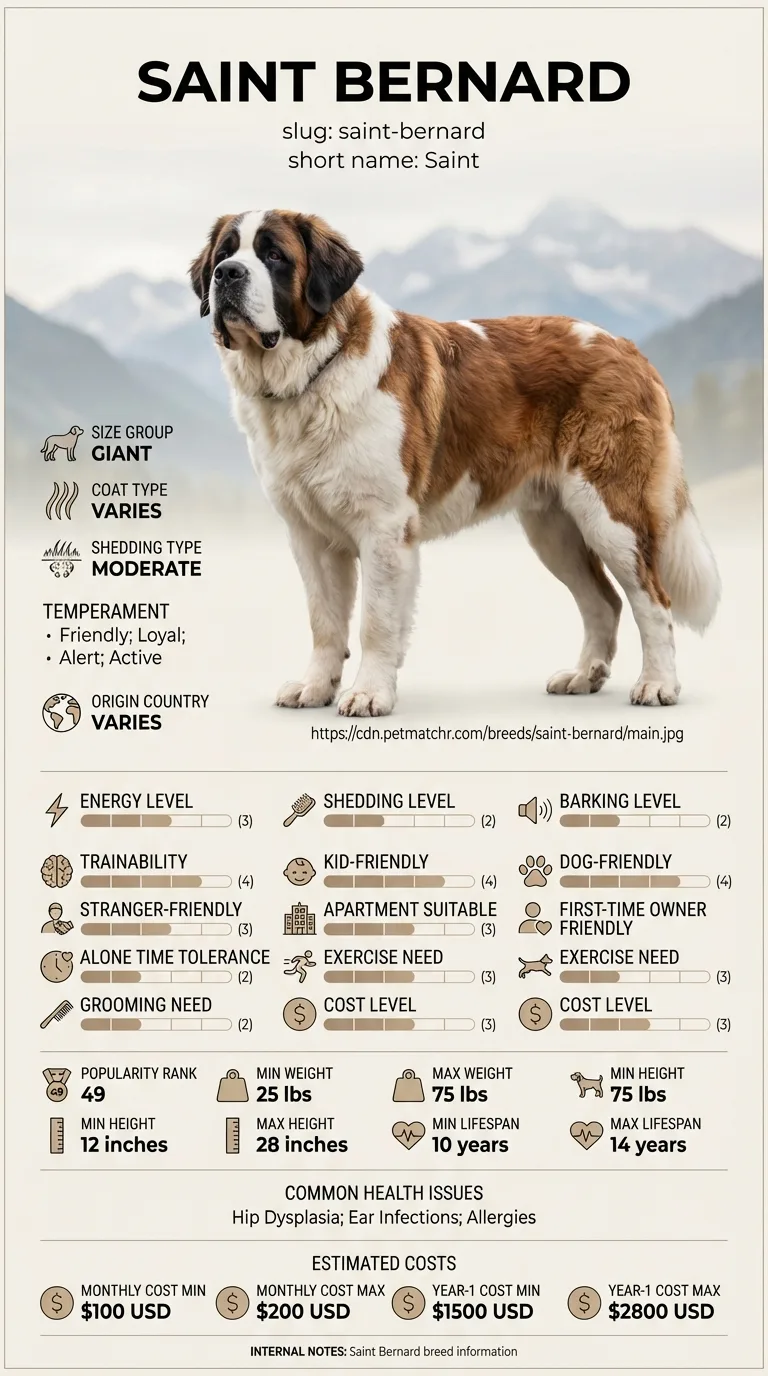
See all Saint Bernard health problems, which breeds are prone to cruciate ligament injuries, or the full Saint Bernard breed guide for temperament, exercise needs and ownership costs.
Recovery from surgical repair typically spans three to six months, including a strict initial rest period, a gradual return to leash walking, and often a formal rehabilitation program.
Success is a dog that returns to good functional mobility and quality of life, understanding that some long-term joint changes, like mild arthritis in the affected knee, are a common and expected part of the outcome.
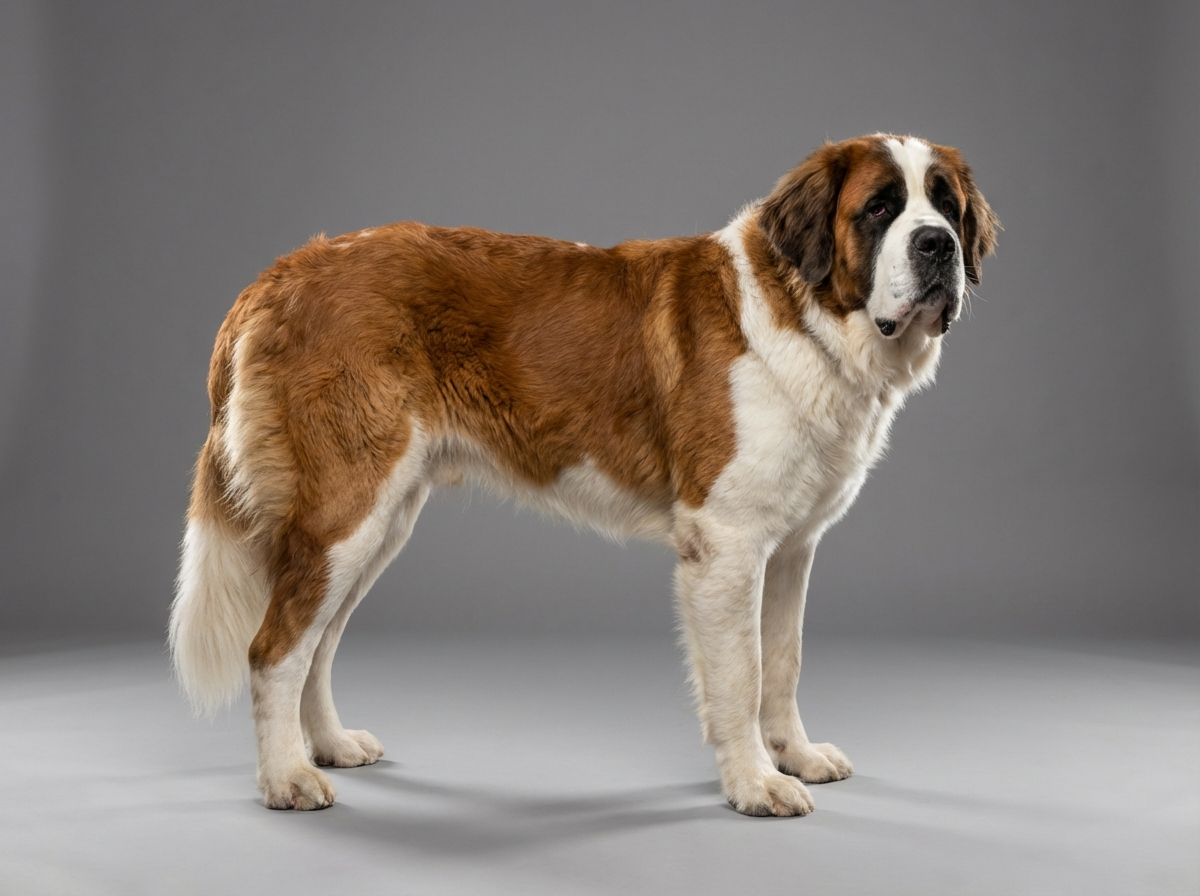
The cranial cruciate ligament in dogs is subject to a slow degenerative process even without any specific injury, and the sheer weight a giant breed's knee joints carry accelerates that wear considerably compared to a smaller dog. A 150-pound Saint Bernard's knee absorbs proportionally more force with every step, jump and turn than a 30-pound dog's does, and that cumulative load is the leading reason large and giant breeds are overrepresented in cruciate injury statistics.
Once a ligament has degenerated enough, an entirely ordinary movement — jumping off furniture, an awkward twist chasing a squirrel, even just standing up quickly — can be enough to cause a full tear. This is different from hip or elbow dysplasia, which are joint-formation issues present from puppyhood, and different from general back strain, since this is specifically about one ligament within the knee joint itself.
Surgery is a significant undertaking for a giant breed both physically and financially, and understanding the full arc — not just the operation itself — helps owners plan realistically.

Willow, a six-year-old Saint Bernard, had jumped off her family's low porch step thousands of times without incident. One afternoon she landed awkwardly, yelped, and immediately refused to bear weight on her back left leg. An exam and further imaging confirmed a torn cranial cruciate ligament. Willow underwent surgical repair and followed a structured rehabilitation program over the following four months, including strict early rest and gradually increasing controlled exercise. She regained good mobility, though her vet noted mild early arthritic changes in the joint at a later checkup. Two years on, her opposite knee remains stable, monitored closely given the elevated risk of a second tear.
Key takeaway: The porch jump wasn't the real cause — it was simply the ordinary movement that finally revealed a ligament that had likely been weakening for months, which is the pattern this injury usually follows in a dog this size.
No. Dysplasia involves malformed joint structures present since puppyhood. A cruciate injury involves a specific ligament within the knee that typically degenerates gradually and can fail during an ordinary movement, unrelated to hip or elbow formation.
For a dog this size, surgery is generally recommended, since the joint stress a giant breed places on an unstable knee usually leads to poor outcomes without surgical stabilization.
Costs vary by region and surgical technique but are a significant expense, often running well into four figures, so getting an estimate from your vet or a veterinary surgeon early is worthwhile.
There is a meaningfully elevated risk, since the same degenerative process affecting one ligament often affects the other knee as well, sometimes within a year or two.
Full recovery typically takes several months, including a strict initial rest period followed by a gradual return to activity, often supported by formal rehabilitation.
Not entirely, since much of the risk relates to weight-bearing biomechanics inherent to a giant breed, but keeping the dog lean and avoiding repetitive high-impact stress can meaningfully reduce risk.
Sudden lameness, often non-weight-bearing on one hind leg, sometimes with a popping sound at the time of injury, and persistent stiffness or reluctance to bear weight afterward.
The early signs are set out in the sections above, and they are the reason to book a veterinary appointment rather than wait. Cruciate Ligament Injuries in Saints is diagnosed by a vet, not from a symptom list, and the sooner it is on record the more options remain open.
Their greater body weight accelerates the ligament's natural degenerative process, making a full tear more likely during ordinary movement.
Generally yes for a dog this size, since the joint stress a giant breed places on an unstable knee typically requires surgical stabilization for a good outcome.
Several months, including strict initial rest followed by a gradual, often rehabilitation-supported return to activity.
Yes, meaningfully — the same degenerative process often affects both knees, sometimes within a year or two of the first tear.
Sudden lameness, often not bearing weight on one hind leg, sometimes with a popping sound at the time of injury.
A one-page prep sheet for this condition: the signs, the questions to ask, what to get priced. Unlocks here.
You get: Vet visit prep sheet
No spam. One-click unsubscribe. See our privacy policy.
Preview page 1 before you decide.