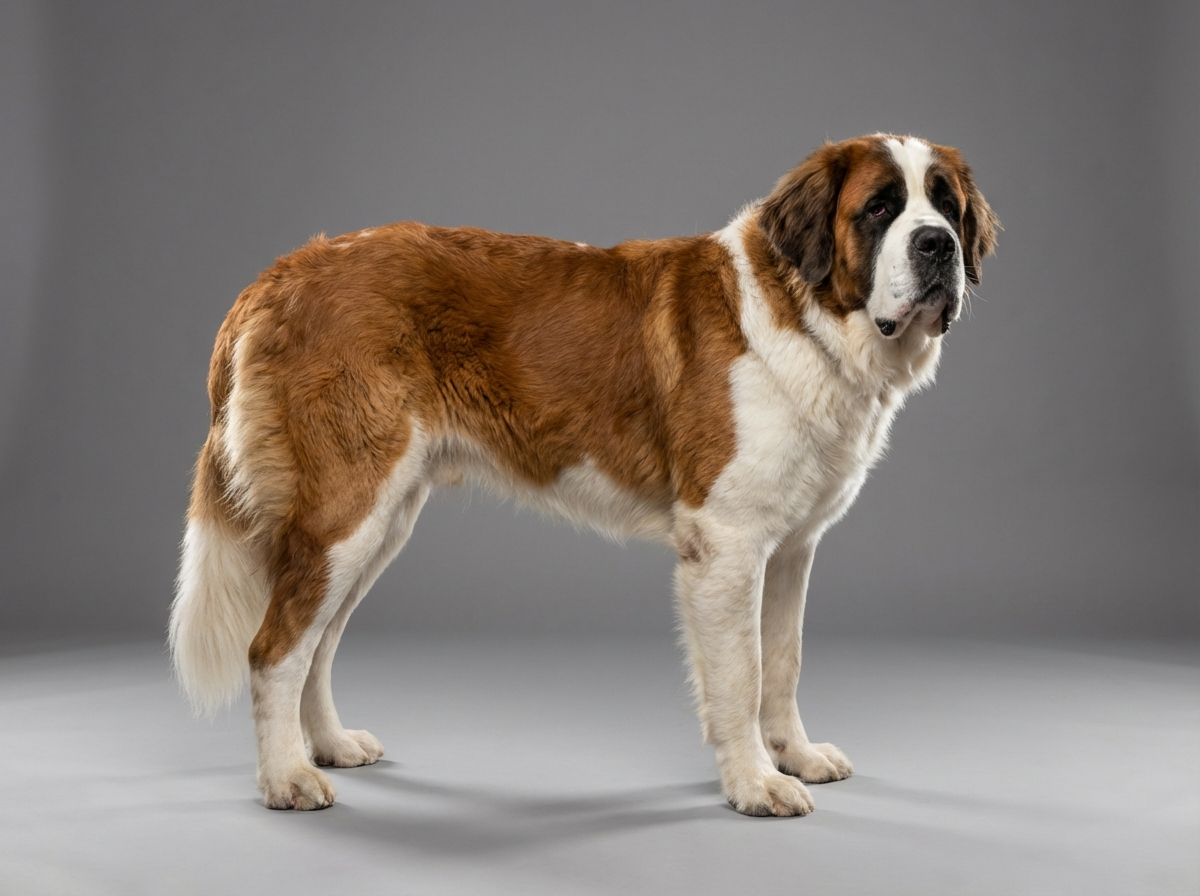
Costs
Saint Bernard cost in Denver
About $158–$326/month and $2,310–$4,410 for year one — above average, with the sneaky local expense being the vehicle a 150-pound dog and a mountain weekend jointly require.

See Saint Bernard price across all cities →
Quick answer
Saint Bernard cost in Denver
About $158–$326/month and $2,310–$4,410 for year one — above average, with the sneaky local expense being the vehicle a 150-pound dog and a mountain weekend jointly require.
A Saint Bernard in Denver costs roughly $158 to $326 a month, with the first year near $2,310 to $4,410 — above the national average, reflecting Colorado's elevated cost of living. The Denver-specific cost that catches people out is not veterinary. It is automotive. This city's weekend life runs west into the mountains, and a 120-to-180-pound dog does not fit in the back of an ordinary car with a weekend's worth of gear beside it.
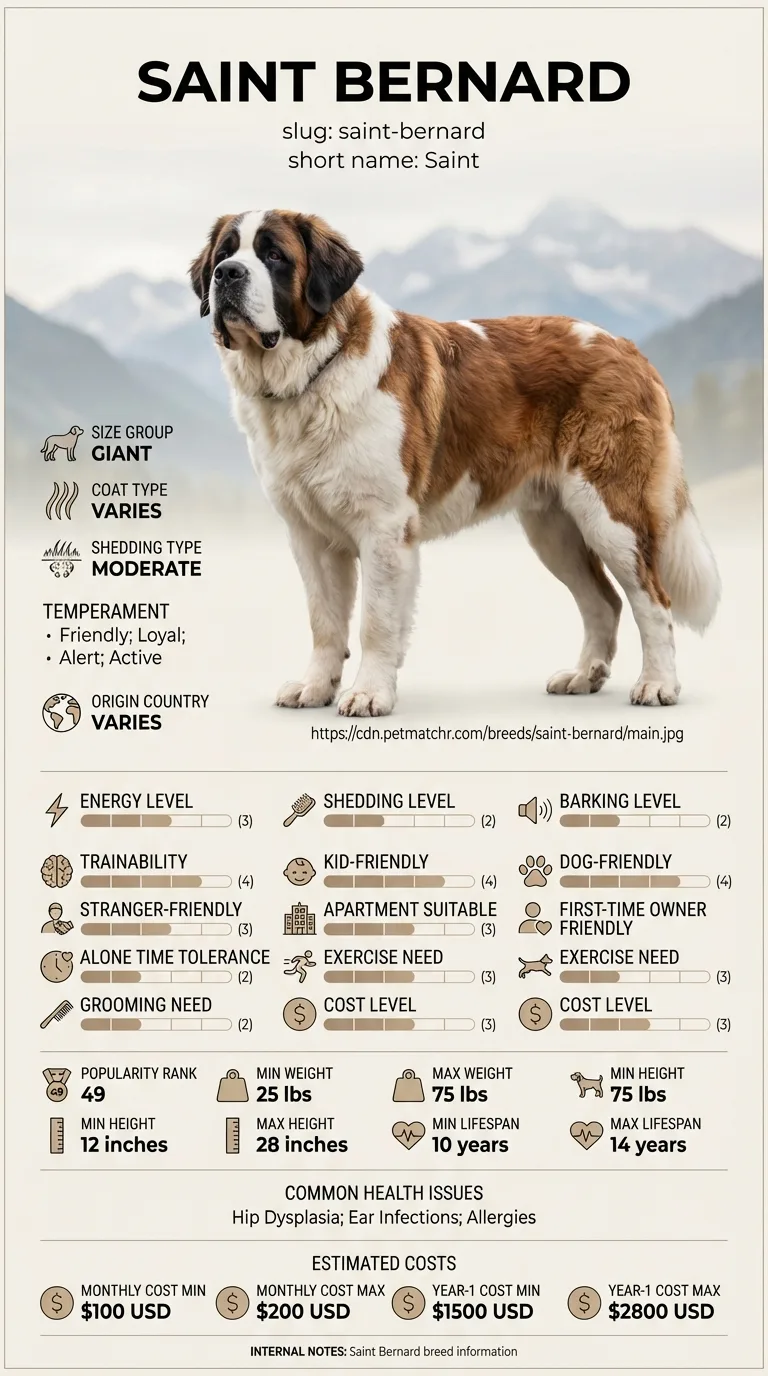
Separately, the documented conditions in this breed are Hip Dysplasia, Elbow Dysplasia, Dilated Cardiomyopathy, Entropion and Bloat (GDV). Front Range veterinary pricing runs above the Midwest average, and every one of those bills is scaled against the dog's weight rather than charged as a flat fee.
Denver prices above the national average on services, with a transport line most cost guides ignore entirely and which this city makes unavoidable.
Estimate · source: estimation · confidence: medium · updated 2026-09-06 · not a quote
| Item | Cost range |
|---|---|
One-time setup (giant crate, orthopedic bed, first exam, spay/neuter) Above-average local surgical pricing carries most of this figure rather than the hardware. | $546 - $945 |
| Item | Cost range |
|---|---|
Food (giant-breed volume) Front Range retail pricing sits above the national line, applied to a quantity dictated by an animal that may reach 180 pounds. | $76 - $134 |
Parasite prevention (seven-month Colorado window) The dry four-season climate closes the schedule for a real portion of the year at this breed's top dosing weight. | $34 - $61 |
Each range starts from a national baseline for this breed's size class and is then adjusted for local cost of living and veterinary pricing. The baselines, and the source each one came from, are listed on our sources page (dataset 2026.09). Two inputs, the purchase price and the emergency reserve, have no published national figure we could verify, so we leave them to you rather than invent them.
These are planning estimates, not quotes. Your own numbers will move with the individual dog, your vet and your insurer. Build a budget with your own figures.
Denver's insurance case is the usual giant-breed one, sharpened slightly by Front Range pricing sitting above the national average.
Enrol before any orthopedic finding exists, particularly in a household that plans to take the dog into the mountains regularly.
An owner with a deep reserve, a level-access home and realistic expectations about how much travelling the dog will actually do carries less exposure.
The Denver savings are decided before the dog arrives, in what you drive and how honestly you have described the weekends you plan to have.
Denver's dog culture is strongly oriented toward taking the animal with you. Trailheads, mountain towns and dog-friendly patios are part of the appeal of living here, and most people buying a large dog assume it will be along for the trip.
For this breed that assumption has a hardware requirement. Transporting a giant dog properly means either a large travel crate secured in a cargo area or a restraint system rated to its actual mass, and neither is compatible with a small vehicle carrying gear. Loading is its own problem: a dog this heavy that cannot spring into a tailgate needs a full-length ramp, and using one at a snowy trailhead is a different exercise from using one on a level garage floor.
That leaves three honest options. Buy a vehicle that fits the dog. Accept that most mountain weekends happen without the dog. Or choose a different breed for the life you actually want. All three are reasonable; pretending the question does not exist is the expensive one.
Denver's ordinary costs run above the national average without being extreme. Veterinary and boarding services price higher than a comparable Midwest metro, and the seven-month parasite window reflects a dry, four-season climate that closes the schedule for a decent stretch.
This breed handles Colorado winters comfortably. A heavy double coat is genuinely well suited to cold, dry air, and the dog's low exercise requirement means the short daylight months cost nothing in extra care. The heat side of the year is the more relevant one, since Front Range summer afternoons at this coat density call for early walks and shade rather than midday outings.
Housing is generally favourable. Denver's suburban stock offers yards and ground-floor access, which suits a breed rated 1 out of 5 for apartment suitability better than the city's newer high-density buildings do.

A Denver couple bought their Saint Bernard partly for mountain weekends and discovered on the first trip that the dog, a crate and two sets of gear did not coexist in their crossover. They tried a harness instead, which meant the dog occupied most of the back seat and the gear went on laps. Within a year they had traded the car. In hindsight they wished they had measured the cargo bay before choosing the breed rather than after.
Key takeaway: In Denver, a giant breed is a vehicle decision as much as a dog decision. Work out where the dog physically goes before the puppy comes home.
About $158–$326, above the national average, in line with Colorado's general cost of living.
Roughly $2,310–$4,410 including the initial exam, spay/neuter and giant-size equipment.
Because Denver life pulls west at weekends, and a properly restrained 150-pound dog plus gear does not fit in a compact car. Households often end up changing vehicles rather than changing plans.
For a dog this heavy, yes, and a full-length one. Lifting a giant breed into a tailgate is hard on the owner's back and on the dog's joints, both of which this breed has documented risk in.
The cold suits it very well — this is a heavy double-coated dog. Summer afternoons are the part to manage, with early walks and shade rather than midday outings.
About $1,300, sized to Front Range service pricing and the higher cost of any procedure on a giant-breed patient.
About $158–$326/month and $2,310–$4,410 for year one — above average, with the sneaky local expense being the vehicle a 150-pound dog and a mountain weekend jointly require.
This guide is not medical advice. If your dog shows pain, sudden behavior change, or worsening symptoms, consult a licensed veterinarian.
Some links may be affiliate links. We may earn a commission at no extra cost to you. We only suggest products we believe are helpful for dog owners.
We research and check what we publish, but we do not warrant that any figure, date, price, or statement is accurate, complete, or current, and we accept no liability for any loss, cost, injury, or other harm arising from the use of this site. Use it as one reference among several. You remain responsible for your own decisions and for your dog's care - confirm anything that matters with a licensed veterinarian or another qualified professional before you act on it. Full disclaimer.
One sheet with every line item, the emergency fund and when insurance pays off - unlocks on this page.
You get: 12-month budget sheet
No spam. One-click unsubscribe. See our privacy policy.
Preview page 1 before you decide.