Health
What does myotonia congenita look like day to day?
A stiff, somewhat awkward gait that's most noticeable right after rest and gradually loosens as the dog continues moving.

Quick answer
What does myotonia congenita look like day to day?
A stiff, somewhat awkward gait that's most noticeable right after rest and gradually loosens as the dog continues moving.
A puppy that looks stiff as a board getting up from a nap, then loosens up after a few steps, is showing a pattern specific enough that it points fairly directly toward a rare muscle disorder rather than ordinary clumsiness.
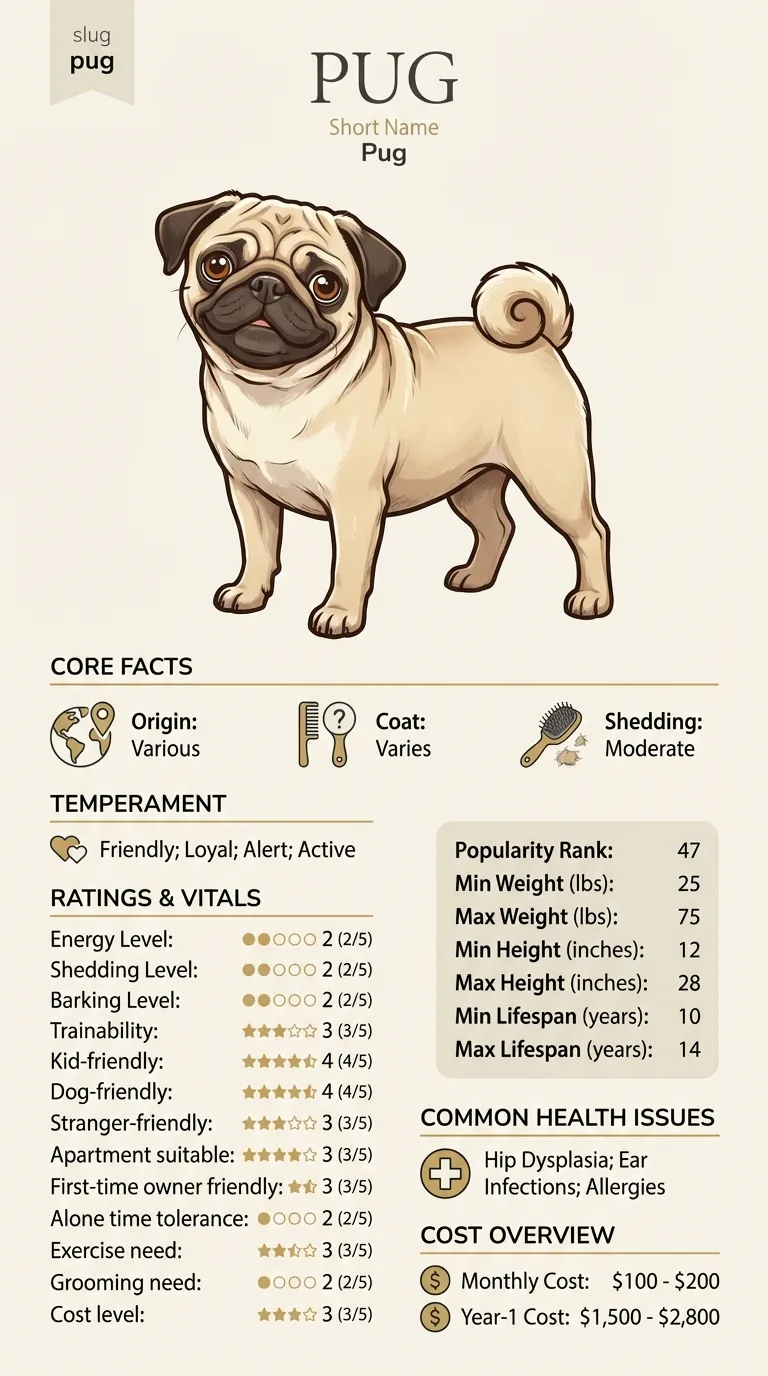
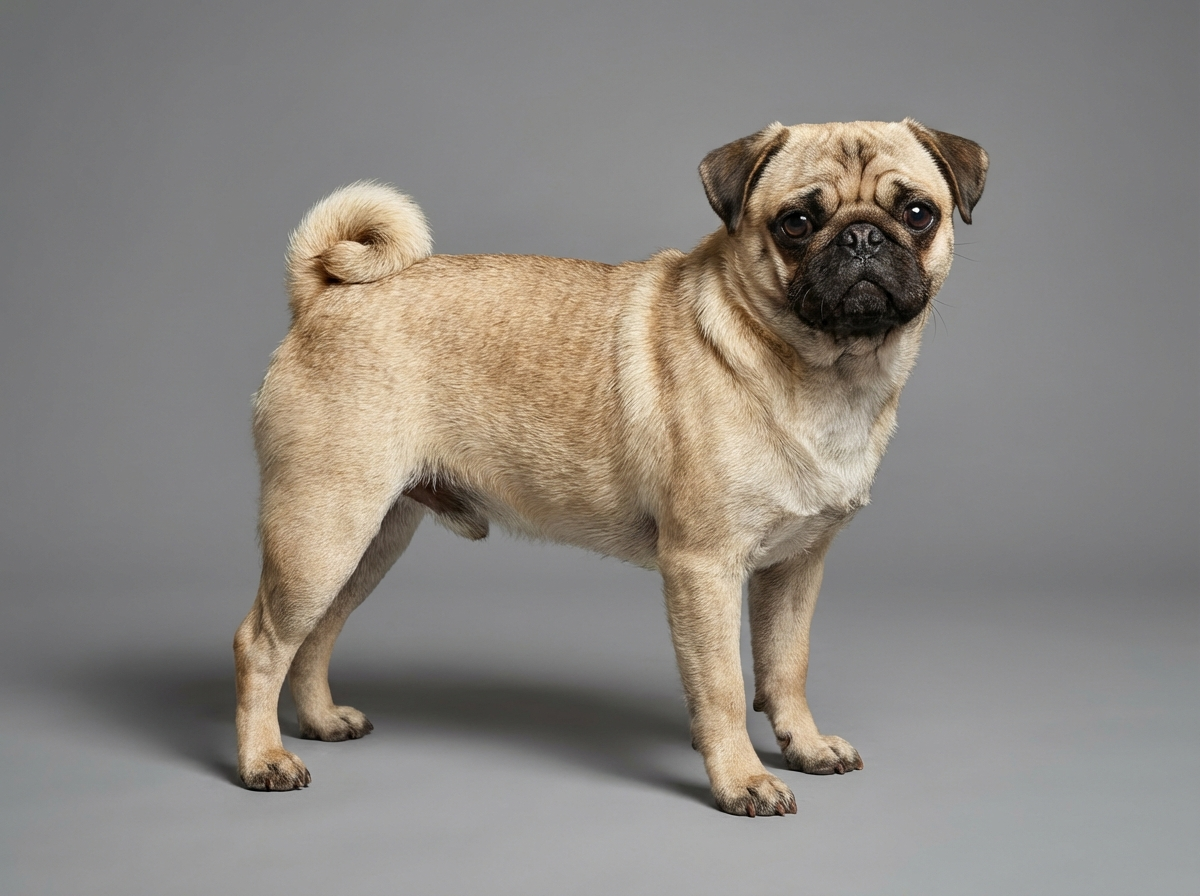
Owners of young Pugs who've noticed an unusual, consistent stiffness pattern — worse after rest, better with movement — and are trying to understand what's actually happening at a muscular level.
This guide is not medical advice. If your dog shows pain, sudden behavior change, or worsening symptoms, consult a licensed veterinarian.
Some links may be affiliate links. We may earn a commission at no extra cost to you. We only suggest products we believe are helpful for dog owners.
We research and check what we publish, but we do not warrant that any figure, date, price, or statement is accurate, complete, or current, and we accept no liability for any loss, cost, injury, or other harm arising from the use of this site. Use it as one reference among several. You remain responsible for your own decisions and for your dog's care - confirm anything that matters with a licensed veterinarian or another qualified professional before you act on it. Full disclaimer.
Myotonia congenita is a rare inherited disorder in which a genetic defect in the muscle cell membrane prevents normal muscle relaxation after contraction, producing a distinctive stiff gait that's worse after rest and eases somewhat with continued movement, often alongside noticeably bulky muscle appearance.
Myotonia congenita is a rare condition overall, documented in a limited number of breeds and individual dogs, and most Pugs will never be affected by it, though it remains a recognized possibility worth knowing about.
Myotonia congenita is caused by a specific inherited genetic mutation affecting muscle cell membrane channels, and its documented presence in certain lines makes genetic testing and careful breeding decisions the primary tool for managing its prevalence, since the condition itself isn't caused by anything about how a dog is raised or exercised.
There's no environmental trigger for the underlying genetic defect. Activity level and rest periods influence how visibly the stiffness pattern presents day to day, but they don't cause or worsen the underlying muscle membrane condition itself.
See a vet for an initial evaluation if you notice unusual, consistent stiffness after rest that improves with movement, particularly alongside unusually bulky muscle appearance. This combination is distinctive enough to warrant specific testing rather than being assumed to be ordinary puppy clumsiness.
Start here: Pug Most Common Genetic Disorders: What to Screen For
See all PUG health problems, which breeds are prone to myotonia congenita, or the full PUG breed guide for temperament, exercise needs and ownership costs.
Diagnosis, once suspected, typically comes together within a few weeks through EMG testing and possibly genetic confirmation. The condition itself is lifelong and doesn't resolve, though many dogs settle into a manageable daily pattern their owners learn to anticipate.
Success is a dog that moves comfortably enough through a daily routine adapted to their stiffness pattern — not a muscle membrane defect that resolves, since this is a permanent genetic condition managed rather than cured.
Normal muscle contraction depends on electrical signals crossing the muscle cell membrane in a tightly controlled way, both to trigger contraction and to allow the muscle to relax again afterward. In myotonia congenita, a genetic defect affects specific channels in that membrane responsible for letting the muscle relax, so muscles that have just contracted stay abnormally rigid for a period afterward instead of releasing promptly. This isn't a nerve problem or a joint problem — the muscle fiber itself is doing something unusual at the cellular level.
The classic presentation is a puppy that looks notably stiff and awkward getting up after resting, often with an unusual, generalized muscle bulkiness that can look almost bodybuilder-like compared to littermates, since the muscles are essentially being exercised constantly by their own delayed relaxation. That stiffness typically eases somewhat as the puppy continues moving, only to return again after the next period of rest — a pattern distinct enough from typical joint or neurological gait problems that it's usually one of the first things that makes a vet suspect this specific rare condition.
This is a rare enough condition that many general practice vets may not have seen a case before, which is part of why EMG testing and sometimes specialist referral are often part of confirming it.

If you think your Pug has myotonia congenita, the plan is three steps: write down what you have seen and when it started, book a veterinary appointment rather than waiting for the next flare, and take video of the behaviour or symptom before you go — the thing you are worried about rarely happens in the consulting room. Screening in the parents covers brachycephalic airway syndrome (boas), pug dog encephalitis, corneal ulcers.
What the vet visit should produce is a diagnosis and a written plan, not just reassurance: what is being ruled out, what the monitoring interval is, and which signs mean you come back sooner. Ask what the treatment costs across a year rather than per visit, because that is the number that decides whether you are managing this condition or reacting to it.
Between appointments, keep a short log — dates, what you saw, what changed. It is the single most useful thing an owner brings to a follow-up, and for myotonia congenita it is often what separates a clear pattern from a guess.
Isaac noticed his ten-week-old Pug puppy, Moose, looked almost comically stiff every time he got up from a nap — legs locked, waddling for several steps before loosening up and running normally. Moose also had noticeably more defined muscle than his littermates, which Isaac initially thought was just good genetics. His vet recognized the pattern immediately and recommended an EMG, which confirmed myotonia congenita. There was no cure to offer, but Isaac's vet walked him through what to expect and how to structure Moose's day around it. Now an adult, Moose still does his stiff little waddle after every nap, loosening up within about thirty seconds. Isaac has simply built it into their routine — a gentle warm-up walk before anything more active — and Moose otherwise lives an entirely ordinary, energetic life.
Key takeaway: A distinctive stiff-after-rest, loose-with-movement pattern combined with unusually bulky muscles is specific enough to point toward this rare condition well before most other explanations would even be considered.
It's a rare inherited condition where a genetic defect in the muscle cell membrane prevents muscles from relaxing normally after contraction, causing a distinctive stiffness that's worse after rest and improves somewhat with continued movement.
It's entirely a muscle-level condition — the muscle fibers themselves aren't relaxing properly after contracting, rather than any structural issue with joints, bones, or nerves. This is confirmed through electromyography testing that measures muscle electrical activity directly.
It's typically noticeable from a young age, often in puppyhood, since the underlying genetic defect is present from birth even though the stiffness pattern may become more apparent as the puppy grows and becomes more active.
No, there's currently no cure, since the underlying genetic membrane defect isn't correctable. Some dogs benefit from medication that helps improve muscle relaxation and comfort, but management rather than cure is the realistic goal.
The stiffness itself doesn't appear to cause significant pain in most affected dogs, though the muscle bulkiness and rigid movement pattern can look uncomfortable to an unfamiliar observer. Your vet can help assess your individual dog's comfort level.
Many affected dogs adapt well and live full lives with some accommodation for their stiffness pattern, though vigorous exercise tolerance and gait may always look somewhat different from an unaffected dog.
Yes, it's a genetic condition, and affected dogs or known carriers generally shouldn't be used for breeding given the hereditary nature of the mutation, which genetic testing can help identify where available.
A stiff, somewhat awkward gait that's most noticeable right after rest and gradually loosens as the dog continues moving.
Electromyography (EMG), which measures electrical activity in muscles, shows a characteristic pattern specific to this condition.
No, it's a rare condition overall, and most Pugs will never encounter it, though it's documented enough in the breed to be worth knowing about.
Some affected dogs benefit from medications that support more normal muscle relaxation, improving comfort and ease of movement.
No — given the hereditary nature of the condition, affected dogs and known carriers are generally excluded from responsible breeding programs.
A one-page prep sheet for this condition: the signs, the questions to ask, what to get priced. Unlocks here.
You get: Vet visit prep sheet
No spam. One-click unsubscribe. See our privacy policy.
Preview page 1 before you decide.