Health
Why is a single puppy litter risky in a Papillon?
The lone puppy grows larger with the whole uterus to itself, and may not generate a strong enough hormonal signal to start effective labour.

Quick answer
Why is a single puppy litter risky in a Papillon?
The lone puppy grows larger with the whole uterus to itself, and may not generate a strong enough hormonal signal to start effective labour.
The single biggest predictor of a difficult Papillon birth is a small litter, which is exactly the opposite of what most people expect.
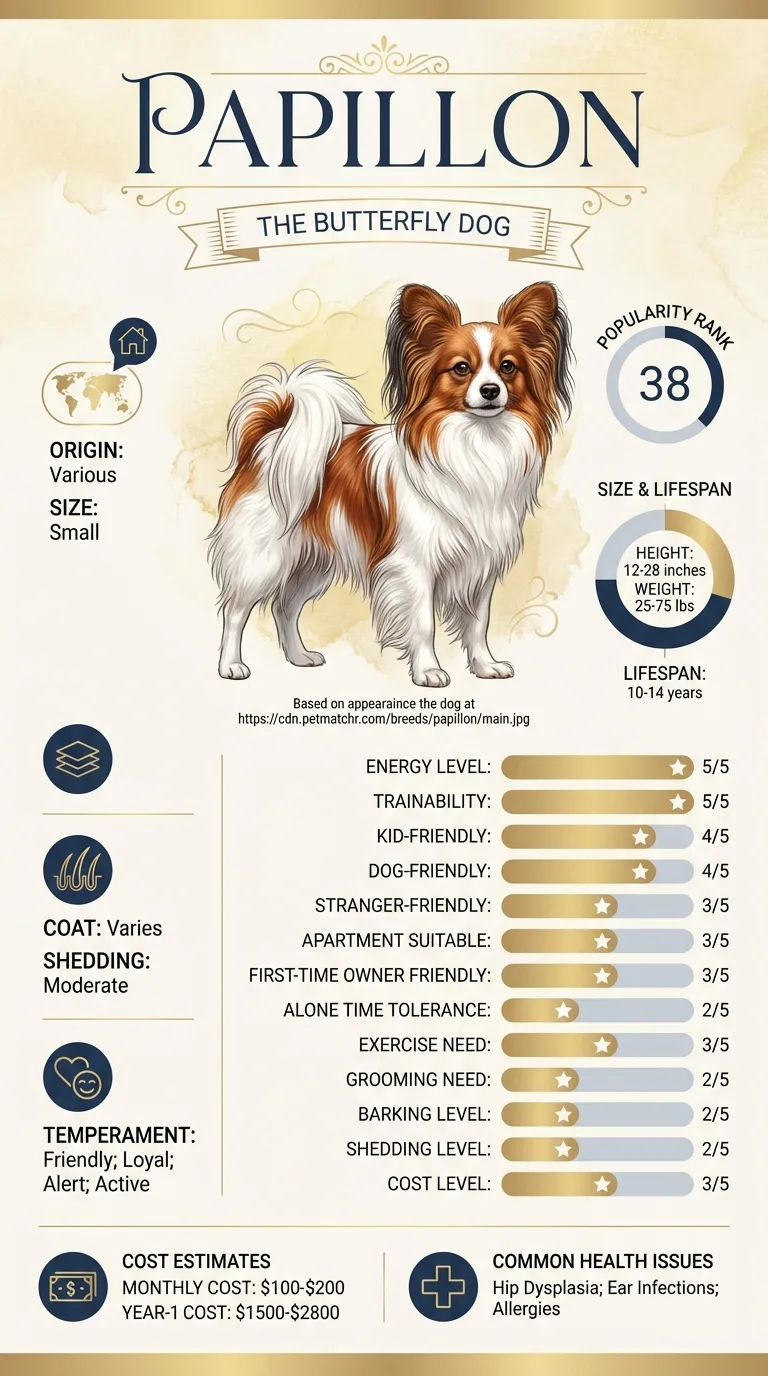
First time breeders who assumed a small dog would have an easy time of it, and owners facing an unplanned pregnancy who need to understand what the next few weeks actually involve.
This guide is not medical advice. If your dog shows pain, sudden behavior change, or worsening symptoms, consult a licensed veterinarian.
Some links may be affiliate links. We may earn a commission at no extra cost to you. We only suggest products we believe are helpful for dog owners.
We research and check what we publish, but we do not warrant that any figure, date, price, or statement is accurate, complete, or current, and we accept no liability for any loss, cost, injury, or other harm arising from the use of this site. Use it as one reference among several. You remain responsible for your own decisions and for your dog's care - confirm anything that matters with a licensed veterinarian or another qualified professional before you act on it. Full disclaimer.
Reproductive complications in toy breeds cluster around three points. Birth itself carries elevated risk of obstructed labour, driven partly by the single puppy effect in which a lone fetus grows too large and fails to trigger effective contractions. The nursing period brings the risk of a calcium crash in a small bitch supporting a litter. And the newborns themselves, weighing only ounces, have almost no reserve against chilling or low blood sugar.
Assisted delivery is far more frequent in toy breeds than in mid sized dogs, and in some small breeds a planned caesarean is the norm rather than the exception. Neonatal losses are also higher in very small breeds than in larger ones. These are not rare misfortunes; they are the expected difficulty profile of breeding a dog this size.
Everything follows from the size of the pelvic canal in a dog weighing five to ten pounds and standing eight to eleven inches tall. Fetal skull size does not scale down as reliably as maternal pelvis size, particularly in a small litter, so the margin is narrow. Lactation places a calcium demand that is enormous relative to a small bitch's total body stores. And newborns of this breed have so little mass that heat loss and glucose depletion happen on a timescale of hours rather than days.
The whelping environment does far more work than in a large breed. Ambient temperature, the insulation of the whelping box, and how promptly a puppy is found after being separated from the bitch all determine outcomes directly. Distance from an emergency veterinary service matters too, because obstructed labour and eclampsia both need professional intervention within a short window rather than advice over the phone.
Call immediately during labour for strong unproductive contractions lasting beyond a short period, more than a couple of hours between puppies when more are expected, dark green discharge before the first puppy, a bitch who is exhausted or collapsing, or a pregnancy past its due date without labour. Call immediately after whelping for restlessness, panting, stiffness, tremors, a wobbly gait, a high temperature or seizures in the bitch, which suggest a calcium crisis. For puppies, a neonate that is cold, limp, crying persistently or losing weight needs veterinary advice the same day.
See all Papillon health problems, which breeds are prone to pregnancy complications, or the full Papillon breed guide for temperament, exercise needs and ownership costs.
Expect ultrasound around a month into gestation and a radiograph in the final week. Whelping or caesarean falls around nine weeks from ovulation. The high risk window for eclampsia runs through the first few weeks of nursing. Puppies need round the clock attention initially, with weight charting continuing until they are reliably thriving.
Success is a bitch who comes through birth and lactation healthy, puppies gaining weight steadily on a chart, and a plan that was agreed with a vet in advance rather than assembled during an emergency. For many owners, success is deciding not to breed at all.
Toy breeds produce small litters, often one to three puppies. That sounds manageable and it is the source of the risk.
A developing puppy grows to fill the space and resources available. In a litter of six, each puppy shares those resources and each is correspondingly smaller. In a litter of one, that single puppy has the entire uterus and the entire nutrient supply to itself, and it can grow substantially larger than a puppy from a bigger litter would. It then has to pass through a pelvis sized for a five to ten pound dog.
The second half of the problem is hormonal. Labour is initiated partly by signals from the puppies themselves, and a single fetus may not generate a strong enough signal to start or sustain effective contractions. A bitch can therefore go past her due date with a large puppy in place and no productive labour at all, which is dangerous for both.
This is why an ultrasound and a late pregnancy radiograph matter in a toy breed. Counting the puppies tells you whether you are in single puppy territory, and a radiograph in the final week shows skull size relative to the pelvis. Many toy breed pregnancies are therefore managed toward a planned caesarean rather than allowed to proceed and see, and that decision is made on imaging by a vet who has seen the films.

The birth is not the end of the risk period. These two problems account for a large share of losses in toy breed litters.
If you think your Papillon has pregnancy complications, the plan is three steps: write down what you have seen and when it started, book a veterinary appointment rather than waiting for the next flare, and take video of the behaviour or symptom before you go — the thing you are worried about rarely happens in the consulting room. Screening in the parents covers patellar luxation, progressive retinal atrophy, dental disease.
What the vet visit should produce is a diagnosis and a written plan, not just reassurance: what is being ruled out, what the monitoring interval is, and which signs mean you come back sooner. Ask what the treatment costs across a year rather than per visit, because that is the number that decides whether you are managing this condition or reacting to it.
Between appointments, keep a short log — dates, what you saw, what changed. It is the single most useful thing an owner brings to a follow-up, and for pregnancy complications it is often what separates a clear pattern from a guess.
Camille intended to breed her Papillon bitch Noor once. The ultrasound at four weeks found a single fetus, and her vet immediately flagged it as the higher risk scenario rather than the easy one Camille had assumed. A radiograph at eight weeks confirmed a large single puppy with a skull that the vet was not confident would pass. A caesarean was scheduled for two days before the due date rather than waiting for labour that might never start productively. The puppy, a dog weighing well above what a Papillon neonate usually does, was delivered without incident. Noor recovered well. Camille weighed the puppy on a gram scale three times a day for a fortnight and kept a heat source running throughout. Both did fine, and Camille has not bred since, on the grounds that she got the outcome she wanted and does not want to test it twice.
Key takeaway: In a toy breed, one puppy is a warning rather than a relief. Image the pregnancy, plan the delivery with a vet in advance, and understand before you start that the costs and the risks both fall on a five to ten pound animal.
Considerably more common than in mid sized breeds, and in some toy breeds planned caesareans are close to routine. The reasons are the single puppy effect, the size of the pelvis relative to the fetal skull, and the fact that a failed labour in a very small dog leaves little time. Your vet will advise based on imaging rather than on breed averages.
Strong contractions for a sustained period with no puppy delivered, more than a couple of hours between puppies when more are known to be present, green or dark discharge before any puppy appears, obvious exhaustion or distress, or a pregnancy that has clearly passed its due date without labour starting. All of these mean phoning a vet immediately.
Not unless your vet has specifically instructed it. Supplementing calcium during pregnancy can downregulate the hormonal machinery the body uses to mobilise its own calcium stores, leaving the bitch less able to respond to the enormous demand of lactation. This is one of the more counterintuitive facts in small breed breeding and it catches people out regularly.
A whelping area with a controlled heat source, kept at the temperature range your vet specifies, with enough space for the bitch to move away from the heat if she wants to. Puppies weighing ounces lose heat extremely fast on any uninsulated surface. Never warm a chilled puppy quickly, and never feed a cold puppy, because both can be harmful. Ask your vet for a written protocol before the litter arrives.
Pre breeding health screening, progesterone timing, ultrasound and radiographs, a possible caesarean, neonatal care and the very real possibility of emergency intervention add up to a figure that frequently exceeds what the puppies sell for. Anyone breeding for income has usually not costed a caesarean at two in the morning.
At minimum a current specialist eye examination and a patellar evaluation on both parents, since progressive retinal atrophy and patellar luxation are documented in the breed. A cardiac examination is a reasonable addition. Screening decisions and the interpretation of results belong with a vet who knows the breed and the lines involved.
The early signs are set out in the sections above, and they are the reason to book a veterinary appointment rather than wait. Pregnancy Complications in Papillons is diagnosed by a vet, not from a symptom list, and the sooner it is on record the more options remain open.
The lone puppy grows larger with the whole uterus to itself, and may not generate a strong enough hormonal signal to start effective labour.
A sudden drop in blood calcium causing restlessness, tremors, rigidity and seizures. It is an emergency and is most common in small breeds nursing a demanding litter.
At least twice daily on a gram scale. Failure to gain is the earliest reliable sign a neonate is in trouble, well before it looks unwell.
Rarely. Screening, imaging, a likely caesarean and neonatal care commonly cost more than a small toy breed litter is worth.
A one-page prep sheet for this condition: the signs, the questions to ask, what to get priced. Unlocks here.
You get: Vet visit prep sheet
No spam. One-click unsubscribe. See our privacy policy.
Preview page 1 before you decide.