Health
Is this breed prone to brachycephalic breathing problems?
No, it has a normal muzzle; its documented respiratory risk instead comes from Primary Ciliary Dyskinesia, an unrelated genetic condition.

Quick answer
Is this breed prone to brachycephalic breathing problems?
No, it has a normal muzzle; its documented respiratory risk instead comes from Primary Ciliary Dyskinesia, an unrelated genetic condition.
This breed's breathing risk isn't about a squished face; it's about microscopic hairs inside the airway that don't do their job properly.
Owners of puppies with recurring respiratory infections, chronic nasal discharge, or a persistent cough that doesn't resolve with typical treatment.
This guide is not medical advice. If your dog shows pain, sudden behavior change, or worsening symptoms, consult a licensed veterinarian.
Some links may be affiliate links. We may earn a commission at no extra cost to you. We only suggest products we believe are helpful for dog owners.
We research and check what we publish, but we do not warrant that any figure, date, price, or statement is accurate, complete, or current, and we accept no liability for any loss, cost, injury, or other harm arising from the use of this site. Use it as one reference among several. You remain responsible for your own decisions and for your dog's care - confirm anything that matters with a licensed veterinarian or another qualified professional before you act on it. Full disclaimer.
This breed's respiratory risk isn't driven by airway anatomy the way it is in brachycephalic breeds, since it has a normal, unshortened muzzle. Instead, Primary Ciliary Dyskinesia, a genetic condition specifically documented in this breed's health record, impairs the airway's ability to clear mucus and debris, leading to recurring infections, a completely different mechanism from mechanical airway obstruction.
Primary Ciliary Dyskinesia is specifically documented as one of this breed's common health issues, making it the far more relevant respiratory risk here than any brachycephalic airway pattern, which simply doesn't apply to this breed's normal muzzle structure.
This breed's own documented health record lists Primary Ciliary Dyskinesia directly, a genetic defect impairing the airway's self-clearing ciliary function, entirely unrelated to muzzle length or facial structure, which in this breed is normal and unshortened.
Heat, humidity, and strenuous exercise all increase breathing effort and strain generally, a factor relevant to this breed's dense coat and body mass regardless of PCD status, while repeated pathogen exposure specifically compounds risk in a dog whose mucus-clearing mechanism is already impaired.
Talk to your vet about any recurring respiratory infection, persistent cough, or chronic nasal discharge, especially in a young puppy. Seek prompt care for labored breathing, blue-tinged gums, or a cough that doesn't improve with initial treatment.
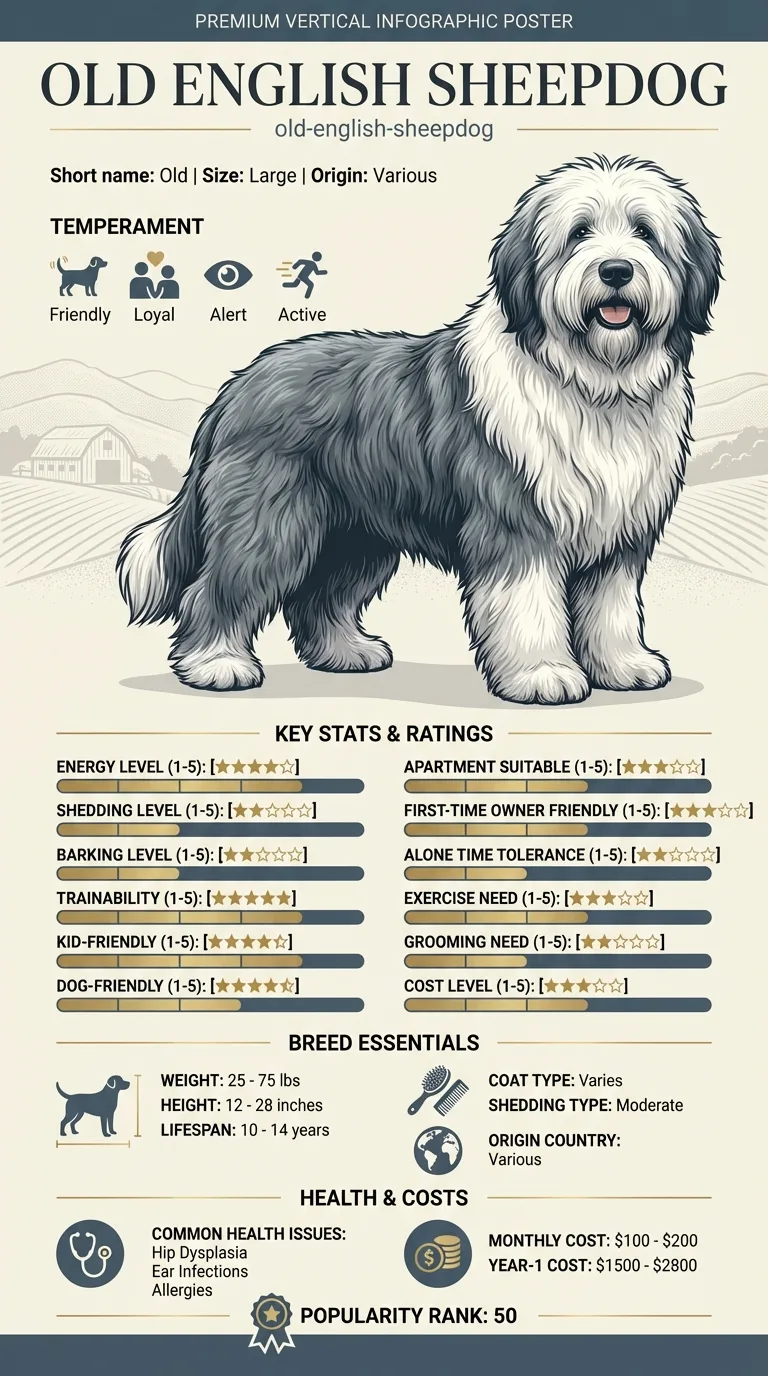
See all OLD English Sheepdog health problems, which breeds are prone to respiratory disease, or the full OLD English Sheepdog breed guide for temperament, exercise needs and ownership costs.
PCD symptoms typically appear from puppyhood and persist for life, since the underlying ciliary defect doesn't resolve. Individual infections are treated as they arise, generally resolving within one to two weeks of appropriate treatment, though the underlying susceptibility remains.
Success looks like prompt treatment of each infection, proactive monitoring for chronic complications like bronchitis, and, for any dog in this breed regardless of PCD status, sensible heat and exercise management to support overall respiratory comfort.
The respiratory tract is lined with microscopic hair-like structures called cilia, which beat in a coordinated wave to sweep mucus, debris, and inhaled particles up and out of the airway, a self-cleaning system that operates constantly without any conscious effort. In Primary Ciliary Dyskinesia, a genetic defect impairs how these cilia move, so that self-clearing mechanism fails, allowing mucus and debris to accumulate and creating a persistently favorable environment for infection. The result in affected dogs is a pattern of recurring respiratory infections, chronic nasal discharge, and a persistent cough starting from a young age, quite different from the airway-obstruction pattern seen in brachycephalic breeds, where the problem is mechanical narrowing rather than a failure to clear the airway.
A confirmed PCD diagnosis, typically made through specialized ciliary biopsy or genetic testing, means a lifetime of proactive management: prompt treatment of respiratory infections rather than waiting to see if they resolve, and close monitoring for the chronic bronchitis or pneumonia that can develop from repeated, poorly cleared infections. For any dog in this breed, PCD-affected or not, this breed's dense coat and body mass also mean heat and humidity add real strain to breathing effort during exertion, quite separate from PCD itself, which is one more reason exercise timing and avoiding heavy exertion in hot, humid weather matters for general respiratory comfort in this breed regardless of underlying diagnosis.

If you think your Old has respiratory disease, the plan is three steps: write down what you have seen and when it started, book a veterinary appointment rather than waiting for the next flare, and take video of the behaviour or symptom before you go — the thing you are worried about rarely happens in the consulting room. Screening in the parents covers hip dysplasia, cataracts, hypothyroidism.
What the vet visit should produce is a diagnosis and a written plan, not just reassurance: what is being ruled out, what the monitoring interval is, and which signs mean you come back sooner. Ask what the treatment costs across a year rather than per visit, because that is the number that decides whether you are managing this condition or reacting to it.
Between appointments, keep a short log — dates, what you saw, what changed. It is the single most useful thing an owner brings to a follow-up, and for respiratory disease it is often what separates a clear pattern from a guess.
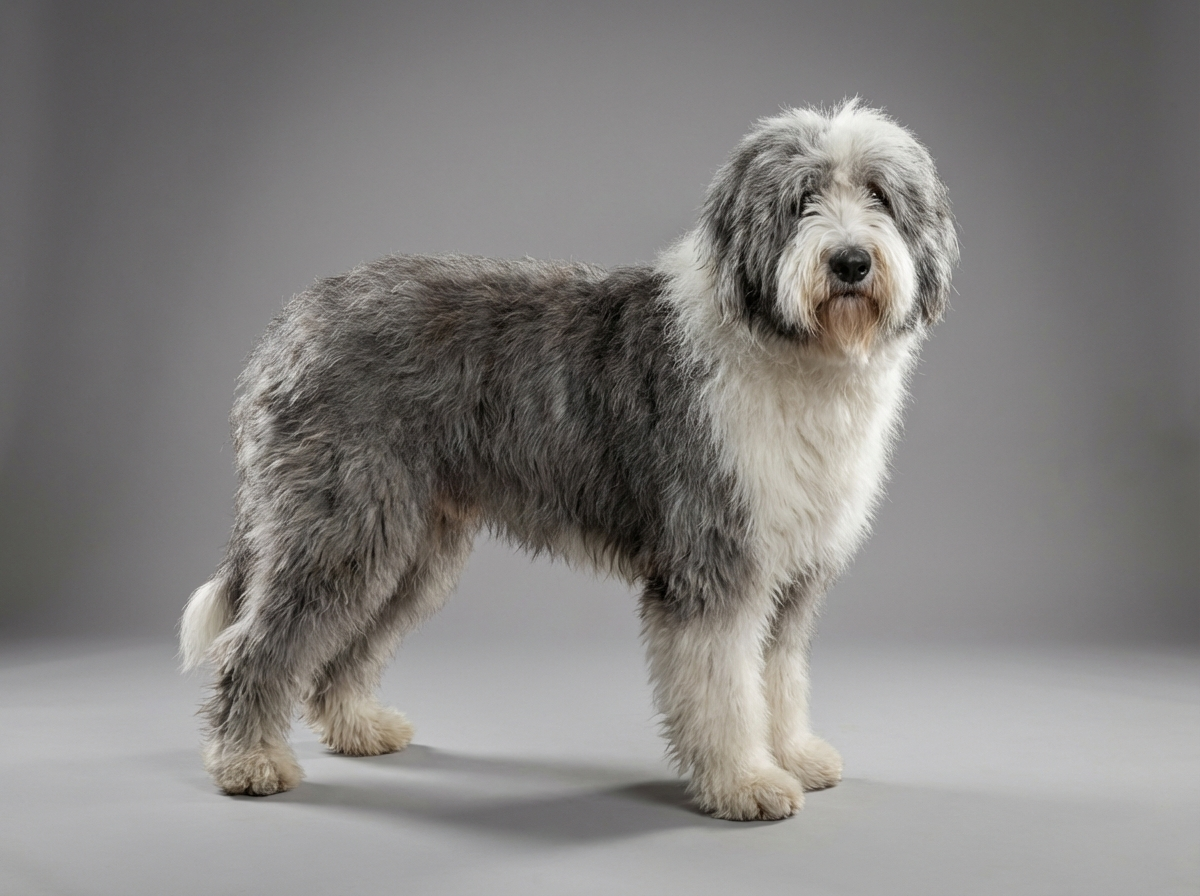
Piper, an Old English Sheepdog puppy in Sacramento, had her third respiratory infection by seven months old, each one clearing with antibiotics only to return within a couple of months. Her owner Nate had assumed she was just unlucky with exposure at the dog park, but after the third round, his vet suggested looking deeper rather than treating it as a coincidence. Specialized testing confirmed Primary Ciliary Dyskinesia. With that diagnosis in hand, Nate and his vet built a plan to treat any new infection immediately and monitor Piper's lungs regularly for signs of chronic complications. Two years later, Piper still gets occasional infections, but each one is caught and treated early, and she hasn't developed the chronic bronchitis her vet had flagged as a risk.
Key takeaway: A pattern that looked like ordinary bad luck with germs turned out to be a genetic condition with a name, and getting that actual diagnosis let Piper's family manage the real underlying issue instead of just treating each infection in isolation.
No, it has a normal, unshortened muzzle and doesn't have the flat-faced airway structure that drives respiratory disease in breeds like Bulldogs or Pugs. Its documented respiratory risk comes from a different, unrelated condition.
It's a genetic condition, specifically documented in this breed, where microscopic hair-like structures in the airway that normally sweep out mucus and debris don't move properly, leading to recurring respiratory infections.
Recurring respiratory infections, chronic nasal discharge, and a persistent cough starting from a young age are the classic signs, distinct from the occasional infection any puppy might get.
Specialized testing, including ciliary biopsy to examine cilia movement directly or genetic testing where available, is used to confirm a diagnosis, since standard chest X-rays alone don't reveal the underlying ciliary defect.
No, it's a lifelong genetic condition. Management focuses on promptly treating respiratory infections as they occur and monitoring for chronic complications like bronchitis, rather than a cure for the underlying ciliary defect.
Indirectly, yes. Heat and humidity add real strain to breathing effort during exertion given this breed's coat and body mass, separate entirely from PCD, making exercise timing relevant to respiratory comfort regardless of diagnosis.
It's reasonable to discuss with your vet, particularly if a puppy shows recurring respiratory symptoms from a young age, though not every puppy needs testing absent any symptoms or known family history.
No, it has a normal muzzle; its documented respiratory risk instead comes from Primary Ciliary Dyskinesia, an unrelated genetic condition.
The microscopic cilia that normally clear mucus and debris from the airway, leading to recurring infections when they don't move properly.
Recurring respiratory infections, chronic nasal discharge, or a persistent cough starting at a young age.
There's no cure, but prompt treatment of each infection and monitoring for chronic complications is the standard management approach.
Yes, separately from PCD, this breed's dense coat and body mass make heat and humidity a real strain on breathing effort during exercise.
A one-page prep sheet for this condition: the signs, the questions to ask, what to get priced. Unlocks here.
You get: Vet visit prep sheet
No spam. One-click unsubscribe. See our privacy policy.
Preview page 1 before you decide.
Early access list
The free prep sheet covers the same-day warning signs, a symptom log and the questions to ask. We are considering a fuller kit that adds a cost worksheet for the usual tests and treatments (US price ranges with their sources) and a plain-English guide to ways of covering the bill. It is not built yet; this list tells us whether it is worth building.
One email, no spam, unsubscribe anytime. Information only, not veterinary advice.