Health
What's the biggest dental risk factor specific to this breed?
The beard and mustache trapping food debris and moisture right against the mouth.

Quick answer
What's the biggest dental risk factor specific to this breed?
The beard and mustache trapping food debris and moisture right against the mouth.
You can't judge this breed's dental health by a glance at their face. The beard hides both the mouth itself and the food debris that builds up around it.
This affects any owner who relies on a casual glance to judge their dog's mouth health, since this breed's facial hair makes that approach far less reliable than it would be for a short-haired dog.
This guide is not medical advice. If your dog shows pain, sudden behavior change, or worsening symptoms, consult a licensed veterinarian.
Some links may be affiliate links. We may earn a commission at no extra cost to you. We only suggest products we believe are helpful for dog owners.
We research and check what we publish, but we do not warrant that any figure, date, price, or statement is accurate, complete, or current, and we accept no liability for any loss, cost, injury, or other harm arising from the use of this site. Use it as one reference among several. You remain responsible for your own decisions and for your dog's care - confirm anything that matters with a licensed veterinarian or another qualified professional before you act on it. Full disclaimer.
Check this first
A broken or visibly infected tooth, a swollen face or jaw, significant difficulty eating, or a dog pawing repeatedly at their mouth are signs that warrant a prompt vet visit rather than waiting for a routine dental cleaning appointment. Facial swelling near the mouth in particular can indicate a dental abscess, which needs treatment sooner rather than later.
Routine dental disease, plaque buildup, mild tartar, or early gum redness, isn't an emergency and is well-managed through a scheduled professional cleaning. The urgency threshold is really about pain and infection signs, not the presence of tartar alone.
If any of these apply, call your vet or an emergency clinic now. The rest of this page is for the cases that are not an emergency.
Dental disease is common in dogs generally, but this breed's thick beard and mustache add a specific complicating factor: trapped food debris and moisture around the mouth, plus a facial coat that makes casual visual checks of the teeth and gums much less reliable than in a short-haired dog.
Dental disease is extremely common across dog breeds by middle age, and this breed's added coat-related complication makes early detection specifically more challenging than average, without necessarily changing the underlying rate of disease itself.
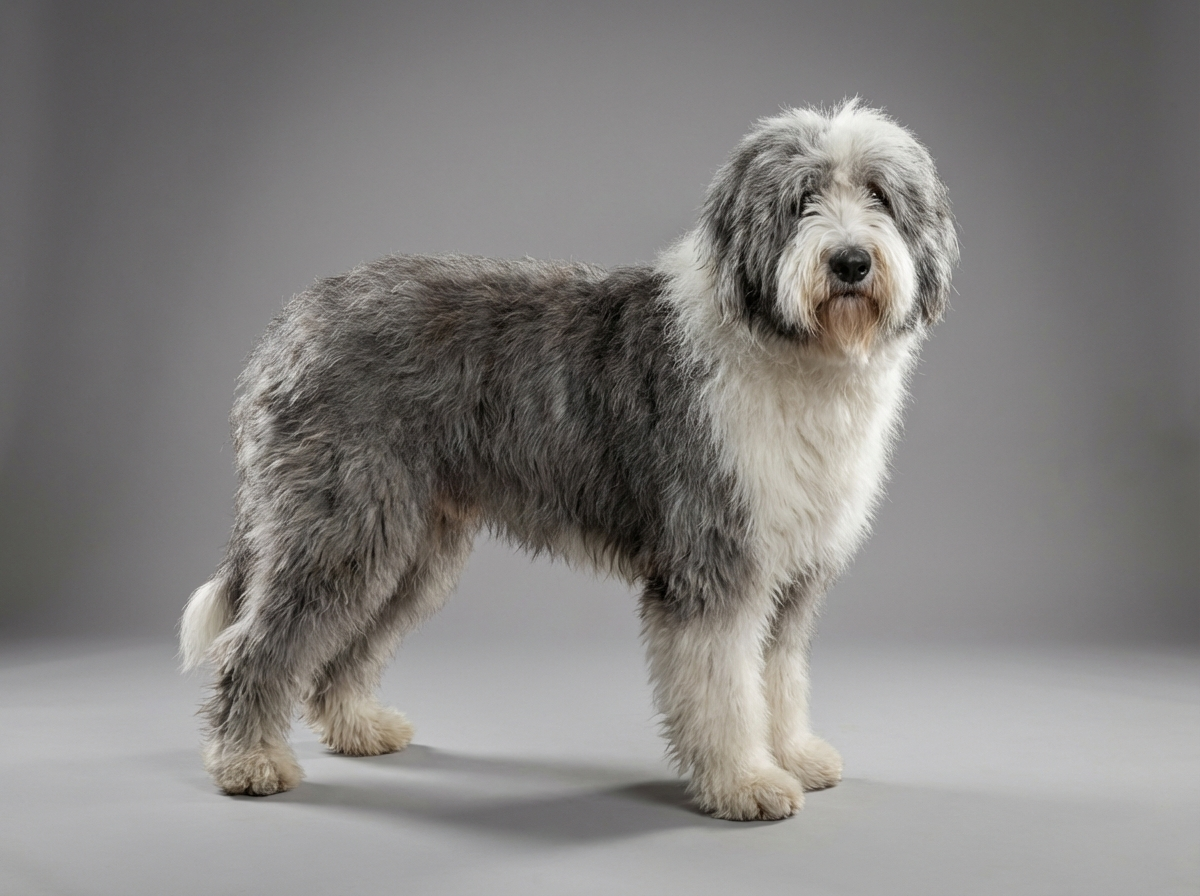
This breed's dense facial hair, including a beard and mustache that sit directly over and around the mouth, traps food debris and moisture against the lips and gums, and also obscures visual access to the teeth that would otherwise make early problems easier to spot in a short-haired dog.
Diet, chewing habits, and how consistently an owner brushes or has professional cleanings performed all influence dental health, same as in any breed, but the added facial-hair factor here means these habits matter even more for staying ahead of problems.
Talk to your vet about visible tartar, red or swollen gums, or bad breath at a routine visit. Seek prompt care for a broken tooth, facial or jaw swelling, or a dog that's clearly struggling to eat.
Most dental problems here trace back to the beard being treated as a grooming issue rather than a dental-health one.
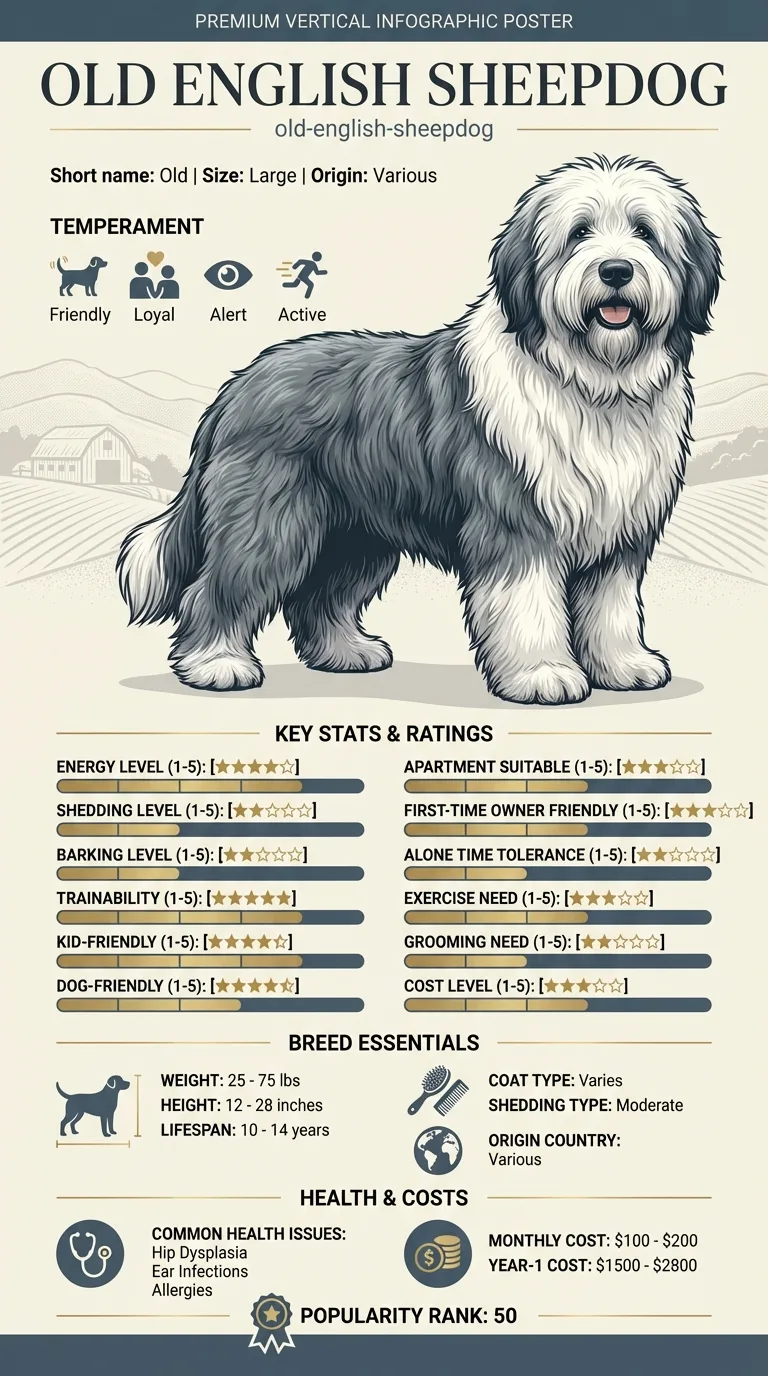
See all OLD English Sheepdog health problems, which breeds are prone to dental issues, or the full OLD English Sheepdog breed guide for temperament, exercise needs and ownership costs.
A consistent brushing and facial-hygiene routine typically shows improved gum health within a few weeks. Established tartar generally requires a professional cleaning to fully address, since brushing alone can't remove hardened buildup.
Success looks like a mouth checked regularly enough that problems are caught early, clean gums, and dental cleanings scheduled proactively rather than reactively.
Duffy, a six-year-old Old English Sheepdog, seemed to have completely normal breath and no visible mouth issues from a casual look. At his annual exam, his vet lifted his beard and lip to find significant tartar buildup and early gum inflammation that had gone unnoticed at home. After a professional cleaning, Duffy's owner started a weekly hands-on mouth check and began wiping his beard after every meal. At his next annual exam a year later, his dental health had markedly improved.
Key takeaway: In this breed, a normal-looking, normal-smelling face doesn't rule out real dental problems underneath. A deliberate check, not a glance, is what actually catches it.
The thick beard and mustache trap food debris and moisture right around the mouth, adding to plaque buildup, and also make it harder to casually glance at the teeth and gums the way you could with a short-haired dog.
A dedicated check, lifting the lip and looking directly at the teeth and gums, is reasonable weekly, in addition to whatever brushing routine you maintain.
Yes, wiping down the beard and mustache area after eating helps prevent food debris from sitting against the lips and contributing to plaque and gum irritation.
This varies by individual dog, but many large breeds benefit from a professional cleaning under anesthesia roughly once a year, based on your vet's assessment at routine exams.
Yes, though you may need to hold the beard back or trim it slightly around the mouth to get proper access. It's still worth doing regularly rather than skipping brushing because of the coat.
It's a common sign, but not the earliest one. Visible tartar, red or swollen gums, and bleeding while chewing often appear before breath odor becomes noticeably bad.
For a large breed like this one, a professional cleaning under anesthesia, including pre-anesthetic bloodwork, commonly runs several hundred dollars, more if extractions are needed.
The beard and mustache trapping food debris and moisture right against the mouth.
A dedicated weekly check lifting the lip to look directly at teeth and gums, beyond casual glances.
Yes, wiping after meals reduces trapped food debris that contributes to plaque buildup.
Often several hundred dollars for a large breed, including pre-anesthetic bloodwork, more if extractions are needed.
No, tartar and gum redness typically appear before breath odor becomes noticeably bad.
A one-page prep sheet for this condition: the signs, the questions to ask, what to get priced. Unlocks here.
You get: Vet visit prep sheet
No spam. One-click unsubscribe. See our privacy policy.
Preview page 1 before you decide.