Health
What is the most distinctive sign in this breed?
A cold-seeking Newfoundland. A dog that has always chosen the coolest floor and now hunts for warmth has changed something real.

Quick answer
What is the most distinctive sign in this breed?
A cold-seeking Newfoundland. A dog that has always chosen the coolest floor and now hunts for warmth has changed something real.
The signs of an underactive thyroid look exactly like a Newfoundland getting older and a bit chunky. That resemblance is why it goes undiagnosed.
For owners of middle-aged Newfoundlands who have noticed gradual weight gain, a coat that has lost its condition, or a dog that seems flatter than it used to be without any obvious reason.
This guide is not medical advice. If your dog shows pain, sudden behavior change, or worsening symptoms, consult a licensed veterinarian.
Some links may be affiliate links. We may earn a commission at no extra cost to you. We only suggest products we believe are helpful for dog owners.
Hypothyroidism is a deficiency of thyroid hormone, the chemical that sets metabolic pace throughout the body. The result is a dog that gains weight without eating more, becomes lethargic, seeks warmth, and develops a dull, thinning coat with skin that becomes prone to infection. It is a slow-onset condition that is frequently mistaken for normal ageing, and in this breed the dense coat conceals some of the most useful evidence.
Thyroid disease is a recognised endocrine problem across many medium and large breeds rather than a signature Newfoundland condition; the breed's documented concerns are hip dysplasia, subaortic stenosis, dilated cardiomyopathy, cystinuria and bloat. Even so, the classic pattern of gradual weight gain and coat loss in a middle-aged dog is worth testing for.
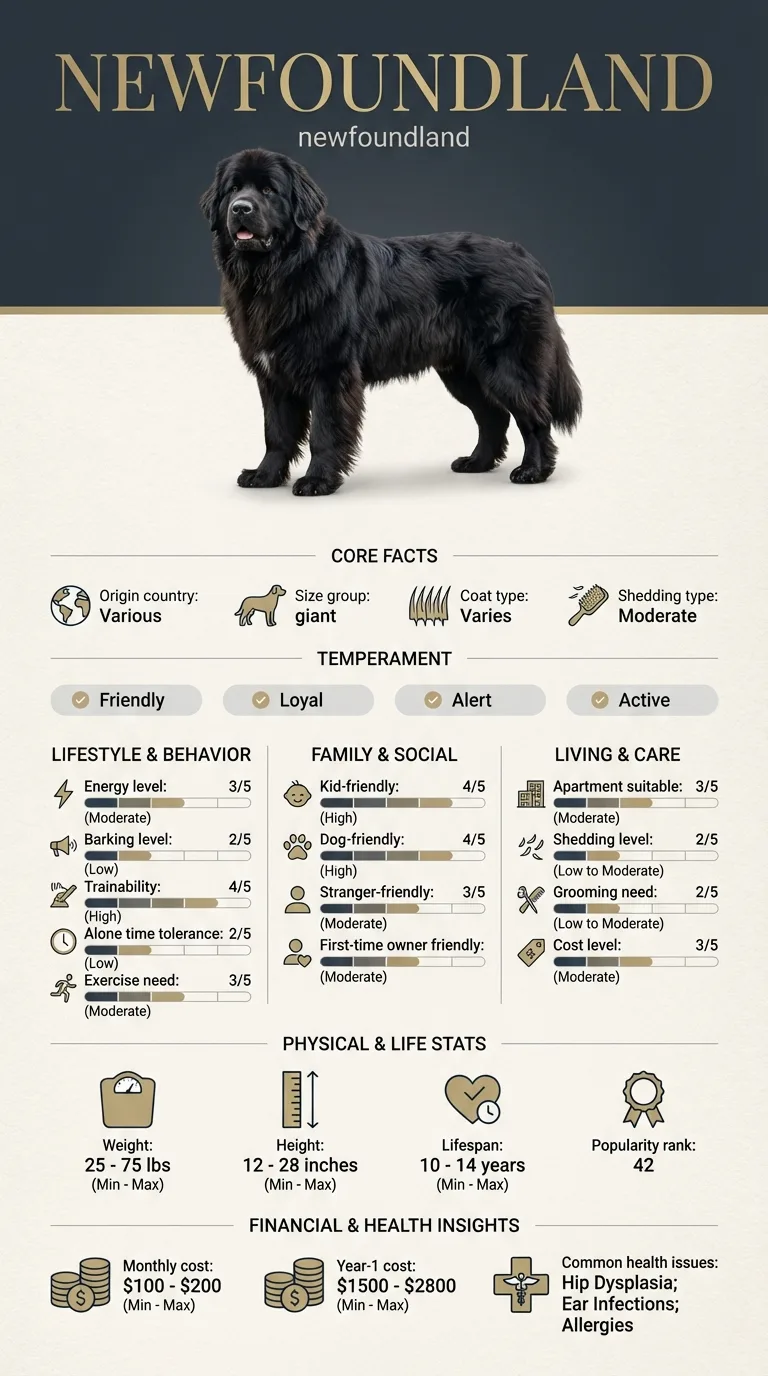
There is nothing about a Newfoundland that causes thyroid failure, but several breed traits make it harder to spot. A rated energy level of 2 out of 5 means reduced activity is unremarkable in a dog that was never especially active. A heavy water-resistant double coat with heavy year-round shedding hides both hair loss and skin change unless someone deliberately parts it and looks. A body that already weighs 100 to 150 pounds absorbs a great deal of weight gain before the change is obvious to the eye. And a lifespan of nine to ten years means the breed reaches the typical age for this diagnosis while owners still think of the dog as young.
Environment does not cause hypothyroidism, but it shapes how visible it is and how much damage the secondary effects do. A household that free-feeds or measures by scoop will not detect that weight is climbing on unchanged intake. Homes without a routine grooming schedule miss the skin and coat evidence entirely. Cold, damp housing makes a heat-seeking dog appear merely sensible. And regions where a dog is exercised infrequently make declining stamina invisible, because nothing tests it.
Book a routine appointment for unexplained weight gain, symmetrical hair loss, recurrent skin infections, persistent lethargy, or a clear change in your dog's tolerance of cold. None of these are emergencies, but they should not be left for a year either. Seek urgent care if your dog collapses, becomes profoundly weak, is unable to stand, or develops a very low body temperature with pale gums, since severe untreated hormone deficiency can occasionally lead to a crisis. Never start or adjust thyroid medication without veterinary direction, because excess thyroid hormone causes its own serious problems.
See all Newfoundland health problems, which breeds are prone to hypothyroidism, or the full Newfoundland breed guide for temperament, exercise needs and ownership costs.
Expect the diagnostic process to take a few weeks, since testing sometimes needs repeating and other conditions have to be excluded. Once treatment starts, energy and demeanour usually improve within two to six weeks. Blood levels are typically rechecked in the first couple of months and again after any adjustment. Weight comes down over three to six months with dietary support, and coat condition is the slowest of all, often taking six months or more to look normal on a dense double coat.
Success is a dog that is back to itself: engaged, active at its own comfortable level, holding a steady healthy weight, with a coat that has recovered its density and skin that has stopped producing infections. Bloodwork sits in the target range on a stable daily treatment. This is one of the conditions where the honest answer is genuinely encouraging, because a corrected deficiency usually stays corrected.
The picture is usually one of gradual, unglamorous decline rather than illness. Weight climbs despite unchanged feeding. The dog becomes slower to get going, sleeps more, and shows less interest in the parts of the day it used to enjoy. Owners frequently describe it afterwards as their dog having aged quickly over a few months.
The coat carries some of the most useful clues, and in a Newfoundland it also hides them. A heavy water-resistant double coat that is thinning, becoming dull, or failing to regrow properly after clipping or shedding is a genuine sign, but you have to part the coat and look at the skin to see it. Hair loss in thyroid disease tends to be symmetrical, affecting both flanks or the tail similarly rather than appearing in one itchy patch. The skin underneath may be thickened, flaky or darkened, and it may develop recurrent infections that keep coming back after treatment.
Heat-seeking behaviour is another marker, and in this breed it is a strong one precisely because it is so out of character. A Newfoundland that has spent its life sprawled on the coldest tile in the house and suddenly starts pressing against radiators has changed something fundamental about how it regulates temperature.

Owners often expect one blood test to settle the question. In practice, interpreting canine thyroid results is one of the more nuanced areas of general practice.
Hypothyroidism is one of the more satisfying chronic diagnoses in veterinary medicine, because the deficiency can be corrected. Treatment replaces what the gland is no longer making, and it is given for the rest of the dog's life.
What owners should expect is a period of adjustment. Blood levels are rechecked after starting, and again after any change, because getting the amount right for an individual dog takes iteration. This is entirely a veterinary matter, and it is one of the clearer examples of why guessing at home is a bad idea: both too little and too much thyroid hormone cause problems.
The response follows a predictable order. Energy and demeanour usually improve first, often within weeks, and owners are frequently surprised by how much personality returns. Weight follows more slowly, and it needs help, since correcting the metabolism does not undo months of accumulated fat on its own. The coat is last and slowest, because hair grows at the pace hair grows, and on a Newfoundland's dense double coat a full recovery of condition can take many months.
Once stable, most dogs need periodic bloodwork rather than intensive monitoring, and they live entirely normal lives.
If you think your Newfoundland has hypothyroidism, the plan is three steps: write down what you have seen and when it started, book a veterinary appointment rather than waiting for the next flare, and take video of the behaviour or symptom before you go — the thing you are worried about rarely happens in the consulting room. Screening in the parents covers hip dysplasia, subaortic stenosis, dilated cardiomyopathy.
What the vet visit should produce is a diagnosis and a written plan, not just reassurance: what is being ruled out, what the monitoring interval is, and which signs mean you come back sooner. Ask what the treatment costs across a year rather than per visit, because that is the number that decides whether you are managing this condition or reacting to it.
Between appointments, keep a short log — dates, what you saw, what changed. It is the single most useful thing an owner brings to a follow-up, and for hypothyroidism it is often what separates a clear pattern from a guess.
Dodger was six, and his family's first clue had nothing to do with his weight. He had spent every winter of his life lying on the coldest flagstone in the kitchen, as close to the back door as he could get, and one November he stopped. They found him instead pressed against the hallway radiator, and after a fortnight of this his owner mentioned it almost as a joke at a routine vaccination visit. The veterinarian took it seriously and asked follow-up questions. Yes, he had put on weight, maybe fifteen pounds, but he was a Newfoundland and it had not seemed dramatic. Yes, his coat had been odd since the summer shed, patchy along both flanks in a way they had assumed was seasonal. Bloodwork and a follow-up panel confirmed an underactive thyroid. Within a month of starting treatment Dodger was asking for evening walks again. His weight took until the following spring to come back down, and his coat until the summer after that. He went back to the flagstone in January.
Key takeaway: In a breed that lives for cold floors, a dog that starts seeking heat is making a statement. Small changes in where a Newfoundland chooses to lie are worth mentioning out loud at the clinic.
Thyroid disease is seen across many medium and large breeds, and this breed's health profile centres on hip dysplasia, cardiac disease, cystinuria and bloat rather than thyroid disease specifically. It remains worth investigating in any Newfoundland showing the classic pattern of weight gain, lethargy and coat change.
It can be, but overfeeding is by far the more common explanation in a calm giant breed. The useful distinction is whether weight is climbing on an intake that genuinely has not changed, and whether other signs such as coat loss and cold-seeking are present too.
Most cases are diagnosed in middle age. In a breed with a nine to ten year lifespan, middle age arrives earlier than owners of smaller dogs expect, so a four or five year old Newfoundland is not too young to consider it.
Reduced energy and engagement are commonly reported, and some owners describe a dog that seems mentally slower. Any marked behaviour change deserves a veterinary examination rather than a training solution, since medical causes are frequently missed.
Usually, but slowly. Hair regrowth on a heavy double coat takes months rather than weeks, and it is normal for the new coat to feel different at first. Judge treatment success on energy and bloodwork before judging it on the coat.
The medication itself is generally one of the more affordable long-term veterinary treatments, though dosing for a 100 to 150 pound dog costs more than for a small one. Periodic monitoring bloodwork is the other recurring cost.
No. Hormone deficiency cannot be corrected by food or by over-the-counter supplements, and some supplements marketed for thyroid support can interfere with proper treatment. Discuss anything you are giving with your veterinarian.
A cold-seeking Newfoundland. A dog that has always chosen the coolest floor and now hunts for warmth has changed something real.
Part the coat and look at the skin on both flanks and the tail. Thyroid-related hair loss is usually symmetrical.
Often not. Other illnesses and some medications suppress thyroid readings, so interpretation usually needs a fuller panel and clinical context.
Energy typically improves within a few weeks, weight over months with dietary help, and coat condition slowest of all.
Yes. Daily medication plus periodic monitoring bloodwork becomes a permanent line in the budget, though it is a modest one by giant-breed standards.
A one-page prep sheet for this condition: the signs, the questions to ask, what to get priced. Unlocks here.
You get: Vet visit prep sheet
No spam. One-click unsubscribe. See our privacy policy.
Preview page 1 before you decide.