Behavior
Newfoundland or Vizsla - which should you pick?
Pick the Newfoundland for a calm, space-hungry homebody; pick the Vizsla if you want a running or hiking partner and can be home most of the day.

Quick answer
Newfoundland or Vizsla - which should you pick?
Pick the Newfoundland for a calm, space-hungry homebody; pick the Vizsla if you want a running or hiking partner and can be home most of the day.
Newfoundland or Vizsla? On paper they differ most on grooming need, and on the scales Newfoundland is the heavier at 100–150 lbs. Here is how the two compare on everything that shapes an ordinary week.
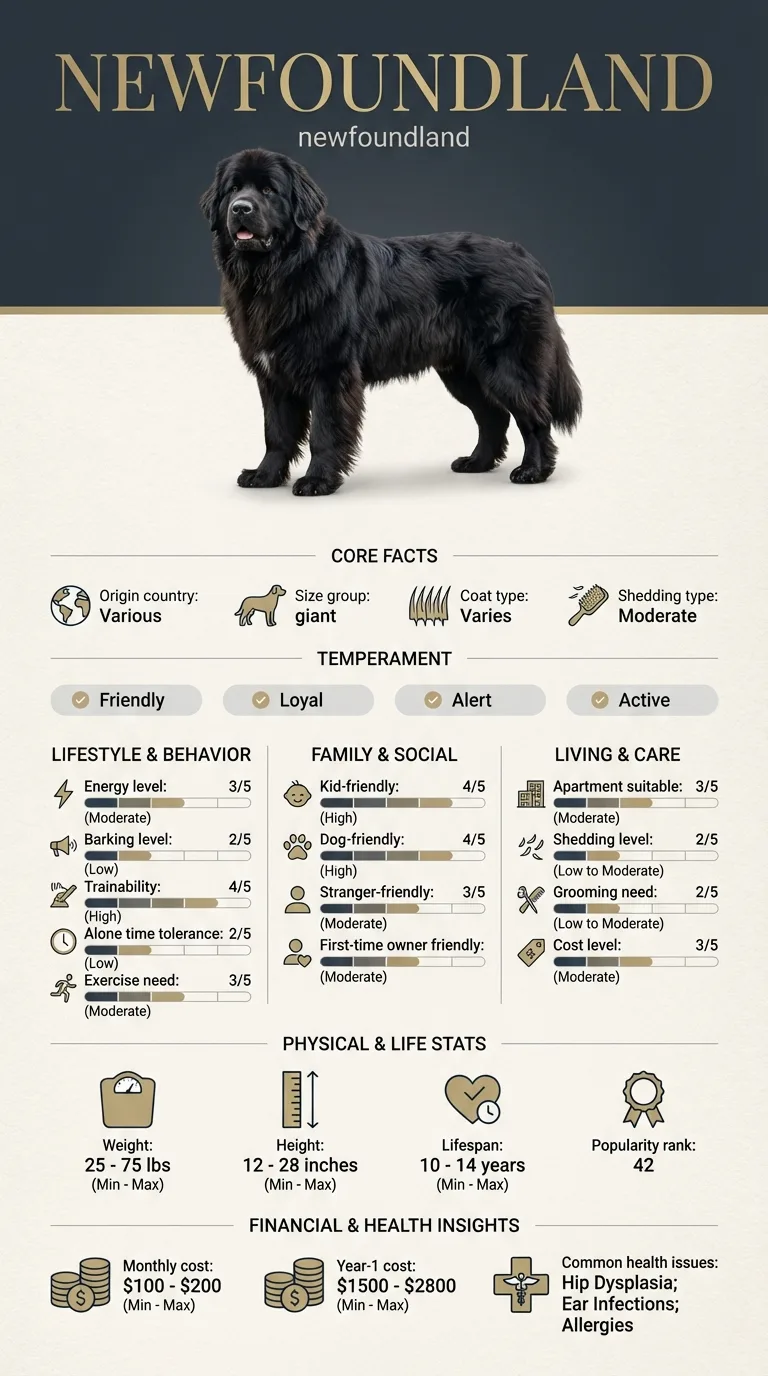
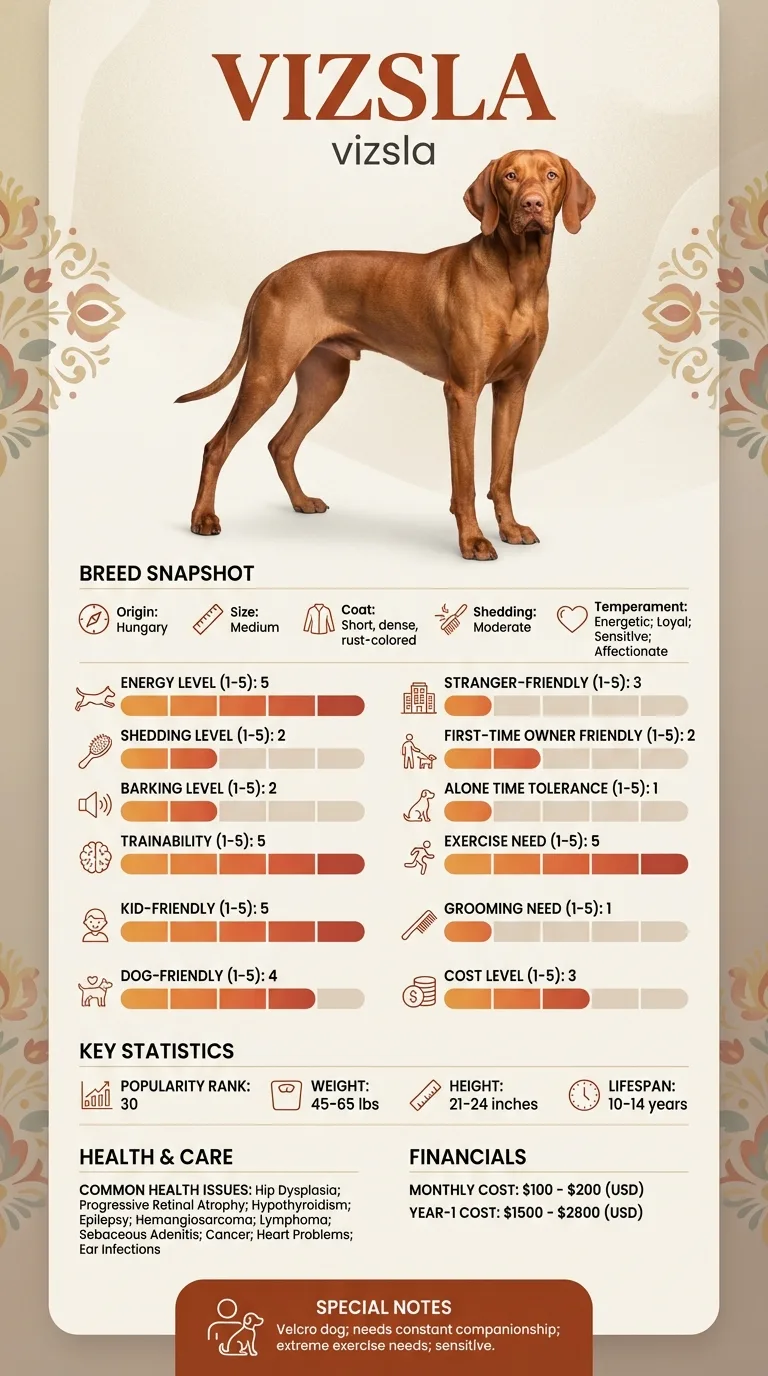
This is for someone already down to Newfoundland and Vizsla and deciding between them. For this pair the decision usually turns on grooming need and energy level, so those are covered first and in most detail. Both rate 1/5 for flats, so housing does not settle this one. There is no origin story here — only what changes about your week.
Between Newfoundland and Vizsla, grooming need is what separates them, and Newfoundland is the lower-effort dog of the two to keep.
Choose Newfoundland if this is your first dog, your walking routine is modest and the dog will be alone during the working day.
Choose Vizsla if you do not want a standing grooming appointment, shedding is a problem in your house and you want a dog that picks up training quickly.
| Feature | newfoundland | vizsla | Winner |
|---|---|---|---|
| Size class | giant | medium | Equal |
| Weight | 100–150 lbs | 45–65 lbs | Equal |
| Height | 26–28 in | 21–24 in | Equal |
| Lifespan | 9–10 years | 10–14 years | vizsla |
| Exercise need | Moderate (3/5) | Very high (5/5) | newfoundland |
| Grooming need | High (4/5) | Very low (1/5) | vizsla |
| Shedding | Very high (5/5) | Low (2/5) | vizsla |
| Energy level | Low (2/5) | Very high (5/5) | Equal |
| Barking | Low (2/5) | Low (2/5) | Equal |
| Apartment suitability | Very low (1/5) | Very low (1/5) | Equal |
| Good for first-time owners | Moderate (3/5) | Low (2/5) | newfoundland |
| Tolerates being alone | Moderate (3/5) | Very low (1/5) | newfoundland |
| Trainability | High (4/5) | Very high (5/5) | vizsla |
| Good with kids | Very high (5/5) | Very high (5/5) | Equal |
| Good with other dogs | High (4/5) | High (4/5) | Equal |
| Friendly to strangers | High (4/5) | Moderate (3/5) | newfoundland |
| Cost level | Very high (5/5) | Moderate (3/5) | vizsla |
| Coat | Heavy water-resistant double coat | Short, dense, rust-colored | Equal |
| Origin | Various | Hungary | Equal |
| Typical monthly cost | $150–$310 | $100–$200 | Equal |
| Typical first-year cost | $2,200–$4,200 | $1,500–$2,800 | Equal |
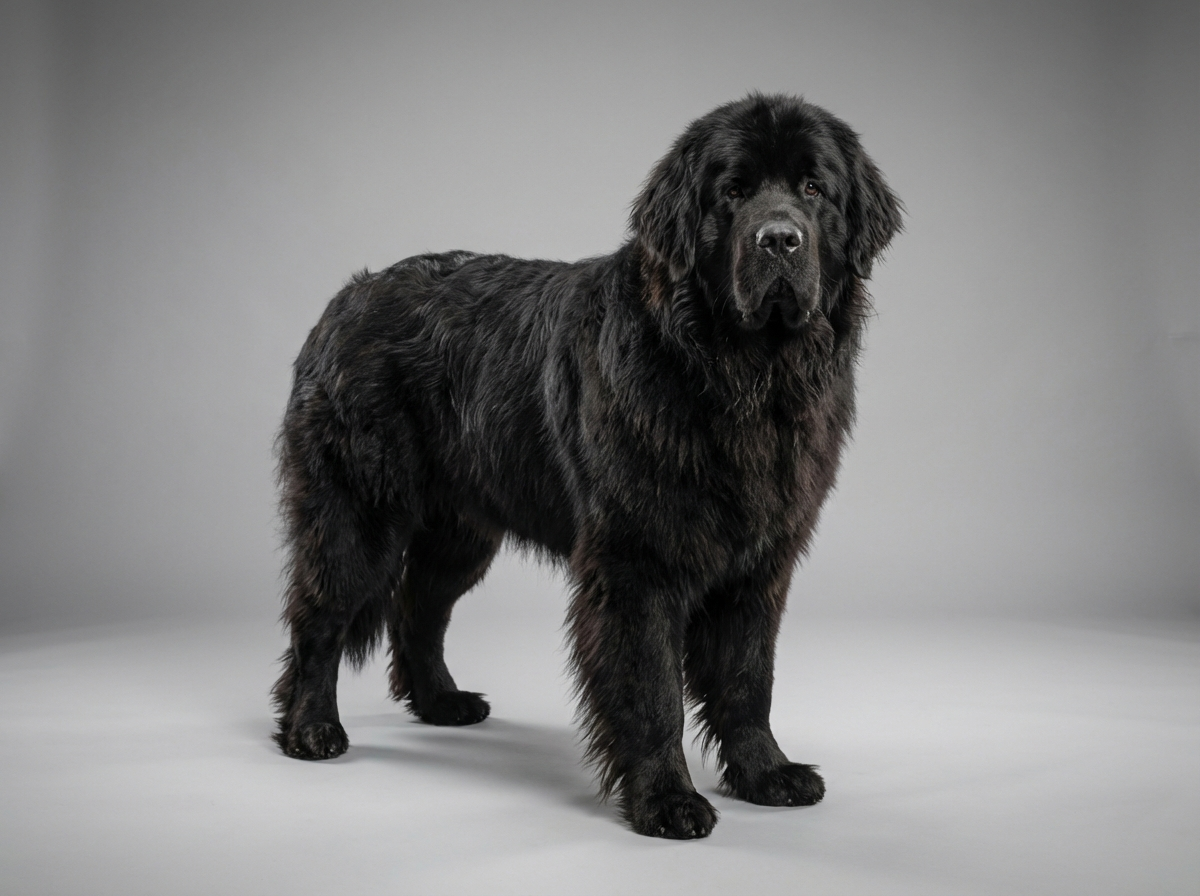
The gap here is enormous. A Newfoundland runs 100-150 lbs and stands 26-28 inches at the shoulder, while a Vizsla tops out around 65 lbs and 24 inches. You're comparing a dog that can lean on a coffee table and tip it over to one you could carry up a flight of stairs in an emergency. Floor space, vehicle size, and even the size of dog bed you buy all shift dramatically depending on which one you pick.
These two sit at opposite ends of the energy scale. The Newfoundland's exercise need is rated moderate (3/5) with low overall energy (2/5) - a couple of walks and some water time satisfy it. The Vizsla rates very high (5/5) on both exercise need and energy level, and it's not a breed that mellows into a couch dog. If your week doesn't include an hour or more of real running or hiking, the Vizsla will make that obvious.
The Newfoundland's heavy, water-resistant double coat scores high (4/5) on grooming and very high (5/5) on shedding - expect regular brushing and a fur-covered house. The Vizsla's short coat is nearly the inverse: very low (1/5) grooming need and low (2/5) shedding. If you're choosing based on how much hair ends up on your clothes, this row alone probably settles it.
Both score very low (1/5) for apartment suitability, so neither is a realistic fit for small-space living regardless of energy differences. Barking is low (2/5) for both, so noise complaints aren't the concern - space and exercise access are. Where they split is time alone: the Newfoundland tolerates it moderately (3/5), while the Vizsla rates very low (1/5) and is known for attaching hard to its people.
The Newfoundland is rated moderate (3/5) for first-time owners and high (4/5) for trainability - it's biddable and food-motivated without being especially quick. The Vizsla trains at a very high (5/5) level but is rated only low (2/5) for first-time owners, since that intelligence pairs with sensitivity and a need for consistent, gentle handling. An inexperienced owner will likely have an easier early stretch with the Newfoundland.
Both breeds score very high (5/5) with kids and high (4/5) with other dogs, so neither is a red flag on that front. The Newfoundland edges ahead with strangers, rated high (4/5) against the Vizsla's moderate (3/5) - fitting the Vizsla's more sensitive, one-family temperament. If you host a lot of unfamiliar guests, that difference is worth weighing. Their broader personality profiles back this up: the Newfoundland is described as sweet, patient, and calm, while the Vizsla's affectionate, loyal streak comes paired with a sensitivity that shows most around unfamiliar faces.
The Vizsla is expected to live 10-14 years against the Newfoundland's 9-10, a meaningful gap tied partly to giant-breed physiology. Both share a risk for hip dysplasia. The Newfoundland's other flagged conditions are subaortic stenosis, dilated cardiomyopathy, cystinuria, and bloat. The Vizsla's list is longer and includes progressive retinal atrophy, hypothyroidism, epilepsy, hemangiosarcoma, lymphoma, sebaceous adenitis, and general cancer risk.
Cost level is rated very high (5/5) for the Newfoundland versus moderate (3/5) for the Vizsla, and the ranges back that up: $150-$310 a month for the Newfoundland versus $100-$200 for the Vizsla, or $2,200-$4,200 versus $1,500-$2,800 in year one. Food volume alone accounts for a lot of that gap - a 130-lb dog eats a lot more than a 55-lb one.
Newfoundland weighs 100–150 lbs and lives 9–10 years; Vizsla weighs 45–65 lbs and lives 10–14 years. The two diverge most on grooming need, energy level and shedding and 3 other rated axes. They are level on apartment suitability, barking and good with other dogs, so those cannot decide it. Where the table declares a winner it means less work for the owner, nothing more; descriptive rows are left as ties on purpose. The value here is in the differences between the two columns; treat any single score as approximate.

The Newfoundland, by a wide margin - 100-150 lbs and 26-28 inches tall versus the Vizsla's 45-65 lbs and 21-24 inches. It's a giant breed against a medium one.
The Vizsla, clearly. It rates low (2/5) on shedding with a short coat, while the Newfoundland rates very high (5/5) with a heavy double coat that needs regular brushing.
The Newfoundland is the better bet, rated moderate (3/5) versus the Vizsla's low (2/5). The Vizsla's very high trainability comes bundled with sensitivity that rewards prior dog experience.
Not comfortably - both score very low (1/5) for apartment suitability. Size aside, the Vizsla's very high exercise need makes small-space living especially hard on it.
The Newfoundland, at $150-$310 a month versus $100-$200 for the Vizsla. Over a first year that's roughly $2,200-$4,200 against $1,500-$2,800.
Both are prone to hip dysplasia. Beyond that their risk profiles diverge - the Newfoundland toward heart conditions and bloat, the Vizsla toward a longer list including cancers and epilepsy.
The Newfoundland, rated moderate (3/5) versus the Vizsla's very low (1/5). Vizslas are known for attaching tightly to their owners and struggling with solitude.
Pick the Newfoundland for a calm, space-hungry homebody; pick the Vizsla if you want a running or hiking partner and can be home most of the day.
The Newfoundland runs $150-$310 a month versus $100-$200 for the Vizsla - mostly a function of how much food a 130-lb dog needs.
The Vizsla, rated very high (5/5) versus moderate (3/5) for the Newfoundland. It needs real daily running, not just walks.
The Vizsla, at 10-14 years versus 9-10 for the Newfoundland - a common pattern between medium and giant breeds.
Secure checkout on Stripe. We never see your card.
7-day money-back guarantee. Instant access.
Health information here is general and is not veterinary advice. If your dog shows pain, sudden behaviour change, or worsening symptoms, consult a licensed veterinarian.
Some links on this site are affiliate links. We may earn a commission at no extra cost to you, and we only suggest products we believe are helpful for dog owners.
We research and check what we publish, but we do not warrant that any figure, date, price, or statement is accurate, complete, or current, and we accept no liability for any loss, cost, injury, or other harm arising from the use of this site. Use it as one reference among several. You remain responsible for your own decisions and for your dog's care - confirm anything that matters with a licensed veterinarian or another qualified professional before you act on it. Full disclaimer.
Match your lifestyle to the right dog.
Take quizNot sure which breed is right for you? Take our 2-minute quiz to find out.
Take the quiz