Health
Is exercise-induced collapse a heart problem?
No — it's a nerve-based condition affecting muscle coordination, with a normal heart rhythm throughout the episode, distinct from a true cardiac arrhythmia.

Quick answer
Is exercise-induced collapse a heart problem?
No — it's a nerve-based condition affecting muscle coordination, with a normal heart rhythm throughout the episode, distinct from a true cardiac arrhythmia.
Two dogs collapsing mid-retrieve on a hot afternoon could be experiencing completely different emergencies — one a genuine cardiac arrhythmia, the other a well-characterized inherited nerve condition specific to this breed — and telling them apart matters enormously for what happens next.
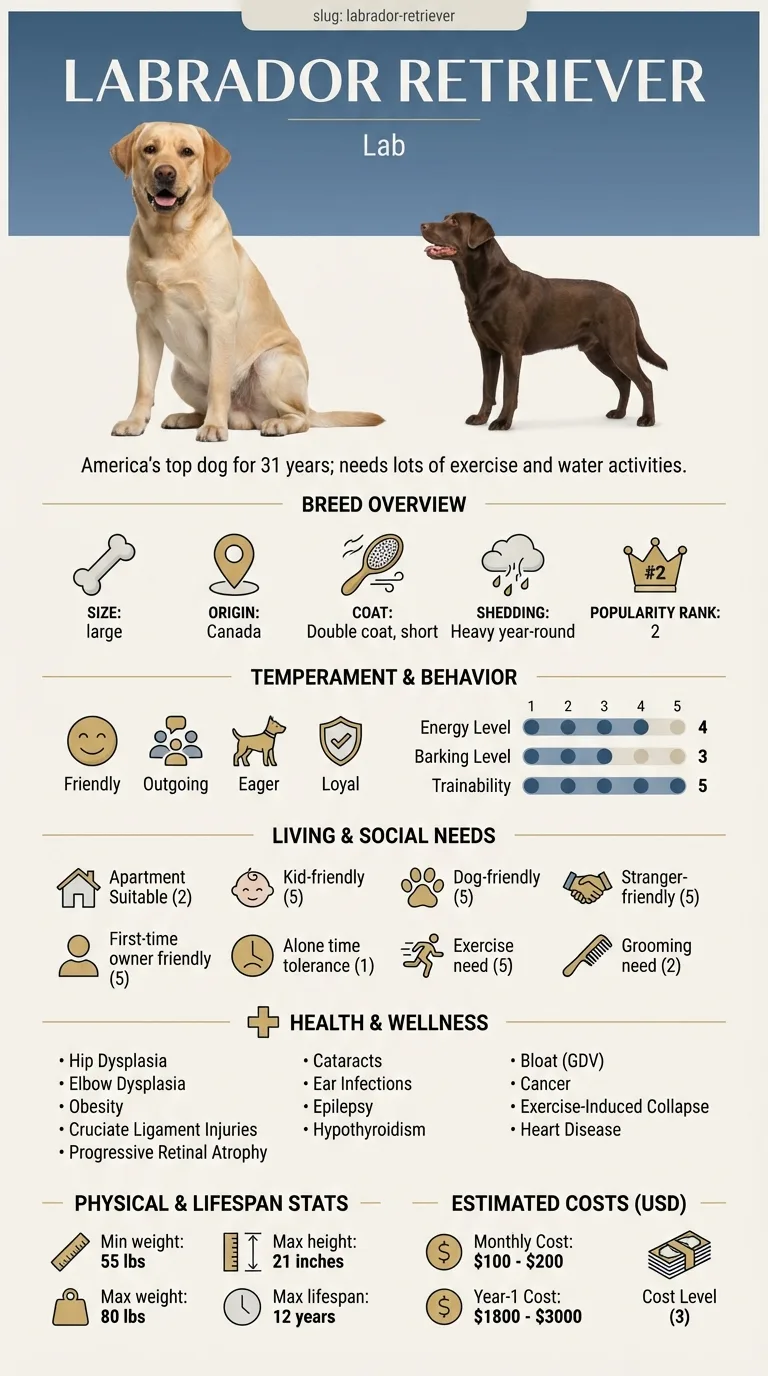
Owners who've witnessed a collapse during exercise and are trying to understand whether it's cardiac, and owners of working or sporting Labs specifically screened for EIC wondering how that diagnosis relates to heart health.
This guide is not medical advice. If your dog shows pain, sudden behavior change, or worsening symptoms, consult a licensed veterinarian.
Some links may be affiliate links. We may earn a commission at no extra cost to you. We only suggest products we believe are helpful for dog owners.
We research and check what we publish, but we do not warrant that any figure, date, price, or statement is accurate, complete, or current, and we accept no liability for any loss, cost, injury, or other harm arising from the use of this site. Use it as one reference among several. You remain responsible for your own decisions and for your dog's care - confirm anything that matters with a licensed veterinarian or another qualified professional before you act on it. Full disclaimer.
Ventricular arrhythmias are abnormal heart rhythms that can cause fainting or collapse due to inadequate blood flow, but in Labrador Retrievers they're frequently confused with exercise-induced collapse (EIC), a separate, genetically identified nerve-based condition specific to this breed that produces similar-looking collapse without any cardiac rhythm abnormality. Distinguishing between the two through a proper veterinary workup matters enormously for both prognosis and management.
Exercise-induced collapse is well documented enough in Labrador Retrievers that a specific genetic test exists and is used in working and sporting dog breeding programs. True ventricular arrhythmias are less specifically breed-associated but do occur, particularly secondary to other cardiac conditions like dilated cardiomyopathy that are documented in this breed.
Labradors carry a documented genetic mutation associated with exercise-induced collapse, distinct from any cardiac arrhythmia risk, which is exactly why this breed specifically needs the differential diagnosis discussed here more than most other breeds. Their high drive and enthusiasm for intense retrieving exercise creates exactly the kind of high-excitement exertion that triggers EIC episodes in genetically affected dogs.
Hot weather, high-excitement competitive or working exercise, and intense sustained exertion are the main environmental triggers for an EIC episode in a genetically affected dog. For true cardiac arrhythmias, any underlying structural heart disease is the primary driver, with exercise simply revealing rhythm abnormalities that may exist regardless of activity level.
Seek prompt veterinary evaluation after any collapse during exercise, and treat it as an emergency if the dog loses consciousness, doesn't recover within a reasonable time, or shows pale or blue-tinged gums — a full workup including ECG, and genetic testing for EIC if relevant, is the only reliable way to know which condition you're actually dealing with.
See all Labrador Retriever health problems, which breeds are prone to ventricular arrhythmias, or the full Labrador Retriever breed guide for temperament, exercise needs and ownership costs.
A collapse workup typically involves an ECG at the first available appointment, sometimes followed by Holter monitoring over 24 hours if the initial reading is inconclusive, plus genetic testing for EIC which returns results within one to three weeks.
For confirmed EIC, success means a modified exercise plan that avoids triggering episodes while still allowing an active, enjoyable life, generally with a normal lifespan. For a true cardiac arrhythmia, success depends on the underlying cause and may involve ongoing medication management — a meaningfully different long-term picture that makes accurate diagnosis worth prioritizing.
A ventricular arrhythmia is an abnormal electrical rhythm originating in the heart's lower chambers, which can reduce effective pumping and, in severe cases, cause fainting or sudden collapse due to inadequate blood flow to the brain. This can occur secondary to an underlying structural heart condition, or in some cases with no other apparent structural disease, and is diagnosed through an ECG, sometimes combined with a longer-term Holter monitor that records heart rhythm over 24 hours to catch intermittent episodes a snapshot ECG might miss.
Exercise-induced collapse, by contrast, is a genetically identified, Labrador-specific condition (with a known DNA test available) affecting nerve signaling to muscles rather than the heart. Affected dogs typically appear completely normal at rest, then develop a rocking or wobbling gait, loss of coordination in the hind end, and sometimes full collapse specifically after five to fifteen minutes of intense, high-excitement exercise — retrieving, competitive field work — with a heart rate that, notably, remains normal or shows a normal exercise-appropriate pattern rather than an arrhythmia.
The distinction matters enormously for what happens next: EIC is managed primarily through exercise moderation and avoiding the specific high-excitement triggers, with a generally good prognosis and normal lifespan, while a true cardiac arrhythmia needs cardiology workup and, depending on cause, medication or in some cases device therapy, and can carry more serious long-term implications if left unaddressed. Getting an accurate diagnosis, rather than assuming either explanation, is exactly why any collapse event deserves a proper veterinary workup rather than a guess based on how dramatic it looked.

Because both conditions can look like a collapse during hard exercise, these are the details that actually differentiate them on a proper workup.
Competitive field trial handler Greg had one Lab, Scout, who wobbled and briefly collapsed after twelve minutes of intense retrieving drills, staying alert throughout and recovering fully within fifteen minutes. Genetic testing confirmed EIC, and Greg adjusted Scout's training to shorter, cooler sessions with planned breaks, with no further serious episodes. A year later, his other Lab, Belle, collapsed after only three minutes of much lighter exercise and seemed briefly unresponsive before recovering. An ECG revealed a genuine ventricular arrhythmia linked to early dilated cardiomyopathy. Belle started cardiac medication and a modified activity plan under her cardiologist's guidance, a completely different path from Scout's management.
Key takeaway: Two dogs collapsing during exercise can have entirely different underlying causes requiring entirely different management — the timing, recovery pattern, and diagnostic workup, not just the collapse itself, are what actually determine the right path forward.
It's a genetically identified, Labrador-specific condition affecting nerve signaling to muscles, causing wobbling, loss of coordination, or collapse after five to fifteen minutes of intense, high-excitement exercise, with a normal heart rhythm throughout the episode.
A veterinary workup including ECG or Holter monitoring during or soon after an episode is the reliable way to tell — EIC shows a normal heart rhythm during collapse, while a true cardiac arrhythmia shows an abnormal one. Genetic testing can also confirm EIC status directly.
It's generally manageable through exercise moderation and avoiding known triggers, with most affected dogs living a normal lifespan, though repeated severe episodes in extreme heat can pose real risk and warrant careful management.
It can occur secondary to an underlying structural heart condition like dilated cardiomyopathy, or in some cases with no other apparent structural disease. Diagnosis relies on an ECG, sometimes combined with a 24-hour Holter monitor to catch intermittent episodes.
A specific DNA test, usually via cheek swab, can confirm whether a dog carries the genetic mutation associated with EIC, which is especially useful for working and sporting dog breeding programs.
An ECG and cardiology consult typically runs $300–$600, with a 24-hour Holter monitor adding further cost, generally $200–$400, if intermittent arrhythmia is suspected but not caught on a single snapshot ECG.
Yes, they're not mutually exclusive — a dog can carry the EIC genetic mutation and separately have an unrelated cardiac condition, which is exactly why a proper diagnostic workup, rather than assuming one explanation, matters so much for any collapse event.
No — it's a nerve-based condition affecting muscle coordination, with a normal heart rhythm throughout the episode, distinct from a true cardiac arrhythmia.
Usually after five to fifteen minutes of intense, high-excitement activity, with recovery typically within five to twenty-five minutes of rest.
Yes — a specific DNA test can confirm whether a dog carries the genetic mutation associated with exercise-induced collapse.
Typically $300–$600 for an ECG and cardiology consult, with additional cost for Holter monitoring if needed.
Yes, they're not mutually exclusive, which is why a proper diagnostic workup matters for any collapse event.
A one-page prep sheet for this condition: the signs, the questions to ask, what to get priced. Unlocks here.
You get: Vet visit prep sheet
No spam. One-click unsubscribe. See our privacy policy.
Preview page 1 before you decide.