Health
Are cataracts a documented eye condition in Goldendoodles?
Yes, cataracts are listed among this breed's documented common health issues.

Quick answer
Are cataracts a documented eye condition in Goldendoodles?
Yes, cataracts are listed among this breed's documented common health issues.
A cataract diagnosis isn't automatically a surgery referral — some cataracts stay small and stable for years, while others progress quickly enough that surgery becomes the only way to preserve vision.
This is hardest for owners facing a genuine cost-versus-vision decision, and for owners of young dogs with early hereditary cataracts trying to understand how quickly things might progress compared to an older dog with typical age-related lens changes.
This guide is not medical advice. If your dog shows pain, sudden behavior change, or worsening symptoms, consult a licensed veterinarian.
Some links may be affiliate links. We may earn a commission at no extra cost to you. We only suggest products we believe are helpful for dog owners.
Check this first
A cataract itself is rarely an emergency, but its complications can be. A cataract that appears suddenly swollen, or an eye that becomes red, painful, cloudy, or squinted, can indicate lens-induced uveitis or secondary glaucoma developing — both are genuine emergencies that need same-day veterinary attention, since elevated eye pressure from secondary glaucoma can cause permanent vision loss within hours if untreated.
A cataract that's progressing gradually, without pain, redness, or sudden vision changes, is not urgent in the same way — it warrants a scheduled evaluation with your regular vet or a veterinary ophthalmologist to assess maturity and discuss whether surgery is worth considering, but it doesn't need a same-day visit.
Sudden total vision loss, even without obvious pain, is worth a prompt same-week evaluation rather than being dismissed as simple cataract progression, since a rapidly advancing or luxated lens can sometimes cause faster changes than typical age-related cataracts.
If any of these apply, call your vet or an emergency clinic now. The rest of this page is for the cases that are not an emergency.
Cataracts, a documented eye condition in this breed, describe clouding of the eye's lens that can range from a small, stable spot to a fully mature cataract that blocks most vision. The practical question for most owners isn't just the diagnosis but whether their specific dog is a good candidate for surgery, based on maturity, overall eye health, and general anesthesia fitness.
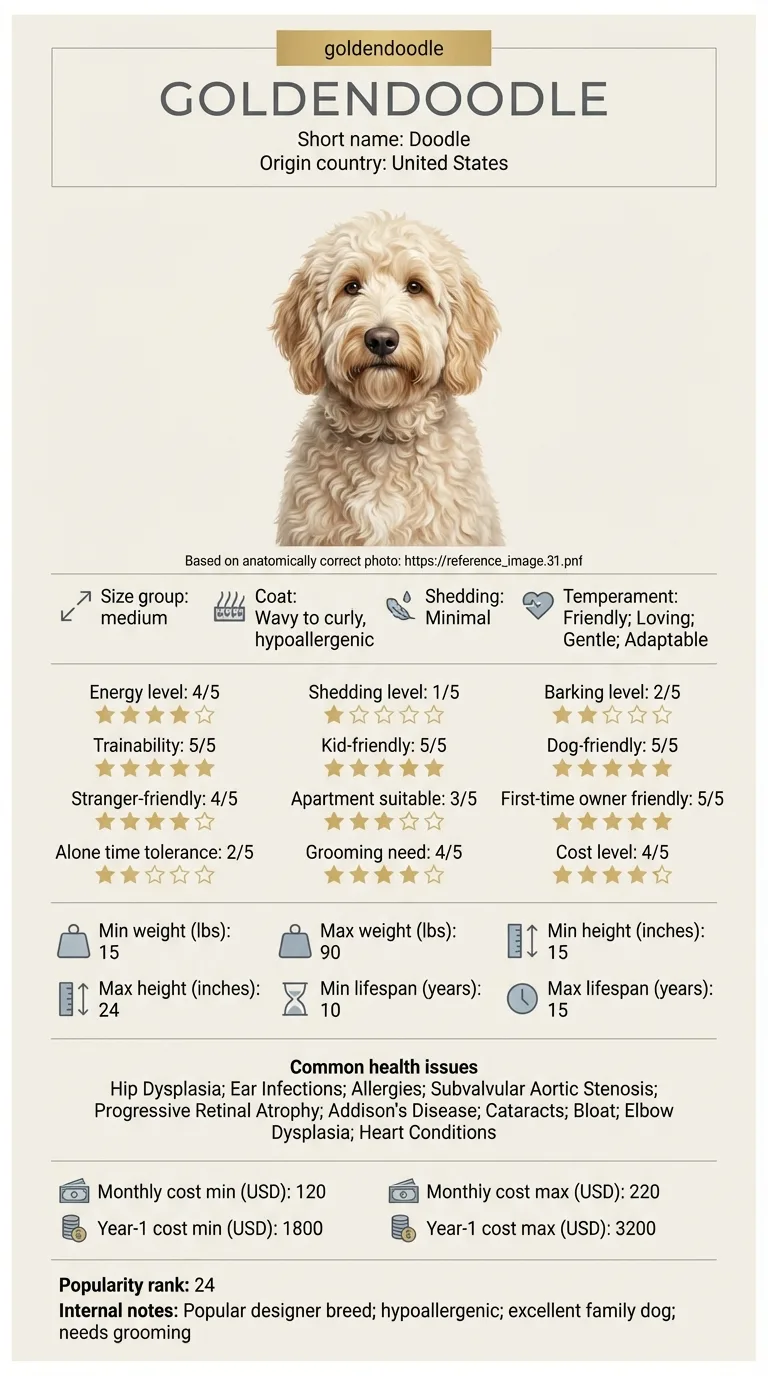
Cataracts are listed among this breed's documented common health issues, making them a realistic possibility across a dog's lifetime, particularly as it ages, though not every case progresses to significant vision loss.
Cataracts are directly documented among this breed's common health issues, which can stem from hereditary factors inherited through either parent line or from typical age-related lens changes as the dog gets older, alongside the breed's separately documented risk of progressive retinal atrophy affecting overall eye health.
Diabetes, chronic eye inflammation, and prior eye injury can all accelerate cataract formation regardless of breed, making overall health management relevant to eye health as well.
Talk to your vet about any new cloudiness noticed in your dog's eyes, changes in how they navigate their environment, or squinting and eye discomfort. Seek emergency care immediately for a red, painful, swollen, or suddenly cloudy eye, which can indicate a serious complication.
See all Goldendoodle health problems, which breeds are prone to cataracts, or the full Goldendoodle breed guide for temperament, exercise needs and ownership costs.
Cataract progression varies enormously, from years of stability to noticeable change within months, particularly for hereditary or diabetes-related cataracts, which is why individual monitoring matters more than a general timeline.
Success looks like an accurate, individualized understanding of your dog's specific cataract — whether that leads to successful surgery restoring functional vision, or confident, well-adapted living with monitored, stable reduced vision.
A veterinary ophthalmologist evaluates several specific factors before recommending cataract surgery, not just the presence of a cataract.
When her senior Goldendoodle Daisy was diagnosed with early cataracts in both eyes, Renee chose to monitor rather than pursue immediate surgery, since Daisy was adapting well and the cataracts were small and stable at the time. Rechecks every few months over the following year showed steady progression, and Daisy began bumping into furniture she'd navigated easily before. At that point, Renee's vet referred her to a veterinary ophthalmologist, who confirmed Daisy was now a strong surgical candidate with healthy retinas and no other complicating conditions. Daisy had cataract surgery on both eyes and, after a few weeks of recovery, was navigating the house confidently again with restored functional vision.
Key takeaway: Cataract surgery isn't an automatic next step after diagnosis — regular monitoring lets owners and vets make the decision at the right time for that specific dog, rather than on a fixed schedule.
Cataract surgery performed by a veterinary ophthalmologist commonly costs several thousand dollars total, covering pre-surgical evaluation, the procedure itself, and post-operative medication and follow-up visits.
Not necessarily. Small, stable, or slow-progressing cataracts can leave a dog with reduced but functional vision for years without ever advancing to total blindness, especially age-related ones in senior dogs.
Hereditary cataracts typically appear earlier in life and can progress at a different rate than age-related ones, which usually develop gradually in senior dogs as a normal part of aging lens tissue.
It depends on overall health, anesthesia fitness, and how much the cataract is actually affecting quality of life. Many senior dogs do well with surgery, but it's a genuinely individual decision made with your vet or ophthalmologist.
Yes, many dogs adapt remarkably well to gradual vision loss, especially in a familiar home environment, though owners should still watch for pain or sudden changes that could indicate a complication.
Most dogs regain significant functional vision after successful surgery, though outcomes depend on overall eye health, including retinal function, which is assessed before the decision is made.
This depends on how quickly it's progressing, but many vets recommend rechecks every few months for an active cataract to monitor maturity and watch for early signs of complications like uveitis.
Yes, cataracts are listed among this breed's documented common health issues.
Commonly several thousand dollars total, including pre-surgical evaluation, the procedure, and follow-up care.
No, small or stable cataracts can be monitored rather than operated on, depending on how much they affect vision and quality of life.
Yes, many dogs adjust well to gradual vision loss in a familiar home, using scent and memory to navigate confidently.
Keeping furniture layout consistent, rather than rearranging it, actually helps a dog with reduced vision navigate confidently using memory.
A one-page prep sheet for this condition: the signs, the questions to ask, what to get priced. Unlocks here.
You get: Vet visit prep sheet
No spam. One-click unsubscribe. See our privacy policy.
Preview page 1 before you decide.