DogBreedCompass
← Back to breed profile

Understanding English Cocker Spaniel Cataracts

Cataracts can cloud your English Cocker Spaniel's vision, leading to serious complications if left untreated. (English Cocker Spaniel cataracts)

Typically, owners of English Cocker Spaniels, especially those over six years old, face this issue. Busy families and first-time dog owners might find it challenging to recognize the signs early on.

Important reminder

This guide is not medical advice. If your dog shows pain, sudden behavior change, or worsening symptoms, consult a licensed veterinarian.

Some links may be affiliate links. We may earn a commission at no extra cost to you. We only suggest products we believe are helpful for dog owners.

What this problem looks like

Cataracts in English Cocker Spaniels can be a frustrating issue for both the dog and its owner. This condition causes the lens of the eye to become cloudy, leading to blurred vision and potential blindness if untreated. Daily signs may include bumping into objects or difficulty navigating stairs, which can be distressing for an active breed like the English Cocker Spaniel.

Common triggers

  • Age-related degeneration
  • Genetic predisposition
  • Diabetes or other health conditions

Cataracts are relatively common in English Cocker Spaniels, especially as they age. It's important for owners to be aware of their dog's vision and seek veterinary help if they notice any changes.

Why this happens

Breed factors

English Cocker Spaniels can be prone to cataracts due to genetic factors. Some may inherit a predisposition to eye conditions, making them more susceptible as they age. Additionally, certain breeds have a higher likelihood of developing cataracts, especially if they have a family history of the issue.

Environment factors

Environmental factors can also contribute to cataracts in English Cocker Spaniels. Prolonged exposure to sunlight can damage their eyes, leading to lens clouding. Poor nutrition and underlying health problems, such as diabetes, can further increase the risk of developing cataracts.

What you can try

At-home strategies

  • Ensure a balanced diet rich in vitamins A, C, and E to support eye health. Look for high-quality dog foods or supplements that promote good vision.
  • Limit your dog's sun exposure by keeping them indoors during peak sunlight hours or using doggy sunglasses when outdoors. This can help protect their eyes from UV damage.
  • Regular eye check-ups can help catch any early signs of cataracts. Monitor your dog's eyes for signs of cloudiness or changes in vision.

When to consider a trainer

If your English Cocker Spaniel shows signs of anxiety or distress due to vision changes, consider consulting a professional dog trainer. They can help with behavioral issues and provide strategies to ease your dog's stress.

When to talk to your vet

If you notice any changes in your dog's eyesight, such as difficulty seeing or cloudy eyes, schedule a visit to the vet. They can diagnose cataracts and discuss treatment options, including surgery if necessary.

Realistic expectations

You can expect to see improvements within 4 to 6 weeks of consistent care and management.

Success means your English Cocker Spaniel will have clearer vision, increased comfort, and a more active lifestyle.

Mistakes that make this worse

Avoiding common pitfalls can significantly improve your English Cocker Spaniel's cataract issues. Here are a few mistakes to watch out for:

  • Ignoring early signs of vision problems: Delaying a vet visit when you notice signs of cataracts can lead to further complications. Instead, schedule a check-up as soon as you suspect an issue.
  • Skipping regular vet check-ups: Regular vet visits help monitor your dog's eye health. Establish a routine check-up schedule to catch any problems early.
  • Not adjusting the environment: A dog with cataracts may struggle to navigate their surroundings. Make sure your home is well-lit and free of obstacles to help them move safely.
  • Overlooking diet and nutrition: Poor nutrition can exacerbate health issues, including cataracts. Consult your vet about a balanced diet that supports eye health.
  • Neglecting to provide mental stimulation: A dog with vision problems might become anxious or bored. Engage them with scent games and training exercises that don't rely on sight.
  • Using harsh chemicals around the home: Cleaning products and pesticides can irritate your dog's eyes. Opt for pet-safe alternatives instead.
  • Failing to follow vet recommendations: If your vet prescribes medication or treatment, be diligent in following their advice. It's crucial for managing your dog's condition.

When to Call Your Vet for English Cocker Spaniel Cataracts

Red flags that mean you should call your vet immediately include sudden vision loss, severe eye redness, swelling, or discharge. If your dog shows signs of distress, such as pawing at their eyes or refusing to eat, these are also serious indicators. Additionally, if your English Cocker Spaniel is bumping into objects or seems disoriented, it's time to seek help.

On the other hand, if your dog has mild cloudiness in the eyes without other concerning symptoms, you can monitor the situation. Keep an eye out for slow changes in vision and maintain regular vet check-ups. If cataracts are progressing but not causing major issues, your vet may suggest a watch-and-wait approach, which can help you avoid unnecessary stress for both you and your dog.

Remember, every dog is different. If you're ever in doubt, it's better to err on the side of caution and consult your vet.

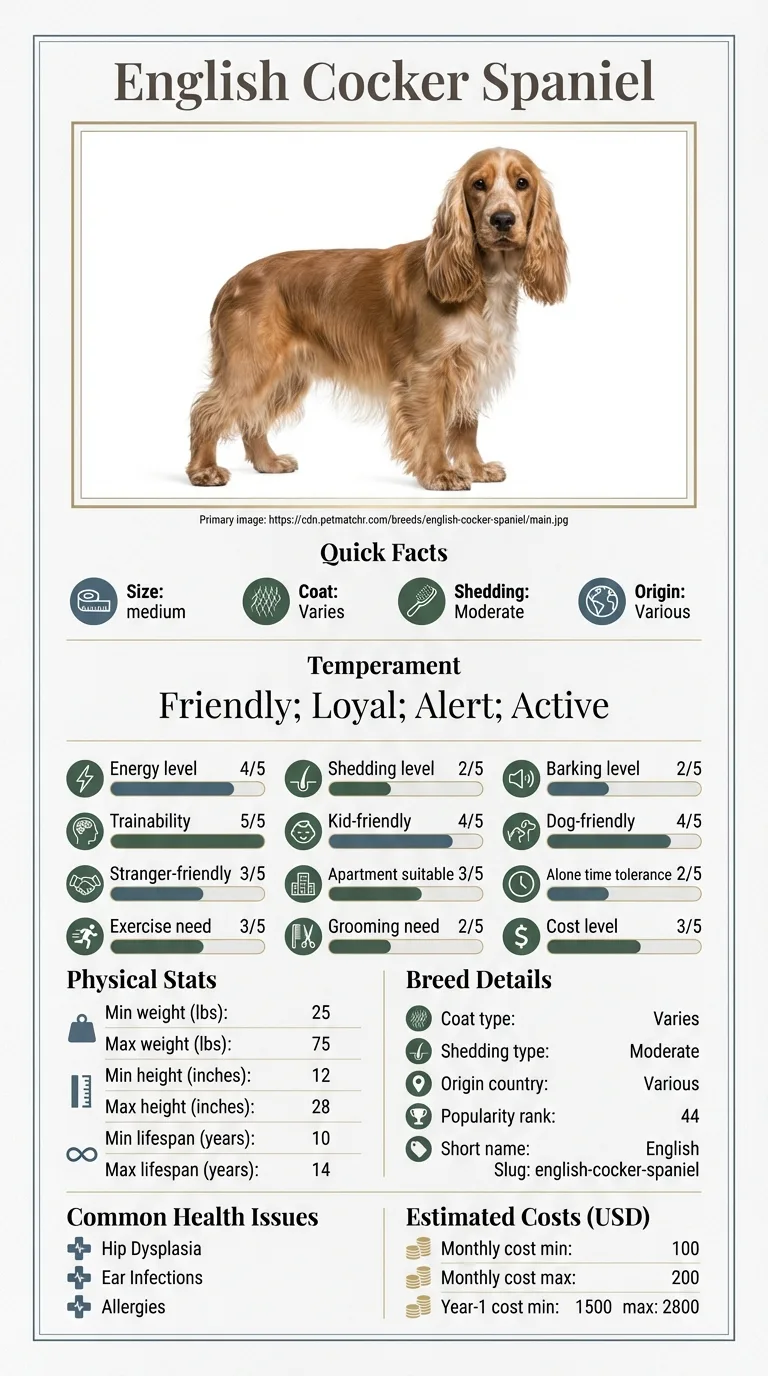
Emily and Max's Journey with Cataracts

Emily, a dedicated dog owner, noticed her English Cocker Spaniel, Max, was bumping into furniture and seemed disoriented. After a vet visit confirmed cataracts, Emily felt overwhelmed. She learned about managing the condition with eye drops and started daily vision exercises with Max. After a few weeks, she saw him navigating the house more confidently and playing with his favorite toys again. Emily's commitment to Max's care transformed their daily routine.

Key takeaway: With proper care and attention, you can help your English Cocker Spaniel manage cataracts and improve their quality of life.

Frequently asked questions

Why does my English Cocker Spaniel have cataracts?

Cataracts in English Cocker Spaniels can develop due to aging, genetics, or underlying health issues. Conditions like diabetes or inflammation can also contribute. Regular vet check-ups can help catch these issues early.

How can I stop English Cocker Spaniel cataracts from worsening?

Preventing cataracts involves managing your dog's overall health. Keeping their weight in check, ensuring they have a balanced diet, and regular vet visits can help. Early intervention is key to slowing cataracts' progress.

What are the treatment options for cataracts in English Cocker Spaniels?

Treatment options vary, but surgery is often the most effective solution for cataracts. Your vet may suggest surgical removal to restore vision. Discuss the risks and benefits with your vet to find the best choice for your dog.

Can cataracts lead to other problems for my English Cocker Spaniel?

Yes, cataracts can lead to other eye issues, including glaucoma or retinal detachment. This can further impact your dog's vision and overall quality of life. Regular monitoring by your vet is essential.

How can I support my English Cocker Spaniel with cataracts at home?

Make your home safe and comfortable for your dog. Keep furniture in the same place to prevent accidents and use rugs to help them navigate. Providing a consistent routine can also ease their anxiety about vision loss.

What causes cataracts in English Cocker Spaniels?

Cataracts in English Cocker Spaniels can be caused by several factors, including genetics, age, and underlying health issues. Some dogs may develop cataracts as they get older, while others may inherit a predisposition to this condition.

How can I tell if my English Cocker Spaniel has cataracts?

Signs of cataracts include cloudy or blurry vision, difficulty seeing in low light, and a noticeable change in eye appearance. If you notice any of these symptoms, consult your vet for a thorough examination.

Are cataracts common in older English Cocker Spaniels?

Yes, cataracts are more common in older English Cocker Spaniels. As they age, the risk of developing cataracts increases, so regular vet check-ups are essential for early detection and treatment.

Can cataracts lead to other eye problems in English Cocker Spaniels?

Yes, cataracts can lead to other complications, such as glaucoma or retinal detachment. It's important to monitor your dog's eye health and seek veterinary care if you notice any changes.

What is the treatment for cataracts in English Cocker Spaniels?

The most common treatment for cataracts is surgery to remove the cloudy lens. This procedure can greatly improve your dog's vision, but it's crucial to discuss the risks and benefits with your veterinarian before proceeding.

Quick answers

View more answers
Health

What are some quick tips for English Cocker Spaniel cataracts?

Maintain regular vet check-ups and monitor for any changes in your dog's vision. Manage their diet and weight to support overall health. Early detection can significantly help in managing cataracts.

Health

Are cataracts in English Cocker Spaniels common?

Yes, cataracts are relatively common in English Cocker Spaniels, especially as they age. Genetics can also play a role, making some dogs more susceptible than others.

Health

When should I consult a vet about my English Cocker Spaniel's cataracts?

If you notice changes in your dog's vision, such as bumping into things or hesitating to jump, it's time to consult your vet. Early intervention can make a significant difference.

Health

Can cataracts in English Cocker Spaniels be hereditary?

Yes, cataracts can be hereditary, particularly in certain breeds like the English Cocker Spaniel. If you have concerns, speak to your vet about genetic testing.

Related DogBreedCompass guides