Living
Is the round 'teddy bear' face a real anatomical feature?
No, it's a grooming style created through scissoring technique. The underlying muzzle and skull are a normal, proportionate shape.

Quick answer
Is the round 'teddy bear' face a real anatomical feature?
No, it's a grooming style created through scissoring technique. The underlying muzzle and skull are a normal, proportionate shape.
That round, teddy-bear face on a freshly groomed Goldendoodle is styling, not skull shape — underneath the trim is a normal-length muzzle, not a flattened one.
This mostly affects new owners comparing photos of different grooming styles and wondering if a rounder-faced trim means a different, flatter-faced dog, and groomers or owners trying to explain the difference between a cosmetic look and actual anatomy to someone unfamiliar with the breed.
This guide is not medical advice. If your dog shows pain, sudden behavior change, or worsening symptoms, consult a licensed veterinarian.
Some links may be affiliate links. We may earn a commission at no extra cost to you. We only suggest products we believe are helpful for dog owners.
We research and check what we publish, but we do not warrant that any figure, date, price, or statement is accurate, complete, or current, and we accept no liability for any loss, cost, injury, or other harm arising from the use of this site. Use it as one reference among several. You remain responsible for your own decisions and for your dog's care - confirm anything that matters with a licensed veterinarian or another qualified professional before you act on it. Full disclaimer.
Check this first
Grooming style itself is never an emergency — but it's worth knowing what would be, since occasionally something real gets missed under a heavily trimmed face. If your groomer or you notice actual physical narrowing of the nostrils, visible difficulty breathing through the nose, or persistent snoring and noisy breathing regardless of haircut, that's worth a vet exam, not because it points to brachycephaly, but because it could indicate an unrelated structural issue, allergy-driven nasal swelling, or another problem worth ruling out properly.
Facial matting hidden under a longer trim is a more realistic grooming-related concern: matted hair around the eyes or mouth can trap moisture and irritate skin, and a face style with heavy volume needs more maintenance to avoid this, not because of any airway issue but because of basic skin health.
Outside of those specific situations, panting, snoring softly during sleep, or breathing sounds that appear regardless of trim style are almost always about coat heat retention or completely normal dog sounds, not a sign that grooming has somehow created or hidden a genuine airway problem.
If any of these apply, call your vet or an emergency clinic now. The rest of this page is for the cases that are not an emergency.
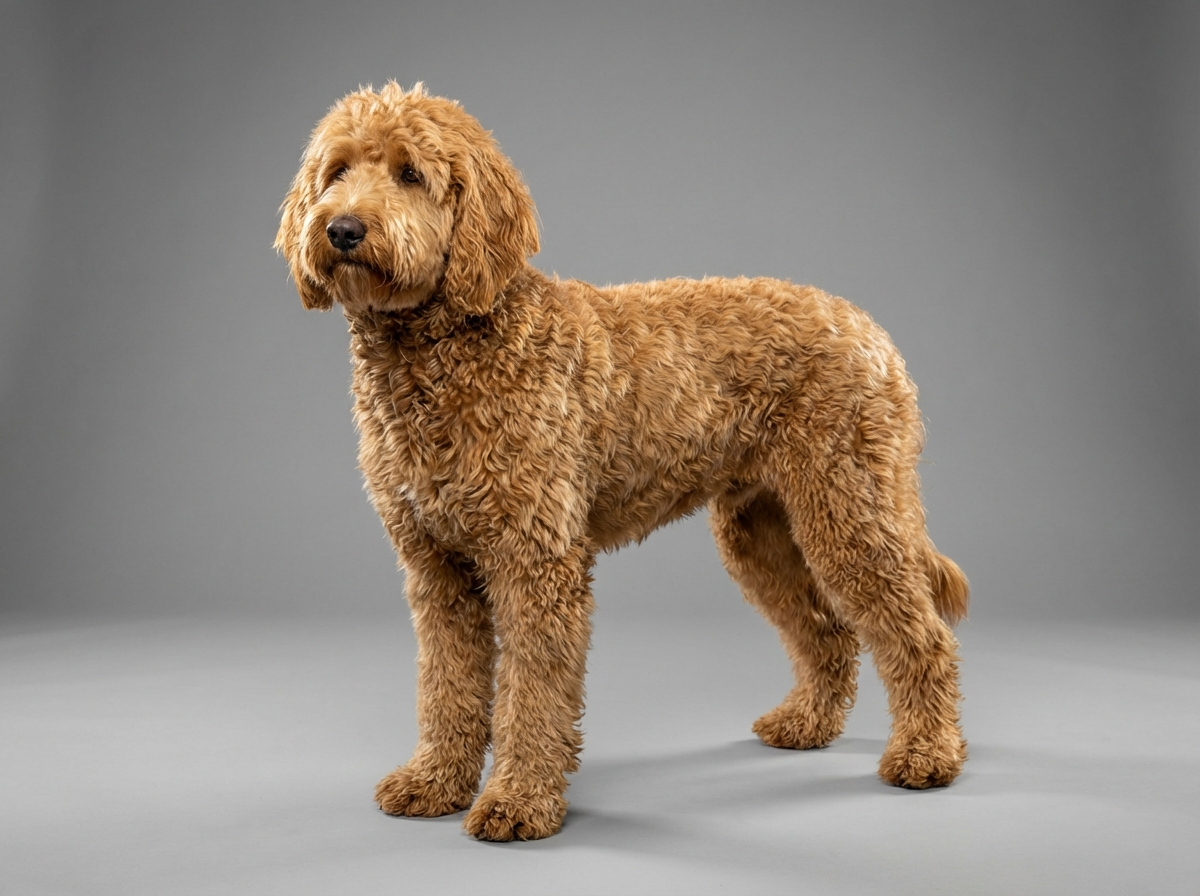
The popular rounded 'teddy bear' grooming trim gives Goldendoodles a plush, flattened-looking face that has nothing to do with actual skull or muzzle anatomy. Underneath any haircut, this breed has a normal, proportionate muzzle inherited from Golden Retriever and Poodle ancestry, neither of which is brachycephalic. The 'issue,' such as it is, is a styling choice being mistaken for a physical trait.
This is an extremely common point of visual confusion given how popular the rounded face trim is for this breed, even though there is no actual documented anatomical basis for it reflecting a flattened muzzle.
Golden Retriever and Poodle ancestry both contribute a normal, tapered muzzle length, and the Poodle side specifically contributes the dense, curly coat that groomers can shape dramatically, including into the popular rounded face style that creates the visual illusion in the first place.
Grooming trends and individual groomer or owner preference are the real drivers here — the same dog can look dramatically different in face shape purely based on styling choice, independent of any environmental health factor.
Talk to your vet if you notice actual nasal narrowing, persistent noisy breathing regardless of coat trim, or facial skin irritation from matting that isn't resolving with basic care. These are genuine health questions, unrelated to grooming style itself.
See all Goldendoodle health problems, which breeds are prone to brachycephalic features, or the full Goldendoodle breed guide for temperament, exercise needs and ownership costs.
There's no medical timeline here since this is a cosmetic and perception issue, not a health condition — a groomer can adjust the face style at literally the next appointment if you want a different look.
Success looks like understanding that your Goldendoodle's face shape under any haircut is a normal, proportionate muzzle, and choosing a grooming style based on preference and maintenance needs rather than any health concern.
A groomer creates the rounded, plush 'teddy bear' look through specific, deliberate techniques that have nothing to do with the bones underneath.
If you think your Doodle has brachycephalic features, the plan is three steps: write down what you have seen and when it started, book a veterinary appointment rather than waiting for the next flare, and take video of the behaviour or symptom before you go — the thing you are worried about rarely happens in the consulting room. Screening in the parents covers hip dysplasia, ear infections, allergies.
What the vet visit should produce is a diagnosis and a written plan, not just reassurance: what is being ruled out, what the monitoring interval is, and which signs mean you come back sooner. Ask what the treatment costs across a year rather than per visit, because that is the number that decides whether you are managing this condition or reacting to it.
Between appointments, keep a short log — dates, what you saw, what changed. It is the single most useful thing an owner brings to a follow-up, and for brachycephalic features it is often what separates a clear pattern from a guess.
When Renata first saw her breeder's photos of an adult Goldendoodle with the classic rounded teddy-bear trim, she worried she'd end up with a flat-faced dog prone to breathing problems. She asked the breeder directly and was shown photos of the same dog with a closer, natural trim from a prior season, revealing a clearly normal, tapered muzzle. Once her own puppy, Milo, grew up, Renata chose a closer facial trim specifically so she could see his actual face shape, and later experimented with the rounder style for a special photo, confirming for herself that it was purely cosmetic.
Key takeaway: A grooming style photo isn't a reliable way to judge a Goldendoodle's actual anatomy — feeling the muzzle directly, or seeing a closer trim, shows the real, normal structure underneath.
No. The rounded 'teddy bear' look is entirely a grooming technique — scissoring the coat into a dome shape — and doesn't reflect any change to the actual muzzle length or skull structure underneath.
It's a popular aesthetic choice that many owners specifically request, achieved through scissoring technique around the muzzle, cheeks, and ears rather than any structural feature of the dog.
Yes, most groomers can do a closer trim that follows the natural taper of the muzzle if you prefer a look that shows the dog's actual face shape more clearly.
No, breathing is determined by the underlying nasal and airway anatomy, not the coat style around it. A round trim is purely cosmetic and has no effect on airflow.
Feel along the bridge of the nose and jaw under the fur — you'll find a proportionate, tapered muzzle similar in structure to a Golden Retriever's or Poodle's, not a flattened one.
It requires regular maintenance to prevent matting and moisture buildup, which can irritate skin, but this is a grooming and hygiene issue rather than an airway or brachycephalic concern.
A shorter facial trim can help with visibility, hygiene, and modest heat relief in summer, though it won't meaningfully change the dog's overall heat tolerance, which is driven more by the body coat.
No, it's a grooming style created through scissoring technique. The underlying muzzle and skull are a normal, proportionate shape.
No, coat styling around the face has no effect on the actual airway or nasal structure underneath it.
Most owners schedule a grooming appointment every 6 to 8 weeks, with regular at-home brushing around the face in between to prevent matting.
Professional grooming for this coat type commonly runs $75 to $150 or more per session depending on size and coat condition.
Yes, gradual desensitization to face handling and grooming tools, started early and reinforced positively, makes facial trims far less stressful for the dog.
A one-page prep sheet for this condition: the signs, the questions to ask, what to get priced. Unlocks here.
You get: Vet visit prep sheet
No spam. One-click unsubscribe. See our privacy policy.
Preview page 1 before you decide.