Health
Do all kidney stones need surgery?
No — struvite stones can sometimes dissolve with diet, while calcium oxalate stones generally require surgical or minimally invasive removal.

Quick answer
Do all kidney stones need surgery?
No — struvite stones can sometimes dissolve with diet, while calcium oxalate stones generally require surgical or minimally invasive removal.
Treating a kidney stone without knowing its exact mineral type is a bit like treating an infection without knowing which bacteria caused it.
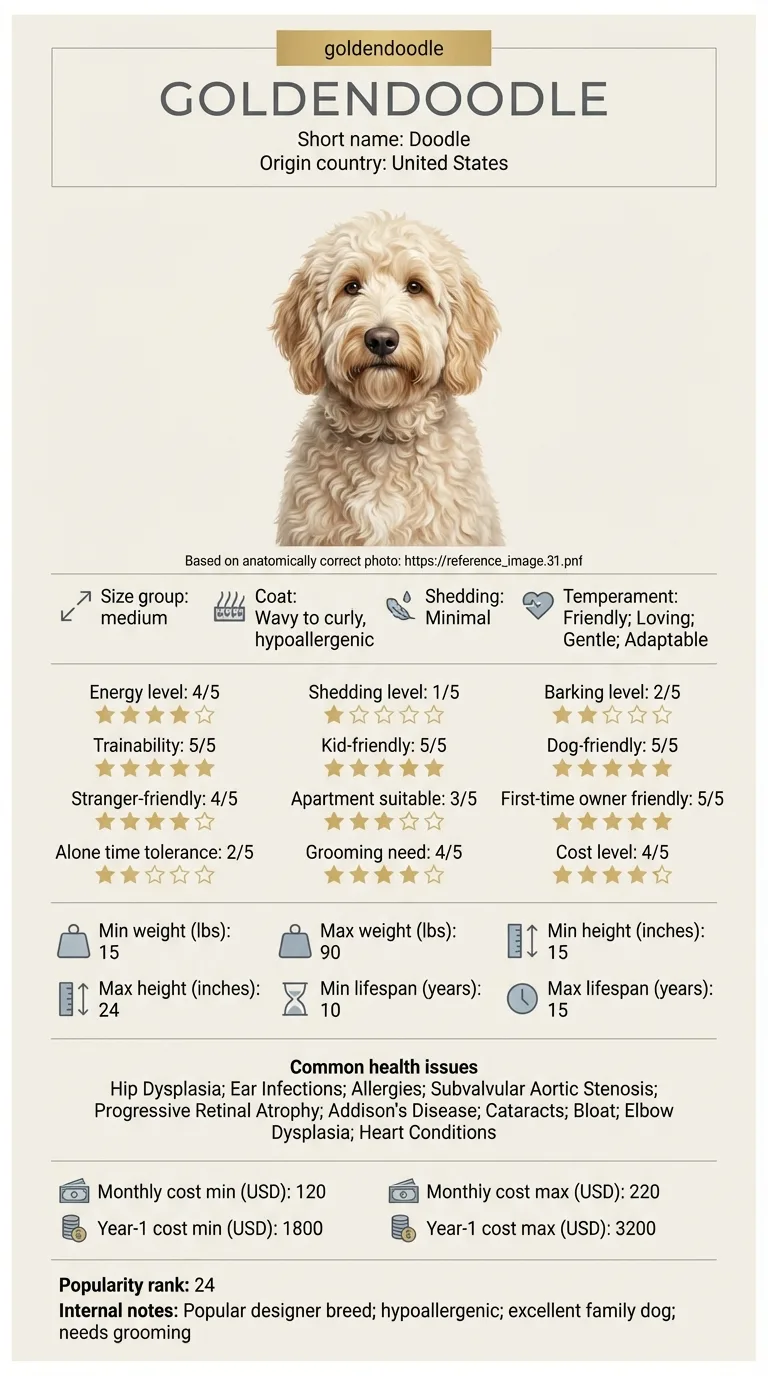
This affects owners of Goldendoodles who've had a stone diagnosed via imaging or passed one on their own, and who are now navigating conflicting diet advice without understanding that stone composition changes the answer entirely.
This guide is not medical advice. If your dog shows pain, sudden behavior change, or worsening symptoms, consult a licensed veterinarian.
Some links may be affiliate links. We may earn a commission at no extra cost to you. We only suggest products we believe are helpful for dog owners.
We research and check what we publish, but we do not warrant that any figure, date, price, or statement is accurate, complete, or current, and we accept no liability for any loss, cost, injury, or other harm arising from the use of this site. Use it as one reference among several. You remain responsible for your own decisions and for your dog's care - confirm anything that matters with a licensed veterinarian or another qualified professional before you act on it. Full disclaimer.
Kidney and bladder stones in Goldendoodles form through different chemical processes depending on mineral type, most commonly struvite, often linked to urinary tract infection and sometimes dissolvable with diet, or calcium oxalate, which generally requires surgical removal. Identifying the exact stone type is the critical first step that determines the entire treatment approach.
Kidney Stones are documented as a urolithiasis concern common in this breed, with struvite and calcium oxalate representing the two most frequently diagnosed stone types across dogs generally.
Urolithiasis risk in Goldendoodles reflects general predispositions documented across medium and large breeds rather than one single dominant genetic driver unique to this cross, though individual dogs can carry a higher tendency toward specific stone types based on inherited urine chemistry patterns from either parent line.
Chronic or recurrent urinary tract infections are a major driver of struvite stone formation specifically. Insufficient water intake, certain diets, and individual urine pH and mineral concentration all influence risk for both major stone types, making hydration and diet meaningful controllable factors.
See a vet promptly for straining to urinate, blood in urine, or frequent small urinations. Treat complete inability to urinate, especially in male dogs, as a true emergency requiring immediate care due to the risk of obstruction and kidney damage.
See all Goldendoodle health problems, which breeds are prone to kidney stones, or the full Goldendoodle breed guide for temperament, exercise needs and ownership costs.
Diagnosis via imaging and urine analysis typically happens within a single vet visit. Diet-based dissolution of struvite stones, when appropriate, can take several weeks to a few months of consistent feeding, while surgical removal of stones resolves the immediate problem within days of the procedure.
Success looks like an accurately identified stone type, a treatment plan matched specifically to that type, and follow-up monitoring confirming either successful dissolution or, after removal, no signs of recurrence.
Struvite stones form most often in the presence of a urinary tract infection, since certain bacteria create an alkaline urine environment that encourages struvite crystal formation. These stones can sometimes be dissolved with a prescription diet designed to acidify urine and control mineral content, alongside treating the underlying infection, without needing surgery at all.
Calcium oxalate stones form through an entirely different process, unrelated to infection, and tend to form in more acidic urine. Critically, calcium oxalate stones cannot be dissolved with diet the way struvite stones sometimes can — once formed, they generally need to be removed surgically or via minimally invasive procedures, and management afterward focuses on prevention of future stones rather than dissolving existing ones.
This is exactly why a vet needs to analyze an actual passed stone, or use imaging combined with urine chemistry, to determine stone type before recommending a treatment or diet plan — a diet that helps dissolve struvite stones could, in the wrong case, do nothing for or even worsen conditions favoring calcium oxalate formation, and vice versa.
Regardless of stone type, certain warning signs and general prevention principles apply broadly.

Corinne's Goldendoodle, Scout, strained noticeably while urinating and had a small amount of blood in his urine. An X-ray confirmed a bladder stone, and Corinne's first instinct, based on a general online search, was to start a generic 'urinary support' diet immediately. Her vet recommended waiting for the stone to be analyzed after a minimally invasive removal procedure rather than guessing. The analysis confirmed calcium oxalate, a type that wouldn't have responded to the acidifying diet Corinne had been about to try, which is actually formulated more for struvite prevention. With the correct stone type confirmed, Corinne's vet recommended a diet specifically suited to reducing calcium oxalate recurrence risk, along with increased water intake and regular urine monitoring.
Key takeaway: Guessing at a urinary diet based on generic advice can mean feeding the wrong strategy entirely, which is exactly why identifying the actual stone type comes before choosing any treatment plan.
Struvite stones sometimes dissolve with a specific prescription diet and treatment of any underlying infection. Calcium oxalate stones generally do not dissolve with diet and typically require surgical or minimally invasive removal.
Analysis of an actual passed or surgically removed stone gives a definitive answer. When that's not available, imaging combined with urine pH and crystal analysis can suggest the likely type, though it's less certain than direct stone analysis.
Not always, but a complete inability to urinate, particularly in male dogs where a stone can obstruct the narrower urethra, is a true emergency requiring immediate veterinary care due to the risk of life-threatening kidney damage or bladder rupture.
Diet can meaningfully reduce recurrence risk for both major stone types once the correct type is identified, but it doesn't guarantee zero recurrence, which is why ongoing monitoring after a first stone diagnosis matters.
Yes — factors like chronic urinary tract infections, certain metabolic conditions, and individual urine chemistry all influence risk, and a dog that's formed one stone type has an elevated risk of forming another of the same type again.
Yes, generally — more dilute urine reduces the concentration of stone-forming minerals, which is why encouraging water intake is a standard general recommendation regardless of stone type.
No — struvite stones can sometimes dissolve with diet, while calcium oxalate stones generally require surgical or minimally invasive removal.
Identifying the exact stone type, ideally through direct analysis, since treatment and diet strategy differ significantly by type.
Surgical or minimally invasive stone removal commonly runs into the thousands, varying by method and severity.
Yes, especially in male dogs — a completely blocked urinary tract requires immediate emergency veterinary care.
Often yes, once the correct stone type is confirmed, though ongoing urine monitoring is still recommended to catch any recurrence early.
A one-page prep sheet for this condition: the signs, the questions to ask, what to get priced. Unlocks here.
You get: Vet visit prep sheet
No spam. One-click unsubscribe. See our privacy policy.
Preview page 1 before you decide.