DogBreedCompass
← Back to breed profile

Goldendoodle Allergies: The Coat Doesn't Protect the Dog

Quick answer

Are Goldendoodles actually hypoallergenic for people with allergies?

Many people with mild dog allergies tolerate Goldendoodles better than shedding breeds, but it's not guaranteed, and it says nothing about whether the dog itself develops allergies.

Owners are often blindsided when their 'hypoallergenic' Goldendoodle turns up with red, itchy skin or a head-shaking ear infection — the coat was never what protected the dog itself from allergies.

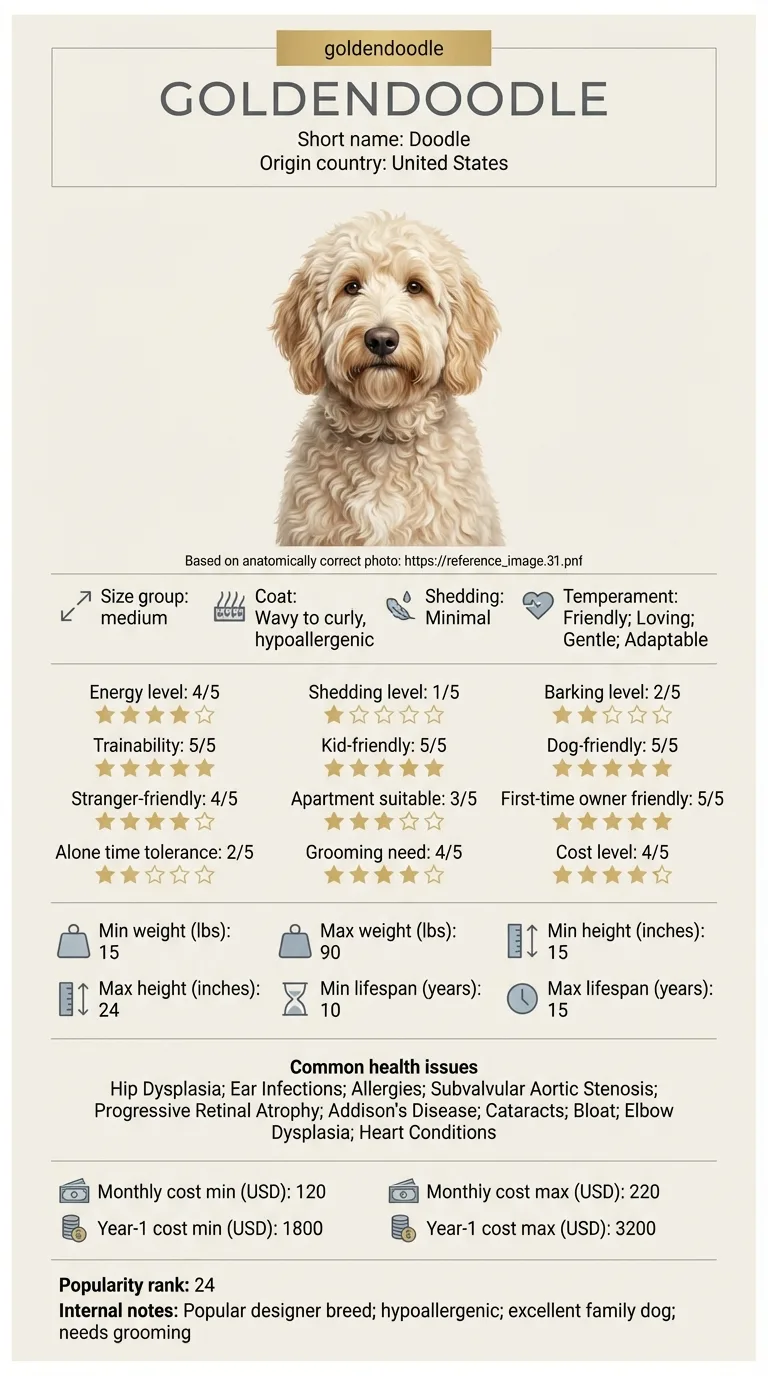
Goldendoodle Allergies: The Coat Doesn't Protect the Dog infographic

This catches new owners who chose the breed specifically to avoid allergy problems in their household and assume the dog is immune to the same category of issue. It's also hard on owners of Goldendoodles with heavier, curlier coats, since more coat means more surface area for moisture and allergens to collect.

Important reminder

This guide is not medical advice. If your dog shows pain, sudden behavior change, or worsening symptoms, consult a licensed veterinarian.

Some links may be affiliate links. We may earn a commission at no extra cost to you. We only suggest products we believe are helpful for dog owners.

Check this first

When a flare becomes an emergency

Chronic allergies in a Goldendoodle are usually a management problem, not an emergency one — but two situations change that. The first is a true acute allergic reaction: sudden facial swelling, hives spreading across the body, or labored breathing within an hour of exposure to a new food or a sting. That needs an emergency vet visit immediately.

The second is a severe secondary ear infection. A Goldendoodle's ear canal holds warmth and moisture well, which is what yeast and bacteria need once allergy-driven inflammation breaks down the ear's normal defenses. Head-shaking that won't stop, a strong odor, dark discharge, visible pain when the ear is touched, or a head tilt mean the infection has progressed past simple cleaning-and-drops and needs same-day attention.

Outside those two patterns, ordinary seasonal itching, occasional paw-licking, or mild redness between the toes is what most Goldendoodles will have at some point and can typically wait for a routine, non-urgent vet visit.

If any of these apply, call your vet or an emergency clinic now. The rest of this page is for the cases that are not an emergency.

What this problem looks like

Goldendoodle allergies are a two-part problem owners often mix up: a low-shedding coat that reduces what humans are exposed to, and a separate immune response inside the dog itself that reacts to pollen, dust, or food. The visible result is usually chronic itching, paw licking, and recurring ear infections rather than a single dramatic flare.

Common triggers

  • Seasonal pollen from grass, trees, and weeds
  • Indoor allergens like dust mites and mold
  • Specific food proteins or grain sources
  • Flea bites, even from a single flea
  • Trapped moisture in the coat and ear canal after baths or swimming

Allergies are a documented, commonly reported issue in this breed, frequently showing up alongside recurring ear infections rather than as a standalone symptom. Not every Goldendoodle develops them, but owners should expect it as a realistic possibility.

Why this happens

Breed factors

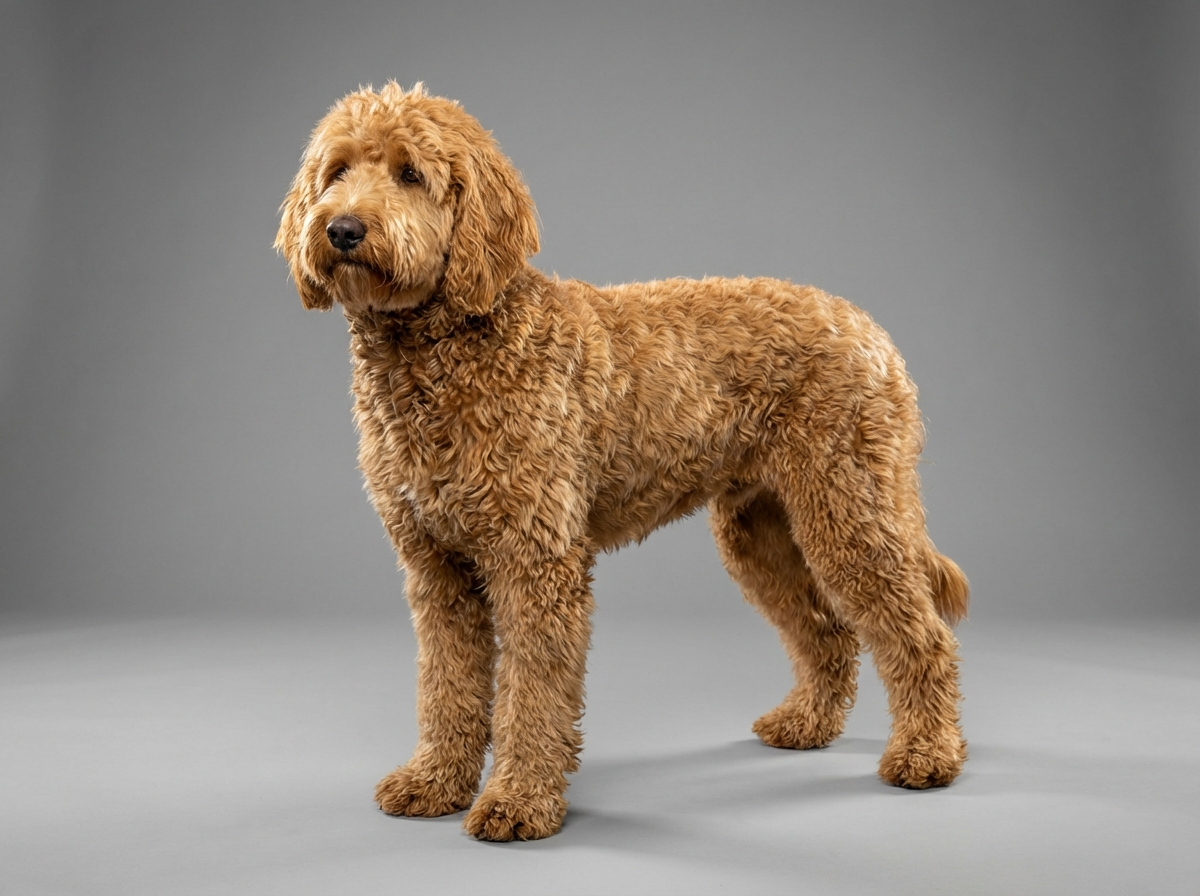
Golden Retriever ancestry brings a well-documented tendency toward environmental and food-related allergies along with the skin and ear infections that follow. The Poodle side contributes the dense, curly coat and furnished ears that hold moisture and warmth against the skin — cosmetically appealing but a more favorable environment for yeast and bacteria once allergic inflammation is present.

Environment factors

Pollen counts, indoor dust and mold levels, and humidity all influence how visible symptoms are day to day. Dogs that swim or get bathed frequently without thorough drying, especially around the ears, are more likely to develop secondary infections on top of the underlying allergy.

What you can do at home (once it is not an emergency)

When to talk to your vet

Talk to your vet if itching, redness, or ear problems are recurring rather than a one-off, if you notice hair loss or open sores from scratching, or if an ear infection returns shortly after treatment ends. These patterns usually mean the allergy needs a real diagnostic plan, not another round of symptom treatment.

At home, alongside your vet's plan

  • Keep a simple log of flare-ups alongside season, recent food changes, and activities, so patterns become visible over a few months.
  • Dry the coat and ears thoroughly after baths and swimming, since trapped moisture is one of the most controllable pieces of this problem.
  • Brush regularly to prevent matting, which otherwise holds allergens and moisture directly against irritated skin.
  • Wipe paws and belly after outdoor time during high-pollen seasons to reduce the allergen load the dog carries indoors.
  • Stick to one consistent, vet-approved diet during any elimination trial instead of switching foods reactively.

Mistakes that keep the cycle going

Because Goldendoodle allergies show up as recurring, low-grade problems rather than one dramatic event, owners often manage the symptoms instead of the cause.

  • Assuming a hypoallergenic coat means a low-allergy dog: the coat trait affects what falls off the dog into your home; the dog's own immune response to pollen, mites, or food is a separate system entirely.
  • Bathing too often to 'wash away' the itch: frequent bathing with the wrong shampoo strips natural oils and can make curly, moisture-holding coats itchier, not calmer.
  • Treating ear infections without addressing the allergy underneath: cleaning and drops handle the symptom for a week or two, then the infection comes back until the allergy itself is managed.
  • Rotating foods repeatedly without a structured trial: switching proteins to 'see what helps' usually just adds new potential triggers without identifying the real one.
  • Letting the coat mat over irritated skin: matting traps moisture directly against inflamed skin, turning a manageable flare into a secondary infection.
  • Skipping the vet visit because 'it's just allergies': recurring ear or skin allergies are exactly the cases where testing can identify a specific trigger instead of guessing indefinitely.

See all Goldendoodle health problems, which breeds are prone to allergies, or the full Goldendoodle breed guide for temperament, exercise needs and ownership costs.

What to expect, and how you know it is working

Identifying a specific trigger through an elimination diet typically takes 8 to 12 weeks done correctly, while environmental allergy management is usually an ongoing, seasonal adjustment rather than a fixed timeline.

Success looks like fewer and shorter flare-ups, ear infections that stop recurring on a monthly cycle, and a coat and skin that stay comfortable most of the year — not a dog that never has another itchy day.

Bailey's Recurring Ear Infections, Asheville

Dave Kessler had taken his Goldendoodle Bailey in for ear infections four times in eight months at their vet in Asheville. Each round of drops cleared things up for a few weeks before the head-shaking started again. Frustrated, Dave finally asked why the treatment kept 'failing.' It wasn't failing — it was treating the infection while leaving the allergy behind it untouched. His vet ran through an allergy workup and put Bailey on a structured elimination diet. Within the trial, the ear infections stopped recurring, and Dave realized he'd spent months treating a symptom instead of the actual cause.

Key takeaway: Recurring ear infections in a Goldendoodle are often a sign of an untreated allergy underneath, not a sign that the ear treatment itself isn't working.

Frequently asked questions

If my Goldendoodle is hypoallergenic, why does it still have allergies?

'Hypoallergenic' describes what the coat sheds into your environment, not the dog's own immune system. A Goldendoodle can still be allergic to pollen, dust mites, or food proteins the same way any other dog can.

Why do Goldendoodles get so many ear infections?

Ear infections and allergies are both documented issues in this breed and are often connected. Allergic inflammation changes conditions inside the ear canal, and this breed's ear furnishings hold in warmth and moisture, giving yeast and bacteria an easy foothold.

What are the most common allergy triggers for Goldendoodles?

Environmental allergens like grass and tree pollen, dust mites, and mold are common, alongside food-based triggers like specific proteins or grains. Fleas can also cause a distinct allergic skin reaction.

Can I tell if it's a food allergy or an environmental allergy at home?

Not reliably. Both can look nearly identical — itchy skin, ear infections, paw licking. An elimination diet trial for food, done under veterinary guidance, is the accurate way to separate them.

Will my Goldendoodle's allergies get better as it gets older?

Usually not on their own. Allergies tend to be lifelong once established, though severity can shift with age and how consistently the trigger is managed.

Is grooming actually part of allergy management for this breed?

Yes. This breed's coat traps allergens and moisture against the skin more than a short, flat coat would. Regular brushing and appropriate bathing reduce that buildup.

Do allergy medications work the same way in Goldendoodles as other breeds?

The treatment categories are similar, but dosing depends on the individual dog's weight and health history. Given how much weight varies across mini, medium, and standard Goldendoodles, this should always be set by your vet.

Quick answers

View more answers
Living

Are Goldendoodles actually hypoallergenic for people with allergies?

Many people with mild dog allergies tolerate Goldendoodles better than shedding breeds, but it's not guaranteed, and it says nothing about whether the dog itself develops allergies.

Costs

How much does managing Goldendoodle allergies typically cost?

Ongoing management, including vet visits, prescription shampoo, and occasional ear treatment, commonly adds a recurring cost on top of routine care.

Health

Can allergies in Goldendoodles be cured?

No, most canine allergies are managed rather than cured. The realistic goal is reducing flare frequency and severity, not eliminating the sensitivity.

Training

Should I change my Goldendoodle's diet on my own if I suspect food allergies?

Not without guidance. A proper elimination trial uses a specific limited-ingredient diet for a set period; switching foods repeatedly on your own confuses the results.

Behavior

Will my Goldendoodle need lifelong medication for allergies?

Some dogs need seasonal or as-needed treatment only; others need consistent year-round management, tailored to how your dog responds.

Related DogBreedCompass guides

  • Goldendoodle ear infectionsEar infections are the most common downstream complication of Goldendoodle allergies.
  • common Goldendoodle health issuesOwners researching allergies often want the full breed health picture first.
  • Goldendoodle grooming needsGrooming routines directly affect how well allergy flares are managed.
  • cost of owning a GoldendoodleOngoing allergy care is a real recurring cost owners should budget for.
  • Goldendoodle vs LabradoodleOwners comparing coat types often want to understand shedding versus allergy claims.

Bring the right questions to the vet

A one-page prep sheet for this condition: the signs, the questions to ask, what to get priced. Unlocks here.

You get: Vet visit prep sheet

No spam. One-click unsubscribe. See our privacy policy.

Preview page 1 before you decide.

Related guides