Health
What grade of heart murmur needs an echocardiogram?
Grade 3 or louder at any age typically warrants one; grades 1-2 in symptom-free puppies are often monitored first.

Quick answer
What grade of heart murmur needs an echocardiogram?
Grade 3 or louder at any age typically warrants one; grades 1-2 in symptom-free puppies are often monitored first.
The word 'murmur' sounds alarming on its own, but the grade your vet actually assigned it is what decides whether you wait, recheck, or get a referral this week.
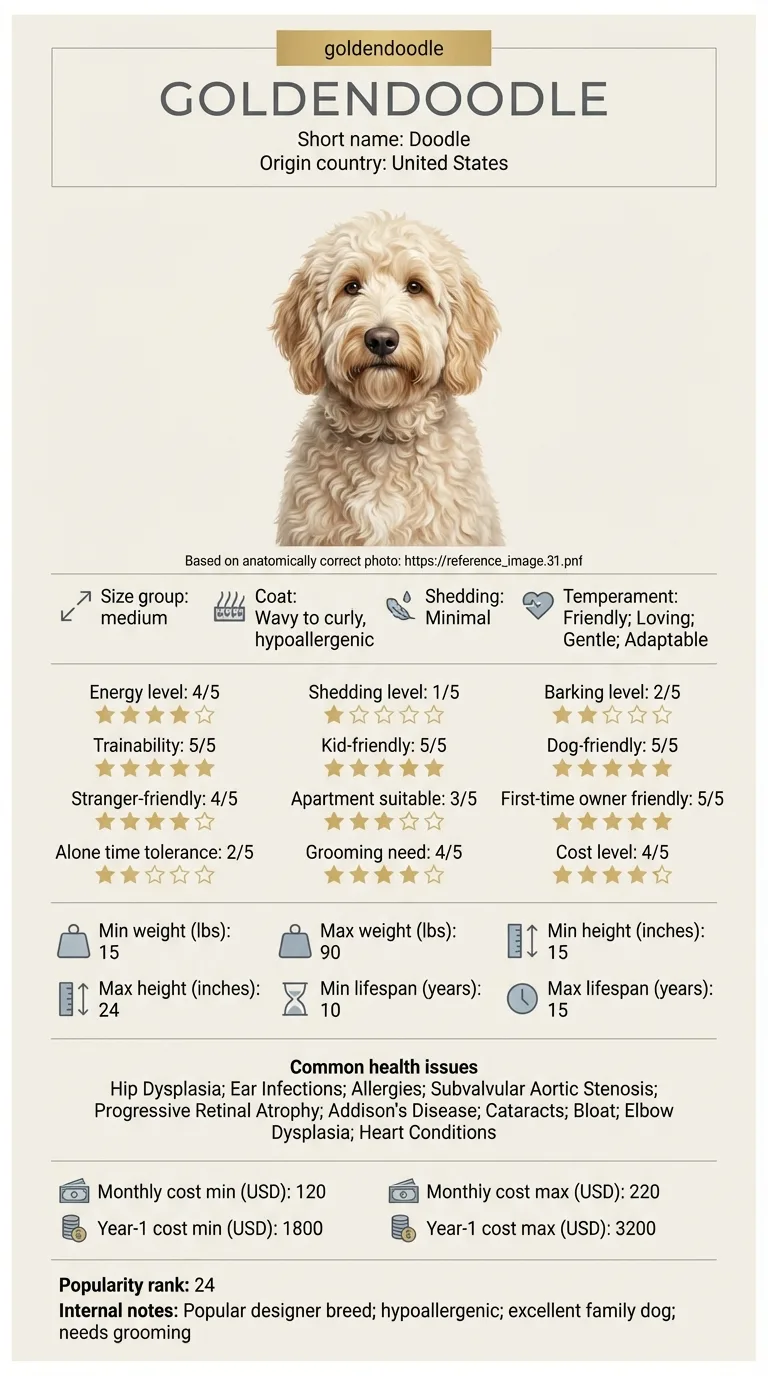
This is most confusing for owners of young puppies told a murmur 'might just go away' and owners of adult or senior dogs hearing the word for the first time, who aren't sure whether it's an emergency or a footnote.
This guide is not medical advice. If your dog shows pain, sudden behavior change, or worsening symptoms, consult a licensed veterinarian.
Some links may be affiliate links. We may earn a commission at no extra cost to you. We only suggest products we believe are helpful for dog owners.
We research and check what we publish, but we do not warrant that any figure, date, price, or statement is accurate, complete, or current, and we accept no liability for any loss, cost, injury, or other harm arising from the use of this site. Use it as one reference among several. You remain responsible for your own decisions and for your dog's care - confirm anything that matters with a licensed veterinarian or another qualified professional before you act on it. Full disclaimer.
A heart murmur in a Goldendoodle is the sound of turbulent blood flow, graded one through six, and can mean anything from a harmless growth-related quirk in a puppy to a sign of subvalvular aortic stenosis or degenerative valve disease. The grade, the dog's age, and follow-up imaging together determine what it actually means.
Murmurs are one of the most frequent cardiac findings noted at routine Goldendoodle exams across all ages, and Heart Conditions is listed among the breed's documented health issues. Most turn out to be either innocent in puppies or mild valve-related findings in adults, though moderate to severe structural cases do occur.
Golden Retriever ancestry carries a documented risk of subvalvular aortic stenosis, which frequently first appears as a murmur in puppies under a year old. Separately, both parent breeds' medium-to-large size puts Goldendoodles into the general population pattern of developing valve-related murmurs later in life, distinct from patterns seen in very small or giant breeds.
A murmur itself isn't caused by environment, but factors like anemia, fever, or dehydration can produce a temporary murmur unrelated to structural heart disease, and stress during a vet visit can sometimes make an existing quiet murmur easier or harder to hear depending on heart rate.
Book a visit promptly if a murmur is newly noticed in an adult or senior dog, if it's grade 3 or louder at any age, or if it's paired with coughing, fatigue, or reduced appetite. Treat fainting or labored breathing at rest as an emergency.
See all Goldendoodle health problems, which breeds are prone to heart murmurs, or the full Goldendoodle breed guide for temperament, exercise needs and ownership costs.
A puppy murmur being tracked for possible resolution is typically rechecked at four to six months old. An adult or senior murmur referred for cardiology usually gets a full echocardiogram diagnosis within two to three weeks of referral.
Success is having an actual grade and, where warranted, imaging results on file — not just a vague memory that 'the vet mentioned something once' — so any future change can be measured against a real baseline.
Grade 1 is barely audible even in a quiet room and often requires a specialist's ear to catch at all. Grade 2 is soft but consistently heard. Grade 3 is moderate and easy for any vet to hear immediately. Grade 4 is loud and can be felt as a faint vibration through the chest wall. Grade 5 and 6 are loud enough to hear with the stethoscope barely touching the chest, with grade 6 audible even slightly off the chest wall. As a general pattern, grades 1-2 in a young, symptom-free puppy are often monitored; grade 3 and above, or any murmur paired with symptoms, typically prompts an echocardiogram regardless of age.
Puppies commonly have soft, transient 'flow murmurs' tied to rapid growth and a proportionally fast heart rate — these often fade by four to six months old with no lasting issue. The trouble is that this same soft grade is also how early subvalvular aortic stenosis, a real structural defect common in Golden Retriever lineage, first sounds. A vet can't always tell the two apart by ear alone in a young puppy, which is exactly why a murmur that hasn't resolved by six months, or one that's grade 3 or louder at any age, gets referred for imaging rather than assumed innocent.
In an adult or senior Goldendoodle, a genuinely new murmur is far less likely to be innocent. It more often reflects early degenerative valve disease, which is a normal part of aging in many medium and large breeds but still worth grading, tracking, and treating on its own timeline rather than ignoring because 'lots of old dogs get one.'

Hannah's Goldendoodle puppy, Otis, had a soft grade 2 murmur noted at his first puppy visit. Her vet explained it was most likely innocent and to recheck at six months, which Hannah did without much worry. At the six-month visit, the murmur was gone, exactly as predicted, and Otis has had a clean cardiac exam at every checkup since. A neighbor's Goldendoodle puppy from the same litter had a similar soft murmur that hadn't resolved by six months and had actually gotten slightly louder. That dog's echocardiogram found mild subvalvular aortic stenosis, now managed with regular cardiology rechecks.
Key takeaway: Two puppies from the same litter with nearly identical soft murmurs at eight weeks can have completely different outcomes, which is exactly why the six-month recheck matters more than the first listen.
Usually the plan is simply to recheck at the next scheduled puppy visit and again around six months old. If it's gone by then, it was likely innocent. If it's still there or has gotten louder, that's when imaging is warranted.
It's serious enough to investigate properly rather than monitor casually. Grade 3 murmurs are reliably heard by any vet and are common in real structural conditions like subvalvular aortic stenosis, so an echocardiogram is the appropriate next step at this grade.
Yes, in puppies with innocent flow murmurs tied to growth, this is common and usually resolves by six months old. A murmur that appears for the first time in an adult or senior dog is much less likely to resolve on its own.
An echocardiogram, performed by a vet or veterinary cardiologist, directly visualizes the heart's structure and blood flow and is the definitive tool — a stethoscope grade alone can suggest severity but can't confirm the underlying cause.
Generally louder correlates with more turbulent flow, but grade alone doesn't perfectly predict severity or prognosis — some serious conditions produce surprisingly soft murmurs. That mismatch is another reason imaging matters more than grade alone.
Yes — a referral to a veterinary cardiologist for a proper grading and echocardiogram is reasonable any time there's uncertainty, especially before ruling something out based on grade alone.
Exercise doesn't create a murmur that isn't there, but it can make an existing murmur or its associated symptoms, like fatigue or coughing, more noticeable, which is often how owners first suspect something is wrong.
Grade 3 or louder at any age typically warrants one; grades 1-2 in symptom-free puppies are often monitored first.
No — many are innocent flow murmurs tied to growth that resolve by six months, though they need rechecking to confirm that.
A cardiology consult with echocardiogram commonly runs several hundred dollars, varying by region and whether sedation is needed.
Grade 4 and above can sometimes be felt as a faint vibration on the chest, but grading reliably requires a stethoscope and trained ear.
Yes — cardiac auscultation and, ideally, an OFA cardiac certification before breeding helps reduce passing on structural defects like SAS.
A one-page prep sheet for this condition: the signs, the questions to ask, what to get priced. Unlocks here.
You get: Vet visit prep sheet
No spam. One-click unsubscribe. See our privacy policy.
Preview page 1 before you decide.