Health
What is von Willebrand's disease in dogs?
A deficiency in a blood protein needed for normal clotting, causing prolonged bleeding after injury or surgery rather than faster blood loss.

Quick answer
What is von Willebrand's disease in dogs?
A deficiency in a blood protein needed for normal clotting, causing prolonged bleeding after injury or surgery rather than faster blood loss.
A nail trim that would stop bleeding within a minute in most dogs can keep oozing for twenty minutes in a dog with this condition, and that difference is often the first real clue anyone has.
Owners caught off guard by unexpectedly prolonged bleeding after a routine grooming appointment, and anyone scheduling a spay, neuter or dental procedure without having mentioned a known bleeding tendency to the vet performing it.
This guide is not medical advice. If your dog shows pain, sudden behavior change, or worsening symptoms, consult a licensed veterinarian.
Some links may be affiliate links. We may earn a commission at no extra cost to you. We only suggest products we believe are helpful for dog owners.
We research and check what we publish, but we do not warrant that any figure, date, price, or statement is accurate, complete, or current, and we accept no liability for any loss, cost, injury, or other harm arising from the use of this site. Use it as one reference among several. You remain responsible for your own decisions and for your dog's care - confirm anything that matters with a licensed veterinarian or another qualified professional before you act on it. Full disclaimer.
Von Willebrand's disease is an inherited deficiency in a protein needed for normal blood clotting, causing prolonged bleeding after injury or surgery rather than a faster rate of blood loss. Most affected dogs show no daily symptoms and live entirely normal lives, with the real risk concentrated around surgery, dental work, heat cycles and significant injury, all situations where advance knowledge of the diagnosis changes how care is planned.
Von Willebrand's disease is one of the more frequently identified inherited bleeding disorders in dogs generally, and it is included on genetic panels commonly used across many breeds, making individual diagnosis increasingly available even before a bleeding event ever occurs.
This is an inherited deficiency in von Willebrand factor, the specific blood protein required for platelets to adhere properly at a site of vessel damage, passed down through specific gene variants present within a breed's population. Documented dental disease in this breed means dental procedures, one of the situations most likely to reveal a clotting deficiency, are also unusually common here, increasing the practical relevance of knowing a dog's clotting status in advance.
A procedure or injury occurring without prior knowledge of the diagnosis is the main environmental factor that turns this condition from a manageable, quiet trait into an acute problem, since appropriate precautions dramatically reduce the practical risk when they are in place ahead of time.
Book an appointment for any unexplained bruising, prolonged bleeding from a minor cut or nail trim, or nosebleeds without an obvious cause, so appropriate testing can confirm or rule out a clotting deficiency. Always disclose a known diagnosis before scheduling any surgery, dental work or procedure, and seek prompt care for bleeding that has not slowed noticeably after ten to fifteen minutes of firm, direct pressure.
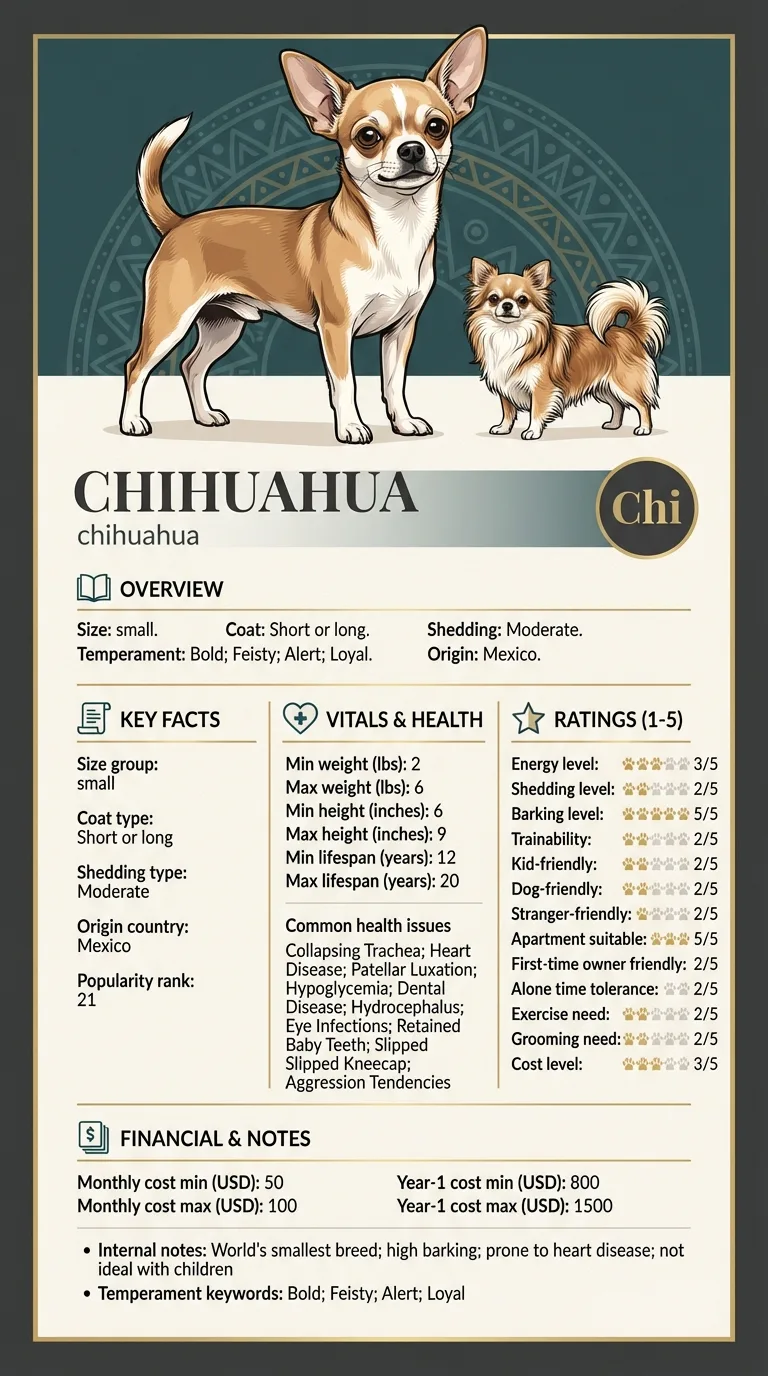
See all Chihuahua health problems, which breeds are prone to von willebrands disease, or the full Chihuahua breed guide for temperament, exercise needs and ownership costs.
Once diagnosed, most dogs require no ongoing daily treatment, only situational precautions, so there is no treatment timeline in the usual sense. Any single bleeding episode, once addressed with appropriate first aid or veterinary care, typically resolves within the same day, though it may take longer to fully stop than it would in an unaffected dog.
Success is a dog who lives a completely normal daily life, with every vet, groomer and caregiver aware of the diagnosis so that surgery, dental work and injury are all handled with appropriate precaution rather than surprise.
Most dogs with this condition live entirely normal lives with no obvious daily symptoms, since ordinary activity does not typically involve the kind of blood vessel damage that reveals a clotting deficiency. The pattern becomes visible around specific events: bleeding from a nail trimmed slightly too short that will not stop within the usual minute or two, bruising that appears disproportionate to a minor bump, occasional nosebleeds without an obvious cause, blood in the gums after a dental cleaning, or heavier and longer bleeding than expected during a heat cycle in an intact female.
The genuinely dangerous moments are ones involving planned or unplanned surgery. A spay, a neuter, a dental extraction or an emergency procedure all involve deliberate incisions that rely on normal clotting to close safely, and a dog with unrecognized von Willebrand's disease going into surgery without precautions faces meaningfully higher bleeding risk during and after the procedure. This is why the single most important practical step for a diagnosed dog is ensuring every vet, groomer and boarding facility involved in its care knows about the diagnosis before any procedure, trim or extended stay.
Diagnosis is confirmed through a specific blood test measuring the level of the deficient clotting protein, sometimes prompted by an unexpected bleeding episode and sometimes found through a genetic panel before any bleeding event has occurred at all. Once known, the condition itself does not need daily treatment in most cases; it needs advance planning around every situation involving deliberate bleeding.

Practical steps that reduce risk around the moments that actually matter.
If you think your Chi has von willebrand's disease, the plan is three steps: write down what you have seen and when it started, book a veterinary appointment rather than waiting for the next flare, and take video of the behaviour or symptom before you go — the thing you are worried about rarely happens in the consulting room. Screening in the parents covers collapsing trachea, heart disease, patellar luxation.
What the vet visit should produce is a diagnosis and a written plan, not just reassurance: what is being ruled out, what the monitoring interval is, and which signs mean you come back sooner. Ask what the treatment costs across a year rather than per visit, because that is the number that decides whether you are managing this condition or reacting to it.
Between appointments, keep a short log — dates, what you saw, what changed. It is the single most useful thing an owner brings to a follow-up, and for von willebrand's disease it is often what separates a clear pattern from a guess.
Chepe was eight months old at his first professional grooming appointment, and a nail trimmed only slightly shorter than usual bled steadily for close to twenty minutes despite the groomer's usual styptic powder, well beyond what she typically saw even with an accidental quick. She sent him straight to his vet rather than continuing the appointment. A clotting panel confirmed von Willebrand's disease. His vet's main message to owner Ana was not alarm but planning: Chepe could still live an entirely normal life, but every future vet, groomer and boarding facility needed to know about the diagnosis in advance, particularly before his upcoming neuter. That neuter went ahead a few months later with pre-surgical screening and a plan in place, and recovery was unremarkable. Ana now keeps a note of the diagnosis in her phone's medical records app and mentions it as a matter of routine before any new appointment, which has made every subsequent nail trim and vet visit uneventful.
Key takeaway: This condition rarely changes daily life at all. What it changes is the conversation that needs to happen before every procedure, trim or extended stay, and having that conversation ready in advance is what actually keeps a diagnosed dog safe.
For most affected dogs, no. Ordinary daily life rarely involves the kind of injury that reveals a clotting deficiency. The real risk concentrates around planned or unplanned surgery and significant injury, which is why advance disclosure to every vet and groomer matters so much.
Through a specific blood test measuring the level of the deficient clotting protein, sometimes triggered by an unexpected bleeding episode such as prolonged bleeding after a nail trim, and sometimes discovered through a genetic panel before any bleeding event has ever occurred.
It is a lifelong condition rather than one that is cured, but it is manageable. Most affected dogs need no ongoing daily treatment, only precautions and, where necessary, specific supportive treatment around planned procedures or in the event of significant bleeding.
Yes, with appropriate precautions. Vets routinely perform these procedures on dogs with known von Willebrand's disease using additional planning, sometimes including pre-surgical screening or supportive measures, once the diagnosis is known in advance.
Specifically mention that nail trims and any other procedure that could nick the skin should be done cautiously, and that if bleeding occurs it may take noticeably longer than usual to stop, so it should not be treated as an emergency by an inexperienced observer as long as it is being managed appropriately.
Inheritance patterns vary by the specific form of the condition, and a veterinary or genetic counseling discussion is the most reliable way to understand a specific dog's inheritance and what it means for breeding decisions.
A deficiency in a blood protein needed for normal clotting, causing prolonged bleeding after injury or surgery rather than faster blood loss.
Usually not. The main risk concentrates around surgery, dental work and significant injury rather than ordinary daily activity.
Yes, with advance disclosure and appropriate precautions planned by the vet performing the procedure.
Every vet, groomer and boarding facility involved in the dog's care, before any procedure, trim or extended stay.
A one-page prep sheet for this condition: the signs, the questions to ask, what to get priced. Unlocks here.
You get: Vet visit prep sheet
No spam. One-click unsubscribe. See our privacy policy.
Preview page 1 before you decide.