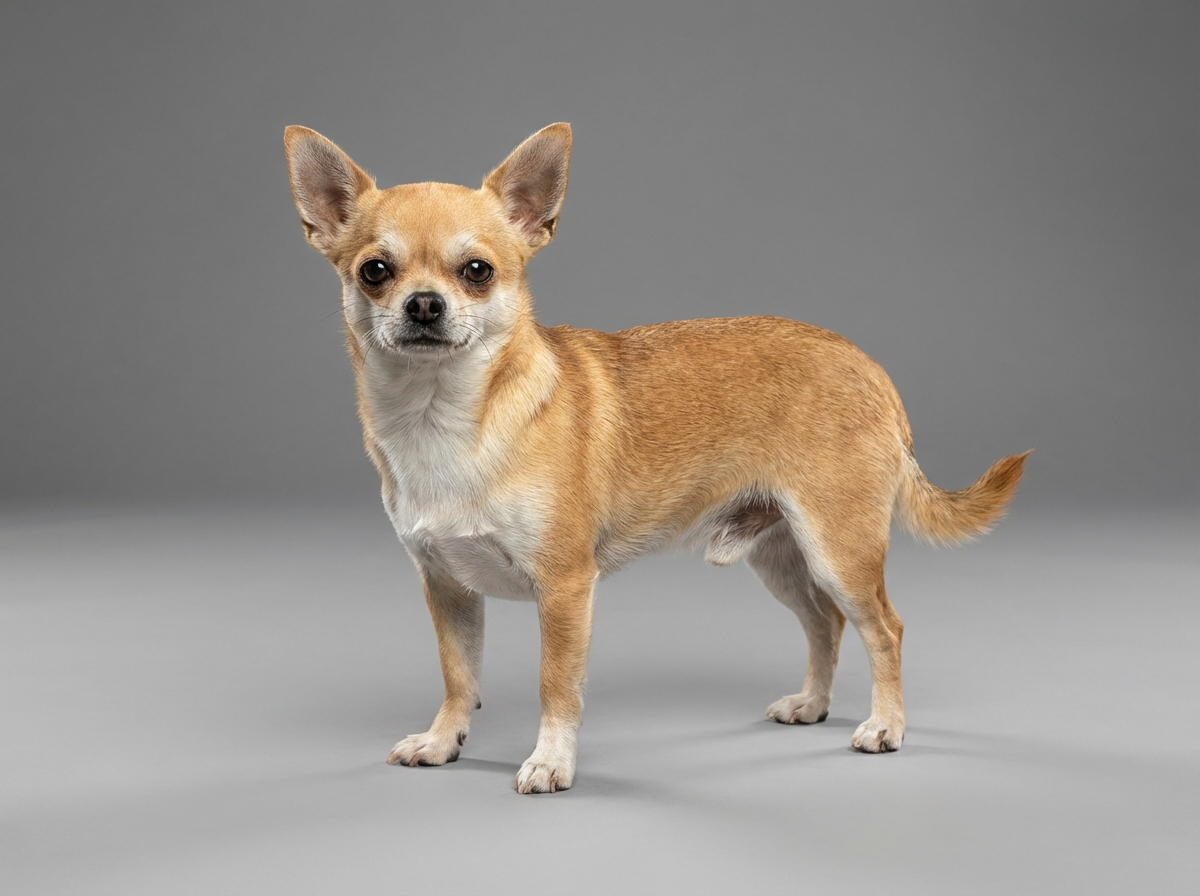
Health
Why is whelping risky for Chihuahuas?
Puppies have proportionally large rounded heads and the mother's pelvis is a very small fixed ring, so obstructed labour is common and dangerous.

Quick answer
Why is whelping risky for Chihuahuas?
Puppies have proportionally large rounded heads and the mother's pelvis is a very small fixed ring, so obstructed labour is common and dangerous.
This is the page that argues against breeding your Chihuahua. Not for sentimental reasons, but because the mechanics genuinely put the bitch's life at stake.
Anyone considering breeding a pet Chihuahua, and owners of a pregnant Chihuahua, planned or otherwise, who need to know what can go wrong and what to prepare for.
This guide is not medical advice. If your dog shows pain, sudden behavior change, or worsening symptoms, consult a licensed veterinarian.
Some links may be affiliate links. We may earn a commission at no extra cost to you. We only suggest products we believe are helpful for dog owners.
We research and check what we publish, but we do not warrant that any figure, date, price, or statement is accurate, complete, or current, and we accept no liability for any loss, cost, injury, or other harm arising from the use of this site. Use it as one reference among several. You remain responsible for your own decisions and for your dog's care - confirm anything that matters with a licensed veterinarian or another qualified professional before you act on it. Full disclaimer.
Pregnancy and whelping carry disproportionate risk in Chihuahuas because of a mechanical mismatch between large-headed puppies and a very small maternal pelvis. Obstructed labour is common, caesarean section is frequently required, and the post-whelping period brings its own dangers in eclampsia and low blood sugar. These risks are the strongest argument against casual breeding of pet dogs in this breed.
Difficult whelping is recognised as substantially more frequent in toy breeds than in medium-sized dogs, and caesarean rates in this group are correspondingly high. Most Chihuahua owners will never encounter this because most pet Chihuahuas are neutered, which is exactly the point: the risk is avoidable by not breeding, and it is very difficult to reduce once a pregnancy is under way.
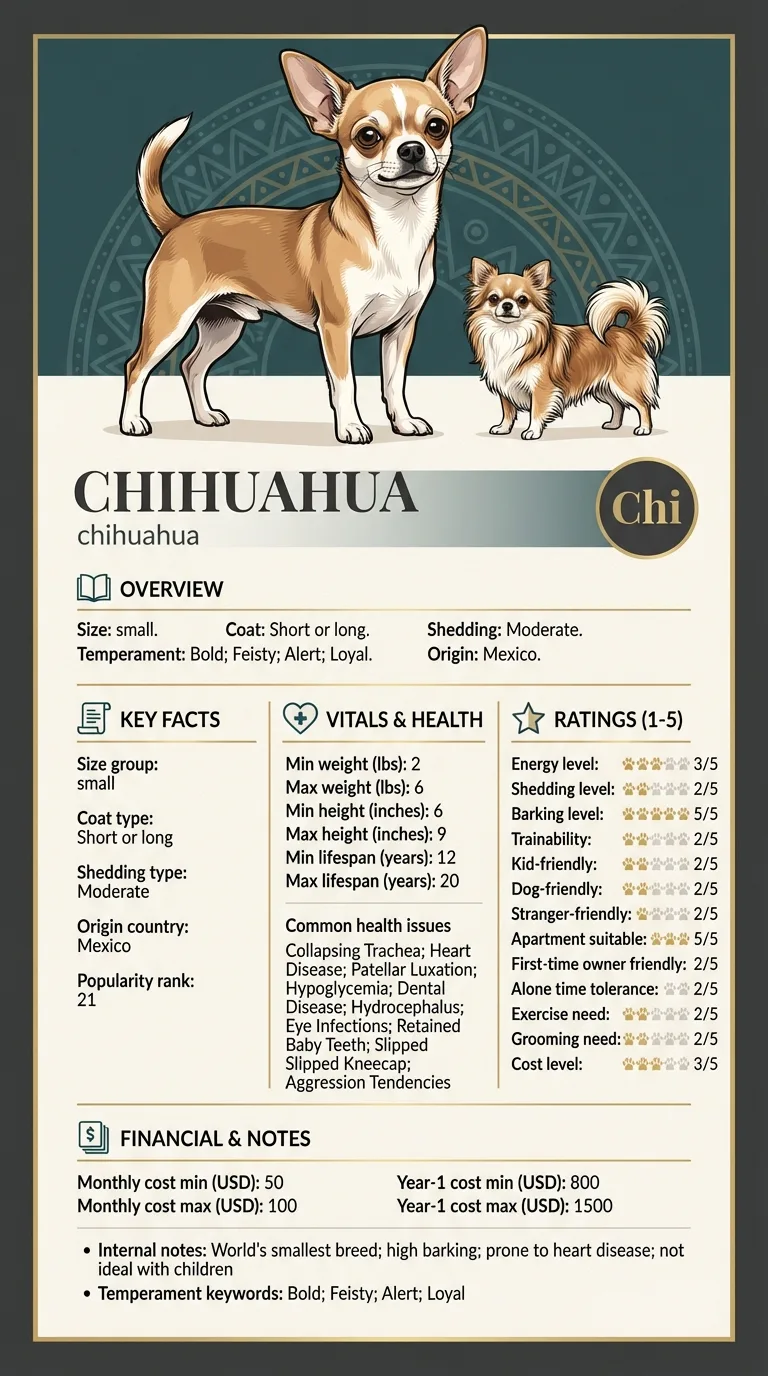
The Chihuahua's defining features work against safe delivery. The domed skull that characterises the breed produces puppies with proportionally large heads, while a body weight of 2 to 6 pounds gives the bitch a pelvic canal of very small fixed diameter. Neither can accommodate the other. In addition, the small maternal body has limited calcium reserves against the demands of lactation, and the breed's documented tendency to low blood sugar adds a further metabolic vulnerability during a period of high energy demand.
Almost all of the modifiable risk here is human decision-making. Whether the bitch was screened, whether her age and size were appropriate, whether the sire was of suitable size, whether litter size and puppy size were imaged before the due date, and whether a veterinary plan existed before labour started. Unplanned matings, particularly with larger dogs, account for a meaningful share of the worst outcomes, and those are prevented by supervision and neutering rather than by anything done during pregnancy.
Go to a veterinary clinic immediately, at any hour, for strong straining lasting twenty to thirty minutes without producing a puppy, more than two hours between puppies while she continues to contract, a puppy visibly stuck, dark green or bloody discharge before the first puppy is delivered, a bitch who has become exhausted, collapsed, or stopped contracting before the litter is complete, or a foul-smelling discharge at any point after whelping. Equally urgent in the weeks after birth are panting with restlessness, a stiff or wobbly gait, muscle tremors, fever, seizures or collapse, which indicate possible eclampsia and require immediate treatment. Do not attempt to deliver a stuck puppy yourself and do not give calcium or any other supplement without veterinary instruction.
See all Chihuahua health problems, which breeds are prone to pregnancy complications, or the full Chihuahua breed guide for temperament, exercise needs and ownership costs.
Canine pregnancy runs approximately nine weeks. Imaging to count and size puppies is typically done in the final fortnight and is the point at which a caesarean is usually planned or ruled out. Whelping itself, when it goes well, is a matter of hours. The highest-risk window for eclampsia is the first two to four weeks after birth, coinciding with peak milk production. Recovery from a caesarean in a small dog is generally straightforward over ten to fourteen days, provided the bitch is monitored for infection and is able to feed her litter.
For an owner who is not breeding, success is simple and complete: a neutered bitch who will never face any of this. For a planned litter, success is a bitch who is alive, uninjured and able to raise her puppies, delivered by a route decided in advance rather than in an emergency. It is worth stating plainly that a good outcome here is defined by the survival and health of the mother first, and that any breeding plan which treats her as secondary to the litter is the wrong plan.
Two features of the breed pull in opposite directions during birth. The Chihuahua's characteristic apple-shaped skull means puppies are born with proportionally large, rounded heads. Meanwhile the pelvis of a dog weighing between two and six pounds is a very small ring of bone that cannot expand beyond a fixed limit.
When a puppy's head is too large for that ring, labour stalls. This is dystocia, and in toy breeds it is common enough that many experienced breeders plan for the possibility of a caesarean section from the outset rather than treating it as a complication. A stalled labour is dangerous for the puppies, who may not survive prolonged obstruction, and dangerous for the bitch, whose uterus can rupture and who can go into shock.
Small litters make this worse rather than better. A single puppy in a small litter grows larger before birth and may not generate enough hormonal signal to initiate labour properly, so a one-puppy litter is a recognised risk situation rather than an easy one.
Beyond the birth itself, two conditions particularly affect toy-breed mothers. Eclampsia is a dangerous fall in blood calcium in the weeks after whelping, driven by the demand of milk production on a very small body, and it presents as restlessness, panting, tremors and, if untreated, seizures and death. It is a genuine emergency. Low blood sugar, which is documented in this breed generally, is a second risk in a small bitch feeding a litter.

This is not a moralising list. These are the specific practical realities that owners are rarely told before they decide.
If you think your Chi has pregnancy complications, the plan is three steps: write down what you have seen and when it started, book a veterinary appointment rather than waiting for the next flare, and take video of the behaviour or symptom before you go — the thing you are worried about rarely happens in the consulting room. Screening in the parents covers collapsing trachea, heart disease, patellar luxation.
What the vet visit should produce is a diagnosis and a written plan, not just reassurance: what is being ruled out, what the monitoring interval is, and which signs mean you come back sooner. Ask what the treatment costs across a year rather than per visit, because that is the number that decides whether you are managing this condition or reacting to it.
Between appointments, keep a short log — dates, what you saw, what changed. It is the single most useful thing an owner brings to a follow-up, and for pregnancy complications it is often what separates a clear pattern from a guess.
Perla was three and weighed four pounds when she got out during a season and was mated by a neighbour's terrier of roughly twenty pounds. Her owner Rosa did not realise until Perla was clearly pregnant. Her vet imaged her at week eight and found three puppies, all with head measurements that made a natural delivery extremely unlikely given Perla's size. A caesarean was scheduled for two days before her due date. She went into labour the night before and Rosa, who had the emergency clinic's details on the fridge because the vet had insisted, was there within forty minutes. All three puppies and Perla survived. The vet was frank afterwards: had Rosa waited until morning, the outcome would very likely have been different, and the mating itself had been the sort of accident that kills small bitches. Perla was neutered once the puppies were weaned. Rosa now keeps her garden gate padlocked during any neighbour's season and tells the story to anyone who mentions letting their small dog have one litter.
Key takeaway: In this breed the mechanics of birth are genuinely dangerous, and most of the risk is decided before the pregnancy begins. Neutering removes it entirely; an unplanned mating with a larger dog is a veterinary emergency in slow motion.
Warning signs include strong straining for twenty to thirty minutes with no puppy produced, more than two hours between puppies while she is still visibly contracting, a puppy visible but not progressing, green or dark discharge before any puppy is born, or a bitch who becomes exhausted, distressed or stops contracting altogether. Any of these is an emergency requiring immediate veterinary attention.
Not always, but the likelihood is high enough that it should be planned for rather than hoped against. Many toy-breed breeders arrange a scheduled caesarean with a veterinary team rather than risking an emergency at three in the morning. If you are breeding at all, arranging that in advance is the responsible course.
It is a dangerous drop in blood calcium caused by the demands of milk production, usually appearing in the first few weeks after whelping. Early signs are restlessness, panting, whining and a stiff or wobbly gait, progressing to muscle tremors, fever, seizures and collapse. It is a true emergency and it kills bitches who are not treated urgently.
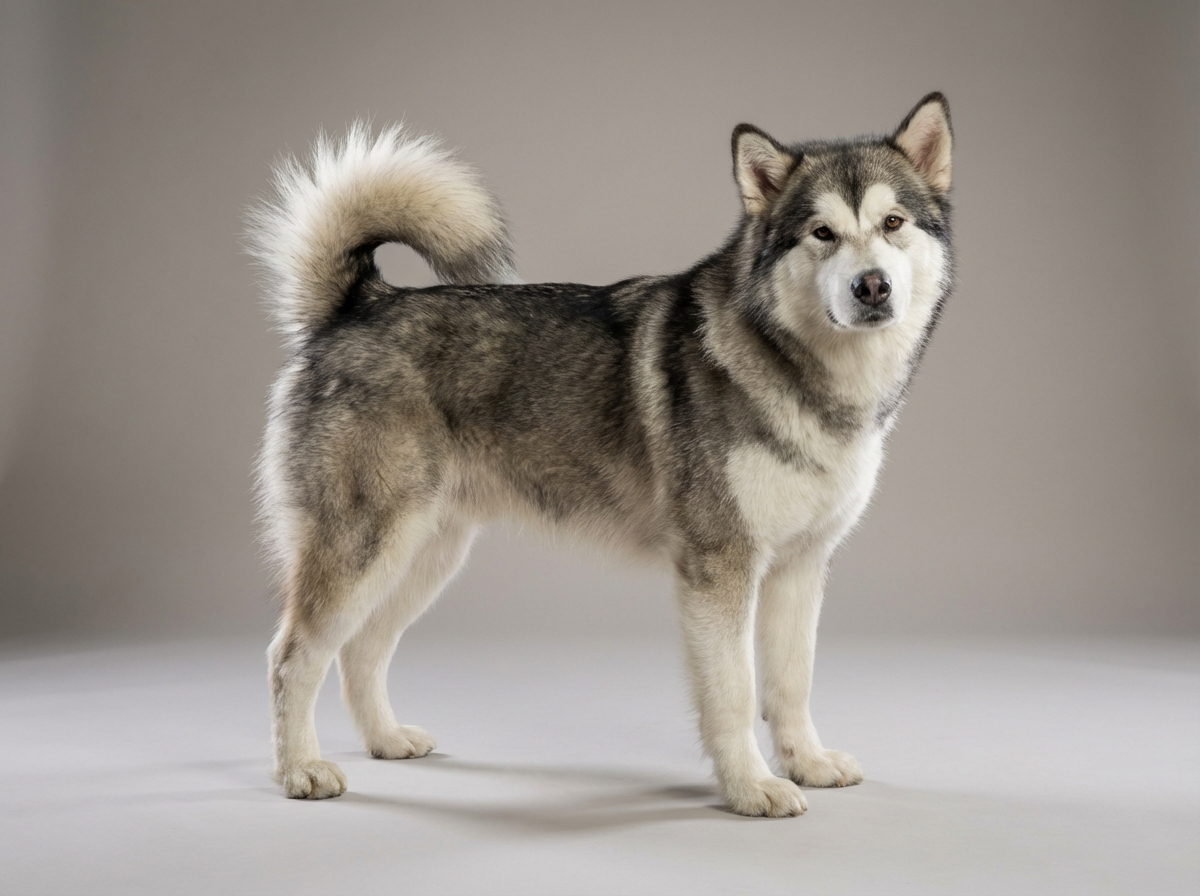
No, and this is one of the most dangerous mistakes in small-dog breeding. Puppies sired by a substantially larger dog can grow too large for the bitch to deliver, turning an already tight mechanical situation into an impossible one. An accidental mating of this kind requires urgent veterinary advice, not a wait-and-see approach.
See your vet promptly. There are decisions to be made about the pregnancy that are time-sensitive, and if it is to continue, you need a plan that includes monitoring, an estimate of litter size and puppy size by imaging, and a pre-arranged route to a caesarean. Do not simply wait and see what happens on the night.
At minimum, veterinary examination of both parents including cardiac auscultation and an orthopaedic assessment of the knees, given that heart disease and patellar luxation are both documented in the breed. Any dog with a confirmed cardiac defect, significant patellar luxation or a neurological condition should not be bred. Ask a breeder for these records in writing before buying a puppy.
Puppies have proportionally large rounded heads and the mother's pelvis is a very small fixed ring, so obstructed labour is common and dangerous.
Strong straining for twenty to thirty minutes with no puppy, over two hours between puppies while contracting, or any dark green discharge before a puppy arrives.
A dangerous post-whelping drop in blood calcium causing panting, tremors and seizures. It is a life-threatening emergency in nursing toy-breed bitches.
Usually not. Pregnancy and breeding-related costs are commonly excluded, so an emergency caesarean is typically paid for entirely by the owner.
A one-page prep sheet for this condition: the signs, the questions to ask, what to get priced. Unlocks here.
You get: Vet visit prep sheet
No spam. One-click unsubscribe. See our privacy policy.
Preview page 1 before you decide.