Health
What is the difference between vomiting and regurgitation?
Vomiting involves active abdominal heaving. Regurgitation is passive, with undigested material coming up with little effort, and points toward the oesophagus rather than the stomach.

Quick answer
What is the difference between vomiting and regurgitation?
Vomiting involves active abdominal heaving. Regurgitation is passive, with undigested material coming up with little effort, and points toward the oesophagus rather than the stomach.
Snoring is not the problem. Snoring is the sound of the problem, and the parts of it you cannot hear are often the parts that matter most.
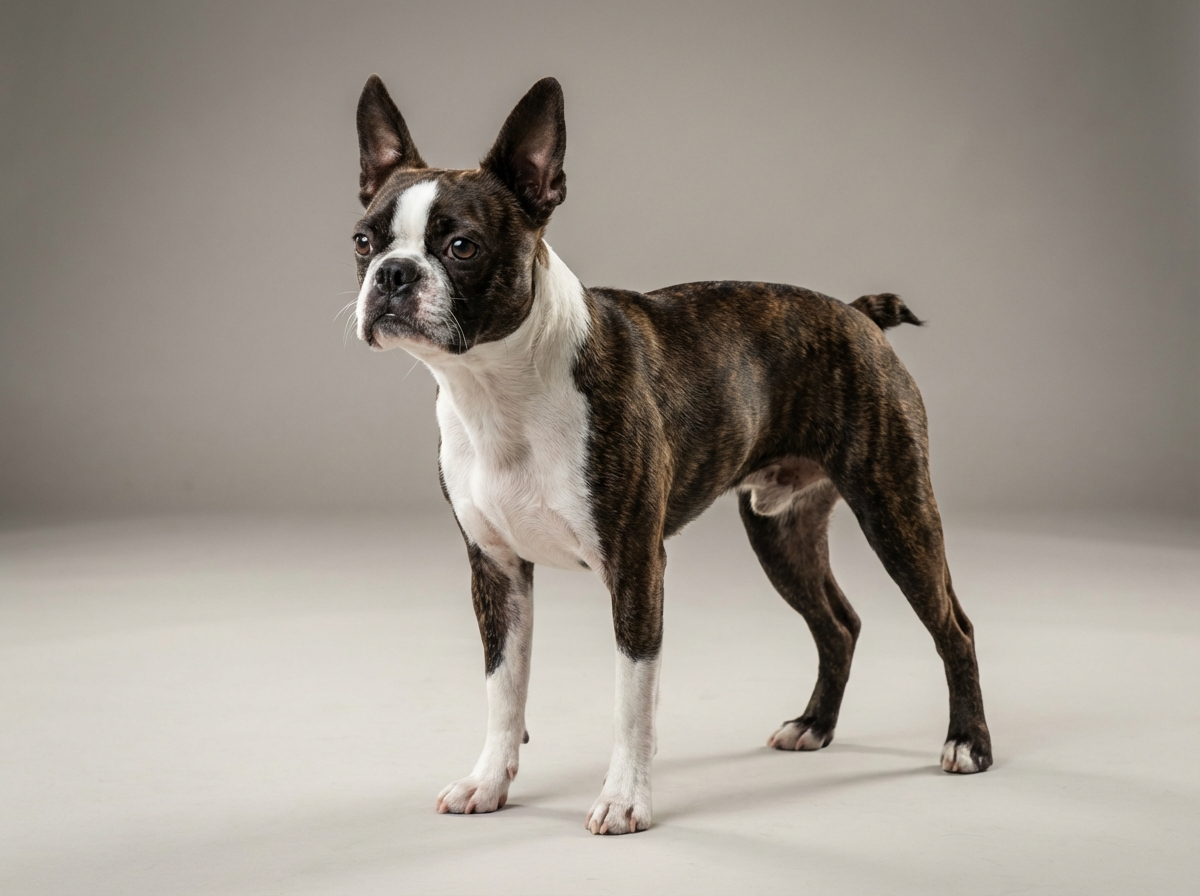
Owners who have been told their Boston is fine because it is not as bad as a Pug, and owners whose dog snorts, gags or regurgitates and have never connected that to its breathing.
This guide is not medical advice. If your dog shows pain, sudden behavior change, or worsening symptoms, consult a licensed veterinarian.
Some links may be affiliate links. We may earn a commission at no extra cost to you. We only suggest products we believe are helpful for dog owners.
We research and check what we publish, but we do not warrant that any figure, date, price, or statement is accurate, complete, or current, and we accept no liability for any loss, cost, injury, or other harm arising from the use of this site. Use it as one reference among several. You remain responsible for your own decisions and for your dog's care - confirm anything that matters with a licensed veterinarian or another qualified professional before you act on it. Full disclaimer.
Respiratory disease in Boston Terriers begins with structural obstruction in the nose and throat and radiates outward from there. Over years it affects the larynx, the lower airways, the right side of the heart and the digestive tract. Understanding it as a whole-body problem rather than a noisy nose is what makes the management decisions make sense.
Brachycephalic airway syndrome heads the Boston Terrier's documented list of common health issues, and some degree of restricted airflow is close to universal in the breed. Severity varies enormously between individuals. What is not universal is diagnosis, because owners and even some vets normalise noisy breathing in flat-faced dogs as characteristic rather than clinical.
Selective breeding shortened the facial skeleton without proportionally reducing the soft tissue inside it. The result is a nose, throat and palate designed for a longer face compressed into a shorter one. In the Boston Terrier the shortening is moderate rather than extreme, which is why the breed generally copes better than the most heavily shortened breeds, but the mechanism is identical. Compact body size at 12 to 25 pounds means small absolute changes in tissue thickness have proportionally large effects.
Heat and humidity are the dominant environmental stressors, because panting is both the cooling system and the thing that is restricted. Excess weight adds tissue in exactly the wrong places. Collar pressure worsens flow at the neck. Excitement raises demand instantly. Air quality, smoke exposure and dusty environments irritate an airway with no spare capacity, and travel in warm vehicles removes the airflow the dog depends on.
Go immediately for blue, grey or very pale gums, frantic breathing that does not settle with rest and cooling, collapse, or any period where the dog cannot get air. Book an assessment promptly for noisy breathing while awake and at rest, an inability to complete short cool-weather walks, sleeping in unusual positions to keep the airway open, frequent gagging or regurgitation, or breathing that is audibly worse than it was a year ago. Tell every practice about the airway before any sedation.
See all Boston Terrier health problems, which breeds are prone to respiratory disease, or the full Boston Terrier breed guide for temperament, exercise needs and ownership costs.
Weight loss improves breathing within four to eight weeks. Harness and arousal changes help immediately. Surgical improvement is usually apparent within a few weeks of recovery. None of it changes the anatomy fundamentally, so heat precautions and weight management continue permanently.
A dog that is quiet at rest, sleeps without waking itself, completes its usual walks in cool weather without stopping, and does not regurgitate. Success is not silent breathing under all conditions. It is a dog with enough margin that ordinary life does not push it to its limit.
Each level contributes, and a full assessment looks at all of them rather than stopping at the visible one.
A large proportion of brachycephalic dogs have gastrointestinal signs, and the connection is mechanical rather than coincidental.
Every breath taken against an obstruction generates strongly negative pressure in the chest. That pressure pulls on the oesophagus and the junction where it meets the stomach, and over thousands of breaths it encourages stomach contents upward. The result is reflux, and reflux inflames the oesophagus and the lower throat.
Owners see this as regurgitation, which is different from vomiting: material comes up passively, often undigested and tubular in shape, without the abdominal heaving that accompanies true vomiting. They also see gagging after eating or drinking, frequent swallowing, licking of lips, and reluctance to eat from a bowl on the floor.
The inflammation this causes makes the throat tissues swell, which narrows the airway further. That is the loop: obstruction causes reflux, reflux causes swelling, swelling worsens obstruction.
This matters practically because airway surgeons routinely treat the gastrointestinal component alongside the airway one, and because dogs whose reflux is managed often breathe measurably better. If your Boston regurgitates, mention it at the airway consultation. Owners frequently do not, because they have filed it under a completely separate heading.
One further consequence: a dog with reflux and a compromised airway is at raised risk of aspirating material into the lungs during sedation and recovery, which is another reason anaesthetic planning in this breed includes the stomach as well as the throat.

If you think your Boston has respiratory disease, the plan is three steps: write down what you have seen and when it started, book a veterinary appointment rather than waiting for the next flare, and take video of the behaviour or symptom before you go — the thing you are worried about rarely happens in the consulting room. Screening in the parents covers brachycephalic airway syndrome (boas), patellar luxation, cataracts.
What the vet visit should produce is a diagnosis and a written plan, not just reassurance: what is being ruled out, what the monitoring interval is, and which signs mean you come back sooner. Ask what the treatment costs across a year rather than per visit, because that is the number that decides whether you are managing this condition or reacting to it.
Between appointments, keep a short log — dates, what you saw, what changed. It is the single most useful thing an owner brings to a follow-up, and for respiratory disease it is often what separates a clear pattern from a guess.
Pip was five and booked for a soft palate procedure. At the pre-surgical consultation her owner Hanne answered questions about snoring, exercise tolerance and heat, all thoroughly. The surgeon asked, almost as an afterthought, whether Pip ever brought food back up. Hanne said yes, two or three times a week, sometimes a whole undigested meal, and that she had assumed it was because Pip ate too fast. She had never mentioned it because it did not seem like a breathing question. The surgeon explained the loop between airway pressure, reflux and throat swelling, and treated the gastrointestinal side for four weeks before operating. Pip's breathing improved measurably during that period alone, before any surgery. The procedure went ahead and her recovery was straightforward. Hanne's view afterwards was that she had been given a form asking about breathing and had answered exactly that question, and nobody would have found the rest if the surgeon had not asked.
Key takeaway: In this breed, the digestive symptoms and the breathing symptoms are one problem. Mention the regurgitation at the airway appointment even when it seems unrelated.
Bostons generally have a longer muzzle than Pugs or French Bulldogs and are usually less severely affected, which is why they often manage more activity. Brachycephalic airway syndrome is still first on the breed's documented health list, so less severe is a comparison, not a clean bill of health.
It is common, which is not the same as harmless. Quiet snoring in deep sleep is usually tolerated. Noise while awake and at rest, effortful breathing, or a dog that must extend its neck to breathe comfortably indicates meaningful obstruction and deserves assessment.
A sudden bout of rapid, snorting inhalations, often triggered by excitement, a collar, or an irritant. It looks alarming and is usually harmless and self-limiting. Frequent episodes, or ones that are becoming longer, are worth investigating rather than accepting.
Widening the nostrils and shortening an over-long soft palate improves airflow substantially in most dogs, and results are generally better when done before secondary changes such as laryngeal collapse have developed. It does not make the dog anatomically normal, and heat precautions continue afterwards.
Often because of reflux and throat inflammation associated with the airway. A raised bowl, smaller more frequent drinks and slowing the dog down can help, but persistent gagging should be assessed rather than managed indefinitely at home.
Yes. Soft tissue can thicken with years of turbulent airflow, weight tends to creep up, and secondary laryngeal changes accumulate. Many owners report that the dog that coped at three needs more careful management at eight.
Vomiting involves active abdominal heaving. Regurgitation is passive, with undigested material coming up with little effort, and points toward the oesophagus rather than the stomach.
A Y-shaped harness is better for walking, since a collar concentrates pressure on an already narrow airway whenever the dog pulls.
Blue, grey or very pale gums, frantic effort that does not settle with rest and cooling, collapse, or an inability to get air are all immediate emergencies.
Noticeably, and often within weeks. Reducing fat around the neck and chest lowers the work of breathing and is the most effective home intervention available.
A one-page prep sheet for this condition: the signs, the questions to ask, what to get priced. Unlocks here.
You get: Vet visit prep sheet
No spam. One-click unsubscribe. See our privacy policy.
Preview page 1 before you decide.